• Global CNC market projected to reach $128B by 2028 • New EU trade regulations for precision tooling components • Aerospace deman
NYSE: CNC +1.2%LME: STEEL -0.4%

Digital Manufacturing Technology for Smart Factory: Key Systems and Data Flow Explained
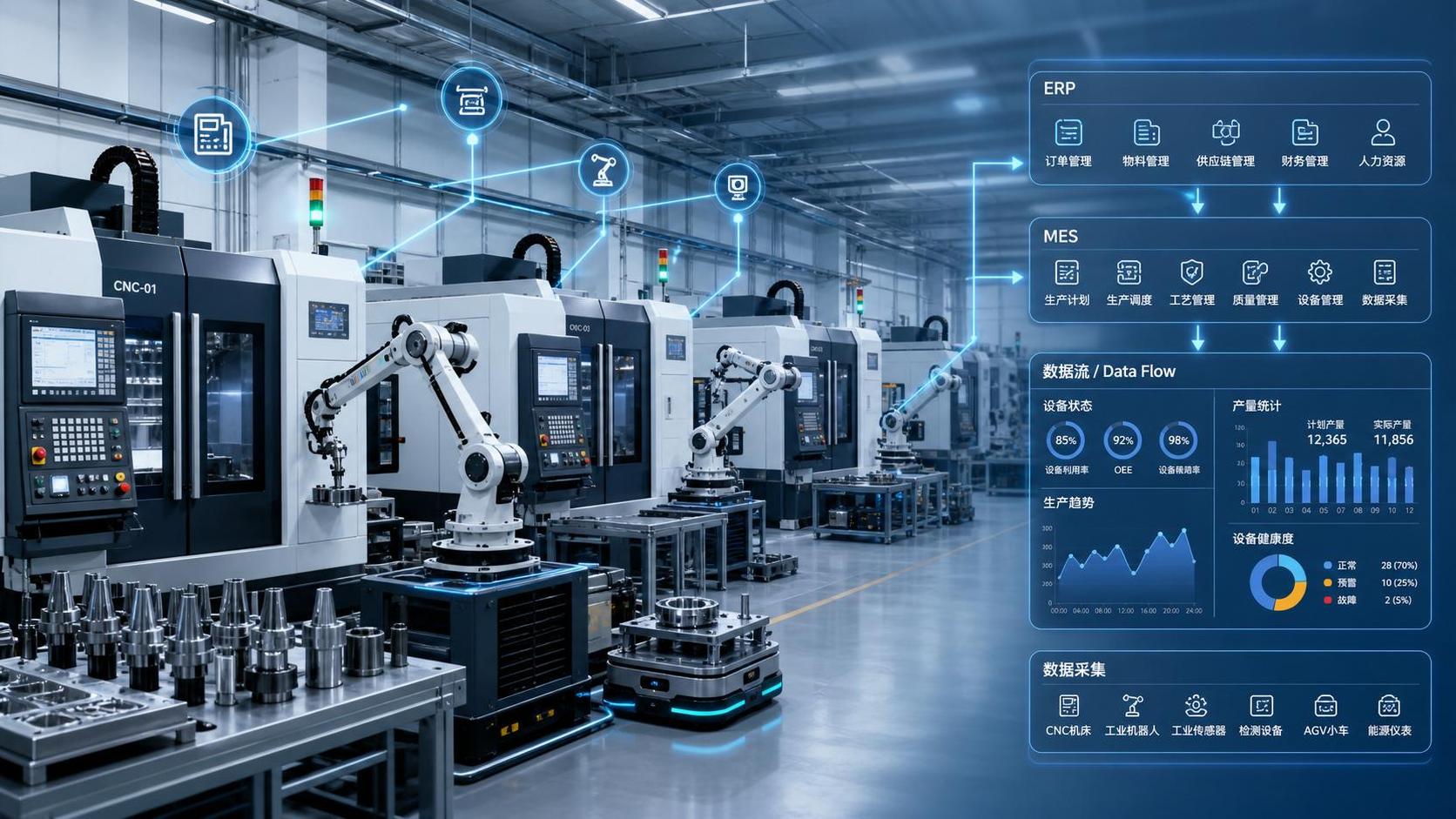
Digital Manufacturing Technology for Smart Factory: Key Systems and Data Flow Explained
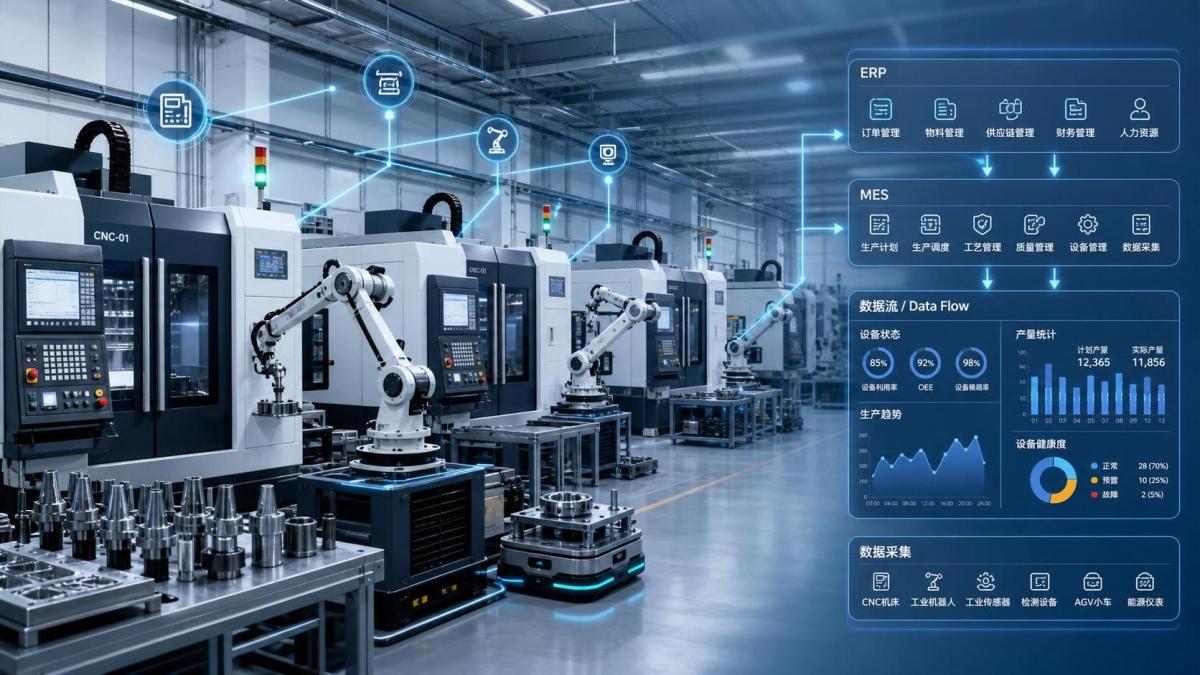
Digital Manufacturing Technology for smart factory is changing how modern production is planned, monitored, and improved.
For manufacturers using CNC machine tools, the shift is no longer optional.
It now affects scheduling, quality control, machine utilization, traceability, and delivery reliability.
In practical terms, Digital Manufacturing Technology for smart factory connects equipment, software, people, and decisions through structured data.
That connection matters most in high-mix, high-precision industries such as automotive, aerospace, electronics, and energy equipment.
The core question is simple: where does data start, where does it go, and how does it improve production outcomes?
Once that flow becomes visible, system decisions become clearer and implementation risks become easier to manage.
Why Digital Manufacturing Technology for Smart Factory Matters Now
Recent changes in manufacturing make integration more urgent than it was a few years ago.
Production lines are more automated, product variants are increasing, and delivery windows are tighter.
At the same time, CNC machining operations produce large volumes of machine, tooling, and quality data.
Without a digital structure, that data stays isolated inside machines, spreadsheets, or disconnected software.
This creates familiar problems: manual reporting, slow root-cause analysis, weak traceability, and inconsistent planning.
Digital Manufacturing Technology for smart factory addresses these gaps by building a common data backbone.
That backbone supports faster decisions, better OEE visibility, lower scrap, and more stable production execution.
The Core System Stack in a Smart Factory
A smart factory does not depend on one platform alone.
It relies on several connected systems, each with a different operational role.
1. ERP for business and resource control
ERP manages orders, purchasing, inventory, cost, finance, and high-level production planning.
It answers what should be made, when it is needed, and what materials are available.
2. MES for shop-floor execution
MES translates planning into real production actions.
It manages work orders, dispatching, WIP tracking, labor reporting, machine status, and process traceability.
3. SCADA and PLC layers for control
PLC systems run machine and line control logic.
SCADA provides monitoring, alarms, and operating status across connected equipment.
4. CNC, robots, and edge devices
These systems generate the most immediate operational data.
Typical signals include spindle load, cycle time, feed rate, alarm codes, offsets, and program versions.
5. QMS, PLM, and maintenance systems
QMS handles quality records and nonconformance control.
PLM manages product definitions, revisions, and engineering data.
Maintenance systems support preventive actions and equipment lifecycle planning.
How Data Flows Through Digital Manufacturing Technology for Smart Factory
The value of Digital Manufacturing Technology for smart factory becomes clear when data flow is mapped end to end.
A simplified flow usually looks like this:
- Customer demand enters ERP through forecast, sales order, or service requirements.
- ERP generates production orders, material reservations, and target delivery dates.
- MES receives work instructions, routing, priorities, and capacity constraints.
- Machines, CNC systems, robots, and sensors execute tasks and return real-time status data.
- Quality systems capture inspection results, deviation records, and process capability indicators.
- MES feeds actual output, downtime, scrap, and labor data back to ERP and analytics platforms.
- Management dashboards convert that data into operational and strategic decisions.
This closed loop is what turns scattered automation into a real smart factory system.
It also explains why interface design matters as much as machine performance.
Key Data Types That Drive Performance
Not every signal has equal business value.
The most useful Digital Manufacturing Technology for smart factory projects focus on a few high-impact data groups first.
- Production data: cycle time, output, setup time, changeover time, downtime, and utilization.
- Quality data: dimensions, SPC trends, defect categories, first-pass yield, and rework causes.
- Tooling data: tool life, wear state, replacement history, and offset corrections.
- Material data: lot number, supplier batch, inventory movement, and consumption accuracy.
- Equipment data: alarms, vibration, temperature, load patterns, and maintenance status.
- Process data: CNC program version, route revision, fixture ID, and operator confirmation records.
When these data sets are linked, traceability becomes stronger and problem-solving becomes faster.
That is especially important for precision manufacturing where small deviations can trigger major cost impacts.
Common Integration Standards and Connectivity Choices
A smart factory depends on data standards as much as on machines and software.
In CNC and industrial automation environments, several standards appear repeatedly.
- OPC UA for secure, structured machine-to-system communication.
- MTConnect for standardized machine tool data collection.
- MQTT for lightweight event transmission in distributed environments.
- REST API for software integration across MES, ERP, QMS, and analytics tools.
- ISA-95 as a reference model between enterprise and control layers.
The right choice depends on installed equipment, legacy constraints, cybersecurity needs, and reporting goals.
In many factories, a hybrid approach is more realistic than a full platform replacement.
Where Implementation Often Fails
Digital Manufacturing Technology for smart factory projects usually fail for operational reasons, not technical ones alone.
The most common issues are predictable.
- No clear ownership of data definitions across production, IT, and engineering teams.
- Too many KPIs launched at once, with little operational follow-through.
- Poor machine connectivity caused by mixed controller generations.
- MES workflows copied from theory instead of actual shop-floor behavior.
- Manual workarounds that break traceability after go-live.
- Weak change management around operators, planners, and maintenance teams.
From a delivery perspective, these risks should be identified before interface development begins.
That saves time, lowers rework, and improves adoption after deployment.
A Practical Rollout Path for Manufacturing Projects
A workable rollout usually starts small, but it should never start vaguely.
The most effective path follows a disciplined sequence.
- Map the current process from order entry to shipment and isolate data gaps.
- Select one pilot line, cell, or CNC cluster with measurable pain points.
- Define a small KPI set, such as OEE, scrap rate, schedule adherence, and tool life.
- Standardize machine naming, event codes, product IDs, and routing structures.
- Build interfaces between shop-floor devices, MES, and ERP in a controlled scope.
- Validate data accuracy before pushing dashboards to wider teams.
- Scale only after the pilot proves operational value and user adoption.
This approach keeps Digital Manufacturing Technology for smart factory aligned with production reality.
It also makes budget conversations easier because benefits can be shown with real operational evidence.
What Good Looks Like in Daily Operations
When Digital Manufacturing Technology for smart factory is implemented well, the changes are visible on the floor.
Production planning reacts faster to machine constraints.
Quality issues are linked to exact lots, tools, programs, and process conditions.
Maintenance teams move from reactive repair toward condition-based action.
Managers spend less time collecting numbers and more time acting on them.
For CNC-intensive operations, that means better spindle time, tighter process control, and more predictable output.
That is the real business case behind smart factory investment.
Final Takeaway
Digital Manufacturing Technology for smart factory is not just about installing software over existing equipment.
It is about building a reliable flow of production data across planning, execution, control, and improvement.
For machine tool, automation, and precision manufacturing environments, the strongest results come from structured integration.
Start with the systems that shape real decisions.
Clarify the data flow before expanding the platform scope.
That is usually the fastest path to a smart factory that performs well under real production pressure.
Recommended for You
 How to Select CNC Equipment for High-Mix, Low-Volume ProductionCNC Machining Technology Center
 Can CNC Machining Inconel Control Tool Wear in High-Temperature Aerospace Parts?CNC Machining Technology Center
 Machine Tool Market Outlook: Demand Drivers, Capacity Shifts, and Investment RisksManufacturing Market Research Center
 Zero-Point Clamping or Modular Fixtures? Choosing a Faster CNC Changeover SystemCNC Machining Technology Center
 How to Cut CNC Fixture Changeover Time Without Sacrificing Part AccuracyCNC Machining Technology Center
 When Does CNC Turning Pay Off? A Break-Even Guide by Annual Part VolumeMachine Tool Industry Editorial Team

Aris Katos
Future of Carbide Coatings
15+ years in precision manufacturing systems. Specialized in high-speed milling and aerospace grade alloy processing.
▶
How to Select CNC Equipment for High-Mix, Low-Volume ProductionCNC Machining Technology Center▶
Can CNC Machining Inconel Control Tool Wear in High-Temperature Aerospace Parts?CNC Machining Technology Center▶
How Automated Precision Machining Maintains Tolerance in High-Mix ProductionCNC Machining Technology Center▶
CNC Programming Explained: From CAD Models to Reliable Shop-Floor ToolpathsCNC Machining Technology Center▶
How Multi-Axis Machining Produces Complex Components With Fewer SetupsCNC Machining Technology Center
Mastering 5-Axis Workholding Strategies
Join our technical panel on Nov 15th to learn about reducing vibrations in thin-wall components.

Providing you with integrated sanding solutions
Before-sales and after-sales services
Comprehensive technical support