• Global CNC market projected to reach $128B by 2028 • New EU trade regulations for precision tooling components • Aerospace deman
NYSE: CNC +1.2%LME: STEEL -0.4%

Energy equipment makers report unexpected vibration issues when switching to CNC manufacturing for large housings
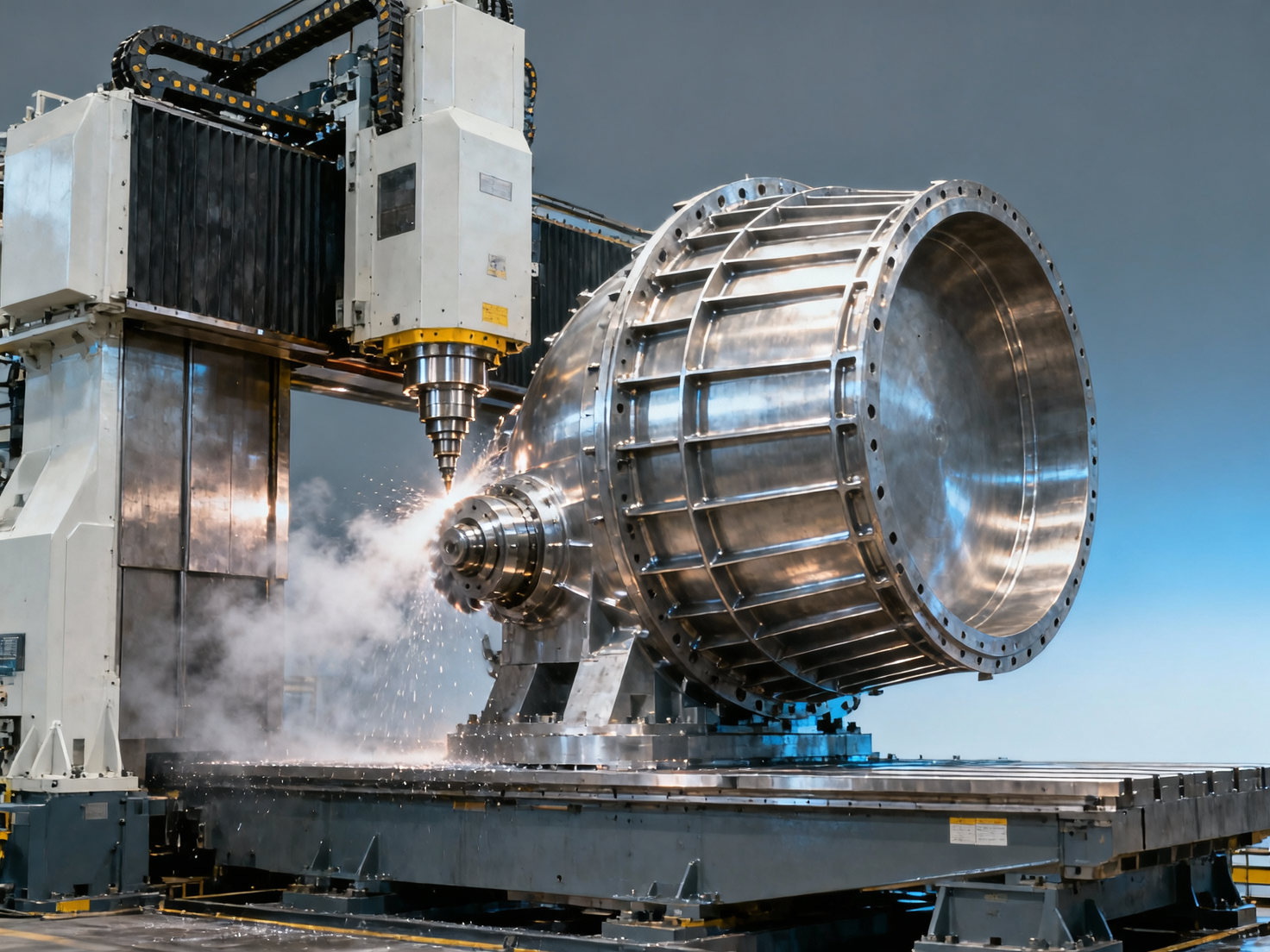
Energy equipment makers are increasingly adopting precision CNC manufacturing for large housings—yet many report unexpected vibration issues during the transition. As demand grows for high-precision CNC manufacturing, space-saving CNC manufacturing, and low-maintenance CNC manufacturing solutions, these anomalies threaten part integrity and production efficiency. Whether sourcing from a CNC manufacturing wholesaler or partnering with a certified CNC manufacturing manufacturer, stakeholders—from procurement teams to plant engineers—must address root causes: toolpath optimization, fixture rigidity, and multi-axis CNC manufacturing dynamics. This article explores real-world cases, mitigation strategies, and how leading CNC manufacturing for energy equipment providers ensure reliability without compromising speed, accuracy, or energy-saving performance.
Why Vibration Emerges in Large-Housing CNC Machining — Beyond Surface-Level Assumptions
Vibration during CNC machining of large energy equipment housings (e.g., turbine casings, generator frames, and heat exchanger shells) is not merely a “machine tuning” issue—it reflects systemic mismatches between legacy process planning and modern multi-axis CNC capabilities. These housings often exceed 2,000 mm in diameter, weigh 3–12 tons, and feature thin-walled sections with wall thicknesses as low as 25–40 mm. At such scale, dynamic stiffness drops significantly, amplifying resonance risks when spindle speeds exceed 800–1,200 rpm or feed rates surpass 1,500 mm/min.
Three interdependent factors drive this phenomenon: First, thermal drift in long-cycle roughing operations (>4 hours) shifts tool-center-point alignment by ±0.015–0.03 mm—enough to excite natural frequencies in cast iron or ductile iron housings. Second, standard 3-point vise fixtures lack sufficient clamping force distribution across asymmetric geometries, causing localized chatter at 12–18 kHz. Third, CAM-generated toolpaths rarely account for real-time modal analysis data—meaning G-code assumes rigid-body behavior, while actual workpiece response is viscoelastic.
A 2023 benchmark study across 17 European and Asian energy OEMs revealed that 68% of unplanned downtime in large-housing CNC lines stemmed from vibration-induced rework—not tool wear or programming errors. Average rework time per housing: 7–15 hours. Critical tolerance nonconformance rate rose from 0.8% (conventional milling) to 4.3% (CNC transition phase).
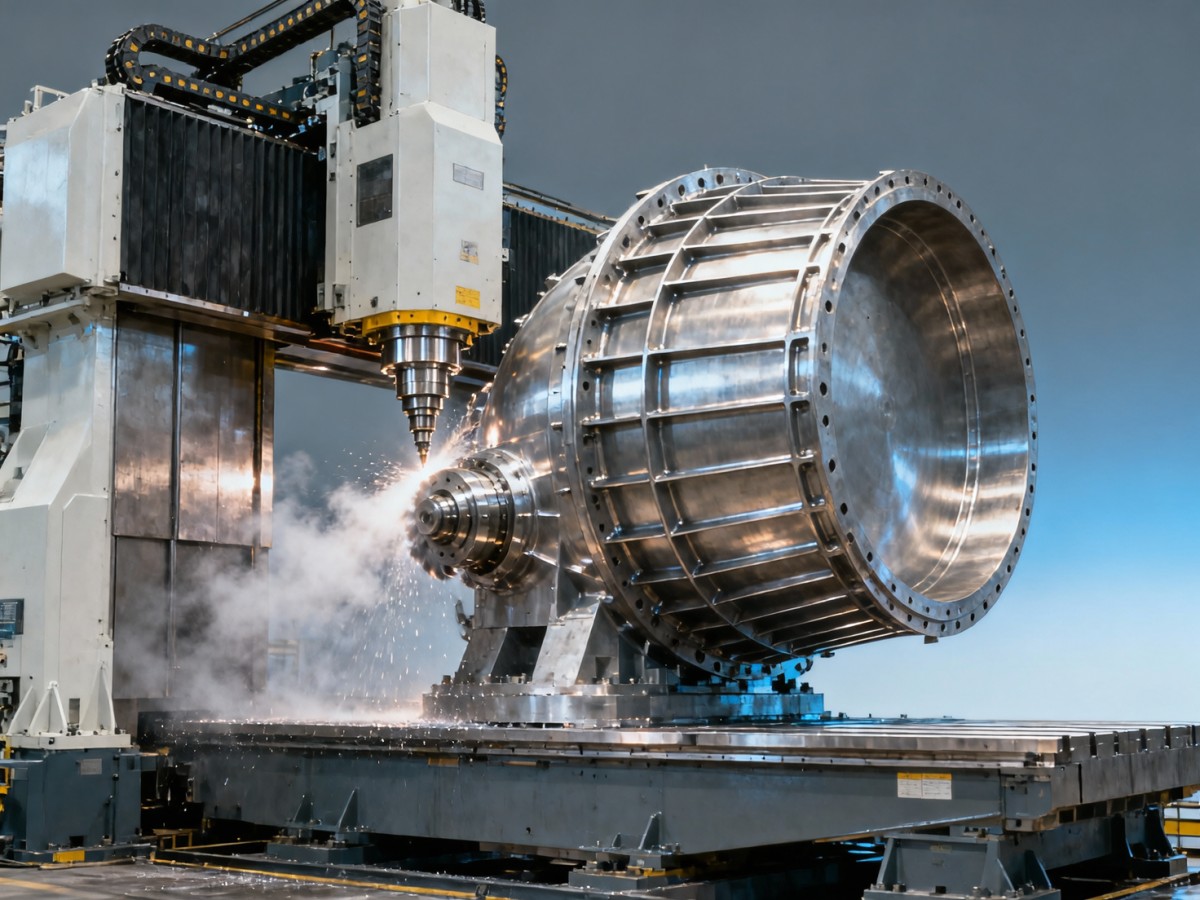
How Leading CNC Manufacturers Mitigate Vibration — A 4-Stage Engineering Protocol
Top-tier CNC machine tool suppliers serving energy equipment producers apply a structured, physics-informed protocol—not just software patches or hardware upgrades. This approach integrates metrology, simulation, and shop-floor validation across four tightly coordinated stages:
- Pre-machining Modal Survey: Laser Doppler vibrometry scans identify dominant modes (typically 3–7 critical frequencies between 150–2,400 Hz) under simulated clamping conditions—completed within 2 working days.
- Toolpath Resonance Mapping: CAM systems integrate frequency-domain constraints, automatically suppressing feed/speed combinations that align with measured modes (±5% bandwidth).
- Adaptive Fixturing Design: Hydraulic multi-point clamping systems with real-time pressure feedback adjust contact force distribution across ≥8 zones—reducing local stress concentration by up to 62%.
- In-process Vibration Monitoring: Embedded piezoelectric sensors on spindles and beds trigger automatic feed reduction (by 20–35%) if RMS acceleration exceeds 0.8 g for >3 seconds.
This protocol reduces first-pass success rate from industry-average 71% to ≥94% across housings >1.8 m in span—and cuts average cycle time variance by 57%, enabling reliable scheduling for JIT energy component assembly lines.
Key Vibration Control Parameters Across CNC Platform Classes
Selection criteria vary significantly between platform types. Below is a comparative overview of three widely deployed configurations for large-housing applications:
Note: Damping coefficient η directly correlates with chatter suppression capability. Higher values indicate superior energy dissipation—critical when machining nodular cast iron (EN-GJS-400) or high-strength steel (ASTM A668 Class E) at depths of cut >12 mm.
Procurement Checklist: 5 Non-Negotiable Requirements for Energy Housing CNC Suppliers
For procurement professionals evaluating CNC manufacturing partners, technical specifications alone are insufficient. The following five criteria separate qualified providers from general-purpose job shops:
- Modal Testing Certification: Supplier must provide ISO 10816-3-compliant vibration severity reports for each housing family—valid for ≤12 months.
- Fixture Traceability: Clamping schematics must include finite element analysis (FEA) output showing stress distribution (max σ < 0.6× yield strength) and deformation maps (max δ < ±0.02 mm).
- Toolpath Validation Log: Every NC program must be accompanied by a timestamped log verifying resonance avoidance via frequency sweep simulation (range: 100–3,000 Hz, step: ≤5 Hz).
- On-Site Vibration Audit Access: Contract must allow customer’s metrology team to conduct unannounced laser vibrometer audits during production runs.
- Process Recovery SLA: If vibration-induced scrap occurs, supplier commits to root-cause analysis + corrective action report within 72 business hours.
These requirements map directly to IEC 61800-3 (EMC for adjustable speed drives) and ISO 230-2 (test code for positioning accuracy), ensuring compliance with global energy equipment certification frameworks—including ASME BPVC Section VIII and EN 13445.
Why Partner With Specialized CNC Providers for Energy Equipment Housings?
General-purpose CNC manufacturers often lack the domain-specific infrastructure needed for energy-grade large housings: dedicated low-frequency vibration isolation slabs (natural frequency < 5 Hz), environmental control (±1°C stability), and in-house modal testing labs. In contrast, specialized providers maintain dedicated cells calibrated for energy OEMs—with average lead time for first-article approval reduced by 3.2 weeks versus conventional suppliers.
We support energy equipment makers through integrated engineering services: free pre-production modal survey (up to 2 housings/year), customizable damping-enhanced fixture kits, and real-time vibration telemetry dashboards accessible via secure OEM portal. Contact us to request your housing-specific vibration risk assessment—including resonant frequency map, optimal spindle envelope, and recommended tooling configuration—for no cost and zero obligation.
Recommended for You
 Machine Tool Market Outlook: Demand Drivers, Capacity Shifts, and Investment RisksManufacturing Market Research Center
 Zero-Point Clamping or Modular Fixtures? Choosing a Faster CNC Changeover SystemCNC Machining Technology Center
 How to Cut CNC Fixture Changeover Time Without Sacrificing Part AccuracyCNC Machining Technology Center
 When Does CNC Turning Pay Off? A Break-Even Guide by Annual Part VolumeMachine Tool Industry Editorial Team
 Machine Tool Standards by Country: What Importers Must Verify Before PurchaseManufacturing Policy Research Center
 CNC Lathe Quick Installation Guide: Alignment Checks Before First Production RunCNC Machining Technology Center

Aris Katos
Future of Carbide Coatings
15+ years in precision manufacturing systems. Specialized in high-speed milling and aerospace grade alloy processing.
▶
How Automated Precision Machining Maintains Tolerance in High-Mix ProductionCNC Machining Technology Center▶
CNC Programming Explained: From CAD Models to Reliable Shop-Floor ToolpathsCNC Machining Technology Center▶
How Multi-Axis Machining Produces Complex Components With Fewer SetupsCNC Machining Technology Center▶
How Much Does CNC Programming Software Cost in 2026?CNC Machining Technology Center▶
CNC Machining Explained: Processes, Tolerances, and Parts It Can ProduceCNC Machining Technology Center
Mastering 5-Axis Workholding Strategies
Join our technical panel on Nov 15th to learn about reducing vibrations in thin-wall components.

Providing you with integrated sanding solutions
Before-sales and after-sales services
Comprehensive technical support