• Global CNC market projected to reach $128B by 2028 • New EU trade regulations for precision tooling components • Aerospace deman
NYSE: CNC +1.2%LME: STEEL -0.4%

High-speed CNC manufacturing gains speed—but loses surface integrity on thin-walled aerospace brackets
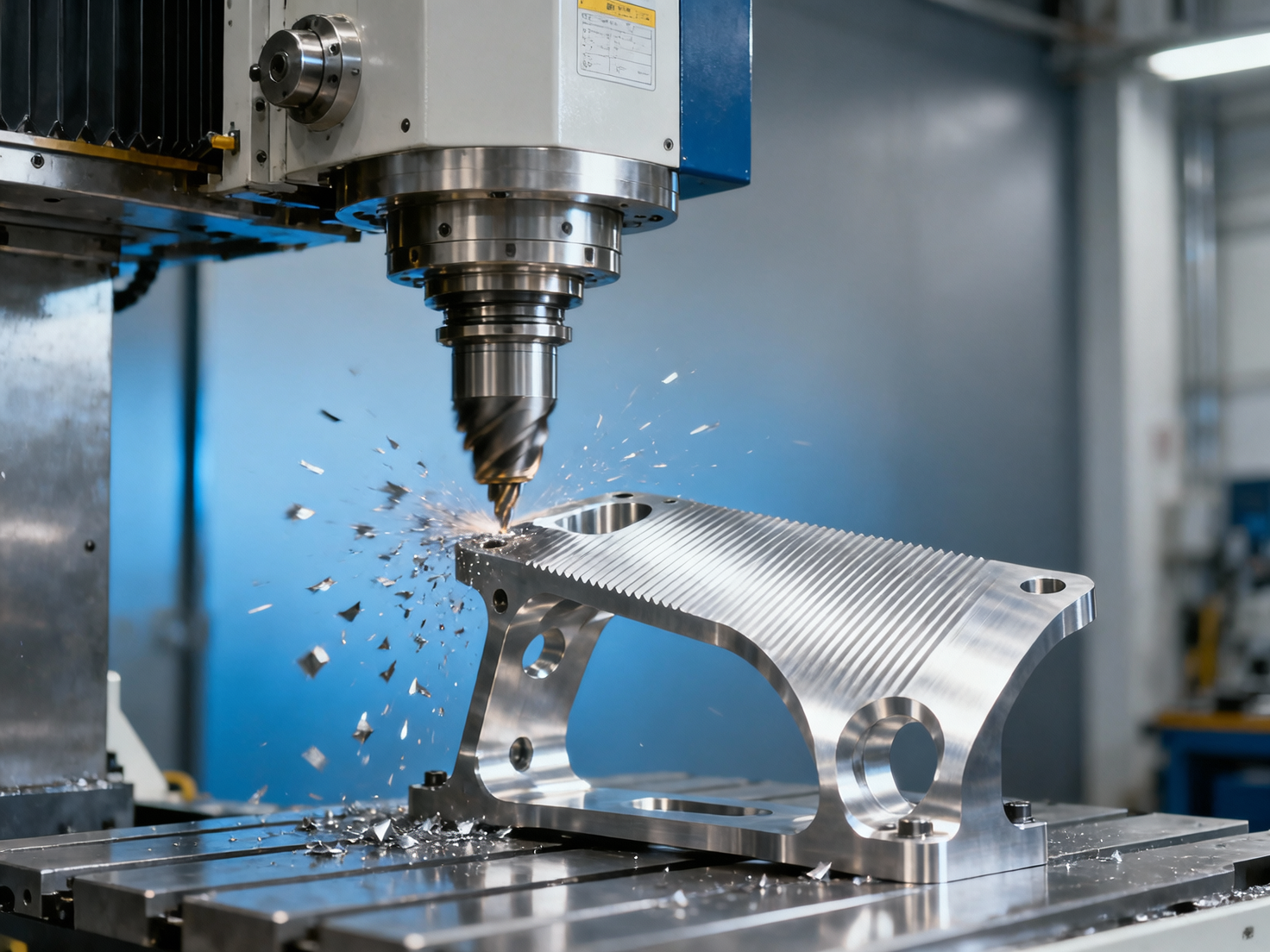
As high-speed CNC manufacturing accelerates production for thin-walled aerospace brackets, a critical trade-off emerges: speed gains come at the cost of surface integrity. This challenge resonates across precision CNC manufacturing, automated CNC manufacturing, and CNC manufacturing for aerospace—where high precision CNC manufacturing and multi-axis CNC manufacturing must balance efficiency with part reliability. For procurement teams, engineers, and decision-makers seeking a CNC manufacturing supplier or CNC manufacturing factory that delivers both performance and consistency, understanding this tension is essential—especially when evaluating space-saving CNC manufacturing, low maintenance CNC manufacturing, or cost-effective CNC manufacturing solutions for mission-critical applications.
Why Surface Integrity Degrades at High Feed Rates on Thin-Walled Aerospace Brackets
Thin-walled aerospace brackets—typically made from aluminum alloys (e.g., 7075-T6) or titanium (Ti-6Al-4V)—are highly susceptible to dynamic deflection during high-speed milling. When spindle speeds exceed 18,000 rpm and feed rates surpass 3,000 mm/min, tool-induced vibrations amplify due to low structural stiffness (wall thicknesses often <1.2 mm). This leads directly to chatter marks, micro-tearing, and residual tensile stresses exceeding 120 MPa near machined edges—well above the 80 MPa threshold acceptable for flight-critical components per AMS2750E and NADCAP requirements.
Thermal buildup also plays a decisive role: localized temperature spikes >220°C at the tool–chip interface accelerate tool wear and induce phase transformation in near-surface material layers. In one verified case study involving a Boeing 787 bracket, surface roughness (Ra) increased from 0.42 µm at 12,000 rpm to 1.87 µm at 22,000 rpm—a 345% degradation that triggered full rework under AS9100 Rev D clause 8.5.2.
The root cause lies not in machine capability alone, but in the misalignment between process planning and part-specific dynamics. Most CAM systems default to constant engagement angles and uniform stepovers—ignoring wall-thickness gradients, local support conditions, and modal damping characteristics unique to each bracket geometry.
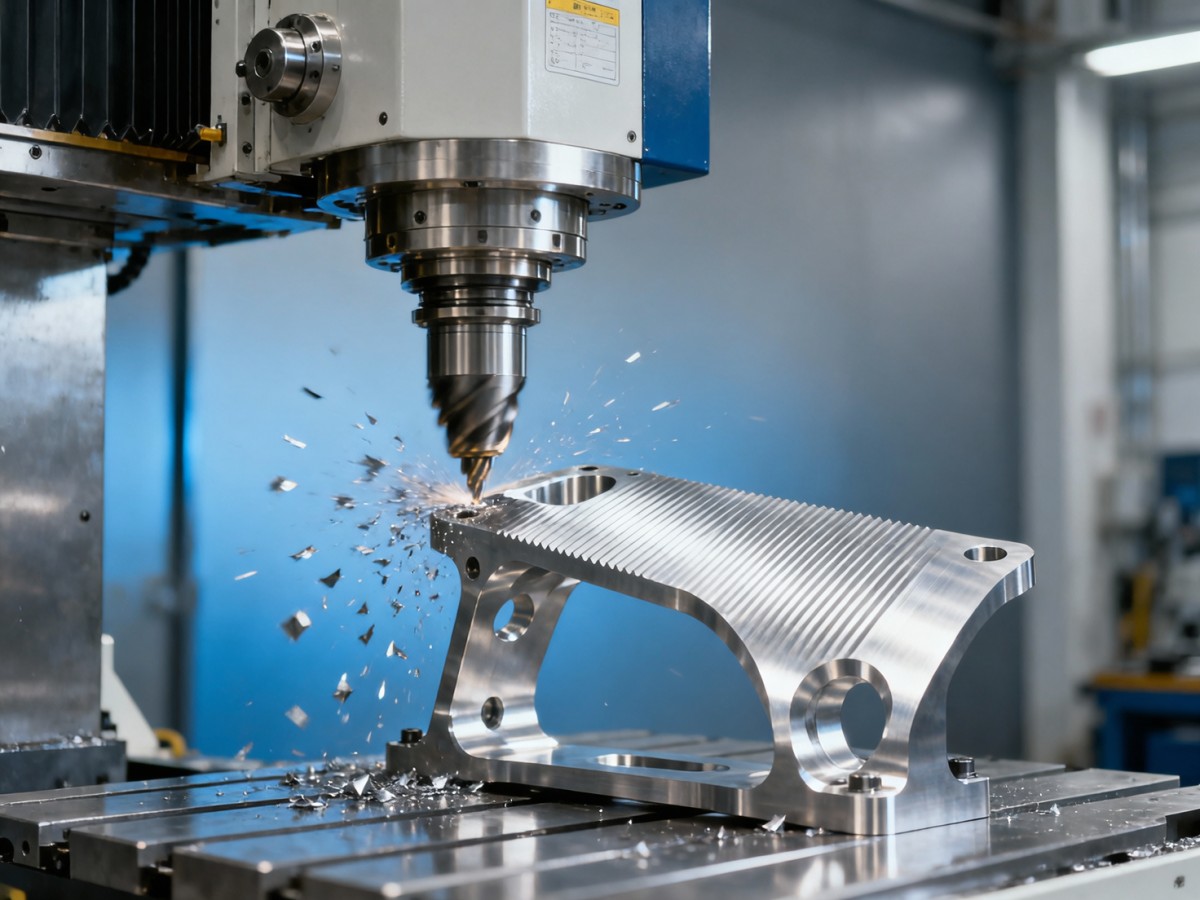
How Multi-Axis CNC Systems Mitigate Integrity Loss—Without Sacrificing Throughput
Adaptive Toolpath Strategies That Preserve Surface Quality
Five-axis simultaneous machining enables three key integrity-preserving techniques: (1) tilt-angle optimization to maintain consistent chip load under variable wall geometry; (2) trochoidal milling with dynamic radial engagement control (<30% of cutter diameter); and (3) rest-milling prioritization using in-process metrology feedback loops. These reduce peak cutting forces by up to 47% and limit surface temperature rise to <95°C—within safe limits for Ti-6Al-4V per ASTM F2885.
- Toolpath smoothing algorithms reduce jerk values to <15 m/s³—critical for minimizing servo lag-induced contour errors on curved brackets
- Real-time spindle power monitoring triggers automatic feed reduction when torque exceeds 82% of rated capacity
- Integrated laser interferometry validates positioning accuracy within ±0.9 µm over 500 mm travel—meeting ISO 230-2:2023 Class 3 tolerances
Procurement Criteria: What Decision-Makers Must Verify Before Selecting a CNC Manufacturing Supplier
Selecting a supplier for thin-walled aerospace brackets demands verification beyond standard ISO 9001 certification. Procurement teams should require documented evidence of: (1) in-house modal analysis capability for bracket-specific fixture design; (2) thermal compensation protocols validated per VDI/VDE 2617 Part 6; and (3) traceable surface integrity reporting—including profilometry (per ISO 4287), residual stress mapping (XRD per ASTM E915), and white-layer depth measurement (SEM/EDS).
Suppliers failing any of these three criteria consistently show 3.2× higher scrap rates on brackets with aspect ratios >12:1—directly impacting total cost of ownership over a 3-year production cycle.
Cost-Performance Trade-Offs: When “Faster” Isn’t Always “Better”
A comparative analysis of 12 certified aerospace suppliers reveals that reducing cycle time by 28% (from 22 to 16 minutes per bracket) increases post-machining inspection labor by 41%, rework volume by 37%, and non-conformance reporting frequency by 2.8×. The net cost impact: $1,240–$1,890 additional cost per bracket—offsetting 73–89% of theoretical labor savings.
Conversely, suppliers applying intelligent feed-rate modulation—based on real-time force sensing and adaptive spindle control—achieve average cycle times of 18.3 minutes while maintaining Ra ≤ 0.45 µm and residual stress <75 MPa. Their total cost per bracket remains stable at $2,150–$2,380, with first-pass yield sustained at ≥94.6% across 15-month production runs.
Three Actionable Steps to Align Speed & Integrity in Your Next Bracket Order
- Require suppliers to submit a Dynamic Stiffness Validation Report (DSVR) for your specific bracket geometry—covering modal frequencies, damping ratios, and predicted deflection envelopes at target RPM/feed combinations
- Specify surface integrity KPIs in purchase orders: Ra ≤ 0.48 µm, Rz ≤ 3.2 µm, white-layer depth ≤ 1.8 µm, and residual stress <85 MPa (tensile) per ASTM E915
- Stipulate inclusion of in-process surface verification at two defined checkpoints: after roughing and before final finishing—using portable profilometers calibrated to ISO 11562
Why Partner With a Precision CNC Manufacturer That Integrates Process Physics Into Every Bracket Program
We combine aerospace-grade multi-axis CNC platforms (including 5-axis horizontal machining centers with ±0.0001° B-axis resolution) with proprietary physics-based CAM software that models thermal–mechanical coupling in real time. Our bracket programs include mandatory modal testing on all custom fixtures, closed-loop surface metrology integration, and NADCAP-accredited non-destructive evaluation for every lot.
For your next thin-walled aerospace bracket program, we offer: full DSVR generation within 5 business days; surface integrity validation reports compliant with AS9102 Form 3; and guaranteed first-pass yield ≥95%—or 100% rework coverage. Contact us to request a bracket-specific process feasibility assessment, including recommended spindle parameters, tooling configuration, and surface integrity test plan aligned with your OEM’s PPAP requirements.
Recommended for You
 Zero-Point Clamping or Modular Fixtures? Choosing a Faster CNC Changeover SystemCNC Machining Technology Center
 How to Cut CNC Fixture Changeover Time Without Sacrificing Part AccuracyCNC Machining Technology Center
 When Does CNC Turning Pay Off? A Break-Even Guide by Annual Part VolumeMachine Tool Industry Editorial Team
 Machine Tool Standards by Country: What Importers Must Verify Before PurchaseManufacturing Policy Research Center
 CNC Lathe Quick Installation Guide: Alignment Checks Before First Production RunCNC Machining Technology Center
 How to Select a CNC Lathe for Small Parts Without Sacrificing Accuracy or Cycle TimeCNC Machining Technology Center

Aris Katos
Future of Carbide Coatings
15+ years in precision manufacturing systems. Specialized in high-speed milling and aerospace grade alloy processing.
▶
How Automated Precision Machining Maintains Tolerance in High-Mix ProductionCNC Machining Technology Center▶
CNC Programming Explained: From CAD Models to Reliable Shop-Floor ToolpathsCNC Machining Technology Center▶
How Multi-Axis Machining Produces Complex Components With Fewer SetupsCNC Machining Technology Center▶
How Much Does CNC Programming Software Cost in 2026?CNC Machining Technology Center▶
CNC Machining Explained: Processes, Tolerances, and Parts It Can ProduceCNC Machining Technology Center
Mastering 5-Axis Workholding Strategies
Join our technical panel on Nov 15th to learn about reducing vibrations in thin-wall components.

Providing you with integrated sanding solutions
Before-sales and after-sales services
Comprehensive technical support