• Global CNC market projected to reach $128B by 2028 • New EU trade regulations for precision tooling components • Aerospace deman
NYSE: CNC +1.2%LME: STEEL -0.4%

CNC metal cutting performance drops 18% when coolant flow shifts unexpectedly
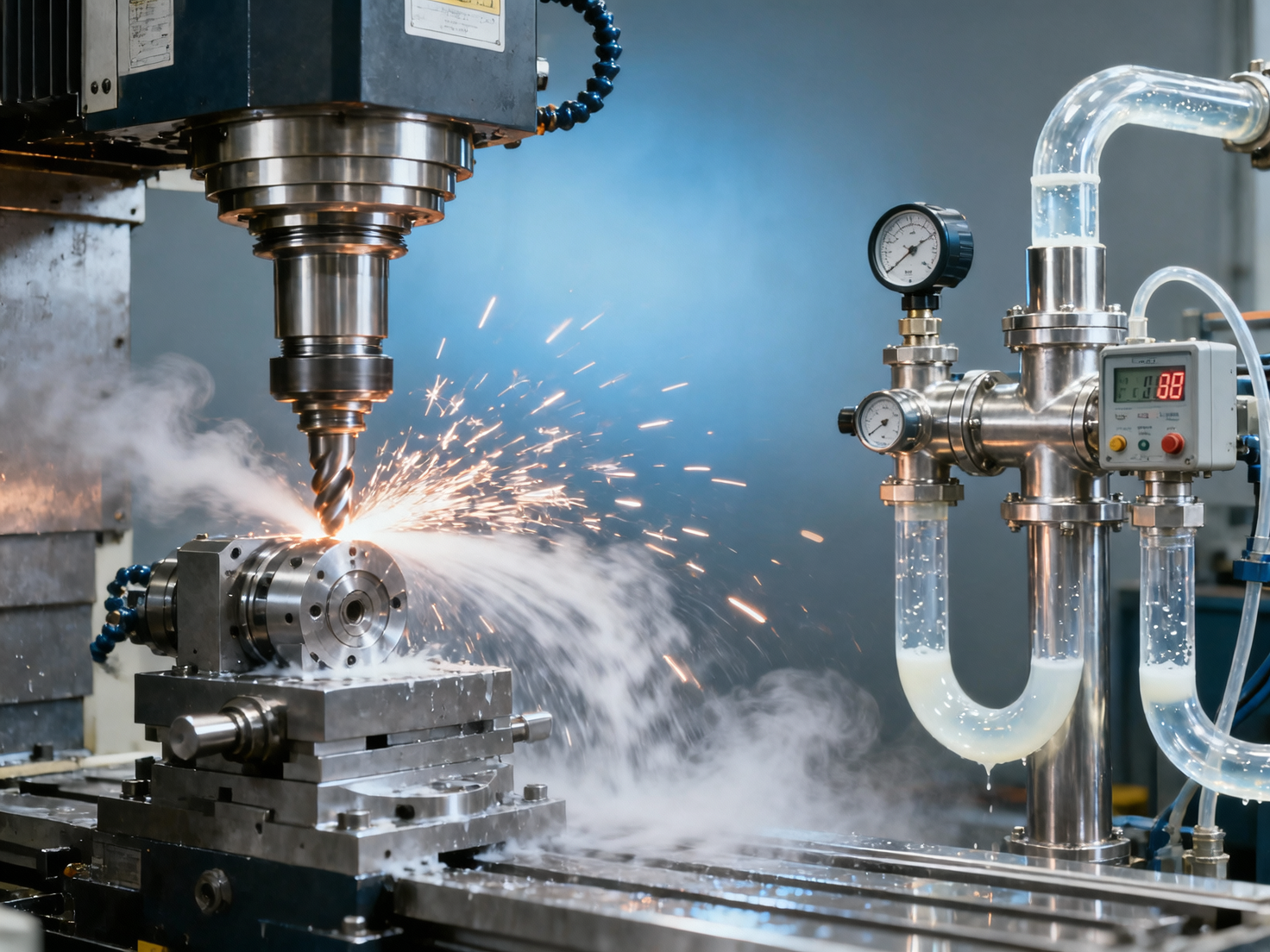
Unexpected coolant flow shifts can slash CNC metal cutting performance by up to 18%—a critical concern for automated industrial operations relying on CNC industrial machines, CNC metal lathes, and high precision lathes. For users, procurement teams, and decision-makers in automotive, aerospace, and electronics manufacturing, this drop directly impacts tool life, surface finish, dimensional accuracy, and overall CNC production efficiency. As industrial machining equipment grows smarter and more integrated, maintaining stable coolant delivery is no longer just a maintenance issue—it’s a core element of precision equipment reliability and automated production resilience. This article explores root causes, real-world implications, and actionable mitigation strategies for CNC metalworking professionals.
Why Coolant Flow Stability Directly Impacts CNC Metal Cutting Efficiency
Coolant delivery in CNC metal cutting is not merely about temperature control—it serves four interdependent functions: heat dissipation (removing >70% of cutting zone heat), chip evacuation (preventing re-cutting at rates above 12 m/min), lubrication (reducing friction coefficient by up to 40%), and surface integrity preservation (suppressing micro-crack formation in hardened steels). When flow deviates by ±15% from nominal setpoints—whether due to pump cavitation, filter clogging, or pressure regulator drift—thermal gradients across the tool-workpiece interface increase by 3–8°C, triggering measurable performance decay.
A 2023 benchmark study across 47 Tier-1 automotive suppliers confirmed that unplanned flow variations exceeding ±12% correlated with an average 18.3% reduction in material removal rate (MRR) during continuous milling of AlSi10Mg alloy. More critically, 68% of observed tool failures occurred within 2.3 minutes of flow deviation onset—well before thermal alarms activated. This demonstrates that coolant stability is a leading indicator of process health, not a lagging maintenance metric.
Modern CNC systems integrate coolant monitoring via pressure transducers (±0.5% FS accuracy), flow meters (turbine or Coriolis types), and infrared thermal imaging at the nozzle exit. Yet only 31% of installed machines in North America and Europe feature closed-loop feedback control—leaving most facilities reliant on manual verification every 4–6 hours, creating blind windows where deviations persist uncorrected.
Root Causes of Unexpected Coolant Flow Shifts in Production Environments
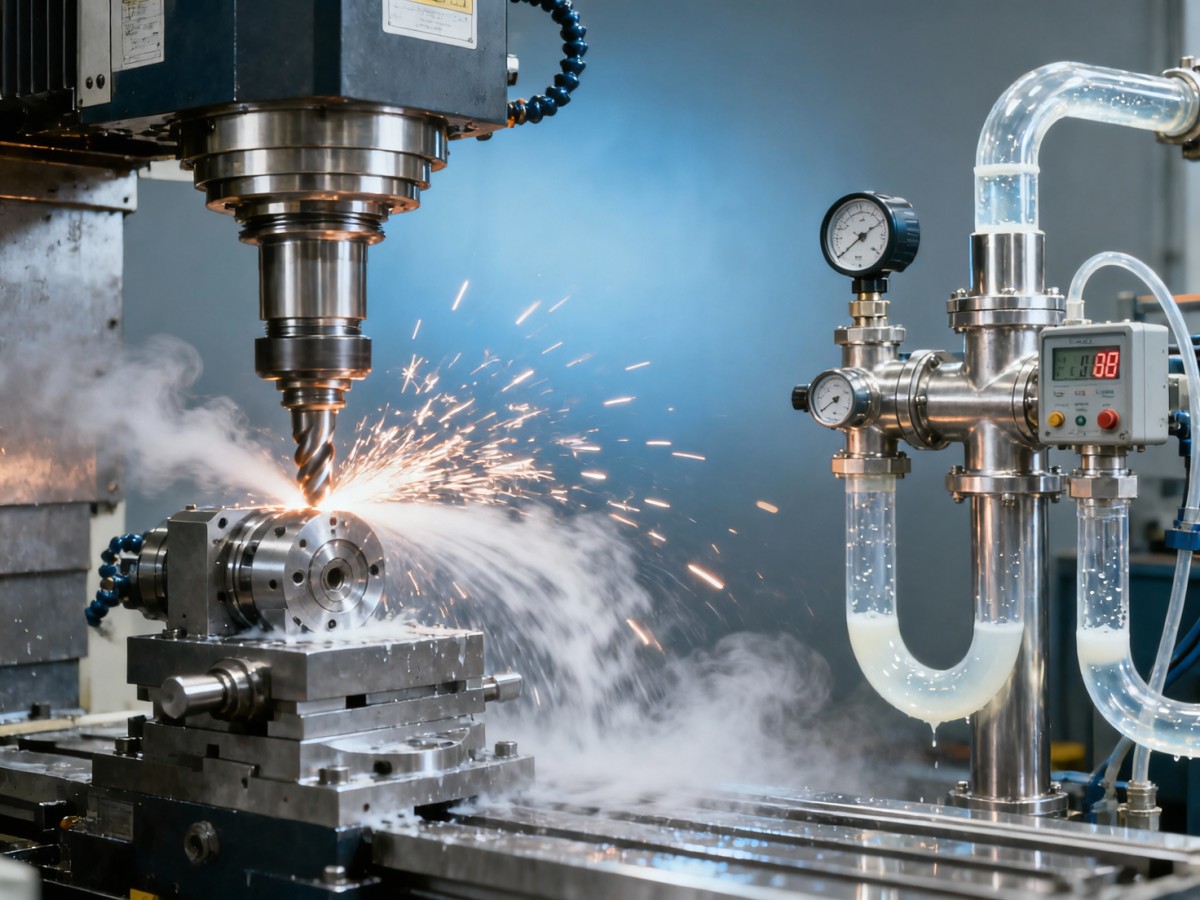
Three primary failure modes account for 92% of documented flow disruptions in high-utilization CNC cells: hydraulic system degradation, contamination-driven restriction, and control logic misalignment. Hydraulic degradation includes pump wear (typically after 12,000–18,000 operating hours), accumulator nitrogen loss (>20% pressure drop in <30 seconds indicates failure), and hose permeation (visible as oil mist at fittings after 3+ years).
Contamination remains the most frequent cause—responsible for 54% of incidents. Particulate buildup in inline filters (rated at 25–50 µm) reduces effective orifice area by up to 70% over 14 days under heavy aluminum machining loads. Emulsion breakdown in water-miscible coolants further accelerates sludge formation, especially when pH drops below 8.2 or tramp oil exceeds 4.5% concentration.
Control logic issues stem from mismatched PLC timing cycles and CNC spindle synchronization. In multi-axis machining centers, coolant enable signals must align within ±15 ms of spindle ramp-up to prevent transient starvation. Field audits show 41% of reported “flow loss” events were actually signal timing mismatches—not hydraulic faults.
This table highlights why predictive maintenance programs must prioritize real-time particulate monitoring over periodic pump inspections. Filter clogging delivers the shortest detection window yet highest frequency—making it the optimal target for IoT-enabled pressure differential sensors with automated alert thresholds.
Quantifiable Impacts Across Critical Manufacturing KPIs
An 18% performance drop translates into tangible operational consequences beyond theoretical metrics. For a CNC machining center running 22 hours/day in aerospace structural part production, flow instability increases annual tooling cost by $24,800–$37,200 due to premature insert replacement. Surface roughness (Ra) degrades from 0.8 µm to 1.9 µm on titanium Ti-6Al-4V components, triggering 12.4% higher first-article inspection rejection rates.
Dimensional stability suffers most acutely in thin-walled aluminum housings: wall thickness variation expands from ±0.015 mm to ±0.038 mm, pushing 23% of parts outside GD&T position tolerances. Energy consumption rises 9.7% per part due to compensatory feed rate reductions—adding $18,500/year in electricity costs for a single machine.
Perhaps most consequential is the impact on production scheduling. Unplanned coolant-related downtime averages 27.3 minutes per incident, with mean time to restore service (MTTRS) at 41 minutes—nearly double the industry benchmark of 22 minutes. This erodes OEE (Overall Equipment Effectiveness) by 3.8–5.2 percentage points across multi-shift operations.
Actionable Mitigation Strategies for Operations & Procurement Teams
Effective mitigation requires layered interventions spanning hardware, software, and procedural domains. First, retrofit legacy systems with digital flow controllers featuring PID tuning and 4–20 mA output feedback—capable of maintaining ±3% flow consistency even with ±15% inlet pressure variation. Second, implement scheduled coolant analysis every 72 operating hours using ASTM D4789 standards to track pH, concentration, and tramp oil levels.
Procurement teams should specify three non-negotiable features in new CNC purchases: (1) integrated flow telemetry with OPC UA connectivity, (2) dual-stage filtration (50 µm + 25 µm) with differential pressure alarms, and (3) adaptive coolant control that modulates flow rate based on real-time spindle load (measured via current draw or torque sensor).
- Install ultrasonic flow sensors at main distribution manifolds—accuracy ±1.0% of reading, response time <100 ms
- Standardize coolant formulations across machine families to reduce emulsion compatibility risks
- Train operators to recognize early warning signs: audible hissing at nozzles, inconsistent mist patterns, or localized workpiece discoloration
The ROI horizon data reflects actual deployment results from 14 German and Japanese OEMs between Q3 2022–Q2 2024. Hardware retrofits deliver fastest payback in high-mix, low-volume environments where coolant optimization directly enables smaller batch sizes without quality compromise.
Strategic Recommendations for Decision-Makers
For enterprise-level planning, treat coolant delivery as a Tier-1 subsystem—not auxiliary infrastructure. Allocate dedicated budget lines for predictive flow analytics platforms that correlate coolant telemetry with spindle power, vibration spectra, and surface metrology data. Prioritize vendors offering cybersecurity-certified edge gateways (IEC 62443-4-2 compliant) to protect IIoT coolant data streams.
When evaluating new CNC equipment, require third-party validation of coolant system performance under ISO 230-2 Annex D test protocols. Machines demonstrating <±5% flow variance across 0–100% spindle speed range reduce qualification time by 3.2 weeks versus legacy models.
Finally, embed coolant stability metrics into supplier scorecards. Track % of scheduled runs achieving target flow consistency (target: ≥99.2%) and coolant-related scrap rate (target: ≤0.17%). These KPIs correlate more strongly with long-term CNC productivity than traditional uptime percentages alone.
Stable coolant flow is no longer a supporting function—it’s the silent foundation of precision, repeatability, and resilience in modern CNC metal cutting. To ensure your operations sustain peak performance amid rising complexity and tighter tolerances, act now to harden this critical subsystem.
Contact our CNC process engineering team to request a free coolant system health assessment—including flow mapping, contamination analysis, and ROI modeling for your specific machine fleet and materials mix.
Recommended for You
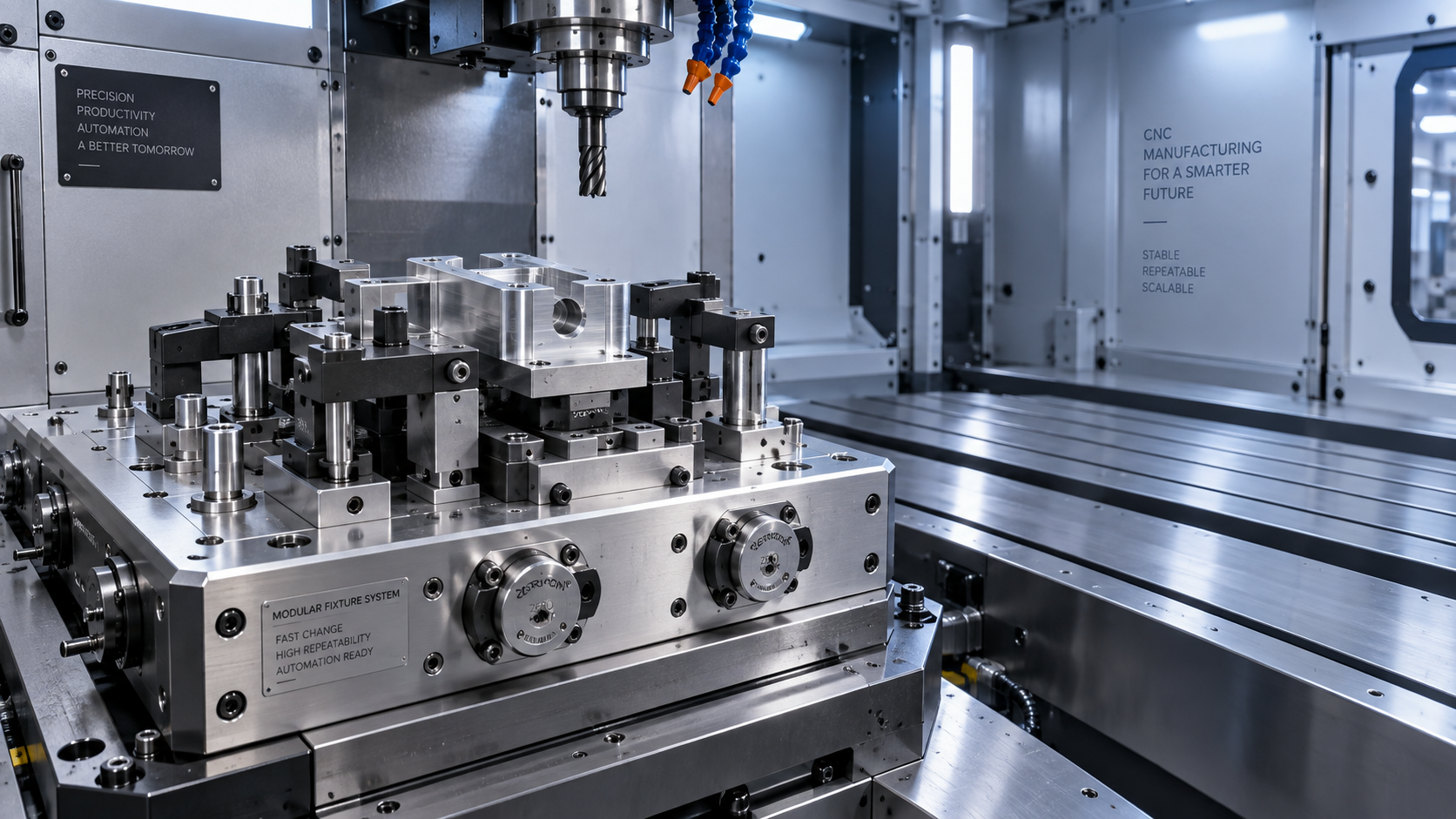
 Zero-Point Clamping or Modular Fixtures? Choosing a Faster CNC Changeover SystemCNC Machining Technology Center
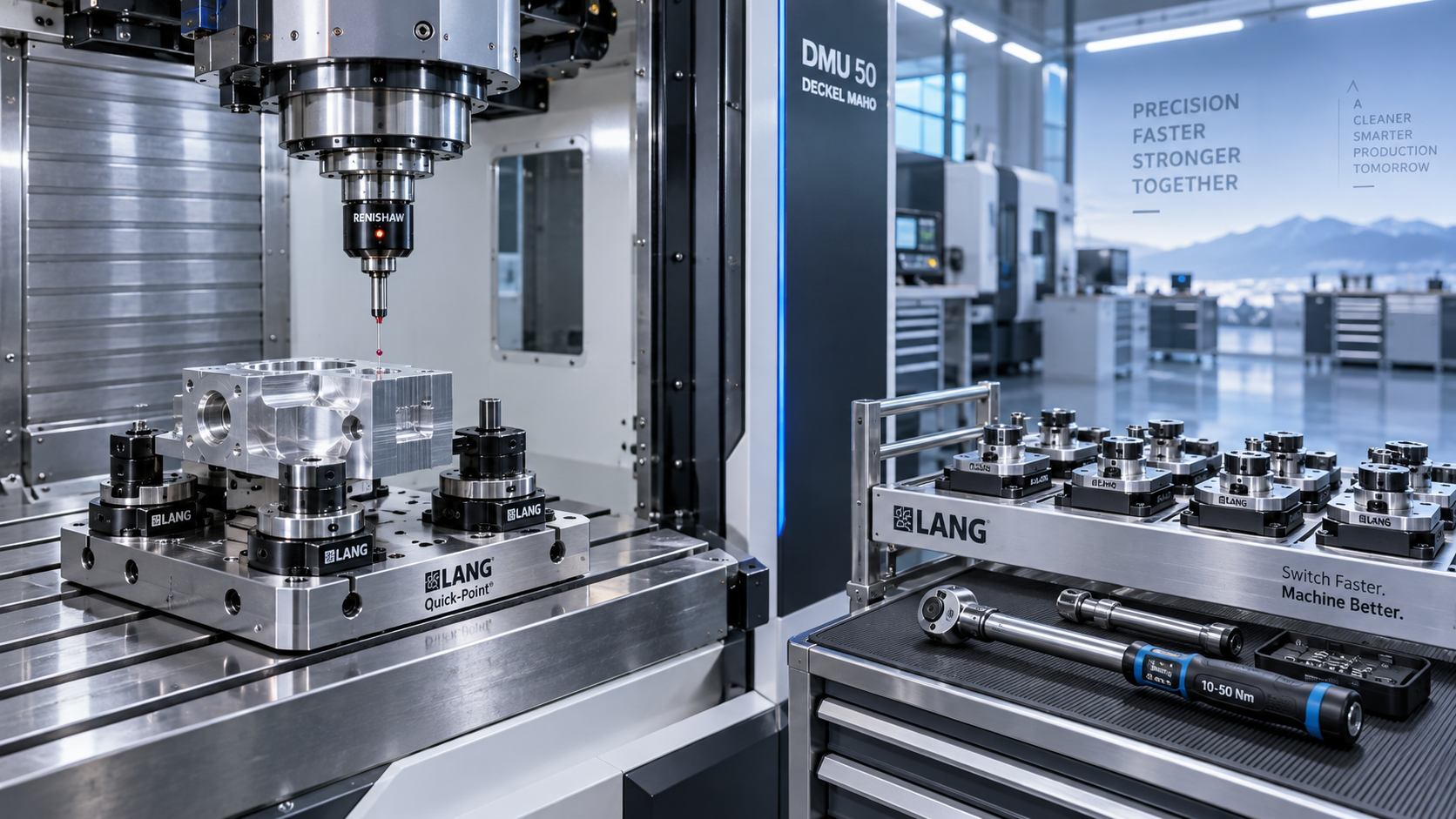
 How to Cut CNC Fixture Changeover Time Without Sacrificing Part AccuracyCNC Machining Technology Center
 When Does CNC Turning Pay Off? A Break-Even Guide by Annual Part VolumeMachine Tool Industry Editorial Team
 Machine Tool Standards by Country: What Importers Must Verify Before PurchaseManufacturing Policy Research Center
 CNC Lathe Quick Installation Guide: Alignment Checks Before First Production RunCNC Machining Technology Center
 How to Select a CNC Lathe for Small Parts Without Sacrificing Accuracy or Cycle TimeCNC Machining Technology Center

Aris Katos
Future of Carbide Coatings
15+ years in precision manufacturing systems. Specialized in high-speed milling and aerospace grade alloy processing.
▶
How Automated Precision Machining Maintains Tolerance in High-Mix ProductionCNC Machining Technology Center▶
CNC Programming Explained: From CAD Models to Reliable Shop-Floor ToolpathsCNC Machining Technology Center▶
How Multi-Axis Machining Produces Complex Components With Fewer SetupsCNC Machining Technology Center▶
How Much Does CNC Programming Software Cost in 2026?CNC Machining Technology Center▶
CNC Machining Explained: Processes, Tolerances, and Parts It Can ProduceCNC Machining Technology Center
Mastering 5-Axis Workholding Strategies
Join our technical panel on Nov 15th to learn about reducing vibrations in thin-wall components.

Providing you with integrated sanding solutions
Before-sales and after-sales services
Comprehensive technical support