• Global CNC market projected to reach $128B by 2028 • New EU trade regulations for precision tooling components • Aerospace deman
NYSE: CNC +1.2%LME: STEEL -0.4%

Multi-axis Machining System for Aerospace: Key Axes, Tolerances, and Part Types Explained
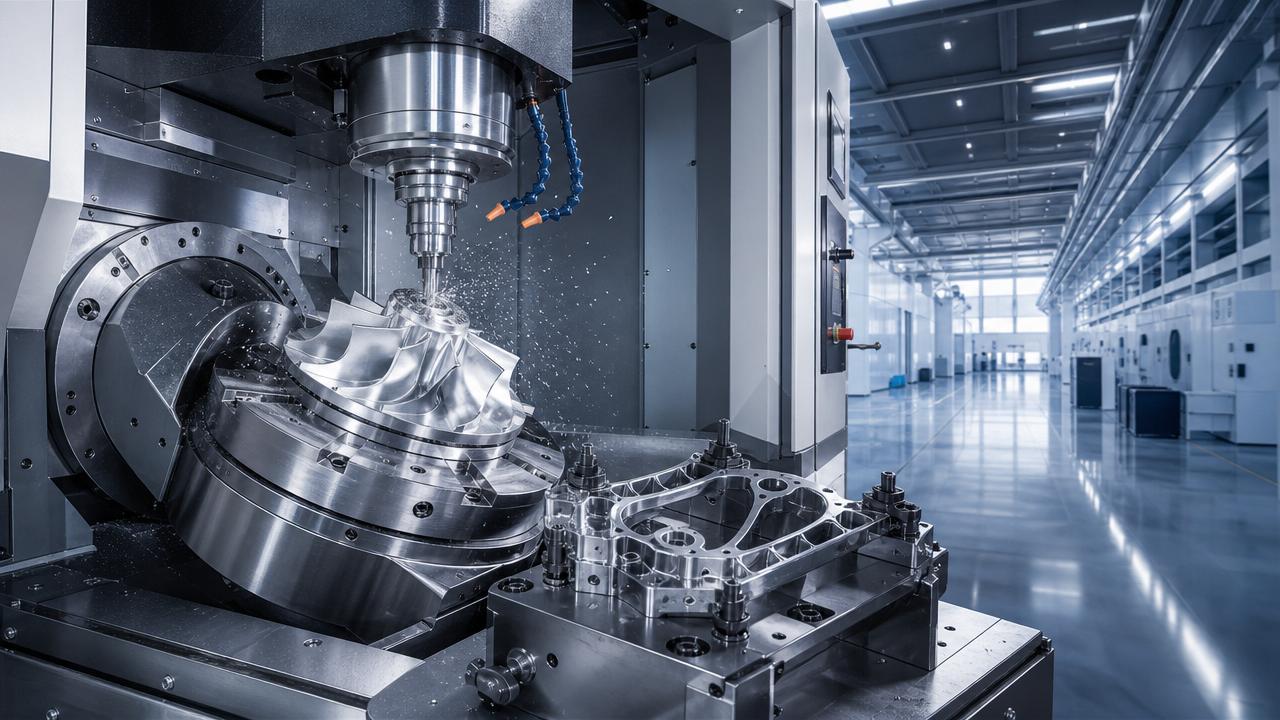
A Multi-axis Machining System for Aerospace sits at the center of modern precision manufacturing. Aircraft and space components often combine thin walls, deep cavities, hard alloys, and exacting geometric control.
That combination makes conventional machining too limited for many critical parts. Multi-axis platforms improve access, reduce setups, and support the repeatable accuracy needed across airframes, engines, satellites, and flight control systems.
This matters beyond aerospace alone. The broader CNC machine tool sector is moving toward tighter tolerances, digital integration, and automated production, and aerospace remains one of the clearest tests of system capability.
Why multi-axis capability matters in aerospace
Aerospace parts rarely present simple flat surfaces and straight holes. They include compound curves, intersecting features, and difficult-to-reach faces that must be machined without losing datum consistency.
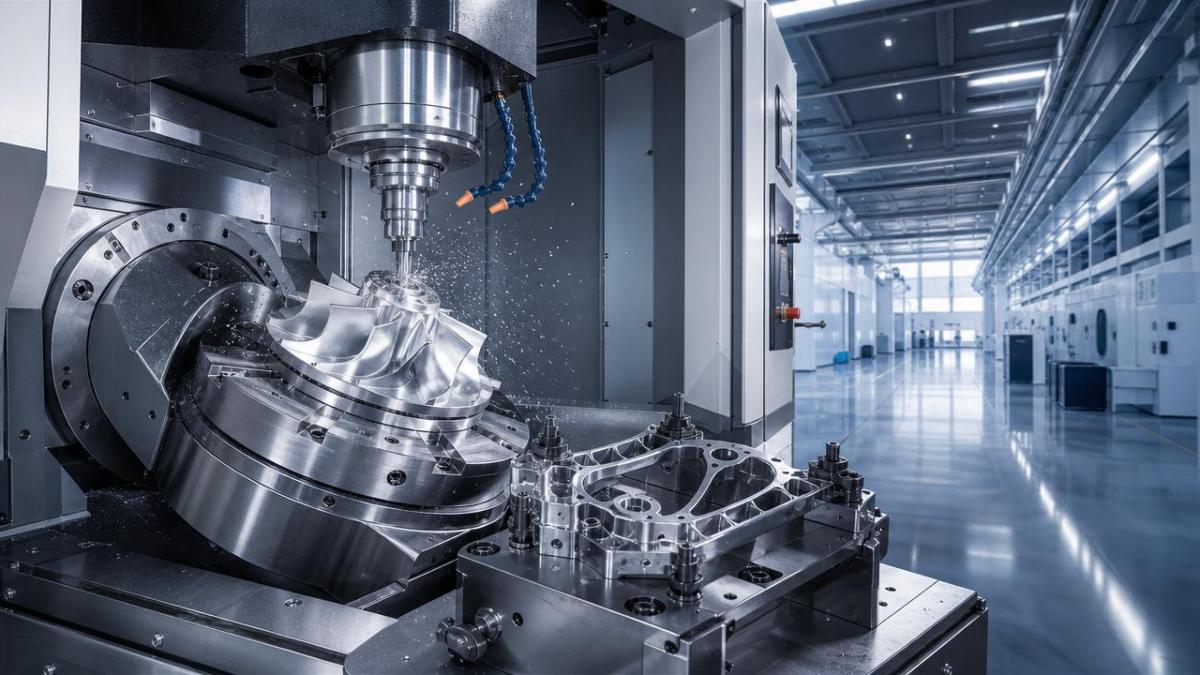
That is where a Multi-axis Machining System for Aerospace becomes valuable. By moving the tool or part along several coordinated axes, the machine can approach features from optimal angles in fewer clamping cycles.
Fewer setups usually mean fewer accumulated errors. In actual production, this supports better positional accuracy, smoother surface transitions, and more stable throughput for complex structural and rotating components.
It also aligns with wider manufacturing trends. Smart machine tools, automated fixture strategies, and process monitoring are now common priorities in global equipment markets, especially in high-value export industries.
Understanding the axes without oversimplifying them
At a basic level, X, Y, and Z are the linear axes. They control left-right, front-back, and up-down movement and remain the foundation of any machining center.
Additional rotary axes are commonly labeled A, B, and C. These rotate around the linear axes and allow angled cutting, contour continuity, and better access to hidden or wrapped surfaces.
What different configurations usually mean
Three-axis machines are still useful in aerospace supply chains. They handle simpler brackets, plates, housings, and pre-machining operations efficiently.
Four-axis systems add rotational movement, often helpful for cylindrical features, indexed side machining, and parts that need multiple angular operations.
Five-axis systems are the most discussed because they support simultaneous motion. That allows complex surfacing, shorter tools, better cutting engagement, and fewer refixturing steps.
Some advanced cells go beyond five axes through turn-mill combinations, pallet automation, or articulated motion systems. Even then, the goal remains practical: stable accuracy on difficult geometries.
Tolerance expectations are about more than one number
When discussing a Multi-axis Machining System for Aerospace, tolerance is often reduced to microns. In practice, aerospace quality depends on a set of linked controls rather than one dimensional target.
Linear tolerance matters, but so do profile accuracy, true position, circularity, concentricity, and surface finish. Thermal stability and repeatability over a production run can be just as important.
Common tolerance concerns in aerospace work
- Datum transfer between operations, especially on long structural parts.
- Blade or airfoil surface profile consistency across multiple sections.
- Hole location accuracy for fastener patterns and assembly interfaces.
- Part distortion caused by residual stress or heat during cutting.
- Surface integrity on titanium, Inconel, and other hard-to-machine alloys.
Usually, achievable tolerance depends on the entire process chain. Machine structure, spindle behavior, control system, fixturing, tool path strategy, and inspection discipline all influence the final result.
This is also why buyers compare more than catalog claims. A machine that looks similar on paper may perform very differently under long-cycle, heat-sensitive, thin-wall aerospace conditions.
Part types that typically require multi-axis machining
Not every aerospace component needs the same machine architecture. The right Multi-axis Machining System for Aerospace depends heavily on part geometry, material, batch size, and downstream assembly requirements.
Structural components
These include ribs, frames, bulkheads, brackets, and monolithic pockets. They often start as large billets and end as lightweight parts with thin walls and demanding positional relationships.
Engine and flow-path parts
Blisks, impellers, blades, casings, and diffuser elements usually need simultaneous multi-axis movement. Surface continuity and tool access are critical here, not just basic material removal.
Landing gear and high-strength rotating parts
These parts often combine difficult materials with strict dimensional control. They may involve turn-mill processes, angular features, and inspection-intensive machining sequences.
Space and electronics support hardware
Satellite brackets, heat-management housings, sensor mounts, and instrument interfaces may be smaller, but they still require stable geometry and reliable repeatability.
What the industry is watching now
Current attention is shifting from machine count to process capability. Aerospace programs increasingly expect digital traceability, spindle monitoring, tool life data, and better integration with automated production lines.
Machine builders in China, Germany, Japan, and South Korea are all pushing higher precision and smarter controls. That makes comparison easier in one sense, but more demanding in another.
The question is no longer only whether a machine has five axes. A more useful question is whether the whole system can hold required geometry across real materials, real cycle times, and repeat orders.
Fixtures, cutting tools, probing, and software matter just as much. In many cases, the strongest results come from a coordinated cell rather than a standalone machine specification.
How to evaluate a Multi-axis Machining System for Aerospace
A useful evaluation starts with the part family, not the brochure. Similar-looking systems can behave differently depending on work envelope, swivel limits, spindle torque, and thermal compensation strategy.
- Match axis configuration to actual feature access, not assumed complexity.
- Review tolerance history on comparable aerospace materials and geometries.
- Check whether probing, compensation, and inspection loops are built into the process.
- Consider rigidity and vibration behavior for long tools or thin-wall sections.
- Look at programming support, post-processing, and operator skill requirements.
- Assess automation options if repeat production or mixed batches are expected.
It also helps to separate must-have precision from nice-to-have motion. More axes do not automatically create better outcomes if the process lacks control, experience, or a stable production environment.
A practical way to move forward
The best way to understand a Multi-axis Machining System for Aerospace is to connect machine architecture with actual part risk. Start with geometry, tolerance stack-up, material behavior, and setup reduction goals.
Then compare systems through sample parts, process data, and inspection evidence rather than headline specifications alone. That approach gives a clearer basis for research, sourcing, and long-term manufacturing planning.
As aerospace programs demand more precision and digital consistency, the most reliable decisions come from evaluating the full machining ecosystem, including tooling, fixturing, automation, and quality verification.
Recommended for You
 How Automated Precision Machining Maintains Tolerance in High-Mix ProductionCNC Machining Technology Center
 How to Evaluate a Machine Tool Factory Before Sourcing CNC EquipmentGlobal Machine Tool Trade Research Center
 CNC Programming Explained: From CAD Models to Reliable Shop-Floor ToolpathsCNC Machining Technology Center
 How Multi-Axis Machining Produces Complex Components With Fewer SetupsCNC Machining Technology Center
 What Production Volume Justifies a CNC Turning Investment?Manufacturing Market Research Center
 How Much Does CNC Programming Software Cost in 2026?CNC Machining Technology Center




Aris Katos
Future of Carbide Coatings
15+ years in precision manufacturing systems. Specialized in high-speed milling and aerospace grade alloy processing.
▶
How Automated Precision Machining Maintains Tolerance in High-Mix ProductionCNC Machining Technology Center▶
CNC Programming Explained: From CAD Models to Reliable Shop-Floor ToolpathsCNC Machining Technology Center▶
How Multi-Axis Machining Produces Complex Components With Fewer SetupsCNC Machining Technology Center▶
How Much Does CNC Programming Software Cost in 2026?CNC Machining Technology Center▶
CNC Machining Explained: Processes, Tolerances, and Parts It Can ProduceCNC Machining Technology Center
Mastering 5-Axis Workholding Strategies
Join our technical panel on Nov 15th to learn about reducing vibrations in thin-wall components.

Providing you with integrated sanding solutions
Before-sales and after-sales services
Comprehensive technical support