• Global CNC market projected to reach $128B by 2028 • New EU trade regulations for precision tooling components • Aerospace deman
NYSE: CNC +1.2%LME: STEEL -0.4%

Why 5-axis machining isn’t always the precision upgrade shops expect
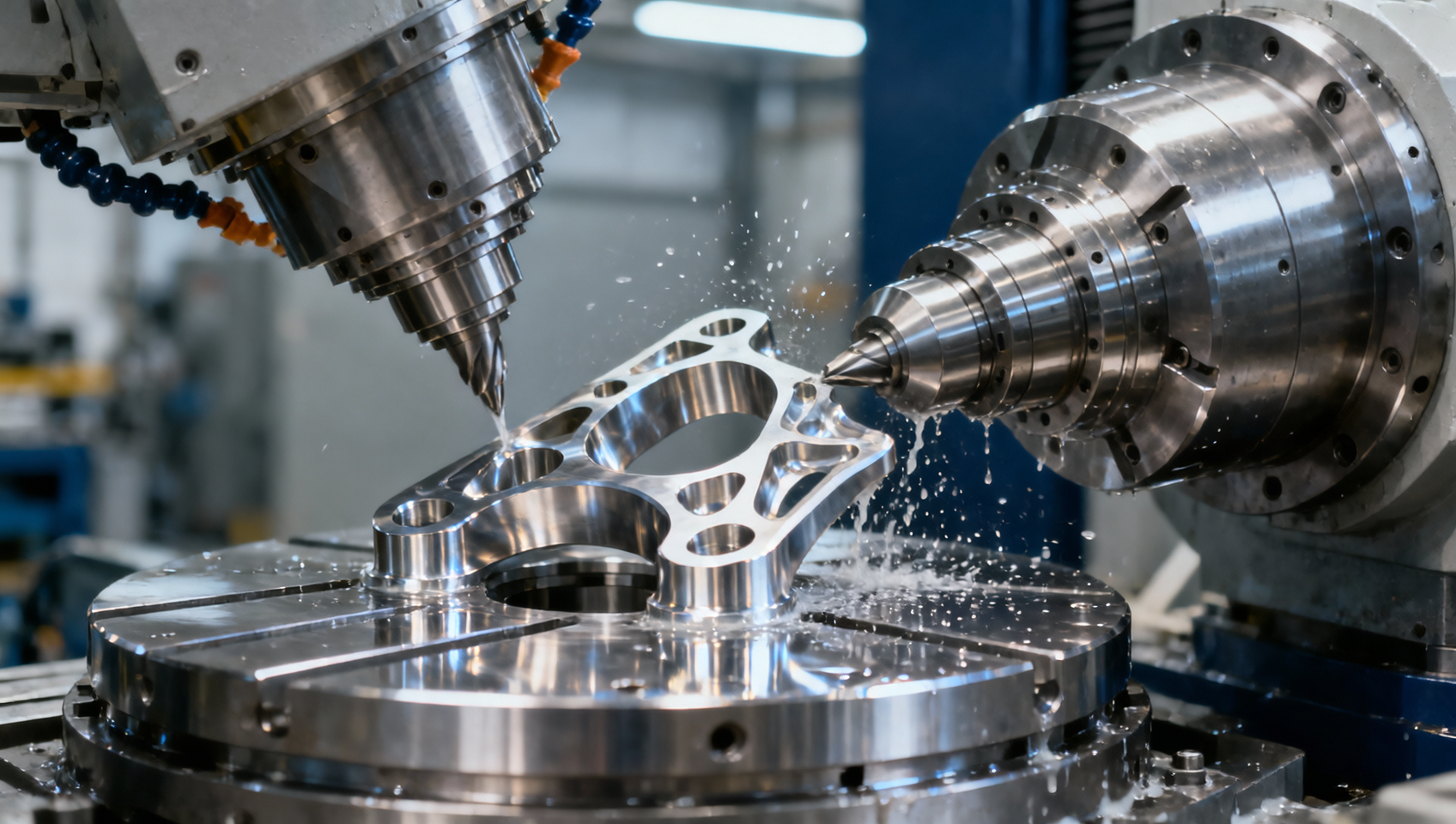
While 5-axis machining is widely hailed as the pinnacle of precision industrial and automated machining, many shops discover it doesn’t automatically deliver the Manufacturing Technology gains they anticipate. From CNC manufacturing bottlenecks to unexpected programming complexity and fixture limitations, this advanced Machining Process often demands more than just upgraded hardware—it requires deeper integration with Smart Manufacturing workflows, skilled operator input, and realistic expectations around Metal Processing ROI. For users, procurement teams, and decision-makers alike, understanding these nuances is critical before investing in next-gen CNC technology.
The Precision Myth: Why Axis Count ≠ Automatic Accuracy Gain
Five-axis capability is frequently marketed as a direct path to tighter tolerances—yet real-world metal processing reveals a different truth. Positional accuracy on a 5-axis machine depends not only on axis interpolation but also on thermal stability, spindle rigidity, servo tuning, and geometric error compensation. Studies by the German Machine Tool Builders’ Association (VDW) show that uncalibrated 5-axis systems can exhibit up to ±0.035 mm volumetric error across a 300 mm work envelope—even when linear axes meet ISO 230-2 standards.
This discrepancy arises because 5-axis motion introduces compounded kinematic errors: tilt-table angular deviation, rotary axis centerline misalignment, and tool-center-point (TCP) drift under load. Unlike 3-axis machines where error vectors are largely orthogonal, 5-axis error propagation is non-linear and highly dependent on part geometry and tool orientation. A titanium aerospace bracket machined at A30°/C90° may hold ±0.012 mm, while the same program at A85°/C180° could drift to ±0.028 mm without dynamic compensation.
Moreover, environmental control matters more at higher axis counts. Ambient temperature fluctuations exceeding ±1.5°C over an 8-hour shift increase thermal drift risk by 40% in multi-axis gantry structures—especially those with long rotary axis overhangs. Shops assuming “more axes = more precision” often overlook foundational requirements: stable foundations (vibration ≤ 2.5 µm/s RMS), climate-controlled zones (±0.5°C tolerance), and regular laser tracker verification every 3–6 months.
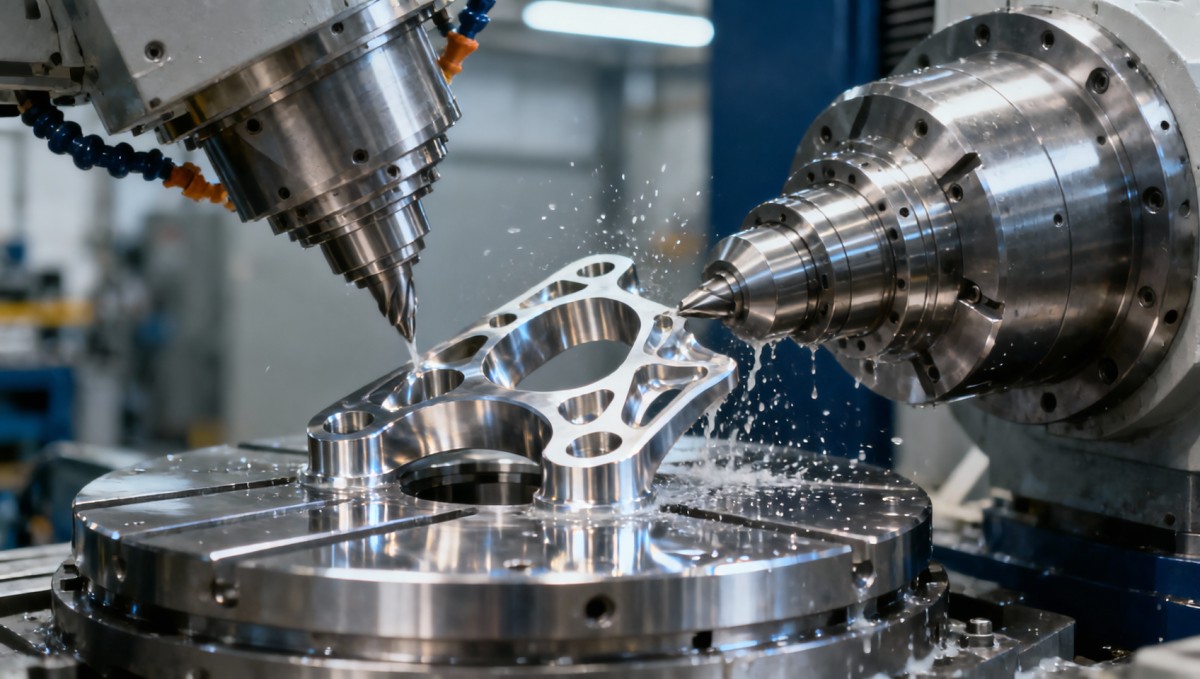
Programming & Workflow Bottlenecks: The Hidden Labor Cost
Adopting 5-axis machining typically increases CAM programming time by 2.5–4× compared to 3-axis equivalents for complex parts. This isn’t just about learning new software interfaces—it’s about rethinking process logic. Collision-free toolpath generation requires simultaneous evaluation of: tool length, holder clearance, table rotation limits, spindle tilt range, and fixture interference across all 5 degrees of freedom.
A recent benchmark across 12 Tier-1 automotive suppliers found average NC program validation cycles rose from 1.8 (3-axis) to 4.3 (5-axis) per part family. Each cycle includes simulation, dry-run verification, and first-article inspection—adding 7–15 business days to launch timelines. Worse, 68% of surveyed programmers reported spending ≥35% of their weekly hours resolving rotary-axis singularities or optimizing feed rates for varying tool engagement angles.
Without integrated digital twin capabilities, shops face iterative physical trial-and-error. True productivity gains require coupling post-processors with real-time machine kinematics models—and training operators to interpret G-code-level axis synchronization logic, not just run preloaded templates.
The table above underscores a key insight: raw axis count alone does not guarantee superior precision. High-end 5-axis platforms achieve sub-arcsecond repeatability only when paired with rigorous calibration protocols, high-resolution encoders (≥29-bit absolute), and real-time thermal compensation algorithms. Entry-level configurations often trade cost for metrological rigor—making them suitable for form-machining but inadequate for true functional-accuracy applications like impeller blades or orthopedic implant surfaces.
Fixture & Workholding Realities: When Geometry Limits Capability
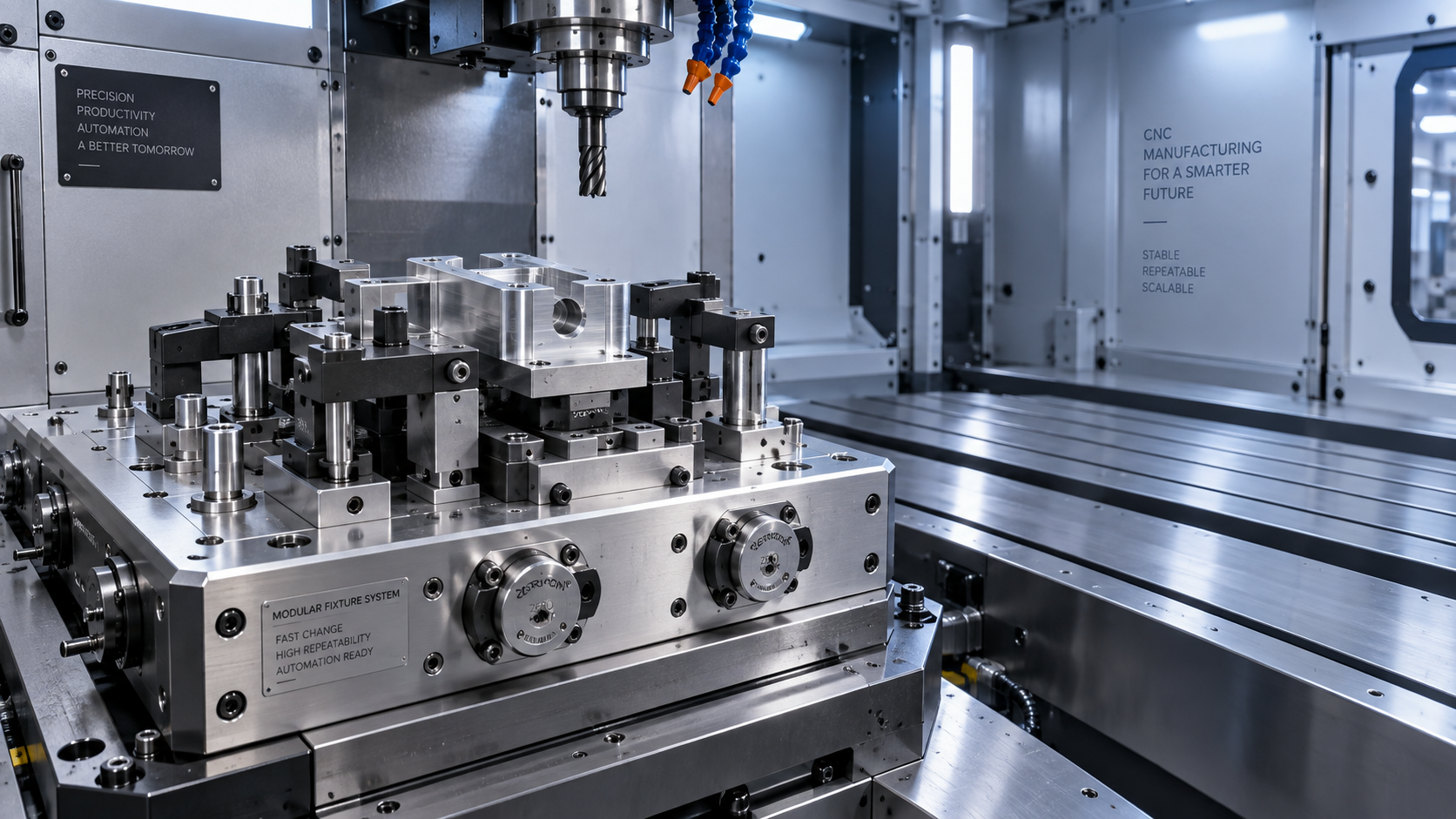
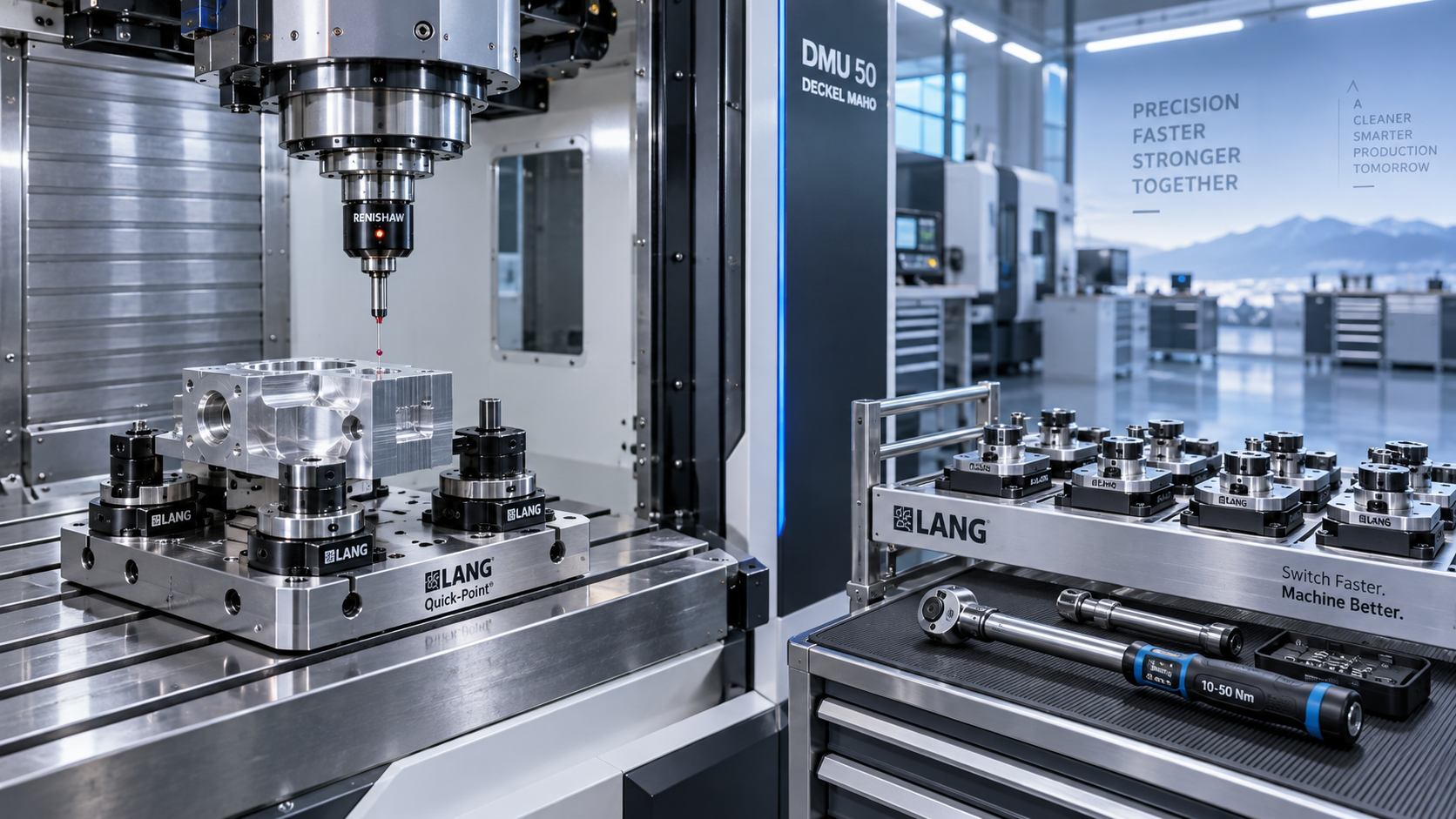
Even the most advanced 5-axis machine cannot overcome fundamental workholding constraints. Standard vise jaws limit part height to ≤120 mm on trunnion tables; modular pallet systems reduce usable Z-travel by 85–110 mm due to base plate thickness and clamping hardware. For parts requiring full 5-axis access—such as turbine housings or satellite antenna reflectors—custom fixturing becomes mandatory, adding $8,000–$25,000 per dedicated setup and 4–6 weeks lead time.
Further, dynamic rigidity drops significantly during heavy side-cutting operations when the rotary table bears eccentric loads. Finite element analysis shows torsional deflection increases by 3.2× at A45° versus A0° under identical 1,200 N cutting forces. This translates directly to surface finish degradation (Ra worsening from 0.4 µm to 1.1 µm) and accelerated tool wear—especially with long-reach end mills.
Shops must evaluate workpiece mass distribution relative to rotary axis centers. Parts exceeding 65% of rated table capacity at extreme angular positions trigger servo saturation alarms or forced feed reduction—effectively halving metal removal rates. Pre-machining weight balancing or using low-inertia carbon-fiber fixtures can mitigate this, but adds engineering overhead.
ROI Expectations vs. Operational Reality
Decision-makers often project ROI based on theoretical cycle time reductions. In practice, 5-axis adoption delivers measurable benefits only after crossing three thresholds: (1) ≥120 annual complex-part SKUs, (2) ≥30% of machining time spent on manual re-fixturing, and (3) existing 3-axis utilization >82%. Below these, total cost of ownership rises due to added maintenance (2–4 extra service visits/year), specialized tooling (high-angle probe kits, extended-reach holders), and certification requirements (AS9100 Rev D clause 8.5.1.2 mandates documented 5-axis process validation).
A 2023 benchmark of 47 North American job shops showed median payback periods of 34 months—not the 14–18 months commonly cited in sales literature. Key drivers included: delayed throughput ramp-up (average 5.7 months), unplanned downtime averaging 11.3% higher than 3-axis counterparts in Year 1, and 22% higher consumables spend due to aggressive tool life management needs.
These metrics define operational readiness—not just technical specification. Without structured verification, shops risk producing parts within nominal tolerance bands but outside functional performance envelopes—especially critical in medical device or flight-critical components where geometric dimensioning and tolerancing (GD&T) callouts demand statistical process control (SPC) compliance.
Strategic Implementation Checklist for Buyers & Decision-Makers
Before committing capital, cross-verify against these six non-negotiable criteria:
- Confirm vendor provides ISO 10791-6 certified volumetric accuracy reports—not just individual axis specs.
- Require documented proof of TCP calibration stability over 72 hours of continuous operation.
- Validate that the controller supports simultaneous 5-axis contouring—not just indexed 3+2 positioning—for your highest-priority part families.
- Assess internal CAM team’s current license tier: Mastercam 2024 Premium or Siemens NX 2212+ required for robust 5-axis auto-avoidance.
- Review facility power quality: voltage fluctuation must stay within ±2% (not ±5%) to prevent servo jitter during fine finishing passes.
- Secure written SLA for remote diagnostics response: ≤2-hour acknowledgment and ≤4-hour root-cause analysis for motion-related faults.
Precision isn’t purchased—it’s engineered, calibrated, maintained, and validated. Five-axis machining delivers transformative value when aligned with realistic operational maturity, not just aspirational specifications. For manufacturers evaluating next-generation CNC investments, the highest return comes not from counting axes—but from quantifying constraints.
Contact our application engineering team to conduct a no-cost 5-axis feasibility assessment—including part-specific cycle time modeling, fixture strategy review, and ROI projection aligned to your production volume, material mix, and quality system requirements.
Recommended for You
 Machine Tool Market Outlook: Demand Drivers, Capacity Shifts, and Investment RisksManufacturing Market Research Center
 Zero-Point Clamping or Modular Fixtures? Choosing a Faster CNC Changeover SystemCNC Machining Technology Center
 How to Cut CNC Fixture Changeover Time Without Sacrificing Part AccuracyCNC Machining Technology Center
 When Does CNC Turning Pay Off? A Break-Even Guide by Annual Part VolumeMachine Tool Industry Editorial Team
 Machine Tool Standards by Country: What Importers Must Verify Before PurchaseManufacturing Policy Research Center
 CNC Lathe Quick Installation Guide: Alignment Checks Before First Production RunCNC Machining Technology Center

Aris Katos
Future of Carbide Coatings
15+ years in precision manufacturing systems. Specialized in high-speed milling and aerospace grade alloy processing.
▶
How Automated Precision Machining Maintains Tolerance in High-Mix ProductionCNC Machining Technology Center▶
CNC Programming Explained: From CAD Models to Reliable Shop-Floor ToolpathsCNC Machining Technology Center▶
How Multi-Axis Machining Produces Complex Components With Fewer SetupsCNC Machining Technology Center▶
How Much Does CNC Programming Software Cost in 2026?CNC Machining Technology Center▶
CNC Machining Explained: Processes, Tolerances, and Parts It Can ProduceCNC Machining Technology Center
Mastering 5-Axis Workholding Strategies
Join our technical panel on Nov 15th to learn about reducing vibrations in thin-wall components.

Providing you with integrated sanding solutions
Before-sales and after-sales services
Comprehensive technical support