• Global CNC market projected to reach $128B by 2028 • New EU trade regulations for precision tooling components • Aerospace deman
NYSE: CNC +1.2%LME: STEEL -0.4%

What Monthly Maintenance Does a CNC Machine Need?
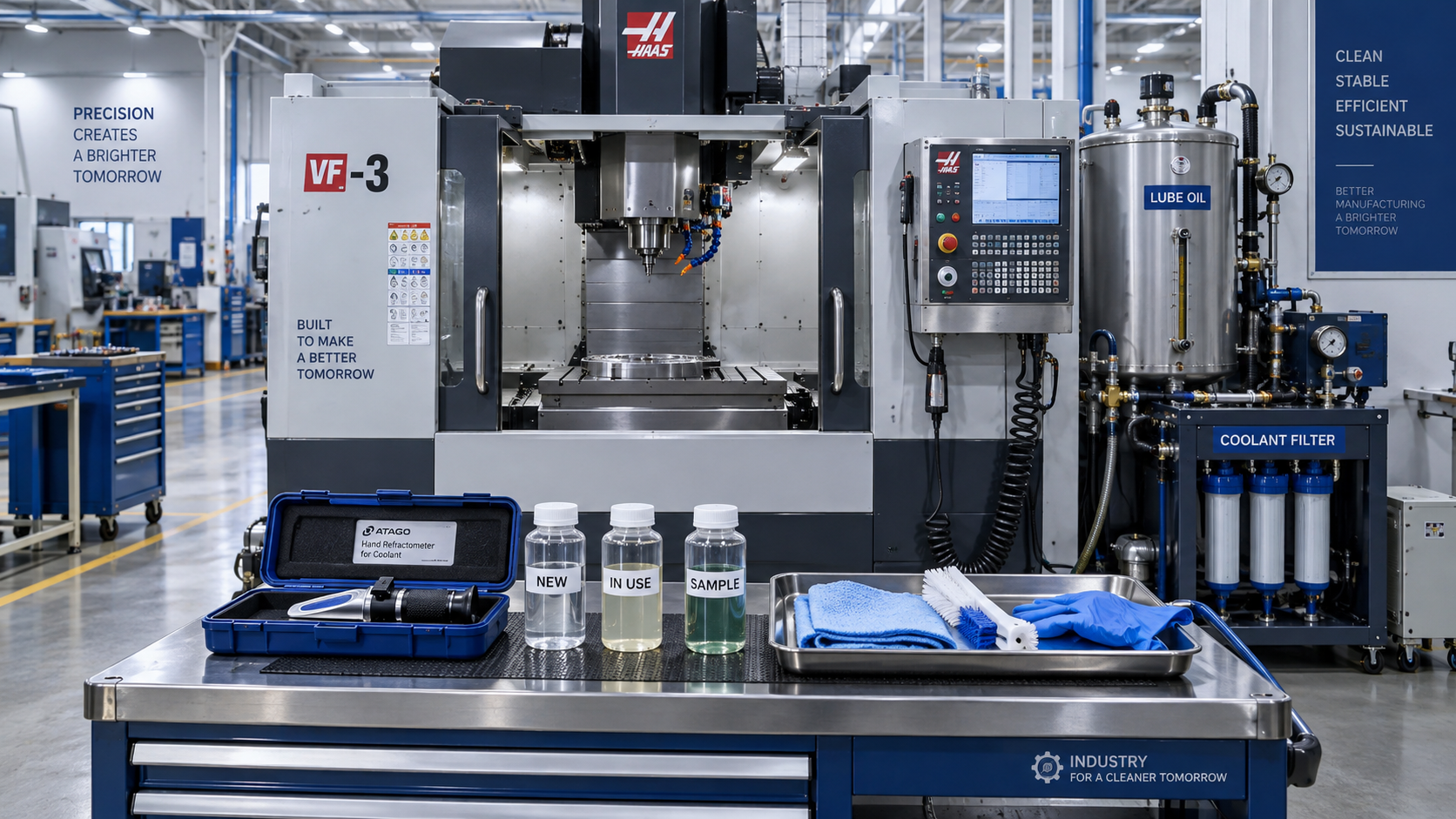
A CNC machine rarely goes from healthy to unreliable overnight. More often, the warning signs accumulate: a lubrication reservoir needs topping up more frequently, coolant develops an unusual odor, or chips begin collecting beneath a damaged way cover. Then a familiar job starts drifting out of tolerance, and the production schedule suddenly looks fragile.
For teams asking “what maintenance does a CNC machine need monthly,” the practical answer is a documented inspection of lubrication, coolant, filtration, chip handling, protective covers, utilities, and safety functions. Spindles, tool changers, workholding, and control backups also deserve attention. However, monthly maintenance is a planning interval—not permission to postpone daily checks or override the machine manufacturer’s service schedule.
What should a monthly CNC maintenance checklist include?
Use the following checklist as a starting point for CNC mills, lathes, and machining centers. Adjust it to the installed equipment, operating hours, materials being machined, and manufacturer instructions. A multi-axis machine running continuously needs a different maintenance plan from a lightly used toolroom lathe.
Some checks belong on daily or weekly lists as well. The monthly review adds depth: it asks whether systems are working consistently, whether deterioration is developing, and whether previous corrective actions actually solved the problem.
How should the machine be made safe before maintenance?
Separate the work into two categories: inspections requiring hazardous energy isolation and controlled checks requiring power. Cleaning inside the enclosure, reaching near a conveyor, removing protective covers, or servicing equipment generally requires the site’s lockout/tagout procedure and the manufacturer’s instructions.
Pressing emergency stop is not equivalent to isolating hazardous energy. Electrical, pneumatic, hydraulic, gravitational, and stored mechanical energy may remain. Authorized personnel must isolate relevant sources, release or restrain stored energy, and verify the safe state before work begins.
Powered observations and safety-function tests should follow an approved procedure with guards in place and personnel clear of moving components. Never bypass an interlock to make inspection easier. Electrical cabinet access, hydraulic repairs, and internal spindle work belong to appropriately qualified personnel.
Does the lubrication system need more than an oil-level check?
Yes. A full reservoir does not prove that lubricant is reaching the guideways, ball screws, or other specified lubrication points. During the monthly inspection, look for accessible damaged lines, leaking fittings, contamination around the reservoir, and abnormal lubricant consumption.
Where the machine provides a lubrication-cycle indicator, pressure switch, or diagnostic screen, review it according to the service manual. A blocked distribution point or failed delivery component may need specialist testing; avoid opening lines or adjusting metering devices without an approved procedure.
- Use the exact lubricant specification required by the manufacturer.
- Keep filling equipment clean and avoid mixing products without confirmed compatibility.
- Record consumption trends rather than repeatedly topping up without investigation.
- Check filters or strainers only at the specified service interval and by the prescribed method.
Do not assume that exposed grease fittings mean every axis component needs monthly greasing. Some assemblies have automatic lubrication or lifetime lubrication arrangements. Excess lubricant and incorrect products can cause problems rather than prevent them.
What coolant checks matter most each month?
For water-miscible coolant, measure concentration with a suitable refractometer and apply the coolant supplier’s correction factor. Follow its sampling and mixing guidance. Compare the result with the recommended range for the coolant, machining process, and materials involved—not a universal percentage.
Inspect accessible tank areas, strainers, filters, and return paths for sludge, fines, and restricted flow. Look for persistent foaming, excessive tramp oil, unusual odor, or signs of corrosion. Where recommended, track pH and microbial condition using the supplier’s specified methods. Straight cutting oils require a different monitoring approach.
Concentration alone does not establish that coolant is healthy. A sample can be within range while the system contains substantial contamination. Equally, odor is a warning sign, not a diagnosis. Investigate the cause rather than adding chemicals at random.
A complete coolant change is not automatically a monthly task. Replacement depends on condition, contamination, supplier guidance, and operating demands. Use approved cleaning methods and disposal arrangements when a change is necessary; do not mix cleaning chemicals or add biocides without appropriate guidance.
How thoroughly should chips, way covers, and filters be inspected?
Daily chip removal keeps production moving. Monthly maintenance should address accessible accumulation that routine cleaning misses: around conveyor entry points, coolant returns, tool-change areas, and protective-cover edges. Isolate the equipment before reaching into any hazardous area.
Check telescopic covers and bellows for dents, tears, loose fasteners, and trapped chips. Examine wipers for damage or gaps. These parts protect precision motion components; a small opening can let abrasive debris reach surfaces that are expensive to repair.
Use manufacturer-approved cleaning methods. Avoid directing compressed air at seals, bearings, electrical components, or guideways, where it can force contamination deeper into the machine. Clean only accessible areas unless disassembly is specifically authorized.
Inspect coolant filters, pneumatic filters, cabinet intake filters, and chiller filters where fitted. Clean or replace them according to their design, condition indicators, and prescribed intervals. A dirty disposable filter should not be treated as washable simply because replacement stock is unavailable.
What should be checked on the spindle and tool changer?
Inspect spindle tapers and toolholder mating surfaces for contamination, corrosion, fretting, and visible damage using the approved cleaning procedure. Toolholders and retention components must match the machine’s specifications. Chips on a mating surface can affect seating and contribute to runout or inconsistent machining.
Observe spindle behavior during an approved operating check. Note unusual noise, vibration, temperature behavior, or chiller alarms, and compare observations under similar operating conditions. Touch alone is not a reliable method of judging spindle health.
For automatic tool changers, inspect accessible pockets, grippers, and nearby chip accumulation with the machine safely isolated. Lubricate only the points specified by the manufacturer. During approved powered checks, watch for hesitation, incomplete seating, or repeated position alarms from outside the guarded hazard zone.
Drawbar retention-force testing can be valuable, but its interval and method are machine-specific. Use the correct test equipment and trained personnel. Do not adjust tool-change alignment or retention mechanisms by trial and error.
Do CNC lathes and multi-axis machines need additional monthly checks?
They often do. On CNC lathes, include the chuck or collet system, hydraulic actuation, tailstock, turret, and any bar feeder or parts catcher. Check accessible components for wear, contamination, secure attachment, and leakage. Follow the chuck manufacturer’s lubrication and service instructions, which may require attention much more frequently than monthly.
On multi-axis machining centers, include rotary-table seals, accessible lubrication points, and clamping-system indicators. Machines with pallet changers or probing systems need checks appropriate to those accessories. Connected robots and automated loading equipment have their own maintenance schedules and isolation requirements.
For pneumatic and hydraulic systems, compare indicated pressures with approved specifications under the stated operating conditions. Inspect accessible hoses and connections for damage. Never search for a suspected hydraulic leak with a hand: high-pressure fluid can penetrate skin. Do not tighten fittings while pressurized or adjust settings merely to suppress an alarm.
Should electrical cabinets and machine accuracy be checked monthly?
Monthly attention to electrical cooling is sensible, but opening a cabinet is not routine operator housekeeping. Inspect external vents and approved serviceable filters, and review cabinet-temperature or cooling-unit alarms. Internal inspection and cleaning require qualified personnel and the applicable electrical safety procedures.
Review alarm history for recurring lubrication, servo, spindle, or overheating faults. An alarm that resets successfully can still reveal a developing issue.
For accuracy, use a consistent reference part, probing routine, or approved verification method where appropriate. Compare results under similar thermal conditions. If dimensions drift, consider tool wear, workholding, material variation, and temperature before concluding that machine geometry has changed.
Full geometric calibration is not universally required every month. Ballbar testing, laser measurement, and compensation changes belong to a planned verification strategy or a specific investigation. Avoid changing compensation values simply to hide an unexplained deviation.
What records should the maintenance team keep?
A useful record shows more than a row of checked boxes. Capture the machine identifier, operating hours where available, date, technician, measurements, observations, actions taken, and outstanding work. Attach photographs of developing damage when helpful.
Record comparable readings—such as coolant concentration or lubricant consumption—so trends become visible. Assign an owner and follow-up date to each unresolved issue. A worn wiper marked “monitor” for several months is not a completed maintenance action.
Maintain verified backups of programs, offsets, parameters, and other supported control data according to the manufacturer’s procedure and company policy. Back up after relevant changes rather than relying solely on the monthly visit. Store copies securely outside the control, and understand the restoration process before a failure occurs.
How should the monthly interval change with production demands?
Start with the manufacturer’s calendar and operating-hour requirements, including instructions for accessories. Then account for actual conditions: continuous production, abrasive materials, heavy chip loads, frequent tool changes, and unstable shop temperatures may justify more frequent inspections.
Do not wait for the next scheduled service if the machine develops a safety fault, unexplained pressure loss, abnormal spindle noise, repeated lubrication alarms, or sudden accuracy deterioration. Stop and escalate according to the site procedure when continued operation could be unsafe or cause damage.
The most effective monthly CNC maintenance plan combines routine care with evidence: measured fluid condition, observed equipment behavior, meaningful records, and clear responsibility for repairs. That makes the checklist more than paperwork. It becomes a practical way to protect precision, reduce avoidable interruptions, and keep small warning signs from becoming the next production emergency.
Recommended for You
![]() Survey: 81% Expect US Cutting Tool Shipments to Rise or Hold Steady in 2026Machine Tool Industry Editorial Team
 CNC Fixture Design: Locating and Clamping for Accurate MachiningCNC Machining Technology Center
![]() US Decides Against New Tariffs on Robots, Industrial Machinery and PartsManufacturing Policy Research Center
![]() White House Section 232 Ruling: No New Machine Tool or Robot Tariffs, Calls for TalksManufacturing Policy Research Center
 How to Integrate Warehouse Palletizing Robots with Minimal DowntimeMachine Tool Industry Editorial Team
![]() AI Investment Lifts US September Equipment Demand; Core Capital Goods Orders Rise 0.5%Manufacturing Market Research Center



Aris Katos
Future of Carbide Coatings
15+ years in precision manufacturing systems. Specialized in high-speed milling and aerospace grade alloy processing.
▶
Why Heavy Machinery Shafts Fail Under Cyclic Loads and How to Prevent ItCNC Machining Technology Center▶
Shaft Parts for Heavy Machinery: Selecting Materials for High Shock LoadsCNC Machining Technology Center▶
What Is Metal Processing? From Raw Material to Finished Machine PartsCNC Machining Technology Center▶
How long does CNC machine delivery and installation usually take?CNC Machining Technology Center▶
What Monthly Maintenance Does a CNC Machine Need?CNC Machining Technology Center
▶
Mastering 5-Axis Workholding Strategies
Join our technical panel on Nov 15th to learn about reducing vibrations in thin-wall components.

Providing you with integrated sanding solutions
Before-sales and after-sales services
Comprehensive technical support