• Global CNC market projected to reach $128B by 2028 • New EU trade regulations for precision tooling components • Aerospace deman
NYSE: CNC +1.2%LME: STEEL -0.4%

How Precision Turning Improves Tolerance Control for Small Shaft and Valve Parts
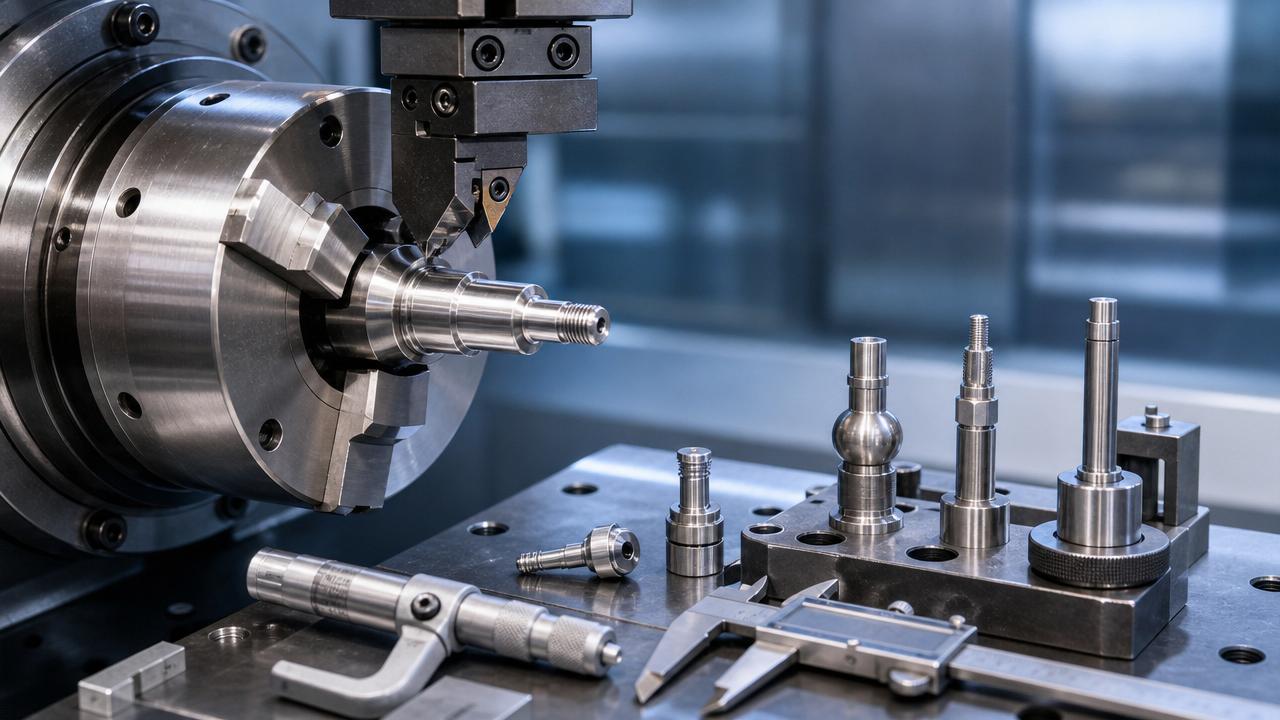
Why precision turning matters for small shaft and valve parts
In high-precision production, small shaft and valve parts leave very little room for error. A few microns can change fit, sealing force, rotation smoothness, or service life.
That is why precision turning remains a core process across automotive, aerospace, energy equipment, and electronics manufacturing. It supports stable dimensions, cleaner surfaces, and repeatable geometry.
For technical evaluation, the real question is not whether a supplier can turn a part. It is whether their precision turning process can hold tolerance consistently in actual production.
The points below make that judgment easier and more practical.

A good setup usually shows more than a polished sample. It shows process control, machine capability, and clear evidence that precision turning can stay stable over time.
What to check first when evaluating precision turning capability
- Check whether the machine platform is built for thermal stability, spindle rigidity, and fine axis control. These basics strongly influence precision turning performance on slim shafts and valve diameters.
- Review how workholding is designed. Poor chucking, weak support, or unstable collets often create runout, taper, or bending, even when the CNC program looks correct.
- Ask for real tolerance history, not only drawing claims. Process data from repeated batches gives a clearer picture of precision turning consistency than a single approved sample.
- Confirm tool selection logic for material, diameter, and surface target. Insert geometry, nose radius, and wear control all affect tolerance drift during continuous machining.
- Look at in-process measurement methods. On-machine probing, offset correction, and first-piece verification can reduce variation before defects spread across a full production run.
- Verify whether coolant delivery matches the feature size and material. Heat buildup during precision turning can quietly shift diameter, roundness, and surface finish on small parts.
- Check if the supplier separates roughing and finishing strategy. Trying to do both with one unstable pass often makes tight tolerance control harder than expected.
A quick way to read process maturity
Stable precision turning usually comes from a controlled system, not from operator correction alone. If process results depend heavily on manual adjustment, repeatability may be limited.
This matters even more in global manufacturing networks. Parts may move between lines, shifts, or plants, so a robust process must survive normal production variation.
How precision turning improves tolerance control in practice
Precision turning improves tolerance control by reducing the sources of change that push dimensions away from target. The biggest ones are vibration, heat, tool wear, and clamping distortion.
When these factors are controlled, diameter variation becomes smaller, circularity improves, and shoulders or grooves stay in better positional relationship.
- Fine spindle accuracy helps keep rotational error low. That directly supports better roundness and concentricity, especially on valve stems and stepped shaft features.
- Controlled feed and depth of cut reduce tool pressure. This is especially important for thin or long parts that can deflect during precision turning.
- Better thermal management keeps dimensions from drifting across a batch. Small shafts can move out of tolerance quickly when heat is not managed early.
- Consistent tool wear tracking supports predictable compensation. Without it, even a capable turning center may lose tolerance control after only a short run.
- Reduced vibration improves both size and finish. In many cases, surface inconsistency is the first visible sign that precision turning stability is slipping.
Why surface finish should not be checked alone
A smooth surface does not automatically mean good tolerance control. Some parts look clean but still fail on roundness, cylindricity, or coaxiality.
For valve parts, this can affect sealing and leakage. For small shafts, it can create assembly stress, bearing wear, or unstable rotation after installation.
Key dimensions and quality signals worth reviewing
Not every drawing dimension carries the same production risk. In precision turning, a few control points often decide whether the part will function properly.
A practical review should connect these dimensions to the process used. That is where precision turning capability becomes visible, not just on the print.
Common risks that are easy to overlook
Some tolerance problems do not come from the machine alone. They appear because the full process chain is not matched to the part geometry.
- Long, narrow shafts may pass first-piece inspection but drift later as tools wear. A short trial run rarely shows this unless trend data is reviewed carefully.
- Soft materials can smear instead of cut cleanly. That may hide size issues at inspection while causing later performance problems in seals or mating fits.
- Secondary handling can damage precision turned surfaces. Tight tolerance control loses value if washing, transfer, or packing introduces scratches or edge deformation.
- Measurement method mismatch is another risk. Checking a critical diameter with an unsuitable gauge can mask process instability and delay correction.
Scenario: small motor shafts
In electronics and light industrial drives, small motor shafts need stable diameter, good straightness, and repeatable shoulders. Bearing fit and rotation noise are usually sensitive points.
Here, precision turning should be reviewed together with runout control and post-process handling. Tiny nicks can undo otherwise good machining accuracy.
Scenario: valve pins and stems
Valve components often combine diameter tolerance, smooth finish, and sealing function. Even slight inconsistency can change friction, leakage rate, or response behavior.
For these parts, precision turning should be judged with real sealing surfaces in mind, not only general dimensional compliance.
Execution tips that make comparison more reliable
When comparing production options, it helps to use the same practical checks across all candidates. That keeps the review fair and easier to defend.
- Request tolerance data from multiple batches, not one lot. Precision turning strength is best shown by consistency over time, shifts, and material lots.
- Ask which dimensions are controlled in-process and which are checked afterward. Earlier control usually means faster correction and lower scrap risk.
- Compare whether critical features are completed in one setup. Fewer reclamping steps often mean better concentricity and less cumulative positioning error.
- Review machine, tool, and inspection matching as one system. Strong precision turning results usually depend on this full-process alignment.
- Check if the supplier can explain failure modes clearly. A precise answer about risk control often says more than a general promise of high accuracy.
A useful final comparison method
If two sources quote similar tolerance capability, compare them on drift control, repeatability, and response speed when dimensions move. That usually reveals the stronger precision turning process.
In modern CNC manufacturing, especially across global supply chains, process reliability matters as much as peak accuracy.
Closing thought
Precision turning improves tolerance control by making variation smaller, more predictable, and easier to correct. That is the real value behind dimensional accuracy on small shaft and valve parts.
A solid review should look beyond sample appearance and focus on machine stability, tooling logic, workholding, thermal control, and measurement discipline.
With those points in hand, the next step is simple: match the most critical part features to the supplier’s actual precision turning controls, then verify them with repeatable batch data.
Recommended for You
![]() Mitsubishi Electric Announces Physical AI System Linking Humanoid Robots and CNC MachinesMachine Tool Industry Editorial Team
Mitsubishi Electric Announces Physical AI System Linking Humanoid Robots and CNC MachinesMachine Tool Industry Editorial Team Precision Machining for Defense: Supplier Quality and Traceability ChecksManufacturing Market Research Center
![]() Nidec Machine Tool Launches MVR-5X Five-Axis Gantry MachineMachine Tool Industry Editorial Team
Nidec Machine Tool Launches MVR-5X Five-Axis Gantry MachineMachine Tool Industry Editorial Team Choosing a Precision Disc Parts Manufacturer in China: Tolerances and Quality ChecksManufacturing Market Research Center
![]() Siemens Executive Says AI Could Raise Factory Automation to 80%Manufacturing Market Research Center
Siemens Executive Says AI Could Raise Factory Automation to 80%Manufacturing Market Research Center Choosing Automated Machine Tools for High-Mix, Low-Volume ProductionMachine Tool Industry Editorial Team


Aris Katos
Future of Carbide Coatings
15+ years in precision manufacturing systems. Specialized in high-speed milling and aerospace grade alloy processing.
▶
How thermal drift affects accuracy in high-precision manufacturingCNC Machining Technology Center▶
Industrial Machining: Selecting Processes for Tight-Tolerance Metal PartsCNC Machining Technology Center▶
How Does Precision Machining Differ From Standard Machining?CNC Machining Technology Center▶
CNC Precision: Which Tolerances, Materials, and Processes Fit Your Part?CNC Machining Technology Center▶
How to Choose Metal Machining Processes for Tight Tolerances and Production VolumeCNC Machining Technology Center
▶
Mastering 5-Axis Workholding Strategies
Join our technical panel on Nov 15th to learn about reducing vibrations in thin-wall components.

Providing you with integrated sanding solutions
Before-sales and after-sales services
Comprehensive technical support