• Global CNC market projected to reach $128B by 2028 • New EU trade regulations for precision tooling components • Aerospace deman
NYSE: CNC +1.2%LME: STEEL -0.4%

Precision CNC vs Standard CNC: What Matters for Surface Finish and Repeatability
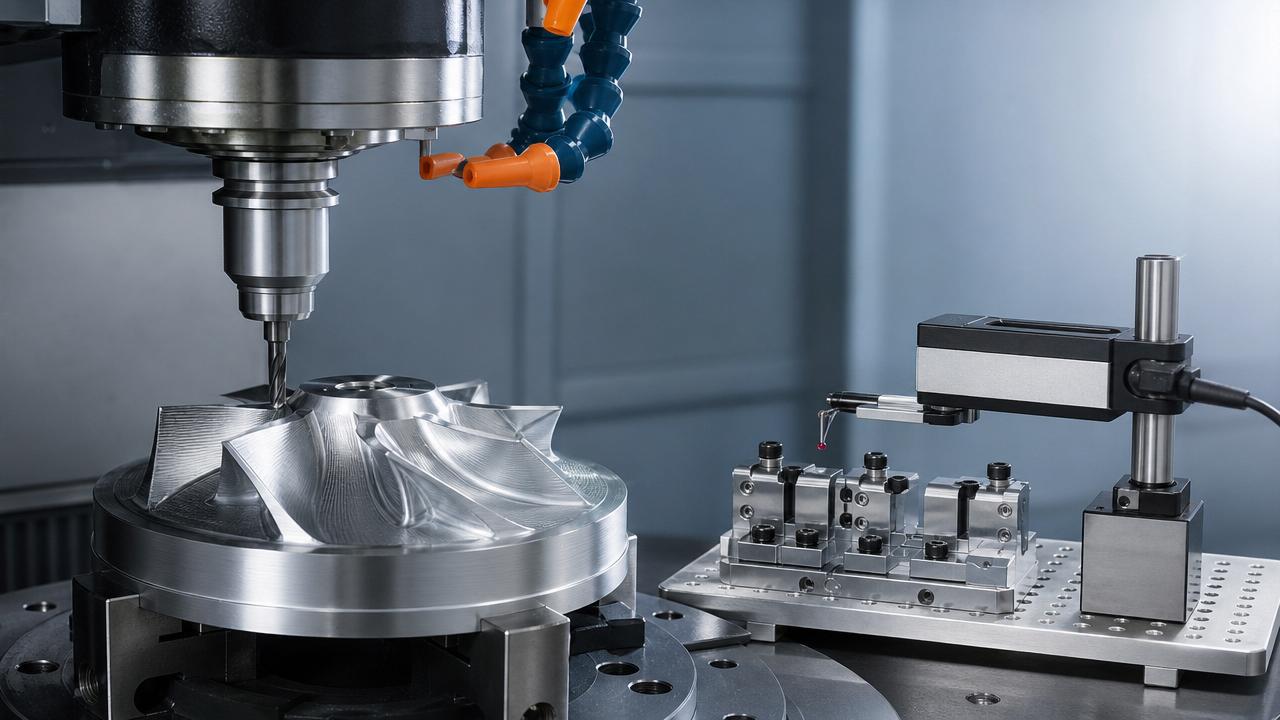
Why Precision CNC Changes the Result
When surface finish and repeatability matter, the gap between standard CNC and precision CNC becomes very real on the shop floor.
A standard CNC machine can handle many general tasks well. But when tolerance windows shrink, part consistency often depends on more than basic positioning accuracy.
That is where precision CNC stands out. It is built to control vibration, thermal drift, servo response, and tool path stability more tightly.
In automotive, aerospace, electronics, and energy equipment, that difference affects scrap rate, polishing time, fit quality, and process confidence.
The practical question is not which machine sounds better. It is which setup gives the required finish and repeatability without wasting cycle time or creating hidden rework.
Below is a clear way to judge when precision CNC is worth it, and what to check before making process decisions.
[Image 01: Precision CNC machine evaluating surface finish and repeatability on a complex metal part]
What Usually Makes the Biggest Difference
The biggest performance gap is rarely one single spec. It usually comes from several machine and process factors working together.
- Check machine rigidity first. Precision CNC frames, guideways, and spindle structures resist chatter better, which directly improves surface finish on thin walls, small radii, and harder materials.
- Look at positioning and feedback quality. Precision CNC systems use finer encoders and tighter servo control, helping repeated passes land closer to the same tool path every cycle.
- Watch thermal behavior during longer runs. A standard CNC may cut well cold, then drift as spindle, ballscrew, or ambient temperature changes through the shift.
- Review spindle stability under load. Precision CNC setups usually hold speed more consistently, which keeps chip formation steady and reduces visible variation across the machined surface.
- Inspect fixturing repeatability, not only machine accuracy. Even a strong precision CNC process fails if clamping pressure, locator wear, or part seating changes between setups.
- Confirm toolholder balance and runout. Many finish problems blamed on the machine actually start with unstable tooling, especially in high-speed or multi-axis applications.
Why standard CNC can still be enough
For brackets, rough-machined housings, basic shafts, and non-critical support parts, standard CNC often delivers acceptable results at lower cost.
If the part allows secondary finishing or wider dimensional spread, the extra capability of precision CNC may not return clear value.
How to Judge Surface Finish in Real Production
Surface finish is not only about Ra numbers on a print. It also affects sealing, friction, coating adhesion, fatigue life, and visual acceptance.
- Match the finish target to part function. If the surface supports sealing, bearing contact, or optical alignment, precision CNC usually reduces follow-up polishing and process variation.
- Measure finish at multiple locations. A standard CNC may meet one point but fail near corners, entry zones, or long unsupported cuts where vibration increases.
- Check tool wear effect over batch size. Precision CNC often keeps finish more stable from first part to last because motion control stays smoother under wear progression.
- Review feed and step-over strategy together. A good precision CNC machine still needs a sensible finishing path, otherwise marks and waviness can remain visible.
- Inspect coolant delivery at the cut point. Poor chip evacuation can scratch surfaces, especially in deep pockets or fine finishing passes on aluminum and stainless steel.
A common shop-floor mistake
It is easy to compare finish using one fresh tool and one short sample run. That often hides what happens after three hours of continuous production.
A better test is to inspect first-off, mid-batch, and last-off parts. That shows whether the process is truly repeatable or only looks good at the start.
Repeatability Is More Than Tolerance on Paper
Repeatability is the ability to produce the same part, again and again, across shifts, operators, and machine warm-up conditions.
This is where precision CNC often justifies itself fastest. Fewer offsets, fewer adjustments, and fewer surprise rejects save time across the entire line.
- Track actual offset changes by shift. If corrections keep growing through the day, precision CNC may solve the root problem better than repeated manual compensation.
- Compare repeatability after restarts or changeovers. Stable precision CNC processes recover faster and reduce the trial cuts needed to return to acceptable dimensions.
- Use capability data, not only pass-fail inspection. A part that barely passes on standard CNC may still create assembly variation later in production.
Where Precision CNC Usually Pays Off Fastest
Some applications clearly reward the extra control of precision CNC, especially when part function depends on reliable geometry and surface quality.
Complex aerospace and energy parts
Blades, sealing faces, precision bores, and heat-resistant alloys all punish unstable cutting conditions. A small finish defect can become a performance issue later.
In these cases, precision CNC helps by keeping contour control smoother and reducing the need for extra hand finishing.
Automotive batch production
High-volume parts do not always need ultra-high precision, but they do need stable output. Repeatability matters because small shifts multiply quickly across thousands of cycles.
Precision CNC often lowers inspection pressure and helps automated lines stay balanced with fewer interruption points.
Electronics and small precision components
When features are small, tool deflection, spindle runout, and heat growth become more visible. Even minor inconsistency can damage fit or appearance.
That is why precision CNC is often preferred for miniature housings, connector features, and fine structural components.
What Gets Overlooked Too Often
A precision CNC machine does not guarantee a precision result by itself. Several basic details still decide whether the process performs well.
- Do not judge only by catalog accuracy. Real output depends on installation condition, maintenance quality, floor vibration, and the actual material being machined.
- Avoid mixing high-precision goals with worn fixtures. Locator damage, clamp inconsistency, and poor datum contact can erase the advantage of precision CNC quickly.
- Review CAM smoothing settings and look-ahead functions. Poor programming can leave visible marks even on a capable precision CNC platform.
- Check spindle warm-up routines before critical cuts. Skipping them may create size drift that looks random but is actually predictable and preventable.
- Monitor machine health trends, not only final parts. Ballbar tests, vibration checks, and backlash tracking reveal repeatability loss before scrap becomes obvious.
A Practical Way to Decide
If the target is tight finish, reliable repeatability, and less manual correction, precision CNC usually becomes the safer long-term choice.
If the part is general-purpose, tolerance is wider, and secondary finishing is acceptable, standard CNC may still be the smarter fit.
- Start with the part requirement, not the machine label. Surface function, batch size, and allowable adjustment time should drive the precision CNC decision.
- Run a controlled comparison using the same material, tooling, and cycle length. That gives a more honest view of finish stability and repeatability.
- Include hidden costs in the evaluation. Rework, inspection load, polishing, tool breakage, and downtime often make precision CNC more economical over time.
In modern manufacturing, the best choice is usually the one that keeps quality stable without constant correction. That is the real value test for precision CNC.
A good next step is simple: review one part family with recurring finish or repeatability issues, then compare current results against what tighter machine and process control could realistically fix.
Recommended for You
![]() Mitsubishi Electric Announces Physical AI System Linking Humanoid Robots and CNC MachinesMachine Tool Industry Editorial Team
Mitsubishi Electric Announces Physical AI System Linking Humanoid Robots and CNC MachinesMachine Tool Industry Editorial Team Precision Machining for Defense: Supplier Quality and Traceability ChecksManufacturing Market Research Center
![]() Nidec Machine Tool Launches MVR-5X Five-Axis Gantry MachineMachine Tool Industry Editorial Team
Nidec Machine Tool Launches MVR-5X Five-Axis Gantry MachineMachine Tool Industry Editorial Team Choosing a Precision Disc Parts Manufacturer in China: Tolerances and Quality ChecksManufacturing Market Research Center
![]() Siemens Executive Says AI Could Raise Factory Automation to 80%Manufacturing Market Research Center
Siemens Executive Says AI Could Raise Factory Automation to 80%Manufacturing Market Research Center Choosing Automated Machine Tools for High-Mix, Low-Volume ProductionMachine Tool Industry Editorial Team


Aris Katos
Future of Carbide Coatings
15+ years in precision manufacturing systems. Specialized in high-speed milling and aerospace grade alloy processing.
▶
How thermal drift affects accuracy in high-precision manufacturingCNC Machining Technology Center▶
Industrial Machining: Selecting Processes for Tight-Tolerance Metal PartsCNC Machining Technology Center▶
How Does Precision Machining Differ From Standard Machining?CNC Machining Technology Center▶
CNC Precision: Which Tolerances, Materials, and Processes Fit Your Part?CNC Machining Technology Center▶
How to Choose Metal Machining Processes for Tight Tolerances and Production VolumeCNC Machining Technology Center
▶
Mastering 5-Axis Workholding Strategies
Join our technical panel on Nov 15th to learn about reducing vibrations in thin-wall components.

Providing you with integrated sanding solutions
Before-sales and after-sales services
Comprehensive technical support