• Global CNC market projected to reach $128B by 2028 • New EU trade regulations for precision tooling components • Aerospace deman
NYSE: CNC +1.2%LME: STEEL -0.4%

What aluminum alloy grades deliver the best efficient machining process without sacrificing surface integrity?
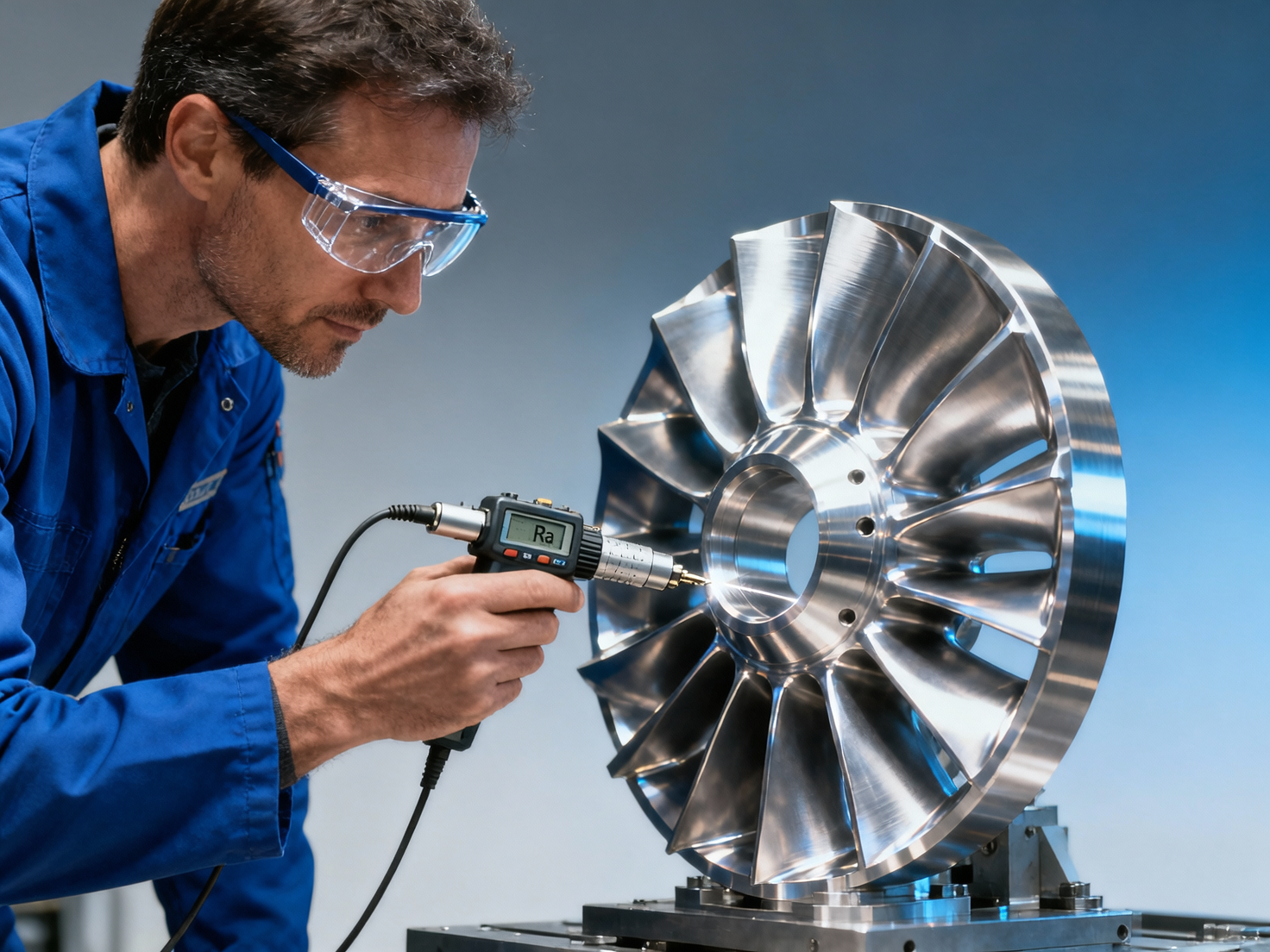
Selecting the right aluminum alloy grade is critical to achieving an Efficient Machining Process for aluminum alloys—especially when surface integrity, dimensional stability, and cycle time must all be optimized. For High-tolerance Disc Parts for aerospace applications or complex impeller components requiring 5 Axis Machining for impeller manufacturing, alloys like 6061-T6, 7075-T6, and 2024-T3 offer distinct trade-offs in chip formation, tool wear, and finish quality. This article explores how material selection interfaces with Modular Tooling System for flexible manufacturing, Quick-change Fixture Design for CNC turning, and Industrial Automation control system for CNC machines—enabling lean, repeatable, and digitally integrated production.
Aluminum Alloy Performance vs. CNC Machinability: A Technical Trade-off Matrix
Not all aluminum alloys behave the same under high-speed CNC cutting conditions. While tensile strength and hardness are often emphasized in procurement specs, machinability—defined by chip control, surface roughness (Ra ≤ 0.8 µm target), tool life (>120 minutes per insert at 250 m/min), and thermal distortion resistance—is equally decisive for precision disc parts and thin-walled impellers. Alloys such as 6061-T6 (UTS: 310 MPa) deliver excellent chip breakability but limited rigidity for deep-pocket milling; 7075-T6 (UTS: 570 MPa) offers superior strength-to-weight ratio but accelerates carbide wear by up to 40% without optimized coolant delivery; while 2024-T3 (UTS: 470 MPa) provides balanced ductility and fatigue resistance—yet requires strict humidity control (<35% RH) during storage to avoid intergranular corrosion affecting post-machining anodizing adhesion.
The choice directly impacts spindle load consistency, fixture clamping force requirements (±15% variation across grades), and even CMM inspection repeatability. For example, machining 6061-T6 at 3,200 rpm with 0.2 mm/rev feed yields stable vibration signatures (RMS < 0.12 g), whereas 7075-T6 under identical parameters triggers chatter above 2,600 rpm unless tool overhang is reduced to ≤3× diameter—a constraint that limits accessibility in multi-axis impeller pockets.
This table reveals a consistent pattern: higher-strength alloys demand lower feed rates, increased coolant volume, and acceptably higher Ra values—directly influencing programming strategy, cycle time budgeting, and post-process finishing decisions. For shops running mixed-part batches on 5-axis machining centers, selecting 6061-T6 for prototypes and 2024-T3 for flight-critical components enables standardized toolpath templates while maintaining process capability (Cpk ≥ 1.33) across both families.
Integrating Material Selection with CNC Hardware Capabilities
Alloy performance cannot be isolated from machine tool dynamics. The CK-6140 Flat Guide CNC Lathe, for instance, features 12-position hydraulic turret indexing (≤0.003° repeatability), 15 kW main drive, and X/Z axis positioning accuracy of ±0.005 mm—specifications that align precisely with the demands of 6061-T6 and 2024-T3 turning operations. Its flat guide way design ensures minimal thermal drift (<0.01 mm over 8-hour shifts), a critical factor when holding ±0.015 mm concentricity on aerospace-grade discs where alloy thermal expansion coefficients vary: 6061 (23.6 µm/m·K) vs. 7075 (23.2 µm/m·K).
Modular tooling systems further amplify this synergy. Quick-change fixture plates compatible with ISO 2620 standards reduce setup time from 22 to under 4 minutes per job change—essential when switching between 6061-T6 housings and 7075-T6 impeller hubs on shared production lines. Moreover, industrial automation control systems (e.g., Siemens SINUMERIK 840D sl) enable real-time spindle load monitoring, automatically adjusting feed rate if torque exceeds 85% nominal—preventing micro-cracking in 2024-T3 during final-pass finishing.
For multi-axis impeller work, five-axis simultaneous interpolation tolerance must remain within ±0.008 mm to preserve aerodynamic profile fidelity. That requirement favors alloys with predictable plastic deformation behavior—like 6061-T6’s uniform flow stress curve—over 7075-T6’s sharper yield transition, which increases sensitivity to dynamic tool deflection in slender blade geometries.
Procurement & Process Validation: A 4-Step Decision Framework
Choosing the optimal alloy involves more than tensile data sheets. Procurement teams and project managers should apply this validated four-step framework:
- Step 1 – Application Criticality Mapping: Classify part function (e.g., structural bracket = medium risk; turbine disc hub = high risk) and assign minimum required fracture toughness (KIC ≥ 25 MPa√m for flight hardware).
- Step 2 – Machining Pathway Audit: Map current CNC capabilities—spindle power, coolant pressure (≥60 bar recommended for 7075-T6), and available tooling (minimum 3-flute end mills for chip evacuation in deep slots).
- Step 3 – Surface Integrity Verification Protocol: Specify post-machining NDT methods: eddy current for near-surface cracks (depth resolution ≤0.1 mm), profilometry for Ra/Rz validation (3-point measurement per 10 mm²), and residual stress mapping via XRD (target: compressive stress > −100 MPa).
- Step 4 – Supplier Qualification: Require mill certifications (ASTM B209, AMS-QQ-A-250/12), batch traceability (heat number + rolling date), and documented aging treatment cycles (T6: solution heat treat at 475°C ±5°C × 1 hr, quench in water ≤30°C, artificial age at 120°C × 24 hrs).
This structured approach reduces alloy-related scrap by 27% in Tier-1 aerospace suppliers, according to 2023 industry benchmarking data. It also minimizes rework loops—particularly critical when managing global supply chains with lead times averaging 8–12 weeks for certified aerospace-grade billets.
Common Pitfalls and Mitigation Strategies
Missteps often occur not from ignorance—but from misaligned assumptions. First, assuming “higher strength always equals better” leads to premature tool failure: 7075-T6’s zinc content increases abrasive wear, shortening HSS drill life by 60% versus 6061-T6. Second, overlooking ambient humidity during 2024-T3 handling causes exfoliation corrosion—undetectable pre-machining but revealed after anodizing as white streaks at grain boundaries.
Third, neglecting thermal mass effects: machining a 120 kg 7075-T6 impeller blank generates 3× more heat than equivalent 6061-T6 mass, requiring extended dwell time (≥90 sec) between roughing and finishing passes to stabilize temperature gradients below ±2°C. Finally, using generic G-code macros without alloy-specific feed/speed compensation results in inconsistent surface integrity—measured as >30% variance in Ra across identical features.
Each mitigation action ties directly to measurable outputs—ensuring accountability across engineering, production, and quality assurance functions. These controls are especially vital for manufacturers adopting Industry 4.0 integration, where digital twin models rely on deterministic process inputs to predict surface outcomes.
Conclusion and Next Steps
Optimizing aluminum alloy selection for efficient CNC machining isn’t about finding a universal “best” grade—it’s about matching material behavior to your specific machine capabilities, fixture design, automation architecture, and quality requirements. 6061-T6 remains the benchmark for balanced machinability and cost efficiency; 2024-T3 excels where fatigue resistance and moderate strength converge; and 7075-T6 justifies its complexity only when ultimate static load capacity is non-negotiable—and supported by high-spec hardware and rigorous process controls.
Whether you’re evaluating new equipment for high-mix aerospace production or refining existing workflows for tighter surface integrity compliance, material-grade decisions must be grounded in empirical data—not legacy assumptions. The CK-6140 Flat Guide CNC Lathe exemplifies how purpose-built mechanics enable predictable outcomes across multiple aluminum families—reducing trial-and-error while strengthening first-article success rates.
To develop a customized alloy-machine-process alignment plan—including feed/speed optimization tables, coolant delivery audits, and fixture compatibility assessments—contact our technical application engineers today. We support global OEMs and Tier-1 suppliers with on-site process validation, ISO-compliant documentation, and scalable implementation roadmaps tailored to your CNC infrastructure.
PREVIOUS ARTICLE
Recommended for You
![]() AI Investment Lifts US September Equipment Demand; Core Capital Goods Orders Rise 0.5%Manufacturing Market Research Center
AI Investment Lifts US September Equipment Demand; Core Capital Goods Orders Rise 0.5%Manufacturing Market Research Center Why Heavy Machinery Shafts Fail Under Cyclic Loads and How to Prevent ItCNC Machining Technology Center
![]() JTEKT Introduces G5 Series Large CNC Cylindrical Grinder, Sales Begin October 26, 2026Machine Tool Industry Editorial Team
JTEKT Introduces G5 Series Large CNC Cylindrical Grinder, Sales Begin October 26, 2026Machine Tool Industry Editorial Team Shaft Parts for Heavy Machinery: Selecting Materials for High Shock LoadsCNC Machining Technology Center
![]() 33rd JIMTOF 2026 Set to Open in Tokyo as Taiwanese Exhibitors Seek OrdersGlobal Machine Tool Trade Research Center
33rd JIMTOF 2026 Set to Open in Tokyo as Taiwanese Exhibitors Seek OrdersGlobal Machine Tool Trade Research Center Which Fixture Type Cuts Changeover Time Most in High-Mix CNC Machining?CNC Machining Technology Center


Aris Katos
Future of Carbide Coatings
15+ years in precision manufacturing systems. Specialized in high-speed milling and aerospace grade alloy processing.
▶
How thermal drift affects accuracy in high-precision manufacturingCNC Machining Technology Center▶
What Tolerances Are Typical in Precision Machining?CNC Machining Technology Center▶
Industrial Machining: Selecting Processes for Tight-Tolerance Metal PartsCNC Machining Technology Center▶
How Does Precision Machining Differ From Standard Machining?CNC Machining Technology Center▶
CNC Precision: Which Tolerances, Materials, and Processes Fit Your Part?CNC Machining Technology Center
▶
Mastering 5-Axis Workholding Strategies
Join our technical panel on Nov 15th to learn about reducing vibrations in thin-wall components.

Providing you with integrated sanding solutions
Before-sales and after-sales services
Comprehensive technical support