• Global CNC market projected to reach $128B by 2028 • New EU trade regulations for precision tooling components • Aerospace deman
NYSE: CNC +1.2%LME: STEEL -0.4%

Which Production Process changes bring the fastest output gains?
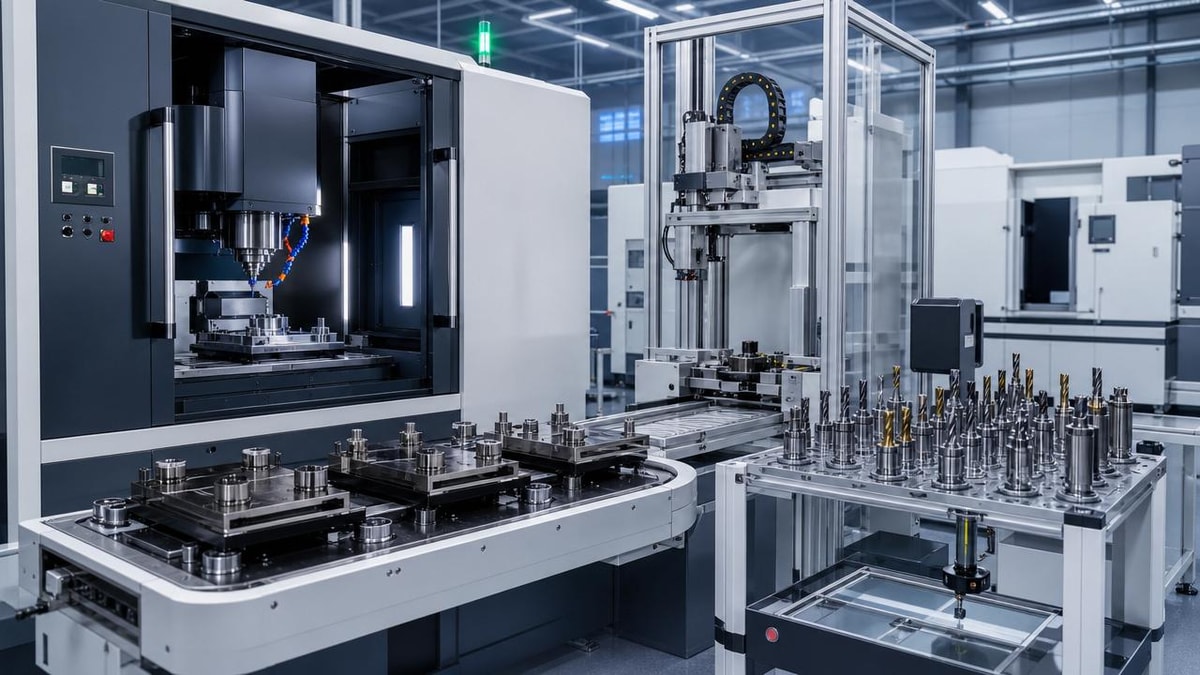
In competitive manufacturing, even small Production Process changes can deliver fast output gains when they target the right bottlenecks. For business decision-makers in CNC machining and precision manufacturing, knowing which improvements raise throughput quickly is critical to controlling costs, meeting delivery targets, and strengthening operational resilience. This article highlights the process adjustments that create the most immediate impact.
Why output gains depend on scenario, not theory
A Production Process change that works in a high-volume automotive plant may produce little value in a low-volume aerospace workshop. Likewise, a job shop serving electronics customers often gains more from setup reduction than from adding machine hours. For decision-makers, the fastest route to higher output is rarely a universal method. It is a scenario-based choice shaped by part mix, order volatility, machine utilization, labor skill, quality risk, and planning discipline.
In CNC machining and precision manufacturing, output is not determined by spindle speed alone. It is shaped by how work moves through programming, tooling, fixturing, inspection, loading, changeover, and maintenance. That is why the best Production Process improvements are usually those that remove waiting, rework, or unnecessary handling before the company invests in more equipment.
This matters even more in today’s market. Customers expect shorter lead times, higher consistency, and predictable delivery. Whether a company supplies shafts, housings, structural parts, precision discs, or complex multi-axis components, the pressure is the same: increase throughput without creating instability. The companies that move fastest are not always the ones with the newest machines; they are the ones that identify the right process change for the right operating context.
The Production Process changes that usually deliver the fastest gains
Across the broader machine tool industry, a few Production Process changes repeatedly generate fast output gains. These changes work because they improve flow instead of simply pushing people or machines harder.
- Reducing setup and changeover time through standardized tooling, fixture preparation, and offline presetting
- Improving scheduling discipline so high-priority jobs do not interrupt stable production unnecessarily
- Moving quality checks earlier in the workflow to prevent defect multiplication
- Balancing work across machines and shifts to remove hidden bottlenecks
- Introducing basic automation for loading, unloading, or pallet transfer in repetitive operations
- Strengthening preventive maintenance to reduce short, frequent downtime events
- Optimizing tool life management and cutting parameter consistency to avoid stop-start production
However, the order of priority changes by application scenario. The fastest gain comes from the change that removes the current constraint, not from the trendiest initiative.
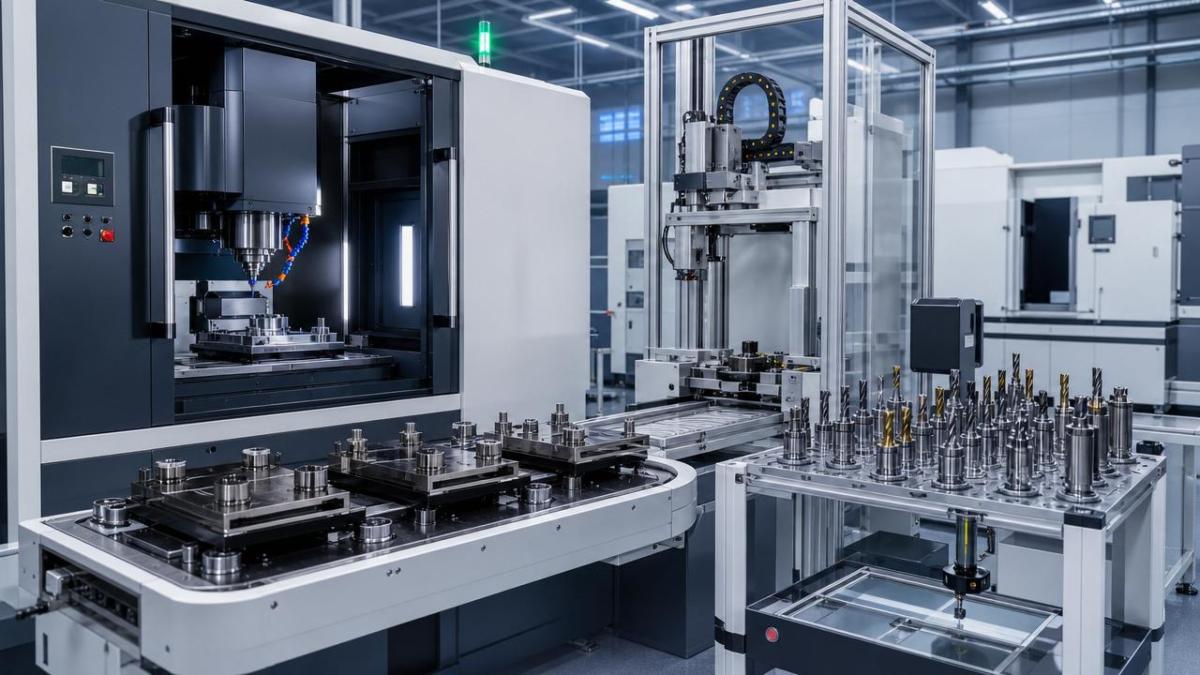
Scenario comparison: where the biggest output gains usually come from
The table below helps decision-makers match Production Process priorities to common manufacturing scenarios found across CNC machining, precision components, and automated production environments.
Scenario 1: High-volume production lines need flow improvements first
In automotive, consumer hardware, and mature industrial components, output losses often come from repeated interruptions rather than dramatic failures. A machine may be technically available, yet actual throughput suffers because operators pause for loading, tool replacement, material confirmation, or downstream congestion. In this scenario, the most effective Production Process changes are those that stabilize rhythm.
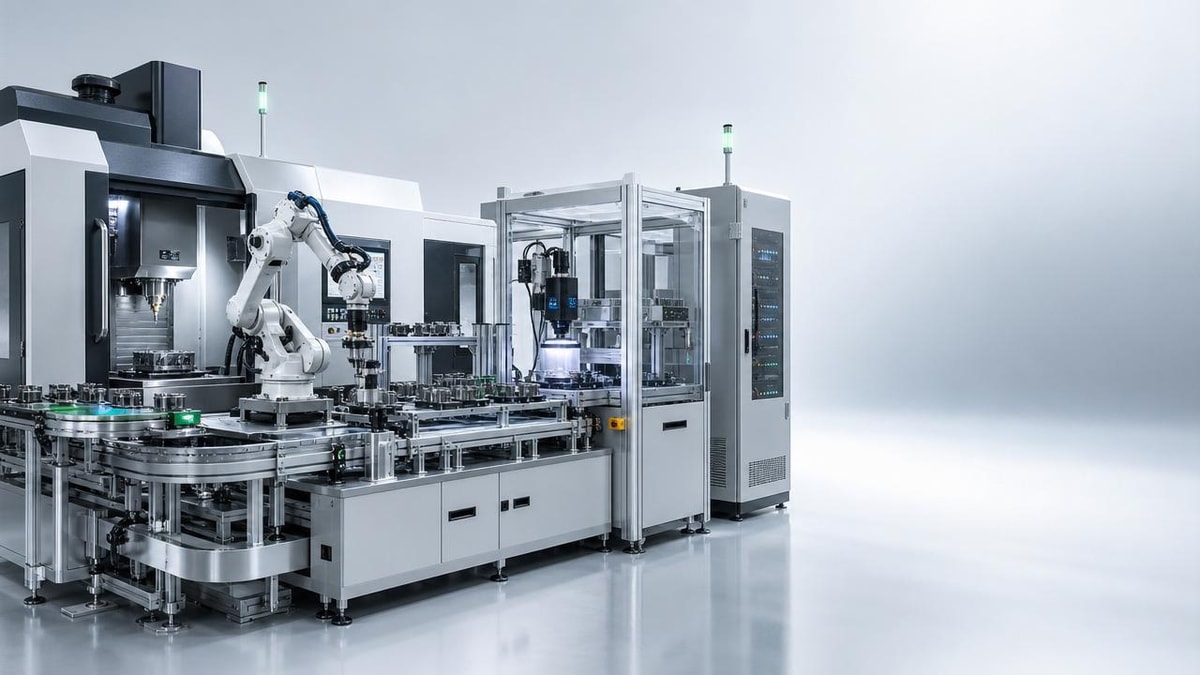
For these businesses, line balancing is often the fastest lever. If one machining center completes work in six minutes but a downstream inspection cell needs nine, extra machine capacity will not increase shipments. Reassigning tasks, simplifying inspection points, or adding pre-stage fixtures can release trapped capacity quickly. Basic automation, such as robotic part handling, automatic pallet change, or conveyor-linked transfer, can also create fast gains when repetitive manual steps dominate cycle loss.
Decision-makers should confirm three conditions before investing: demand must be stable enough to justify standardization, part variation must be manageable, and downstream operations must be ready to absorb higher output. Otherwise, a local improvement may simply move the bottleneck.
Scenario 2: High-mix CNC workshops gain fastest from setup reduction
For many CNC machining businesses, especially those serving aerospace, mold, medical, or custom industrial projects, setup time is the hidden output killer. Machines may run advanced controls and high-speed spindles, but capacity disappears during repeated fixturing, program verification, tool searching, and first-piece approval. In such environments, a Production Process change focused on setup reduction often outperforms capital spending in the short term.
Practical actions include standard fixture libraries, digital setup sheets, tool presetting outside the machine, and verified machining templates for recurring part families. Even modest improvements can produce immediate output gains because they convert non-cutting time into productive capacity. Companies with multiple shifts often see additional benefits when setup methods are documented clearly enough for different teams to execute consistently.
This is also where engineering-to-production handoff matters. If CAM programming, tooling selection, and quality requirements are not aligned before the job reaches the machine, operators will solve the problem on the floor, usually at the expense of output. Faster throughput comes from cleaner preparation, not from asking skilled machinists to rush.
Scenario 3: Precision parts production benefits from early quality control
In precision manufacturing, especially for electronics, high-tolerance assemblies, and critical machined components, rework destroys output more quickly than most leaders expect. A weak Production Process often allows defects to travel too far before detection. By the time final inspection finds the issue, multiple parts, tools, and machine hours have already been consumed.
For this scenario, the fastest output gain usually comes from moving quality checks closer to the source of variation. In-process probing, tool wear triggers, first-off validation, and operator checklists at critical dimensions reduce the chance of defect batches. The main business result is not only better quality but also more effective machine utilization, because less time is wasted producing parts that cannot ship.
Leaders should be careful not to confuse more inspection with better process performance. The goal is targeted control at the highest-risk points, not excessive measurement that slows flow. The right Production Process change combines speed and containment.
Scenario 4: Capacity-constrained plants should fix scheduling before buying more machines
Many factories believe they have a machine shortage when the real problem is scheduling instability. This is common in general manufacturing environments that serve multiple industries, order sizes, and due dates. Urgent jobs jump the queue, similar jobs are not grouped, tools are changed too often, and work-in-process accumulates between cells. As a result, lead time stretches even when machine utilization appears high.
In this scenario, the fastest Production Process change is often simple production sequencing discipline. Grouping jobs by material, tooling, or fixture family reduces changeovers. Limiting work released to the floor prevents congestion. Defining rules for hot orders stops constant rescheduling. These are not glamorous changes, but they frequently unlock output within weeks because they reduce waiting and confusion across the entire production system.
This is especially relevant for decision-makers considering digital manufacturing tools. Software creates value only when the planning logic is clear. A poor scheduling process does not become effective just because it is visible on a screen.
Scenario 5: Heavy machining and critical assets need maintenance-led gains
In energy equipment, large structural parts, and machine-intensive workshops, output often depends on a limited number of high-value assets. If one large machining center, grinder, or turning cell stops unexpectedly, the impact on delivery can be severe. In this case, the fastest Production Process improvement is often not a cycle-time reduction but a maintenance intervention that improves uptime.
Short, frequent stoppages are particularly harmful because they appear manageable individually but erode productive time across the week. Scheduled preventive maintenance, spare part readiness, lubrication discipline, and daily operator checks can generate measurable output gains faster than a major equipment upgrade. When paired with offline material staging and fixture preparation, these changes improve both reliability and throughput.
How to judge which Production Process change fits your business
Executives should not start with abstract lean principles or vendor promises. They should start with evidence from the actual operation. The most useful questions are practical:
- Where do orders wait the longest: before machining, between operations, or at inspection?
- How much capacity is lost to setups, unplanned downtime, rework, or material shortages?
- Is demand repetitive enough to justify automation or standardization?
- Are cycle-time losses concentrated on one machine, one shift, or one product family?
- Can the organization sustain the change through standard work and accountability?
A sound rule is to pursue the smallest Production Process change that removes the biggest current constraint. That may be a better fixture cart, a revised scheduling rule, a more disciplined first-article process, or a tool management upgrade. Fast output gains usually come from focused execution, not broad transformation language.
Common misjudgments that slow output improvement
Several mistakes appear repeatedly across the manufacturing sector. First, companies automate an unstable process and end up accelerating defects or stoppages. Second, they buy new machines before measuring how much hidden capacity exists in current workflows. Third, they treat all products the same even though different part families require different Production Process rules. Fourth, they overemphasize utilization and ignore flow, causing local efficiency to reduce system output.
Another common issue is poor cross-functional alignment. Operations may want faster output, while quality protects risk, engineering manages complexity, and sales pushes urgent orders. Without clear decision criteria, every team optimizes its own objective and the Production Process becomes unstable. Senior leadership must define which trade-offs are acceptable for each business scenario.
FAQ: scenario-based decisions on fast output gains
Which Production Process change usually gives the fastest result?
In many CNC environments, setup reduction and scheduling discipline deliver the fastest gains because they increase available capacity without major investment. In repetitive production, however, simple automation and line balancing may act faster.
When should a company prioritize automation?
Automation is most suitable when demand is repeatable, manual handling consumes significant time, and quality variation is already under control. If the process is unstable, automation should wait.
How can leaders tell whether quality is the true bottleneck?
If rework, scrap, delayed approvals, or repeated dimension corrections consume machine hours, quality control placement is likely limiting output. In that case, redesigning the Production Process around early detection often creates fast gains.
From insight to action
The fastest output gains do not come from copying generic best practices. They come from matching the right Production Process change to the right operational scenario. High-volume lines usually benefit from flow stabilization and automation. High-mix CNC workshops gain quickly from setup reduction. Precision parts manufacturers often win through earlier quality control. Capacity-constrained plants need better scheduling, while heavy machining environments depend on uptime and maintenance discipline.
For business decision-makers, the next step is clear: map the current bottleneck, classify the production scenario, and prioritize one change that can be measured within a short review cycle. In modern manufacturing, speed matters, but targeted process fit matters more. The right Production Process improvement can raise output faster than expected while strengthening cost control, delivery reliability, and long-term competitiveness.
Recommended for You
 Industrial Robotics payback depends on more than labor savingsManufacturing Market Research Center
 Shaft Parts machining problems that show up after final inspectionCNC Machining Technology Center
 Which Production Process changes bring the fastest output gains?CNC Machining Technology Center
 Industrial Automation projects fail when integration is underestimatedCNC Machining Technology Center
 CNC metal cutting costs rise fast when material data is wrongCNC Machining Technology Center
 High precision lathe claims to verify before accepting deliveryMachine Tool Industry Editorial Team

Aris Katos
Future of Carbide Coatings
15+ years in precision manufacturing systems. Specialized in high-speed milling and aerospace grade alloy processing.
▶
Shaft Parts machining problems that show up after final inspectionCNC Machining Technology Center▶
Which Production Process changes bring the fastest output gains?CNC Machining Technology Center▶
Metal machining bottlenecks that slow down small batch outputCNC Machining Technology Center▶
Shaft Parts Machining Problems That Show Up After Final InspectionCNC Machining Technology Center▶
Metal Machining Bottlenecks That Slow Delivery More Than CapacityCNC Machining Technology Center
Mastering 5-Axis Workholding Strategies
Join our technical panel on Nov 15th to learn about reducing vibrations in thin-wall components.

Providing you with integrated sanding solutions
Before-sales and after-sales services
Comprehensive technical support