• Global CNC market projected to reach $128B by 2028 • New EU trade regulations for precision tooling components • Aerospace deman
NYSE: CNC +1.2%LME: STEEL -0.4%

Shaft Parts machining problems that show up after final inspection
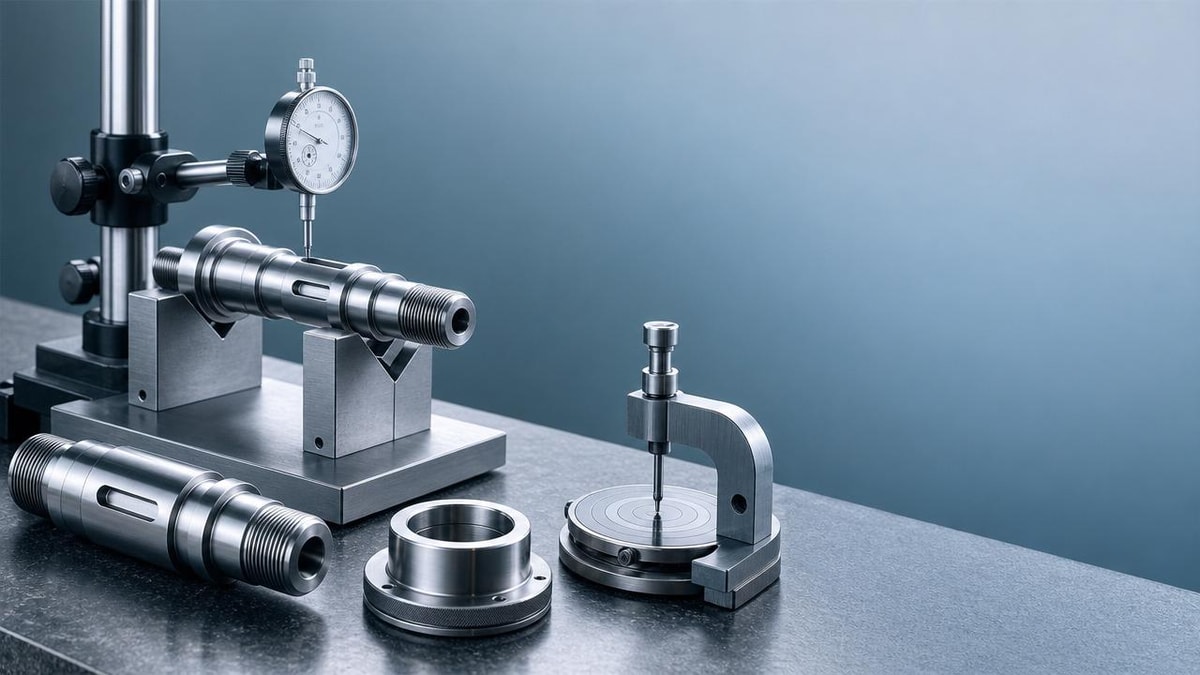
Even when dimensions appear acceptable, Shaft Parts can still reveal hidden machining problems after final inspection, from surface defects and runout issues to unstable tolerances that affect safety and reliability. For quality control and safety management teams, identifying these late-stage failures is essential to reducing rework, preventing field risks, and improving process consistency across precision manufacturing.
Why do Shaft Parts still fail after final inspection if most dimensions pass?
This is one of the most frustrating questions in CNC machining. A shaft may pass diameter checks, length verification, and even visual review, yet still cause assembly noise, vibration, premature bearing wear, or seal leakage once it reaches the next process or the customer. The reason is simple: many machining defects in Shaft Parts are not isolated dimensional errors. They are combined quality risks involving geometry, surface integrity, residual stress, concentricity, and process stability.
For quality control teams, final inspection often confirms whether the part matches drawing values at selected checkpoints. However, shaft performance depends on how all critical features interact under rotation, load, temperature, and fit conditions. A shaft with acceptable journal diameters can still have runout at one end, waviness on a bearing seat, micro-burrs at an edge, or heat-induced distortion after grinding. These problems may not be obvious during static inspection, but they become serious in use.
Safety managers should also pay attention because late-discovered defects are not only a quality cost issue. In automotive systems, energy equipment, machine tools, and automated production lines, failed Shaft Parts can trigger shutdowns, unstable rotation, seal damage, overheating, or even secondary equipment failure. That is why post-inspection failures deserve root-cause investigation rather than simple sorting and rework.
Which machining problems in Shaft Parts most often appear only at the final stage?
Several defect types are repeatedly found after machining seems complete. They usually become visible during final inspection, assembly, balancing, or functional testing rather than during in-process checks.
Among these, runout, straightness drift, and surface integrity issues are especially common in Shaft Parts because they may remain hidden when inspection focuses too heavily on simple diameter tolerance. In complex manufacturing, a shaft is rarely judged only by size. The real issue is whether it rotates correctly, mates consistently, and survives its service environment.
How can quality control teams tell whether a Shaft Parts defect is a measurement issue or a true machining issue?
This distinction matters because many disputes inside factories start with inconsistent inspection results. Before blaming machining, quality personnel should verify the measurement system. Shafts are sensitive to support method, reference datum, temperature, cleanliness, and operator technique. A part checked between centers may show different runout than the same part checked on V-blocks. A freshly ground shaft measured while still warm may appear out of size later at room temperature.
A practical approach is to ask four questions. First, is the inspection method aligned with the functional requirement of the shaft? Second, is the datum used in inspection identical to the datum used in machining and assembly? Third, is the gauge capability proven for the tolerance level involved? Fourth, do repeated measurements by different operators produce the same result?
If the measurement system is stable but the problem remains, the issue is likely in the machining process itself. Typical signs include defect patterns linked to machine number, tool life stage, batch sequence, shift, or heat treatment lot. For example, if Shaft Parts from one machine consistently show taper at the tailstock side, that points to alignment, support, or thermal behavior rather than inspection error.
Quality teams should combine dimensional data with surface checks, roundness records, machine logs, and process capability trends. When all evidence is connected, the cause becomes much clearer than relying on final pass/fail judgment alone.
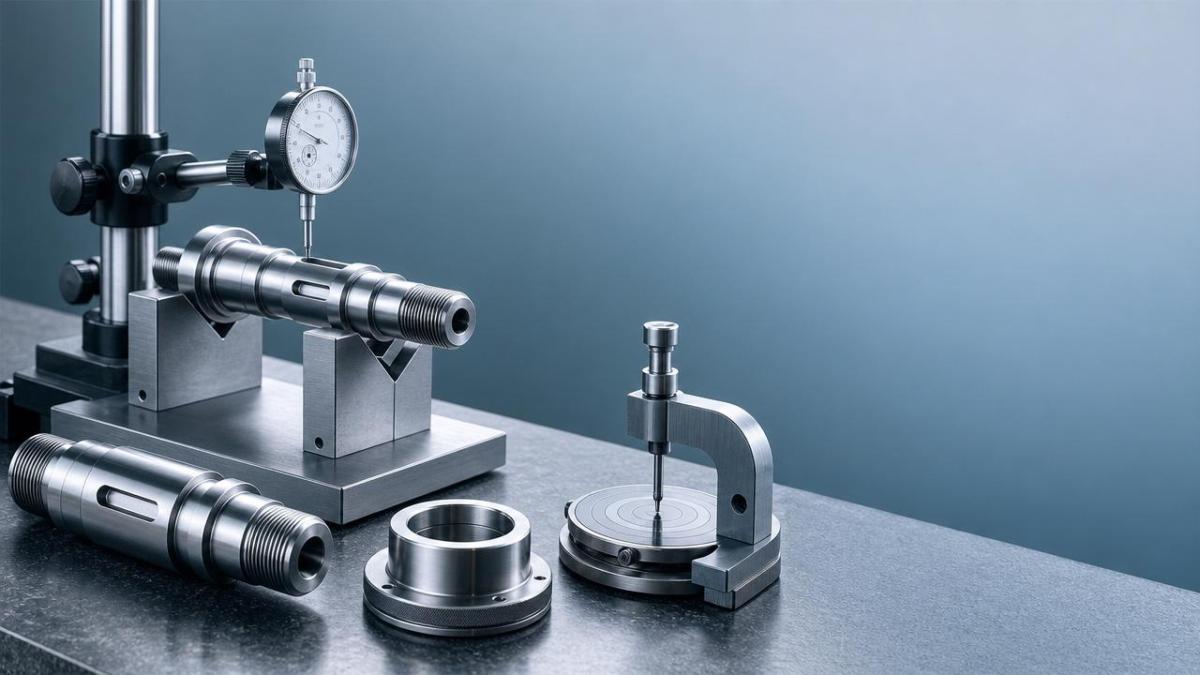
What are the most overlooked root causes behind late defects in Shaft Parts?
The most overlooked causes are usually not dramatic machine failures. They are process interactions that gradually create unstable results. One major factor is residual stress. If raw material contains internal stress, or if roughing removes stock unevenly, the shaft can bend slightly after semi-finishing, heat treatment, or grinding. Final inspection may catch the distortion only after value has already been added.
Another common cause is poor process sequencing. In Shaft Parts machining, the order of turning, heat treatment, grinding, thread cutting, keyway milling, and straightening influences final geometry. If a keyway is cut before final grinding without considering stress release, the shaft may move. If a bearing seat is finished before a later clamping step, the surface may be marked or distorted.
Tool condition is another hidden source. Progressive insert wear can create taper, poor surface finish, or inconsistent shoulder geometry long before the tool appears visibly damaged. Grinding wheel loading and dressing inconsistency can also leave thermal damage or chatter marks that are difficult to detect without proper lighting, roughness measurement, or metallurgical review.
Clamping strategy also deserves scrutiny. Long or slender Shaft Parts are highly sensitive to support pressure, center hole condition, and chuck jaw repeatability. Excessive force may temporarily straighten or deform the part during machining, only for the shaft to relax afterward and fail final inspection. In high-precision applications, this is a classic reason why results look good in-process but unstable at the end.
Which inspection points should quality and safety teams prioritize for Shaft Parts beyond basic dimensions?
If teams want to catch risk earlier, they need an inspection plan based on function, not just drawing convenience. For Shaft Parts used in rotating equipment, several checks should be prioritized because they directly affect reliability.
- Total runout and circular runout on critical journals and sealing areas
- Straightness over the full effective length, especially for long shafts
- Roundness and cylindricity where bearings, bushings, or couplings fit
- Surface roughness, waviness, chatter, and burn indications after grinding
- Burr condition on threads, grooves, shoulders, and oil holes
- Hardness consistency and any post-heat-treatment distortion
- Datum relationships between journals, threads, splines, and keyways
From a safety perspective, quality teams should also identify which shaft characteristics are critical to failure containment. A minor cosmetic mark may be acceptable on a nonfunctional area, while a small burn on a bearing seat could become a serious fatigue initiation point. Not all defects carry equal risk, so inspection priorities should reflect actual service consequences.
What mistakes do companies make when responding to rejected Shaft Parts?
A frequent mistake is treating late defects as isolated operator errors. In reality, repeated defects in Shaft Parts usually indicate process weakness, not just a single bad action. If the response is only to sort inventory and rework a few pieces, the same issue often returns in the next batch.
Another mistake is relying too much on final inspection instead of process prevention. End-of-line detection is expensive because material, machine time, grinding time, and handling cost have already accumulated. For shafts with tight tolerances, the right strategy is staged verification at roughing, semi-finishing, heat treatment, and final finishing, with statistical review rather than simple acceptance sampling.
Some teams also overfocus on nominal tolerance and ignore process capability. A shaft dimension may still be within print limits, but if the process is drifting toward the edge, the risk of customer complaints remains high. Process capability, machine condition, and tooling trends are often better predictors of future failure than a single final result.
Finally, companies sometimes approve rework without checking whether reworked Shaft Parts still meet function. Extra polishing, repeated grinding, or aggressive deburring can change surface integrity, fit, or hardness. Rework should be validated like any other process step, especially where safety, high-speed rotation, or fatigue loading is involved.
How can manufacturers reduce the chance that Shaft Parts problems appear only after final inspection?
The most effective strategy is to build control earlier into the machining route. Start with raw material and stress condition. If distortion is a recurring issue, review material source stability, pre-machining straightness, and whether stress-relief steps are needed. Then evaluate process sequencing to make sure critical journals and datum features are finished only when downstream operations will not damage them.
Machine capability should also be matched to shaft geometry. Long, thin, or high-precision Shaft Parts require stable support, proper tailstock condition, accurate centers, and controlled thermal behavior. Tool life rules must be based on actual wear data, not only operator judgment. For grinding, wheel dressing intervals, coolant condition, and spark-out parameters need strict discipline.
In inspection planning, introduce in-process checks at the points where errors first become detectable. Measure runout after key setups, confirm straightness after heat treatment, and verify surface integrity before the final operation hides the source of the defect. Digital records from CNC machine tools, precision gauges, and shop-floor quality systems can help reveal whether a problem is random or process-related.
Cross-functional review is equally important. Quality control, production engineering, safety management, and maintenance should analyze recurring shaft failures together. In modern manufacturing environments shaped by automation and smart factory methods, the strongest results come when inspection data is connected to machine parameters, tooling history, and corrective action tracking.
What should you confirm first when evaluating a supplier or internal process for Shaft Parts?
If you are qualifying a supplier or reviewing an internal line, do not start only with price or nominal tolerance claims. First confirm how the supplier defines critical characteristics for Shaft Parts, how runout and straightness are measured, and whether the inspection method reflects the application. Ask how they control residual stress, heat treatment variation, tool wear, and clamping distortion. Request examples of capability data, not only sample inspection reports.
Also confirm their reaction plan when a shaft fails late in the process. Strong manufacturers can explain containment, root-cause analysis, rework validation, and preventive action clearly. They should be able to discuss not only what they inspect, but why those controls matter for rotating performance, safety, and long-term reliability.
For quality and safety teams, the key lesson is that late defects in Shaft Parts are rarely random surprises. They are often signals of hidden variation in machining, grinding, fixturing, heat treatment, or measurement. If you need to confirm a specific solution, process route, inspection plan, lead time, quotation basis, or cooperation model, the best first step is to communicate the shaft’s functional surfaces, critical tolerances, operating conditions, rejection history, and acceptable risk level before production decisions are finalized.
PREVIOUS ARTICLE
NEXT ARTICLE
Recommended for You
 Industrial Robotics payback depends on more than labor savingsManufacturing Market Research Center
 Shaft Parts machining problems that show up after final inspectionCNC Machining Technology Center
 Which Production Process changes bring the fastest output gains?CNC Machining Technology Center
 Industrial Automation projects fail when integration is underestimatedCNC Machining Technology Center
 CNC metal cutting costs rise fast when material data is wrongCNC Machining Technology Center
 High precision lathe claims to verify before accepting deliveryMachine Tool Industry Editorial Team

Aris Katos
Future of Carbide Coatings
15+ years in precision manufacturing systems. Specialized in high-speed milling and aerospace grade alloy processing.
▶
Shaft Parts machining problems that show up after final inspectionCNC Machining Technology Center▶
Which Production Process changes bring the fastest output gains?CNC Machining Technology Center▶
Metal machining bottlenecks that slow down small batch outputCNC Machining Technology Center▶
Shaft Parts Machining Problems That Show Up After Final InspectionCNC Machining Technology Center▶
Metal Machining Bottlenecks That Slow Delivery More Than CapacityCNC Machining Technology Center
Mastering 5-Axis Workholding Strategies
Join our technical panel on Nov 15th to learn about reducing vibrations in thin-wall components.

Providing you with integrated sanding solutions
Before-sales and after-sales services
Comprehensive technical support