• Global CNC market projected to reach $128B by 2028 • New EU trade regulations for precision tooling components • Aerospace deman
NYSE: CNC +1.2%LME: STEEL -0.4%

Automated Production Bottlenecks Often Start at Changeover
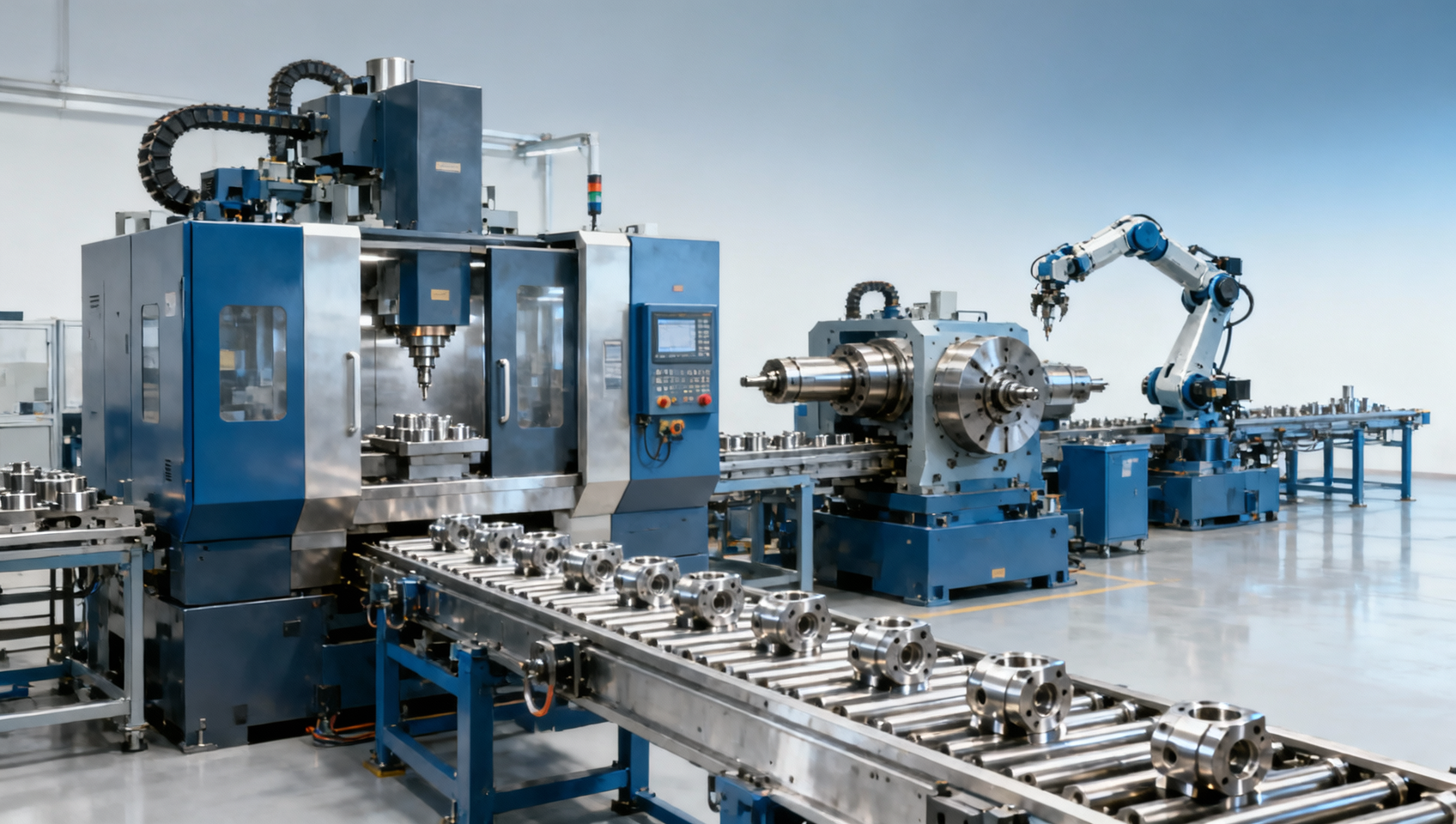
In automated production, efficiency losses often begin not during machining, but at changeover. For manufacturers relying on industrial CNC, CNC milling, automated lathe systems, and integrated Automated Production Line operations, slow setup shifts can disrupt the entire Production Process. Understanding how changeover affects CNC production, metal machining, and Industrial Automation is essential for improving flexibility, uptime, and competitiveness in the Global Manufacturing landscape.
Why changeover is often the hidden bottleneck in automated production
In many CNC production environments, managers focus on spindle speed, cutting stability, tool life, or robot cycle time. Those factors matter, but the real production bottleneck often appears between batches, part numbers, or fixture states. A changeover that takes 20-40 minutes can quietly erase the gains created by faster machining. In high-mix, medium-volume manufacturing, this loss repeats several times per shift and can become more expensive than a modest reduction in cutting efficiency.
Changeover includes more than replacing tools. It may involve fixture swaps, program calls, offset verification, probing, material routing, first-piece inspection, robot gripper adjustment, and communication between CNC machine tools and the automated production line. When even 1 of these steps is delayed, upstream and downstream processes can stop. This is why many industrial automation projects underperform: the line is automated, but the transition logic is still manual, fragmented, or poorly standardized.
For operators, the pain point is frequent interruption and unclear setup responsibility. For procurement teams, the problem is that machine comparison often emphasizes machine travel, spindle power, or axis count, while setup efficiency receives too little weight. For decision-makers, the issue is strategic. If product mix changes every 2-8 hours, or if customer orders shift weekly, a rigid production process creates scheduling risk, missed delivery windows, and higher unit cost.
In sectors such as automotive parts, aerospace components, electronics housings, and energy equipment, the demand for smaller batch sizes and faster response has made changeover capability a frontline issue. A plant with strong metal machining capacity but weak setup discipline can still suffer from low OEE, unstable lead time, and avoidable overtime. That is why more global manufacturing teams now treat changeover as a production system issue, not simply an operator task.
What typically slows down a CNC changeover?
- Manual fixture alignment and repeated clamping checks when the workholding system is not standardized across machines.
- Tool offset re-entry, tool magazine mismatch, or uncertain tool life records that force extra verification before restart.
- Program version confusion between engineering, operators, and line controllers, especially in multi-machine automated lathe or CNC milling cells.
- First-piece inspection delays because quality checkpoints are not integrated into the setup sequence.
- Robot hand change, pallet routing, or sensor reset issues that stop the full automated production line even when one machine is ready.
The key lesson is simple: a fast machine cannot compensate for a slow transition. In practical terms, reducing a 30-minute changeover to 12-15 minutes may create more daily capacity than raising spindle utilization by a few percentage points. That is why setup engineering deserves the same attention as machining optimization.
Where changeover losses appear across the production process
Changeover losses do not only appear at the machine door. They are distributed across planning, tooling, material flow, quality control, and automation logic. In a typical CNC production system, the bottleneck may shift from one node to another depending on part complexity, batch size, and line integration level. This is why companies need to map the entire production process rather than blame a single operator or machine.
For example, a machining center may complete fixture exchange in 8 minutes, but the first article may still be delayed by another 15-25 minutes if measurement approval is manual. Similarly, an automated lathe cell may have rapid tool call capability, yet lose time because raw material replenishment is not synchronized. In industrial automation, localized speed is not enough. The transition must be stable from order release to qualified restart.
The table below highlights where automated production bottlenecks commonly begin and how they affect uptime, labor use, and output stability. This helps buyers, production engineers, and plant managers identify whether they need better equipment, better process design, or better digital coordination.
This comparison shows a useful pattern: changeover is rarely a single-step delay. It is usually a chain of 3-5 connected checks. If one check remains manual or unclear, the whole production process slows down. That is why plants moving toward smart manufacturing should evaluate setup readiness as carefully as they evaluate cutting capability.
Which environments are most exposed?
High-mix production is the most exposed, especially where part families vary in diameter, clamping method, or tolerance level. In aerospace and energy equipment, a single machine may switch between low-volume precision parts within the same 1-2 shift window. In electronics and automotive supply chains, delivery pressure may force frequent line balancing and urgent part substitution.
Plants with 6-12 CNC machines often feel this pain more strongly than very small workshops. The reason is scale. Once multiple machines feed a shared automated production line, each delayed changeover affects robot allocation, pallet buffering, and inspection timing. At that point, setup speed becomes a plant-level KPI, not just a local shop-floor issue.
Another exposed group is manufacturers adding automation to legacy machine tools. The machining power may still be sufficient, but communication interfaces, preset routines, and digital work instructions may lag behind. This creates a gap between machine capability and real throughput, which procurement teams should identify before expanding line automation.
How to evaluate equipment and automation for faster changeover
When buyers compare CNC machine tools or automated production line solutions, they should move beyond basic machine specifications. A machine with strong rigidity and multi-axis capability can still create poor output if changeover tools are weak. The better evaluation method is to review setup architecture, data flow, fixture compatibility, and restart control under real batch-switch conditions.
For procurement, there are at least 5 key checks. First, ask whether tools can be preset offline. Second, verify whether fixture references are repeatable enough to reduce manual indication. Third, confirm whether the controller supports recipe management for multiple part numbers. Fourth, check how probing, offset adjustment, and quality release connect. Fifth, review how robots, pallets, or loading systems react when the part family changes.
For users and operators, the best setup-friendly systems reduce uncertainty. That may include quick-change fixture interfaces, standardized clamping points, digital setup sheets, barcode-linked programs, and alarm guidance for restart. Even simple changes matter. Reducing manual re-entry from 12 fields to 3 fields can cut setup error risk dramatically in daily CNC production.
The table below provides a practical selection framework for purchasing teams comparing machine tools, automation modules, or integrated manufacturing cells. It focuses on decision criteria that directly influence changeover performance, not just nameplate performance.
A good purchasing decision should link equipment choice to actual production rhythm. If the plant changes part numbers once per week, setup optimization may be secondary. If the line changes 2-6 times per day, changeover architecture becomes a central purchasing criterion. Matching the solution to the production profile prevents overspending on unnecessary complexity while avoiding underinvestment in critical flexibility.
A practical 4-step assessment before buying
- Map current setup time into internal tasks and external tasks. External tasks can be prepared while the machine is still running.
- Group parts by fixture family, tool family, and inspection method to see where the biggest setup variability appears.
- Run a live changeover trial, ideally across 2-3 representative part numbers, not only a demonstration cycle.
- Review support scope: training, commissioning, signal integration, spare parts, and post-install setup optimization.
This approach helps procurement teams avoid a common mistake: buying a high-performance CNC or robot cell without confirming whether the supplier can support changeover engineering in the real factory environment.
Implementation methods that reduce setup time without sacrificing quality
Reducing changeover time should not mean rushing the process. In precision manufacturing, quality and traceability remain essential, especially when producing shaft parts, discs, housings, and structural components with tight tolerances. The best improvement path is to remove unnecessary motion, unclear handoffs, and duplicate checks while keeping critical verification points intact.
A useful starting point is to separate setup activities into before-stop, stop-time, and after-restart stages. Before-stop tasks may include preparing tools, fixtures, programs, gauges, and raw material. Stop-time tasks should be limited to essential physical exchange and controller confirmation. After-restart tasks should focus on first-piece release and stable flow into the automated production line. In many plants, this 3-stage method reveals that 30%-50% of current setup work can be shifted away from machine idle time.
Another high-impact method is standardization across machine types. If CNC milling machines, turning centers, and automated lathe systems use different naming, offset logic, or clamping conventions, operators must mentally reset each time. Standardized setup sheets, unified tool coding, and common fixture references can reduce learning time for new operators over a 2-4 week ramp-up period and improve shift-to-shift consistency.
Digital support also matters. Simple integrations such as barcode program selection, electronic work instructions, and in-machine probing can lower restart risk. More advanced environments may connect MES, tool presetters, and line controllers so that the correct setup recipe is called automatically. The goal is not digitalization for its own sake. The goal is a predictable production process with fewer manual decisions at the moment of change.
Common improvement priorities for manufacturers
- Convert repeatable manual setup steps into documented standard work with time targets such as 5 minutes, 10 minutes, or 15 minutes per task group.
- Use modular fixtures or base plates so that only the locating elements change between part families.
- Build first-piece inspection into the setup routine, using probing or predefined measurement plans to avoid delayed approval.
- Train operators, maintenance staff, and quality teams together, because changeover failure often occurs at the interface between functions.
What results are realistic?
Without promising fixed outcomes, many manufacturers target setup reduction in stages rather than expecting one immediate transformation. Stage 1 may focus on visibility and standard work over 2-6 weeks. Stage 2 may address fixtures, tool preparation, and digital setup aids over 1-3 months. Stage 3 may integrate robot logic, pallet flow, and line-level scheduling over a longer cycle. This phased model is often more practical than a one-time overhaul.
The right benchmark is not only shorter setup. It is smoother recovery, fewer first-piece deviations, and more stable unattended hours. For a plant that runs evening or night shifts, even an extra 1-2 hours of reliable autonomous operation per day can justify focused changeover improvement work.
Common questions, risks, and decision mistakes in CNC changeover projects
Many companies recognize setup losses, but they still delay action because they assume only major automation investment can solve the problem. In reality, some bottlenecks come from process design, operator guidance, and fixture planning. Others do require equipment upgrades. The challenge is knowing which issue belongs in which category. This is where structured evaluation prevents unnecessary cost.
Another common mistake is to measure average setup time only. Average time hides instability. A line that usually changes over in 12 minutes but occasionally takes 45 minutes may create more delivery risk than a line that consistently takes 18 minutes. Procurement and management teams should therefore track range, repeatability, and restart quality, not only the best-case number.
Compliance also deserves attention in global manufacturing environments. While changeover itself is not a certification, machine safety, electrical integration, guarding, traceability, and operator procedures may need to align with the applicable regional regulations and customer requirements. If a factory exports parts across markets, documentation discipline during setup and program control becomes even more important.
The questions below address frequent search intent from researchers, operators, buyers, and decision-makers evaluating CNC production efficiency and automated production line flexibility.
How do I know whether changeover is the real bottleneck?
Start with a 2-week observation window. Measure how many times machines are stopped for part-family changes, fixture swaps, tool replacement, first-piece checks, and automation resets. If these non-cutting activities consume a visible share of scheduled production time, or if queue buildup appears after each batch switch, changeover is likely a primary bottleneck. In high-mix CNC production, this is very common.
Is fast changeover only important for small batches?
No. Small-batch manufacturing feels the impact first, but medium-volume lines also benefit. Even where batch sizes are stable, frequent maintenance recovery, tool family change, or model revision can create similar setup losses. Fast, repeatable changeover supports resilience, not just flexibility. It also helps when customer demand shifts from monthly planning to weekly or even daily pull signals.
What should procurement ask a supplier before ordering equipment?
Ask for a real setup scenario, not just cutting samples. Confirm how long fixture exchange takes, how programs are controlled, how offsets are verified, how the robot or loader adapts, and what training is included. Review lead time in practical terms as well, such as 6-12 weeks for standard components versus longer cycles for customized fixtures or integrated automation interfaces. This gives a more realistic purchasing picture.
Can legacy equipment still support better changeover?
Often yes, especially if the machine is mechanically stable. Legacy CNC machine tools can gain meaningful improvement through modular workholding, offline tool presetting, revised setup sheets, barcode program control, and clearer quality checkpoints. Full replacement is not always the first step. A mixed strategy, where older assets are upgraded and new automation is added selectively, may offer a stronger return path.
Why work with a partner that understands CNC production, automation, and global manufacturing needs
Changeover improvement is most effective when machine capability, tooling logic, production planning, and automation interfaces are reviewed together. A supplier or industry platform focused on CNC machining and precision manufacturing can help decision-makers compare options across machine tools, fixtures, cutting systems, and automated production line integration without treating them as separate purchases. This reduces blind spots during evaluation.
For information researchers, this means access to industry news, technology trends, and market updates that explain why flexibility is becoming central in global manufacturing. For operators and users, it means practical insight into setup methods, equipment compatibility, and process reliability. For procurement teams, it means clearer support on configuration choices, delivery windows, and technical matching. For business leaders, it means a stronger basis for capacity planning and investment timing.
If you are evaluating CNC milling systems, automated lathe cells, machining centers, industrial robots, or integrated production process upgrades, the most useful next step is a targeted consultation. You can discuss 5 concrete areas: parameter confirmation, product selection, expected delivery cycle, custom solution scope, and applicable documentation or compliance expectations. Where needed, sample-part review, line layout discussion, or quotation communication can also be included.
Contact us if you need support comparing changeover-friendly equipment, reviewing a current production bottleneck, or planning a more flexible automated production line. A focused technical conversation can help clarify whether your next priority should be fixture standardization, software integration, machine selection, or a broader CNC production upgrade strategy.
PREVIOUS ARTICLE
Recommended for You
 Heavy-duty Machining Center for mold making: Why coolant filtration standards evolve faster than OEM manualsMachine Tool Industry Editorial Team
 Quick-change Fixture Design for CNC turning: Why clamping force consistency drops after 200 cyclesCNC Machining Technology Center
 5 Axis Machining for impeller manufacturing: Why toolpath smoothing affects surface fatigue lifeCNC Machining Technology Center
 Lean Production Process implementation: Where value stream mapping fails to expose hidden machine downtimeManufacturing Market Research Center
 Modular Tooling System for flexible manufacturing: Why interface repeatability degrades faster than expectedMachine Tool Industry Editorial Team
 Industrial Automation control system for CNC machines: When cybersecurity updates disrupt scheduled maintenanceMachine Tool Industry Editorial Team

Aris Katos
Future of Carbide Coatings
15+ years in precision manufacturing systems. Specialized in high-speed milling and aerospace grade alloy processing.
▶
Industrial Automation control system for CNC machines: When cybersecurity updates disrupt scheduled maintenanceMachine Tool Industry Editorial Team▶
Automated Production Line troubleshooting: Why intermittent faults resist standard diagnostic treesMachine Tool Industry Editorial Team▶
Automated machine tool: When integrated vision systems introduce new validation headachesMachine Tool Industry Editorial Team▶
Industrial Robotics Payback Gets Delayed by These GapsMachine Tool Industry Editorial Team▶
Automated Production Bottlenecks Often Start at ChangeoverMachine Tool Industry Editorial Team
Mastering 5-Axis Workholding Strategies
Join our technical panel on Nov 15th to learn about reducing vibrations in thin-wall components.

Providing you with integrated sanding solutions
Before-sales and after-sales services
Comprehensive technical support