• Global CNC market projected to reach $128B by 2028 • New EU trade regulations for precision tooling components • Aerospace deman
NYSE: CNC +1.2%LME: STEEL -0.4%

Automated Production Line Issues That Appear Only After Scale-Up
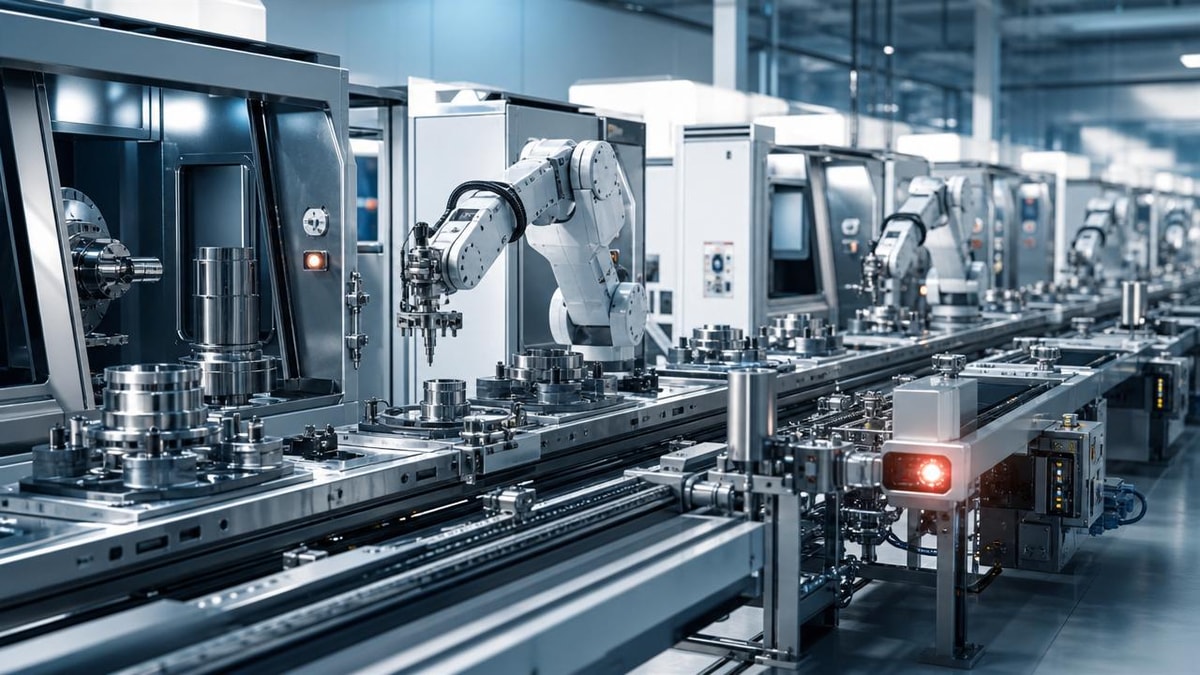
An Automated Production Line that performs flawlessly in pilot runs can reveal unexpected bottlenecks, quality drift, and coordination failures once full-scale production begins. For project managers and engineering leaders, understanding these scale-up issues early is critical to protecting throughput, cost, and delivery targets while building a more stable, efficient manufacturing system.
Why scale-up problems are becoming a bigger industry signal
Across CNC machining, precision manufacturing, and integrated assembly operations, the pressure on production systems has changed. Customers expect shorter lead times, higher part consistency, traceable quality data, and faster product launches. At the same time, manufacturers are introducing more robotics, more sensors, more software layers, and tighter takt requirements. The result is that an Automated Production Line is no longer judged only by whether it can run, but by whether it can sustain output at volume without hidden instability.
This is especially relevant in industries such as automotive, aerospace, electronics, and energy equipment, where CNC machine tools, machining centers, transfer systems, and automated inspection cells are increasingly linked into larger digital production environments. In these settings, scale-up is not a simple multiplication of pilot performance. It is a transition into a new operating reality where variation accumulates faster, interfaces become more fragile, and small engineering assumptions start to affect financial outcomes.
For project leaders, this shift matters because many launch plans still underestimate what happens between “successful test” and “stable mass production.” A line can meet cycle time in a controlled demonstration and still fail at volume because the interaction between machines, tooling, material flow, software logic, operator behavior, and maintenance response changes under sustained load.
The trend behind the issue: complexity is rising faster than production readiness
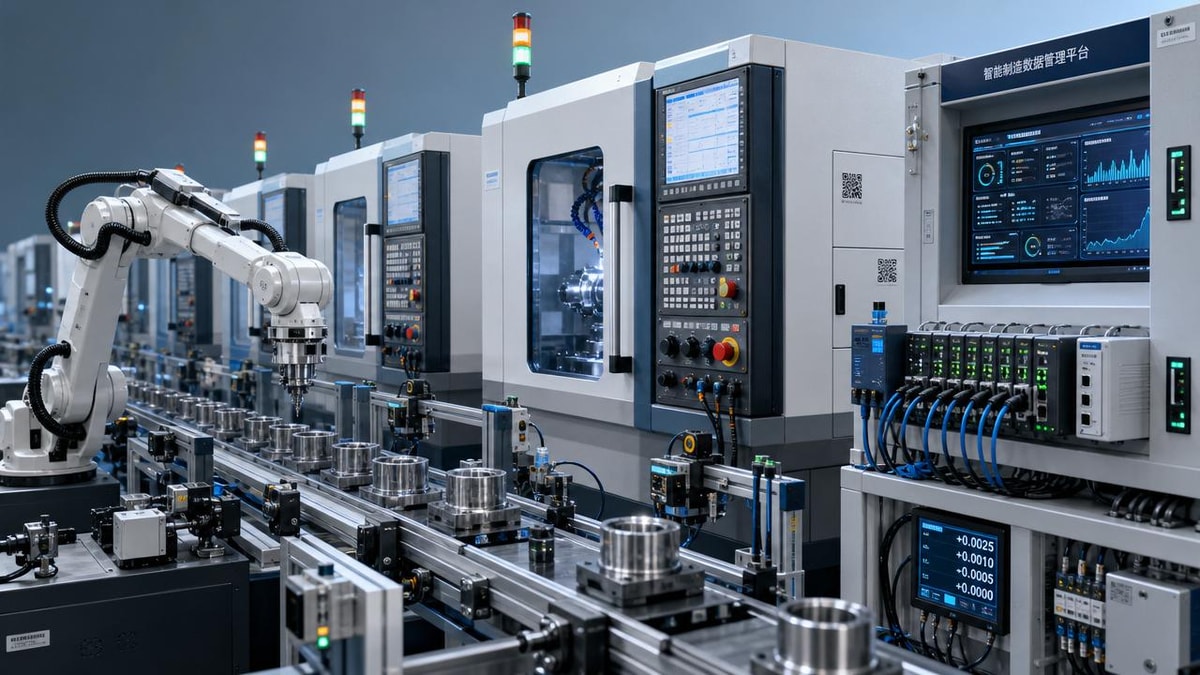
One of the clearest signals in modern manufacturing is that complexity is scaling faster than readiness frameworks. An Automated Production Line today often combines CNC equipment, robots, vision systems, automated gauging, MES connectivity, pallet handling, tool life monitoring, and predictive maintenance functions. Each layer promises efficiency, but each layer also creates new dependencies that may remain invisible during pilot runs.
Another trend is the reduction of buffer time. Manufacturers want faster commissioning, compressed ramp-up schedules, and earlier customer shipments. That accelerates capital return, but it also leaves less time to expose low-frequency failures. Problems that occur once every 500 cycles may never appear in a pilot batch, yet they become critical in a full-scale Automated Production Line running thousands of cycles per shift.
A third signal is the move toward mixed-model and flexible manufacturing. A line designed to process multiple part variants is more exposed to fixture tolerance stack-up, tooling transitions, recipe switching errors, and inconsistent recovery logic after stoppages. In other words, the smarter and more flexible the line becomes, the more carefully scale-up risk must be managed.
What changes after pilot success: the most common scale-up failure patterns
The most important change after scale-up is not always a major breakdown. More often, it is the emergence of repeated small losses that compound into significant output gaps. These losses may appear in cycle instability, rising tool change frequency, inconsistent loading, sensor contamination, queue imbalance, or delayed fault recovery.
In CNC-centered production systems, quality drift is one of the first warning signs. A process that looks centered during pilot production can shift when spindle temperature, tool wear, coolant condition, material batch variation, and fixture fatigue begin to interact over longer runs. As volume increases, the line may still appear “running,” but scrap, rework, and downstream sorting quietly erode margin.
Another recurring issue is coordination failure between stations. During pilot runs, engineering teams usually monitor the line closely, manually clear exceptions, and compensate for weak handshakes between machines. At full production, that support is reduced, and interface weaknesses become visible. A robot may wait for a confirmation bit that arrives late. A conveyor may release parts with timing variation. An inspection result may not synchronize correctly with part routing. Each issue seems minor in isolation, but together they reduce OEE and create schedule risk.
For decision-makers, these signals are more useful than broad statements about automation success. They reveal where a production line is vulnerable when demand, complexity, and operating hours increase together.
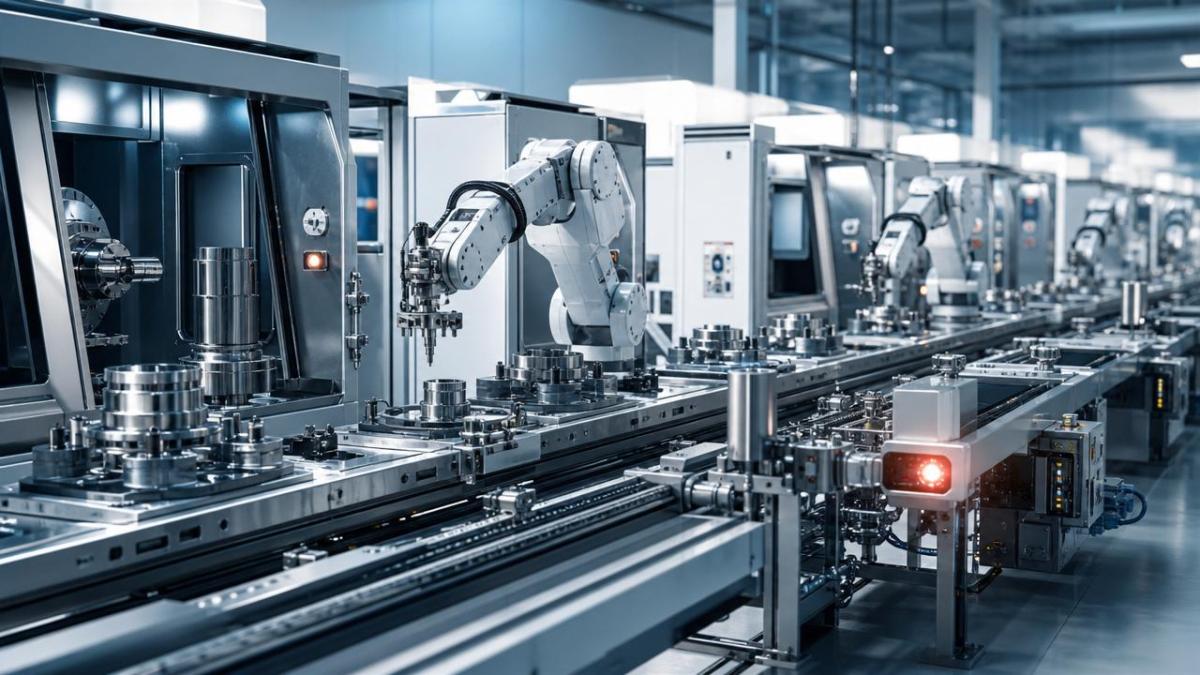
What is driving these issues in modern Automated Production Line projects
Several forces are pushing scale-up risks higher. First is tighter economic pressure. Manufacturers want automation investments to deliver faster returns, so project teams are often measured against launch speed more heavily than long-term robustness. That can shift attention away from stress testing, fault simulation, and prolonged capability verification.
Second is digital integration. MES, ERP links, production dashboards, traceability systems, and remote diagnostics can improve transparency, but they also add points of failure. If data structures, naming logic, or event timing are weak, the Automated Production Line may experience routing confusion, inaccurate downtime reporting, or delayed process response after scale-up.
Third is supply chain variability. Tooling, sensors, drives, and software modules may come from multiple suppliers. During pilot builds, teams often work with ideal components, experienced vendor support, and limited shift coverage. In real production, spare part substitutions, maintenance skill gaps, and vendor response delays can expose weak standardization.
Fourth is the rising requirement for flexibility. A line that supports more SKU changes or precision targets has less tolerance for undocumented manual adjustments. Scale-up therefore exposes whether process knowledge is truly embedded in the system or still dependent on a few key engineers.
Who feels the impact most strongly
The effects of scale-up problems are not distributed equally. Project managers see milestone drift and budget pressure. Manufacturing engineers face repeated root-cause cycles. Quality teams handle rising containment actions. Maintenance teams inherit unstable systems that were never fully hardened. Procurement and supplier management may also be pulled in when replacement components, service support, or software updates become urgent.
The most important warning signs before problems become expensive
Not every issue starts as a crisis. In many Automated Production Line projects, the earliest indicators are subtle. If engineering teams need repeated manual overrides to maintain output, the line is not truly stable. If cycle time averages look acceptable but the spread is widening, bottlenecks are forming. If first-pass yield declines only on night shift or after longer runs, the system is reacting to scale conditions rather than isolated operator behavior.
Another warning sign is when support from suppliers remains unusually intensive after launch. That may indicate unresolved software, motion, or sensing dependencies. Similarly, if root-cause reports repeatedly point to “intermittent” faults without durable corrective action, scale-up stress is exposing design gaps that were not closed during commissioning.
For project leaders in CNC and precision manufacturing environments, one of the strongest signals is divergence between machine-level performance and line-level performance. Individual machines may pass acceptance, yet the full Automated Production Line underperforms because handoff logic, queue design, and recovery behavior were not validated under realistic production variation.
How smarter manufacturers are changing their scale-up approach
A notable trend in advanced manufacturing is the shift from launch validation to resilience validation. Instead of asking only whether the line can hit target speed, stronger teams ask whether it can sustain target speed across shifts, part variants, maintenance events, tool changes, and abnormal recovery scenarios. This is a more realistic way to evaluate an Automated Production Line in the current market.
Manufacturers are also putting more emphasis on production data quality. It is not enough to have dashboards; the event logic behind those dashboards must be trustworthy. Clean downtime classification, part genealogy, station-level cycle data, and reason-code discipline help teams identify whether scale-up losses come from process physics, control logic, material behavior, or organizational response.
Another promising direction is cross-functional ramp governance. Instead of handing the line from project engineering to operations too early, leading firms keep project, process, quality, maintenance, and supplier teams tied to a shared stabilization plan. This approach reflects a broader industry lesson: scale-up success is rarely the result of one perfect machine; it comes from coordinated system ownership.
Practical judgment framework for project managers and engineering leaders
For leaders responsible for an Automated Production Line, the key question is not whether issues will appear after scale-up, but which issues are most likely and how quickly the team can detect them. A useful judgment framework includes five areas.
First, test at realistic duration, not only realistic speed. Second, separate machine acceptance from integrated line acceptance. Third, monitor variability, not just averages. Fourth, validate abnormal recovery logic as rigorously as standard operation. Fifth, confirm that operational teams can sustain the line without exceptional engineering presence.
These priorities align with the broader direction of smart manufacturing. As automation systems become more connected and more precise, commercial success depends less on headline equipment capability and more on stability under real demand conditions.
What to do next if scale-up risk is already visible
If warning signs are already present, companies should avoid treating them as isolated maintenance events. The better response is to map recurring symptoms against system-level causes: control timing, fixture repeatability, tooling strategy, thermal behavior, operator intervention points, and digital data reliability. This prevents the common mistake of solving the same issue repeatedly in different forms.
It is also wise to reset ramp expectations where necessary. Protecting customer deliveries matters, but forcing a weak Automated Production Line to chase output without stabilization often increases total cost. A short, disciplined correction phase can save months of quality firefighting and schedule disruption later.
FAQ
Why does an Automated Production Line pass pilot runs but fail at volume?
Pilot runs usually involve limited duration, close engineering supervision, and lower variation. Full-scale production introduces sustained load, shift differences, longer thermal cycles, more material variation, and more interface dependency, which expose weaknesses not visible earlier.
What is the most overlooked scale-up risk?
Micro-stoppages and recovery logic are often underestimated. They may not cause dramatic failures, but they can quietly reduce throughput and make the Automated Production Line appear unreliable even when machines are technically available.
What should project managers review before full launch?
They should review run-at-rate evidence, variation trends, quality drift by shift, spare parts readiness, interface logic between stations, and whether operations can manage the line without heavy engineering intervention.
Final perspective for decision-makers
The broader industry direction is clear: automation is advancing, precision requirements are rising, and integrated production systems are becoming central to competitiveness. But this also means that scale-up risk in every Automated Production Line deserves more strategic attention than in the past. For project managers and engineering leaders, the real advantage comes from recognizing that scale changes system behavior. If companies want to judge how these trends affect their own operations, they should confirm three things early: where variation will accumulate, which interfaces are most fragile, and whether the line can remain stable when engineering support steps back. Those answers will shape not only launch success, but long-term manufacturing performance.
Recommended for You
 Industrial Machining Equipment Lead Times Are Changing AgainManufacturing Market Research Center
 Where Industrial Robotics Adds Value Beyond Simple Labor SavingsMachine Tool Industry Editorial Team
 Shaft Parts Machining Problems That Show Up After Final InspectionCNC Machining Technology Center
 Production Process Variations That Quietly Raise Scrap RatesCNC Machining Technology Center
 Industrial Automation Projects Fail When Data Is Added Too LateCNC Machining Technology Center
 CNC Metal Cutting Quality Drops Often Start With ClampingMachine Tool Industry Editorial Team

Aris Katos
Future of Carbide Coatings
15+ years in precision manufacturing systems. Specialized in high-speed milling and aerospace grade alloy processing.
▶
Where Industrial Robotics Adds Value Beyond Simple Labor SavingsMachine Tool Industry Editorial Team▶
Automated Production Line Issues That Appear Only After Scale-UpMachine Tool Industry Editorial Team▶
Is Space-Saving CNC Manufacturing Worth the Layout Trade-Off?Machine Tool Industry Editorial Team▶
How Automated Production Changes Defect Control on the LineMachine Tool Industry Editorial Team▶
Automated Production Line gaps that appear between design and launchMachine Tool Industry Editorial Team
Mastering 5-Axis Workholding Strategies
Join our technical panel on Nov 15th to learn about reducing vibrations in thin-wall components.

Providing you with integrated sanding solutions
Before-sales and after-sales services
Comprehensive technical support