• Global CNC market projected to reach $128B by 2028 • New EU trade regulations for precision tooling components • Aerospace deman
NYSE: CNC +1.2%LME: STEEL -0.4%

Is Space-Saving CNC Manufacturing Worth the Layout Trade-Off?
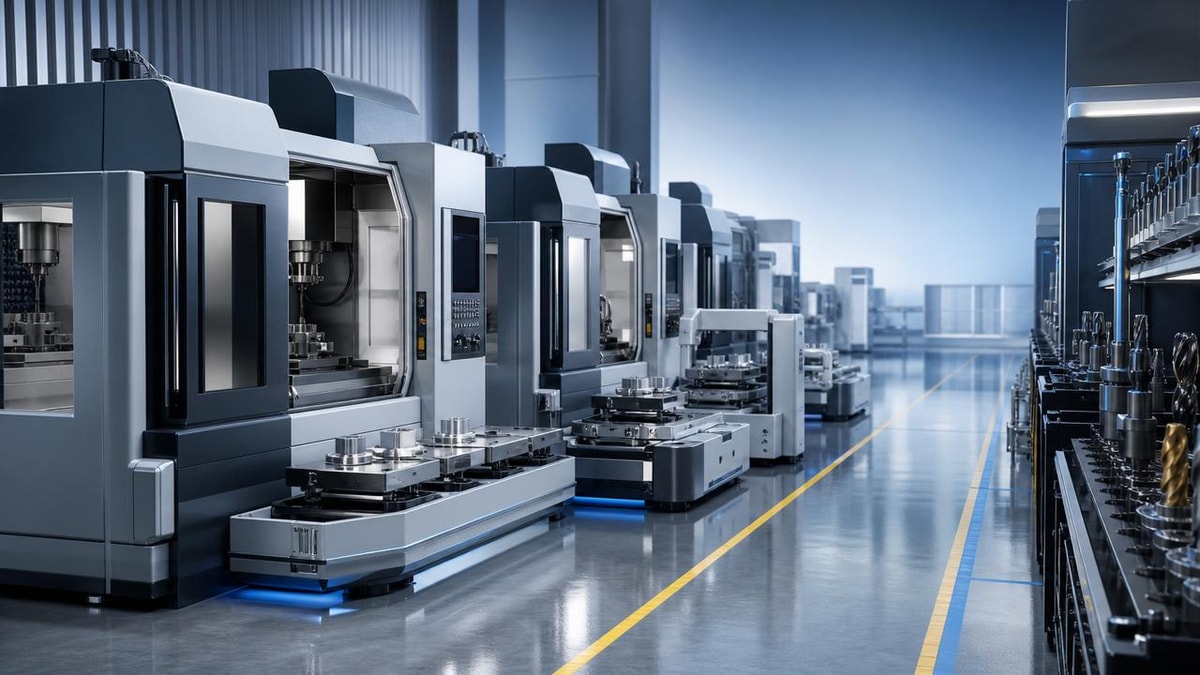
For project managers balancing throughput, safety, and floor efficiency, the appeal of space-saving CNC manufacturing is obvious: if the same output can be achieved in less space, the business gains flexibility, lower facility pressure, and better asset utilization. In practice, however, compact layouts are only worth the trade-off when they improve the entire production system rather than just reducing the footprint of individual machines.
The short answer is yes—space-saving CNC manufacturing can be worth it, but only under specific conditions. It tends to deliver real value when floor space is constrained, material flow is redesigned together with machine placement, maintenance access is protected, and future capacity changes are built into the plan. It becomes a costly mistake when companies simply compress equipment into tighter rows and create bottlenecks, unsafe access, difficult chip removal, or poor serviceability.
For engineering and project leaders, the key question is not “How many machines can fit?” but “Will this layout reduce total operating friction?” That means evaluating throughput per square meter, operator travel distance, tool and fixture logistics, downtime risk, quality stability, and expansion options. A compact CNC cell that saves space but adds waiting time, forklift conflicts, or maintenance delays often performs worse than a slightly larger but better-balanced layout.
This article examines the real business case for space-saving CNC manufacturing, where the trade-offs appear, and how project managers can decide whether a compact CNC layout supports long-term production goals.
What project managers really need to know before choosing a compact CNC layout
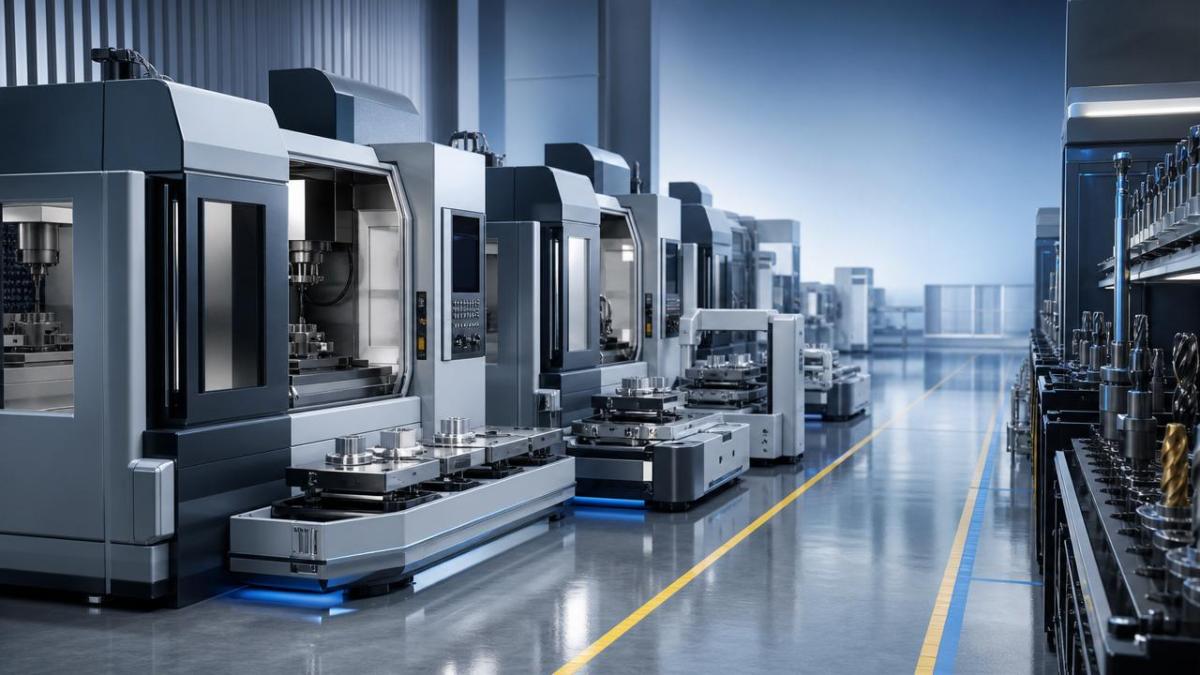
When people search for answers about space-saving CNC manufacturing, they are usually not looking for a general definition. They want to know whether a denser setup will improve operations or create hidden costs. For project managers, the decision is tied directly to delivery reliability, capex efficiency, staffing, and operational risk.
The most important issue is whether the layout supports flow. A CNC workshop is not just a collection of machine tools; it is a movement system for raw material, in-process parts, finished parts, tools, chips, coolant, operators, inspectors, and maintenance personnel. If one of those flows becomes constrained, the apparent space savings can disappear quickly.
This is why the best compact manufacturing projects start with system design instead of machine count. Teams that define takt needs, process sequence, loading methods, inspection points, and maintenance routines before locking the floor plan are far more likely to capture the value of a smaller footprint.
When space-saving CNC manufacturing creates real operational value
There are several situations where space-saving CNC manufacturing produces measurable benefits. The most obvious is facility cost pressure. In high-rent industrial zones or plants approaching floor capacity, reducing occupied area can delay building expansion, reduce utility distribution complexity, and free room for secondary processes such as inspection, assembly, or automation support.
Compact layouts can also improve communication and supervision. When related CNC machines, presetting stations, and quality checkpoints are arranged in tighter, more intentional cells, operators and team leads often respond faster to alarms, setup issues, and quality deviations. Shorter walking distances can support better labor efficiency, especially in high-mix, medium-volume environments.
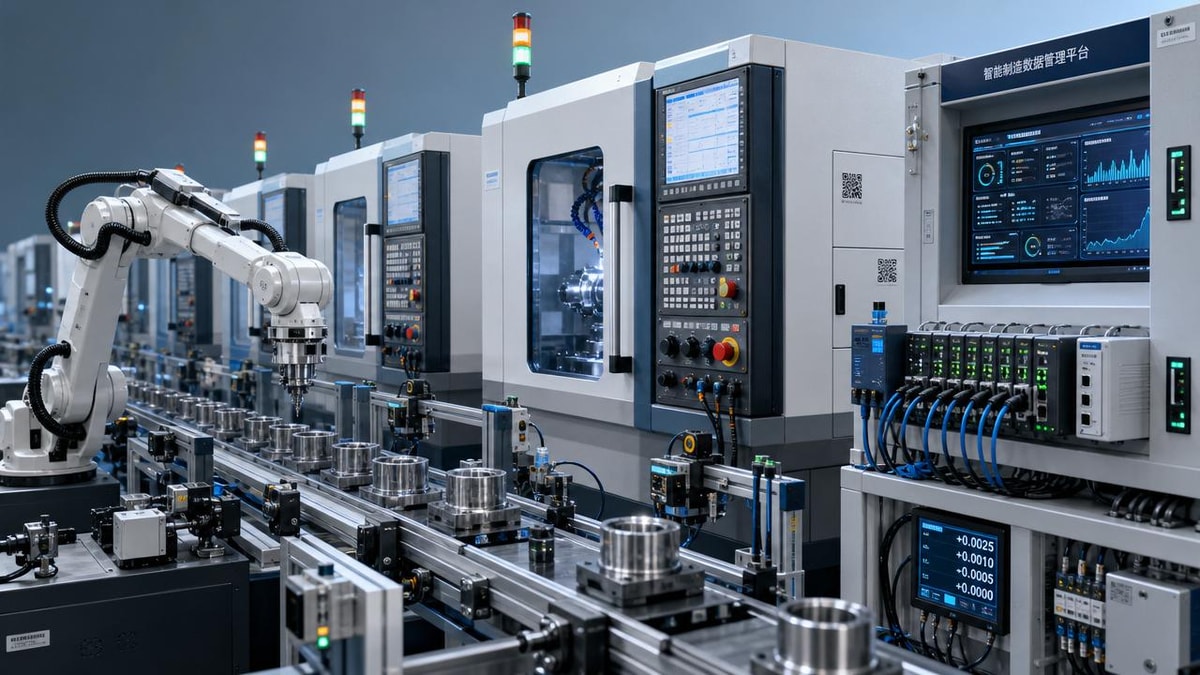
Another major advantage appears when compact design supports automation. A smaller, well-structured layout can make robot loading, pallet transfer, part buffering, and centralized coolant or chip systems easier to integrate. In many cases, the value does not come from “smaller” alone, but from making automation practical in a previously fragmented area.
Space-saving strategies also help in brownfield projects, where existing columns, walls, utility lines, or neighboring departments limit layout flexibility. In these cases, a compact CNC arrangement may be the only realistic path to adding capacity without major building modification.
For project owners managing phased growth, a space-efficient layout can preserve strategic options. If a production line occupies less floor area while keeping support functions organized, the plant retains room for future machining centers, metrology stations, or automated storage later on.
Where the layout trade-off becomes risky
The downside of a compact CNC layout is that every saved meter removes operating margin. Machines may fit on paper, but production rarely behaves as neatly as a CAD drawing. Operators need room to load awkward parts, maintenance teams need access to service panels, and forklifts or AGVs need clear routes that remain safe during busy shifts.
One common problem is maintenance obstruction. CNC machine tools require routine service, lubrication checks, spindle work, electrical access, and occasional component replacement. If a machine can only be serviced by shutting down neighboring equipment or moving temporary barriers, downtime costs rise. In a dense layout, even a simple repair may become a scheduling event.
Chip and coolant management is another hidden issue. Tight machine spacing can complicate chip conveyor routing, coolant tank access, waste collection, and housekeeping. Once chips accumulate in walking paths or behind machines, the layout begins to hurt both safety and uptime.
Compact setups can also create workflow interference. If raw stock, WIP carts, finished parts, and tooling all share narrow movement corridors, congestion grows quickly. This is especially harmful in mixed production environments where different part families have different setup times and handling requirements.
Noise, heat, and operator fatigue deserve more attention as well. Denser machine placement may concentrate thermal load and acoustic exposure. Over time, this can affect comfort, concentration, and even machining stability in precision-sensitive environments.
Finally, there is the risk of locking the factory into the wrong future. A highly compressed layout optimized for today’s product mix may leave no practical path for larger parts, additional automation, or higher spindle utilization tomorrow.
How to evaluate whether a compact CNC layout is actually worth it
For project managers, the decision should be based on measurable operating outcomes rather than footprint reduction alone. A strong evaluation framework starts with throughput and cost per square meter, but it must go further. The question is whether the layout improves the economics of the full process.
Start by comparing current and proposed layouts across five dimensions: output capacity, labor movement, material handling complexity, downtime exposure, and expandability. A smaller footprint only creates value if at least two or three of these categories improve without causing major deterioration elsewhere.
It is also useful to calculate “productive footprint” rather than total occupied footprint. Productive footprint refers to the portion of floor area that directly supports cutting, loading, inspection, and controlled part flow. Some larger layouts waste space, but some compact layouts simply shift wasted time into hidden corners.
Simulation is highly recommended for any significant CNC layout redesign. Even a simple digital model of operator routes, pallet movement, queue points, and maintenance clearances can reveal whether the compact design will work under peak conditions. If your operation already uses MES, digital twins, or factory planning software, layout scenarios should be stress-tested before installation.
Another useful metric is recovery time after disruption. Ask how quickly the line returns to normal after a tool break, urgent setup change, machine alarm, or incoming material delay. The best layouts absorb disruption. Poorly compressed ones amplify it.
A practical review checklist should include machine envelope plus service envelope, door swing and loading zone, crane or lift access if needed, chip bin replacement paths, coolant service points, inspection placement, electrical and air routing, fire safety compliance, and forklift or AGV turning geometry. These details often decide whether the design will succeed in the real world.
What a good space-saving CNC strategy looks like in practice
Successful compact CNC manufacturing is usually based on layout discipline, not crowding. Machines are grouped by process relationship, loading method, and support needs. High-interaction equipment is kept close, while conflict-prone flows are separated. The result is dense but readable, with clear logic for people and materials.
One effective model is the modular cell approach. Instead of compressing an entire workshop uniformly, planners build compact cells around part families or process chains. Each cell includes machines, tool staging, inspection support, and controlled WIP zones. This reduces unnecessary travel without creating plant-wide congestion.
Another good approach is vertical and peripheral space use. Tool storage, electrical cabinets, coolant support, and fixture racks do not always need to consume prime floor area. By shifting selected support functions to walls, mezzanine-support concepts, or shared service zones, plants can gain meaningful floor efficiency without shrinking machine access zones too aggressively.
Automation-ready design is also critical. If a project may later add robotic loading, pallet pools, or automated guided transport, those interfaces should be protected from day one. A compact layout that blocks future automation can become more expensive than a larger layout designed for phased upgrades.
Standardization helps too. When machine models, fixtures, carts, and service routines are standardized, tighter layouts are easier to manage. Variability is the enemy of compact manufacturing because every exception consumes extra space, time, or attention.
Questions project managers should ask before approving the layout
Before signing off on a space-saving CNC manufacturing plan, project leaders should challenge the proposal with a few direct questions. First: what specific business problem is the compact layout solving? If the answer is only “we fit more machines,” the justification is incomplete.
Second: where will daily friction appear? Ask operators, maintenance technicians, quality personnel, and material handlers to review the plan. Their concerns often reveal practical conflicts that are invisible in high-level design reviews.
Third: what happens during abnormal conditions? Review the layout under tool failure, scrap containment, rush order insertion, machine replacement, and preventive maintenance scenarios. A layout that only works under normal flow is fragile.
Fourth: how much flexibility is preserved? Project managers should look at whether the line can support product mix changes, larger fixtures, secondary automation, or one more machine in the future. Long-term resilience often matters more than short-term density.
Fifth: what are the quantified gains? A sound proposal should estimate floor space released, labor steps reduced, expected throughput impact, utility changes, and payback period. If the benefits cannot be measured, they will be difficult to defend later.
So, is space-saving CNC manufacturing worth the trade-off?
In most cases, space-saving CNC manufacturing is worth the layout trade-off only when compactness is the result of better production design rather than tighter packing. For project managers, that distinction is everything. A smart compact layout can improve floor efficiency, support automation, reduce motion waste, and postpone costly facility expansion. A poorly planned one can weaken safety, increase downtime, and make future growth harder.
The strongest indicator of success is not reduced square meters alone, but improved operational balance. If the proposed CNC layout protects maintenance access, keeps materials flowing, supports operators, and leaves room for change, it is likely to generate real value. If it compresses the workshop at the expense of serviceability and resilience, the savings are probably superficial.
The practical takeaway is simple: evaluate space-saving CNC manufacturing as a system decision, not a space decision. For leaders responsible for production performance, the best layout is not the smallest one. It is the one that delivers stable throughput, safe access, manageable maintenance, and room for the next stage of manufacturing growth.
PREVIOUS ARTICLE
Recommended for You
 Industrial Machining Equipment Lead Times Are Changing AgainManufacturing Market Research Center
 Where Industrial Robotics Adds Value Beyond Simple Labor SavingsMachine Tool Industry Editorial Team
 Shaft Parts Machining Problems That Show Up After Final InspectionCNC Machining Technology Center
 Production Process Variations That Quietly Raise Scrap RatesCNC Machining Technology Center
 Industrial Automation Projects Fail When Data Is Added Too LateCNC Machining Technology Center
 CNC Metal Cutting Quality Drops Often Start With ClampingMachine Tool Industry Editorial Team

Aris Katos
Future of Carbide Coatings
15+ years in precision manufacturing systems. Specialized in high-speed milling and aerospace grade alloy processing.
▶
Where Industrial Robotics Adds Value Beyond Simple Labor SavingsMachine Tool Industry Editorial Team▶
Automated Production Line Issues That Appear Only After Scale-UpMachine Tool Industry Editorial Team▶
Is Space-Saving CNC Manufacturing Worth the Layout Trade-Off?Machine Tool Industry Editorial Team▶
How Automated Production Changes Defect Control on the LineMachine Tool Industry Editorial Team▶
Automated Production Line gaps that appear between design and launchMachine Tool Industry Editorial Team
Mastering 5-Axis Workholding Strategies
Join our technical panel on Nov 15th to learn about reducing vibrations in thin-wall components.

Providing you with integrated sanding solutions
Before-sales and after-sales services
Comprehensive technical support