• Global CNC market projected to reach $128B by 2028 • New EU trade regulations for precision tooling components • Aerospace deman
NYSE: CNC +1.2%LME: STEEL -0.4%

Industrial Automation Projects Stall Over Data Integration
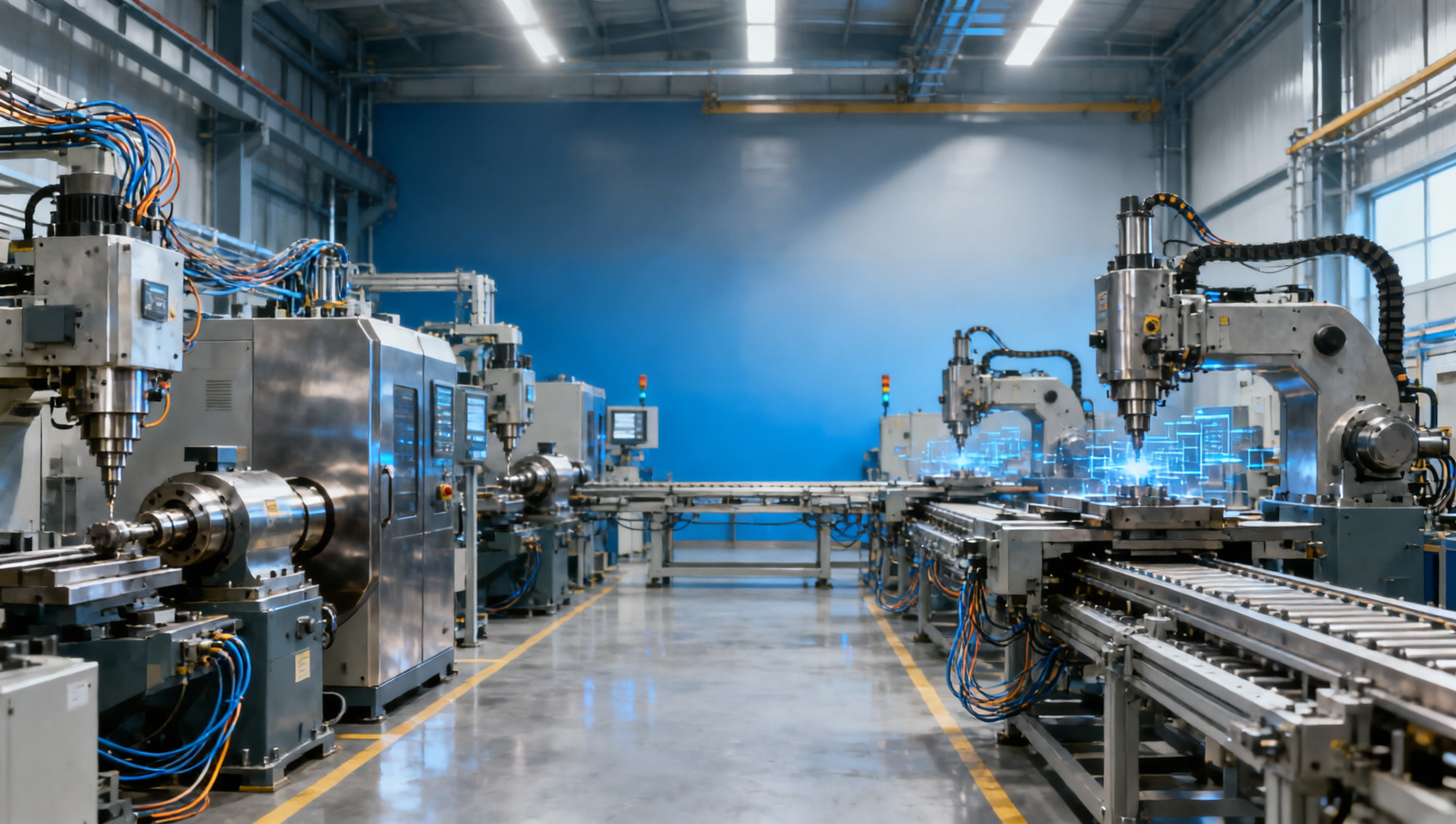
Across Global Manufacturing, many Industrial Automation initiatives are stalling because fragmented data blocks visibility across the Production Process. For companies relying on industrial CNC, CNC milling, automated lathe systems, and Automated Production Line solutions, poor integration slows CNC production, limits efficiency, and weakens decision-making. This article explores why data connectivity now matters as much as machine performance in the Machine Tool Market and Manufacturing Industry.
Why data integration has become a production bottleneck
In many factories, machine capability has improved faster than information flow. A CNC lathe may run with stable spindle performance, a machining center may hold tight tolerances, and an automated production line may keep cycle time within target, yet managers still cannot see real-time output, tool wear status, scrap causes, or order progress in one place. When data stays trapped inside separate controllers, ERP systems, quality logs, and operator spreadsheets, industrial automation projects lose momentum.
This is especially common in the CNC machine tool industry, where production often combines 3–5 system layers: CNC control, PLC, MES, ERP, and quality inspection software. If even one layer cannot exchange usable data, the result is delayed reporting, manual re-entry, and inconsistent decisions. For information researchers, this raises doubts about digital maturity. For operators, it creates extra work. For procurement teams, it complicates supplier comparison. For executives, it weakens ROI visibility.
The issue is not only technical. It is operational. A production cell with 6–12 machines can generate data every few seconds, but if the format is inconsistent, timestamps differ, or alarm codes are not normalized, that data cannot support scheduling, predictive maintenance, or traceability. In automotive manufacturing, aerospace machining, electronics production, and energy equipment processing, this gap directly affects throughput, compliance, and customer delivery confidence.
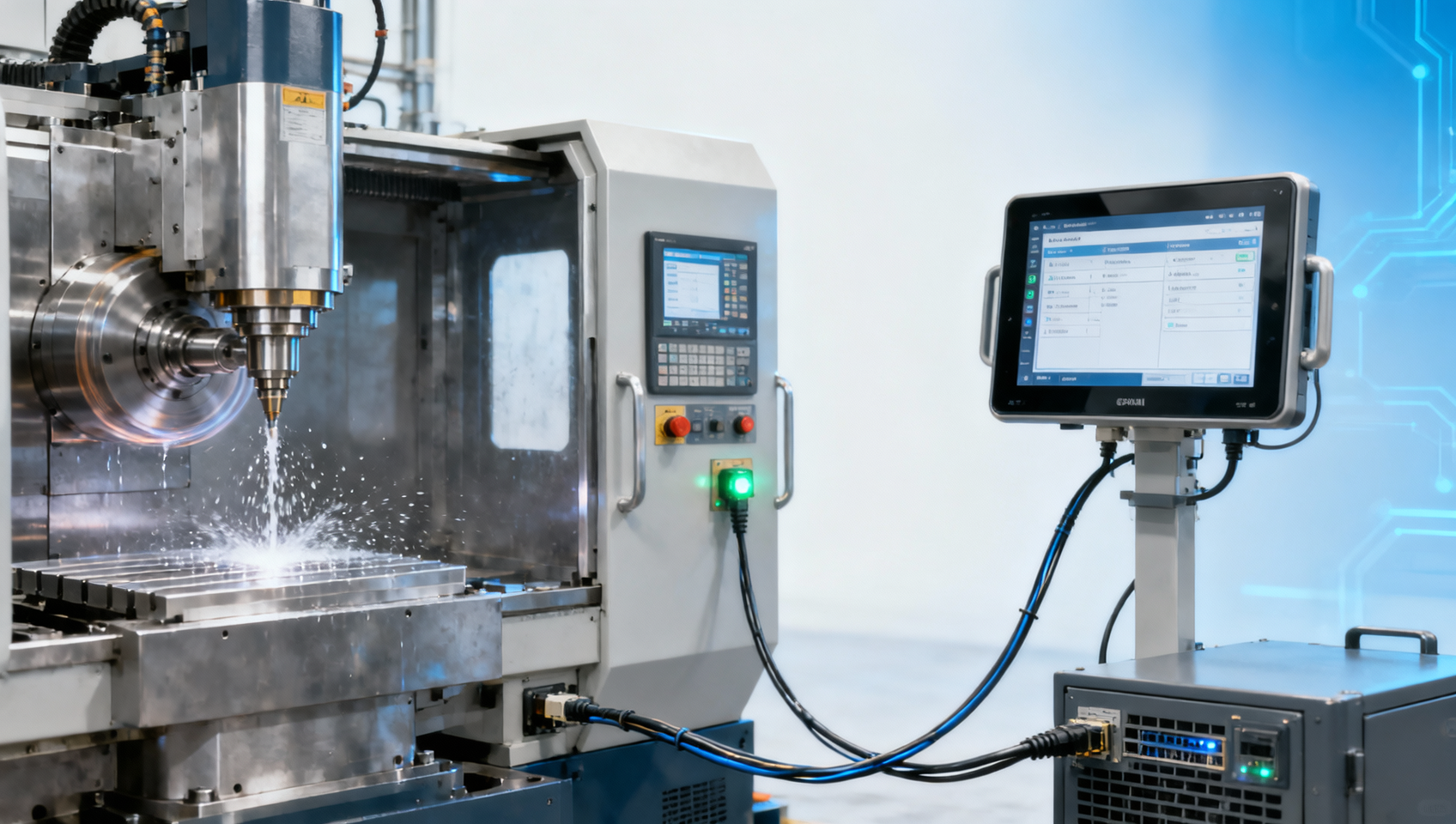
For the global machine tool market, digital integration is now part of equipment value. Buyers are no longer asking only about axis travel, spindle speed, or positioning accuracy. They also ask whether the machine can connect to MES, whether production data can be exported every shift, and whether alarm history can be mapped into a plant-wide dashboard within 2–4 weeks rather than after a long custom IT project.
Typical signs that an automation project is stalling
- Production reports are delivered at the end of the day or end of the week instead of in near real time.
- Operators enter machine status, part counts, or downtime causes manually across 2–3 separate records.
- Procurement compares machine prices, but not connectivity protocols, API availability, or data mapping workload.
- Management invests in industrial robots or flexible production lines, but still cannot track OEE, scrap trends, and order completion by line.
When these signs appear together, the obstacle is rarely the machine alone. It is usually the lack of a practical integration strategy across equipment, software, and reporting workflows.
Where fragmented data hurts CNC production most
Fragmented data affects each stage of the production process differently. On the shop floor, operators may not receive the latest NC program revision or tool offset instruction. In planning, schedulers may rely on outdated machine availability. In quality control, measurement records may not link back to the exact machine, batch, tool life condition, or operator shift. In procurement, replacement decisions become reactive because maintenance history is incomplete.
The problem grows in mixed environments. A factory may operate legacy CNC milling machines beside newer multi-axis machining systems, robot loading cells, and automated lathe systems from different suppliers. Some support modern communication standards, while others require gateways or customized middleware. If this diversity is not addressed early, the automation architecture becomes expensive to scale after the first pilot phase.
Below is a practical view of where data disconnects create the highest operational cost in precision manufacturing and automated production.
This table shows why industrial automation failures often begin as information failures. The cost is not always visible as one large event. More often, it appears as repeated 10–20 minute delays, missing production records, extra troubleshooting steps, and decisions made with incomplete data.
Which stakeholders feel the pain first
Operators usually feel it first because they spend extra time confirming machine states, tool changes, and work order details. Procurement teams feel it next when machine comparison becomes difficult beyond the price sheet. Decision-makers feel it later but at a larger scale, especially when capital investment is approved without a clear path to plant-wide integration over the next 12–24 months.
For sectors with demanding tolerances and traceability, such as aerospace and energy equipment, the impact goes beyond efficiency. It affects customer confidence, audit readiness, and the ability to scale high-mix, low-volume production without adding too much manual coordination.
How to evaluate integration readiness before buying equipment or upgrading a line
Many buyers still evaluate CNC machine tools and automation solutions mainly on machining performance, mechanical rigidity, and delivery time. Those remain critical, but they are not enough. A machine that arrives in 8–12 weeks but takes another 3–6 months to connect reliably can delay the expected return on investment. Integration readiness should be assessed before contract finalization, not after installation.
A practical evaluation framework usually includes 5 core dimensions: data accessibility, protocol compatibility, line-level interoperability, implementation workload, and long-term service support. These dimensions matter whether a company is buying a single machining center, a CNC milling cluster, or a complete automated production line with robots and material handling.
The following table can help procurement teams, plant engineers, and executives compare machine tool suppliers and automation partners in a more decision-oriented way.
The strongest procurement decisions balance machine performance with information usability. A highly capable CNC machine that cannot contribute usable production data may still fit a standalone application, but it is far less suitable for digital manufacturing strategies that require scheduling visibility, quality traceability, and cross-plant reporting.
A simple pre-purchase checklist
- List the 6–10 data points your team must see each shift, such as cycle time, part count, alarms, tool status, and downtime reason.
- Confirm whether those points are natively available from the controller or require middleware.
- Define the target connection path to MES, ERP, SCADA, or cloud reporting before the machine ships.
- Ask for a sample data structure or interface description, not just a verbal promise of compatibility.
- Review who will own commissioning, testing, and troubleshooting during the first 30–60 days after startup.
This process helps avoid a common mistake: approving capital equipment first and discovering integration gaps only after factory acceptance or site installation.
What implementation path works best for mixed CNC and automation environments
In real factories, full replacement is rarely practical. Most plants need to connect new and existing assets step by step. A useful implementation path usually starts with one pilot line, one product family, or one high-value process such as precision shaft machining, disc component manufacturing, or multi-axis structural part production. This reduces risk while exposing actual data mapping issues early.
A phased approach often works better than a large one-time rollout. In phase 1, the goal may be basic visibility: machine state, output count, alarms, and shift-level dashboarding. In phase 2, the focus may shift to traceability, tool life, and quality correlation. In phase 3, the plant may add automated scheduling, maintenance triggers, and broader smart factory reporting. Each phase can be validated over 2–8 weeks depending on line complexity.
This matters in the machine tool market because many buyers operate multi-brand equipment from China, Germany, Japan, South Korea, and regional suppliers. Integration strategies must support this reality. Choosing solutions that only work well in a single-brand ecosystem may limit future flexibility.
Recommended 4-step rollout structure
- Step 1: Data mapping. Identify machines, controllers, software layers, and required production events. This usually takes 3–10 working days for a small pilot.
- Step 2: Connectivity validation. Test communication, timestamp consistency, and alarm normalization across target assets. This is where legacy constraints often appear.
- Step 3: Operational dashboarding. Build reports for operators, supervisors, and management using different views rather than one overloaded screen.
- Step 4: Scale and optimize. Expand from one line to multiple cells, then add traceability, maintenance logic, and planning integration.
The key is to define measurable outcomes at each stage. For example, reduce manual reporting steps from 4 logs to 1 digital record, shorten downtime diagnosis from 30 minutes to one visible alarm sequence, or provide end-of-shift output visibility within minutes instead of the next morning.
Common implementation mistakes
One frequent mistake is treating connectivity as an IT task only. In reality, successful industrial automation integration requires process engineers, operators, maintenance staff, and management to align on definitions. If one team counts machine idle time differently from another, dashboards will not support decisions. Another mistake is trying to collect every possible data point from day one, which increases complexity without improving actionability.
A better approach is to prioritize 3 categories first: production flow, machine health, and quality linkage. Once these are stable, additional analytics can be layered in with lower risk and clearer business value.
FAQ and decision guidance for buyers, operators, and managers
The questions below reflect common concerns from companies evaluating CNC machine tools, automated production line upgrades, and industrial automation platforms in a data-driven manufacturing environment.
How do I know whether a CNC machine is integration-ready?
Start with practical evidence. Ask which data can be exported directly from the controller, how often it updates, and whether alarm, cycle, and part-count data can be mapped without custom redevelopment. Integration-ready equipment does not need to solve every software challenge alone, but it should expose essential operating data in a usable, documented way.
If the supplier cannot clearly explain interface options, data fields, and commissioning steps, the project risk is higher. For most buyers, 5–8 core machine data points are enough to verify basic readiness before deeper expansion.
Is it better to retrofit old machines or replace them?
That depends on part value, machine accuracy, remaining service life, and integration cost. Retrofits can work well when the machine is mechanically sound and still fits current precision needs. Replacement is often more attractive when downtime is frequent, controller access is limited, or the line requires broader automation support. A mixed strategy is common: retain stable core assets and replace the weakest 10%–20% that block visibility or create recurring disruptions.
Procurement teams should compare not only machine price, but also gateway cost, engineering hours, lost production during commissioning, and future support complexity.
What should operators and supervisors see first on a dashboard?
The first dashboard should answer immediate shop-floor questions in less than 10 seconds: Is the machine running, waiting, in alarm, or in setup? How many parts have been completed this shift? What was the last downtime cause? Are any tools near replacement? These views are usually more useful than advanced charts during the first rollout stage.
Management dashboards can then summarize line output, downtime distribution, and order progress at daily or weekly intervals. Different users need different layers of detail, and this separation improves adoption.
How long does a typical pilot take?
A focused pilot for 1–3 machines or one compact production cell often takes 2–6 weeks, depending on controller variety, internal approval speed, and dashboard complexity. A broader line integration covering multiple CNC machines, robots, and quality stations may take 6–12 weeks. The faster projects usually begin with a narrow scope and a clear list of required outputs.
Projects slow down when requirements remain vague, machine interfaces are not confirmed in advance, or no one owns data validation on the plant side.
What is the most common misconception in industrial automation projects?
The biggest misconception is that automation value comes mainly from hardware. In practice, machine performance and data usability now influence each other. A high-precision CNC production system with poor data integration can still produce parts, but it cannot support fast planning, stable traceability, or confident scaling. For modern manufacturing, visibility is no longer optional. It is part of process capability.
Why work with a platform focused on global CNC machining and precision manufacturing
When companies evaluate industrial CNC, CNC milling systems, automated lathe solutions, or automated production line upgrades, they need more than product brochures. They need industry context, supplier comparison logic, and clear guidance on how machine performance connects with digital integration. A specialized platform focused on the global CNC machining and precision manufacturing industry can shorten this learning curve.
Because the machine tool industry spans automotive, aerospace, energy equipment, electronics production, and cross-border sourcing, decision-making often includes technical, operational, and trade factors at the same time. That is why buyers benefit from access to market updates, application insights, technology interpretation, and structured evaluation support instead of isolated equipment descriptions.
If your automation project is slowing down over data integration, the next step is not guesswork. It is structured clarification. You can discuss machine connectivity, data collection scope, production process matching, retrofit versus replacement options, expected delivery cycles, and implementation priorities before committing budget.
What you can contact us about
- Parameter confirmation for CNC machine tools, machining centers, automated lathes, and related production cells.
- Product selection based on part type, batch size, tolerance requirement, and target automation level.
- Delivery timeline planning, including typical lead time ranges and phased implementation suggestions.
- Customized solution discussion for mixed-brand machine environments and smart factory upgrades.
- General guidance on interface needs, traceability expectations, and common compliance considerations in manufacturing projects.
- Quotation communication, sourcing comparison, and early-stage feasibility review before final procurement decisions.
For information researchers, this helps turn scattered market data into a usable short list. For operators and technical users, it helps align equipment choice with actual process needs. For procurement, it creates a clearer basis for comparison. For business decision-makers, it reduces the risk of investing in industrial automation that performs well mechanically but stalls at the data layer.
If you are reviewing a current line, planning a new CNC production setup, or comparing machine tool suppliers across regions, contact us with your part category, production goals, integration concerns, and timeline expectations. That makes it easier to discuss realistic options for selection, deployment, and long-term manufacturing visibility.
PREVIOUS ARTICLE
Recommended for You
 Heavy-duty Machining Center for mold making: Why coolant filtration standards evolve faster than OEM manualsMachine Tool Industry Editorial Team
 Quick-change Fixture Design for CNC turning: Why clamping force consistency drops after 200 cyclesCNC Machining Technology Center
 5 Axis Machining for impeller manufacturing: Why toolpath smoothing affects surface fatigue lifeCNC Machining Technology Center
 Lean Production Process implementation: Where value stream mapping fails to expose hidden machine downtimeManufacturing Market Research Center
 Modular Tooling System for flexible manufacturing: Why interface repeatability degrades faster than expectedMachine Tool Industry Editorial Team
 Industrial Automation control system for CNC machines: When cybersecurity updates disrupt scheduled maintenanceMachine Tool Industry Editorial Team

Aris Katos
Future of Carbide Coatings
15+ years in precision manufacturing systems. Specialized in high-speed milling and aerospace grade alloy processing.
▶
Industrial Automation control system for CNC machines: When cybersecurity updates disrupt scheduled maintenanceMachine Tool Industry Editorial Team▶
Automated Production Line troubleshooting: Why intermittent faults resist standard diagnostic treesMachine Tool Industry Editorial Team▶
Automated machine tool: When integrated vision systems introduce new validation headachesMachine Tool Industry Editorial Team▶
How a CNC manufacturing factory balances automation with skilled operator oversightMachine Tool Industry Editorial Team▶
Industrial Robotics Payback Gets Delayed by These GapsMachine Tool Industry Editorial Team
Mastering 5-Axis Workholding Strategies
Join our technical panel on Nov 15th to learn about reducing vibrations in thin-wall components.

Providing you with integrated sanding solutions
Before-sales and after-sales services
Comprehensive technical support