• Global CNC market projected to reach $128B by 2028 • New EU trade regulations for precision tooling components • Aerospace deman
NYSE: CNC +1.2%LME: STEEL -0.4%

CNC Production Delays Often Begin With Program Revisions
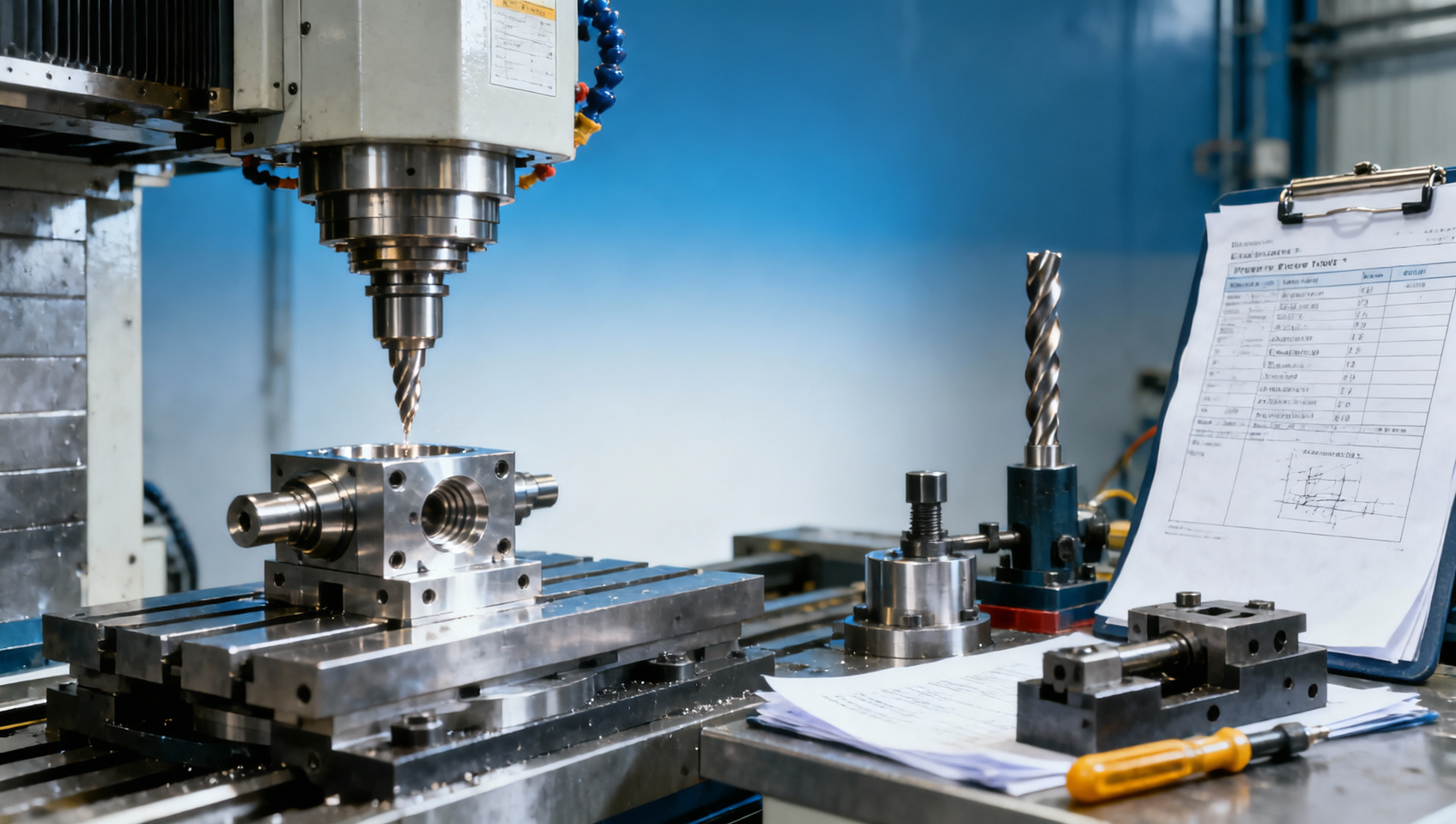
In Global Manufacturing, CNC production delays often start long before machining begins—during CNC Programming revisions that disrupt the production process. For buyers, operators, and decision-makers in the Manufacturing Industry, understanding how changes affect industrial CNC workflows, CNC milling, CNC cutting, and automated production is essential to protecting quality, lead times, and overall efficiency.
Why program revisions create CNC production delays earlier than most teams expect
In many CNC operations, the visible delay appears at the machine, but the real disruption often begins in the programming stage. A drawing update, tolerance adjustment, fixture change, or tooling substitution can trigger a chain reaction across CAM files, setup sheets, verification steps, and scheduling. What looks like a small edit may add 4 to 24 hours of engineering review before the first part is even loaded.
This issue is especially relevant in industries that rely on CNC milling, CNC turning, precision cutting, and automated production lines. Automotive suppliers, aerospace subcontractors, energy equipment manufacturers, and electronics component producers all depend on stable digital workflows. When a revision arrives late, operators may wait, procurement may scramble for replacement tools, and managers may lose promised delivery windows of 3 to 10 working days.
For information researchers, the key point is simple: not all delays come from machine capacity. For operators, the practical concern is whether the latest program matches the latest setup. For procurement teams, the concern is whether revision frequency will increase hidden costs. For business decision-makers, the bigger question is whether weak revision control is limiting throughput across multiple machines or even across a 2-shift or 3-shift production system.
In modern CNC manufacturing, revision-driven delay is not just a technical problem. It is a coordination problem between engineering, planning, quality, tooling, and the shop floor. The more complex the part geometry, the tighter the tolerance band, and the more connected the production line, the more expensive unmanaged program changes become.
Where delays usually begin
- Design changes are released without a synchronized update to tool paths, setup instructions, and inspection points.
- A machine shop receives the revised program, but the fixture, tool offset, or post-processor settings still reflect the previous version.
- The first article plan changes after material has already been allocated, forcing a recheck of cycle time, cutter reach, and clamping strategy.
- Multi-axis machining or tight-surface finishing requires additional simulation, adding several review steps before release.
How revision changes affect CNC milling, cutting, quality, and delivery
A CNC program revision does more than alter code lines. It changes cutting strategy, spindle load, tool engagement, fixture access, and inspection logic. In CNC milling, even a small pocket-depth revision may require different tool lengths, altered feeds and speeds, and another dry run. In CNC cutting or drilling operations, changes to hole position, edge condition, or sequencing may affect burr control, thermal distortion, and downstream assembly fit.
The impact becomes larger when automated production is involved. Robots, pallet systems, and flexible manufacturing cells rely on repeatable process timing. If one revised program adds 90 seconds to a cycle that originally ran in 6 minutes, the effect on daily output can be significant. Over a batch of 300 parts, that single change may consume 7.5 additional machine hours, not including setup and inspection.
Quality risks also increase during revisions. A stable process may have already proven its dimensional repeatability, but a revised path can create new vibration zones, tool deflection behavior, or heat concentration points. Operators may see dimension drift after only 20 to 50 parts if compensation values are not reset to match the new program logic. This is one reason why disciplined verification matters as much as machining speed.
For procurement and operations managers, delivery risk often hides inside engineering changes. A supplier may appear capable based on machine count or spindle power, yet still miss deadlines because revision handling is slow. The most reliable partners are often those with stronger digital control, faster feedback loops, and clear release gates between programming, setup, and quality approval.
Typical production impact by revision type
The table below helps compare how common program revisions influence lead time, quality risk, and shop-floor execution in industrial CNC manufacturing.
The takeaway is not that revisions should be avoided. Many are necessary for function, compliance, or manufacturability. The real objective is to control how each change moves through programming, setup, validation, and release so that output remains predictable.
What buyers and decision-makers should evaluate before placing CNC orders
If you are sourcing CNC components or contract machining services, revision management should be part of supplier evaluation from the start. Many purchasing teams compare only price, machine list, and quoted lead time. That is not enough for parts with tight tolerances, repeated engineering changes, or multi-process routing. A strong CNC supplier should explain how revised programs are reviewed, approved, and linked to shop-floor execution.
A practical screening method is to ask about 3 areas: document control, validation process, and cross-team response speed. Document control means how drawings, NC files, setup sheets, and inspection plans stay aligned. Validation means whether the supplier uses simulation, first-piece verification, or staged release. Response speed means how quickly engineering, production, and quality can react when a revised file arrives at the end of a workday or during an active batch.
This matters even more in global manufacturing. Buyers may source from China, Germany, Japan, South Korea, or other industrial hubs where machine capability is strong, but communication rhythm differs. A supplier that can confirm revision impact within 12 to 24 hours is usually easier to manage than one that only updates status after production has already slipped. For enterprise decision-makers, this becomes a risk-control issue, not just a sourcing issue.
Operators and technical users also benefit when procurement sets clearer expectations. If the purchase specification already defines revision freeze dates, approval sequence, and sample confirmation logic, there is less confusion on the shop floor. That helps reduce emergency edits, tool changes without notice, and repeated first-off inspections.
Supplier evaluation checklist for revision-sensitive CNC projects
Use the following table when comparing suppliers for CNC machining, CNC milling, or automated production work that is likely to include engineering changes.
A supplier that scores well on these points may not always be the lowest-cost option on paper, but it often becomes the lower-risk option across a full project cycle. That distinction matters when one delayed component can hold up assembly, export preparation, or final acceptance.
Key questions procurement teams should ask
- How are NC program revisions approved and released to operators?
- What is the standard review window for minor changes versus major geometry changes?
- Does the quote include first-article validation after customer-driven revisions?
- Which process documents are updated at the same time: tooling list, setup sheet, probe routine, inspection plan, and packaging notes?
How to reduce revision-related delay in real CNC production workflows
The most effective way to reduce CNC production delays is to treat program revision as a managed production event, not as an informal engineering correction. Whether you run a small machine shop or a multi-line manufacturing plant, the process should include defined release gates. In practice, 4 stages work well: change review, process update, controlled verification, and final production release.
During change review, the team confirms what actually changed. Is it geometry, tolerance, material, sequence, or tooling? This step sounds simple, but it often saves hours. If the issue is only a drawing note or a chamfer value, the impact may be limited. If the revised area affects clamping or tool reach, then the shop must plan for setup revision, simulation, and perhaps a new first article.
During process update, all related documents should move together. The CNC program alone is not enough. Operators need the latest setup sheet, quality teams need updated checkpoints, and planners need revised cycle time assumptions. Shops with digital control systems often handle this faster, but even a manual process can work if version discipline is strong and responsibility is clear.
Controlled verification is where many companies either protect profit or lose it. For low-risk changes, a simulation plus first-piece inspection may be enough. For tighter parts, a dry run, in-process probing, and pilot batch of 3 to 10 pieces may be more appropriate. The last stage is release: only after approval should the revised program move into full batch production or automated line scheduling.
A practical 4-step implementation flow
- Step 1: Define the change. Classify the revision as minor, moderate, or critical based on tolerance, geometry, material, and fixture impact.
- Step 2: Update process data. Synchronize CAM file, post-processed NC code, setup instruction, tool list, offset strategy, and inspection method.
- Step 3: Verify before release. Use simulation, dry run, first-off measurement, and where needed a pilot batch to confirm stability.
- Step 4: Lock the version. Release only one approved revision to the machine and archive previous versions to prevent accidental reuse.
Common control points that should never be skipped
For revision-prone production, 5 checkpoints are especially important: drawing revision confirmation, NC file version check, fixture match check, first-piece dimensional review, and operator signoff. In higher-risk work such as aerospace, energy components, or precision structural parts, teams may also add tool life reset, probe logic review, and traceability confirmation before batch release.
If a plant uses multi-axis machining centers, pallet changers, or unattended shifts, these checks become even more valuable. A single wrong version can consume an entire night shift before anyone notices. The cost of one structured review is usually far lower than the cost of scrap, urgent reprogramming, and delayed shipment.
Common misconceptions, compliance points, and FAQ for CNC revision control
Many production teams assume that if the part shape changed only slightly, the CNC program can be edited quickly with minimal risk. That assumption is often wrong. Small revisions can affect cutter engagement, tool deflection, inspection sequence, and assembly interface. Another common misunderstanding is that operator experience alone can absorb revision risk. Skilled operators are essential, but without controlled documents and clear release rules, even experienced teams face preventable errors.
From a compliance perspective, manufacturers in regulated or quality-sensitive sectors often need traceability between drawing revision, production record, and inspection outcome. While exact requirements vary by customer and industry, the general principle is consistent: the released process should match the approved product definition. That is why document control, version history, and inspection linkage matter in CNC manufacturing as much as spindle performance or axis travel.
For companies sourcing internationally, revision control also supports smoother communication. Time zone differences of 6 to 12 hours can easily slow clarification if the engineering package is incomplete. A well-prepared supplier will identify missing dimensions, unclear datums, or probable tooling conflicts early, which helps avoid repeated back-and-forth before machining starts.
Below are several common questions that buyers, operators, and project managers ask when evaluating CNC production delays related to program revisions.
How long should a CNC program revision review take?
For minor edits such as note clarifications or non-critical dimensional changes, review may take a few hours to 1 working day. For geometry changes, material substitutions, or fixture-related updates, 1 to 3 working days is more realistic. Critical components with multi-axis machining, strict surface finish, or formal first-article requirements may need longer depending on verification depth.
What should operators verify before running a revised CNC program?
Operators should confirm at least 4 items: the latest revision level, the matching setup sheet, correct tool and holder combination, and zero-point or offset alignment. If probing, fixture changes, or cycle-time-sensitive automation are involved, those should also be checked before the first run. A fast checklist is often enough to prevent a long downtime event.
Does a revision always mean higher cost?
Not always. Some revisions improve manufacturability and reduce machining time. However, costs usually rise when the change increases setup complexity, adds inspection steps, shortens tool life, or interrupts an active batch. The most useful supplier feedback is not just the revised price, but a clear explanation of whether the change affects programming hours, tooling, scrap risk, and delivery commitment.
Which projects are most vulnerable to revision-driven delay?
Projects with tight tolerances, frequent engineering changes, short lead times, and linked downstream assembly are the most vulnerable. This includes precision shafts, discs, structural parts, electronics fixtures, energy equipment components, and many aerospace or automotive parts. The risk rises further when production depends on 2 or more connected processes such as milling plus turning, machining plus assembly, or machining plus automated handling.
Why manufacturers and buyers work with us on CNC machining insight and sourcing decisions
We focus on the global CNC machining and precision manufacturing industry, with attention to how machine tools, CNC lathes, machining centers, multi-axis systems, cutting tools, fixtures, and automated production lines work together in real production. That industry focus helps us support not only technical understanding, but also sourcing, project planning, and communication across manufacturing teams.
For information researchers, we help clarify terminology, workflow logic, and practical decision points. For operators and users, we highlight process risks, setup considerations, and revision-sensitive areas that affect stable production. For procurement teams, we help compare suppliers, lead-time assumptions, and process-control capability. For business decision-makers, we translate technical detail into delivery, quality, and cost impact that can be used in planning and supplier management.
If you are reviewing a CNC project affected by repeated drawing changes, uncertain program revisions, or delivery pressure, you can contact us for specific support. We can help you discuss parameter confirmation, machining process selection, supplier evaluation points, revision impact on lead time, typical validation steps, sample support logic, and quotation communication for custom parts or production programs.
When you reach out, it is useful to prepare 5 items: current drawing revision, expected material, annual or batch volume, target lead time, and any special inspection or compliance requirement. With those basics, discussions about CNC milling, CNC cutting, automation compatibility, tooling strategy, and revision risk become faster and more practical.
What you can consult us about
- Program revision impact on delivery schedule and production planning.
- CNC machining process selection for shafts, discs, structural parts, and precision components.
- Supplier comparison for document control, validation flow, and automated production readiness.
- Sampling strategy, first-piece review, and quotation communication for custom manufacturing projects.
If your goal is to reduce hidden delay before machining starts, the right conversation is not only about machine capacity. It is about how revisions are controlled, how fast the production team responds, and how reliably the final program reaches the machine. Contact us to discuss your part data, delivery targets, and revision challenges in a more structured way.
PREVIOUS ARTICLE
Recommended for You
 Heavy-duty Machining Center for mold making: Why coolant filtration standards evolve faster than OEM manualsMachine Tool Industry Editorial Team
 Quick-change Fixture Design for CNC turning: Why clamping force consistency drops after 200 cyclesCNC Machining Technology Center
 5 Axis Machining for impeller manufacturing: Why toolpath smoothing affects surface fatigue lifeCNC Machining Technology Center
 Lean Production Process implementation: Where value stream mapping fails to expose hidden machine downtimeManufacturing Market Research Center
 Modular Tooling System for flexible manufacturing: Why interface repeatability degrades faster than expectedMachine Tool Industry Editorial Team
 Industrial Automation control system for CNC machines: When cybersecurity updates disrupt scheduled maintenanceMachine Tool Industry Editorial Team

Aris Katos
Future of Carbide Coatings
15+ years in precision manufacturing systems. Specialized in high-speed milling and aerospace grade alloy processing.
▶
Heavy duty machine tool: Where structural damping reveals itself only after months of operationMachine Tool Industry Editorial Team▶
Portable machine tool: Real-world limits of on-site machining accuracy vs. workshop benchmarksMachine Tool Industry Editorial Team▶
Compact machine tool: Can true footprint reduction coexist with rigidity for heavy cuts?Machine Tool Industry Editorial Team▶
CNC Production Scheduling Breaks Down With Mixed Batch SizesMachine Tool Industry Editorial Team▶
CNC Production Delays Often Begin With Program RevisionsMachine Tool Industry Editorial Team
Mastering 5-Axis Workholding Strategies
Join our technical panel on Nov 15th to learn about reducing vibrations in thin-wall components.

Providing you with integrated sanding solutions
Before-sales and after-sales services
Comprehensive technical support