• Global CNC market projected to reach $128B by 2028 • New EU trade regulations for precision tooling components • Aerospace deman
NYSE: CNC +1.2%LME: STEEL -0.4%

CNC Production Delays Often Start Before the First Cut
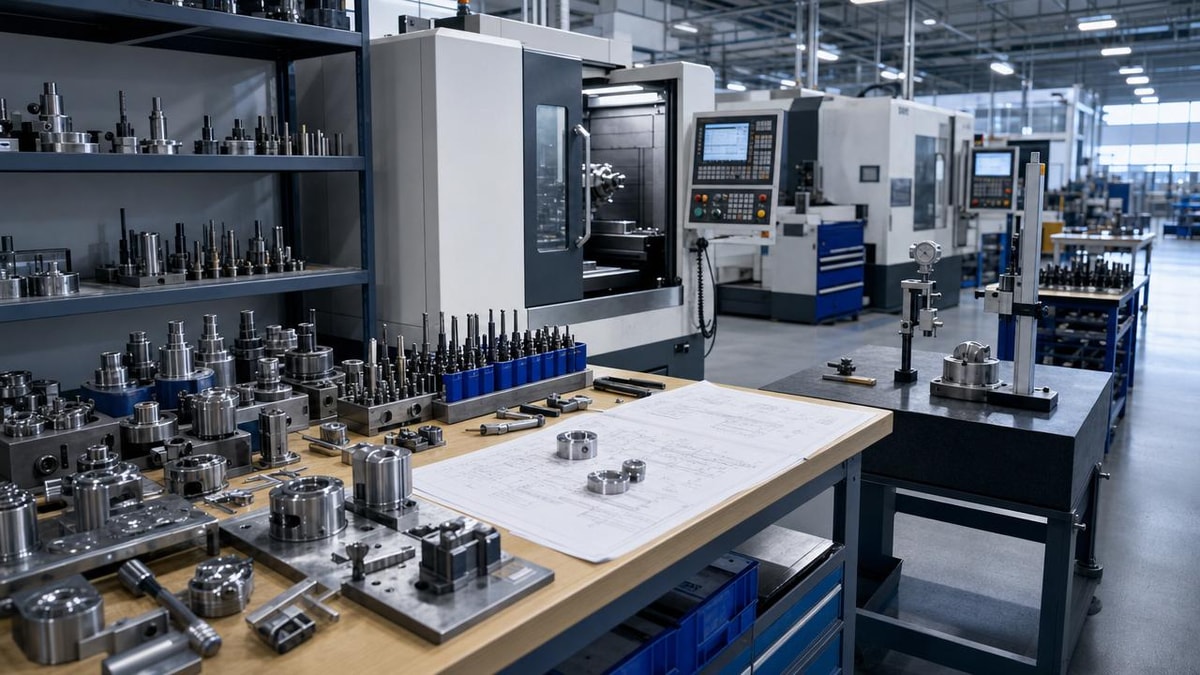
Many CNC production delays begin long before machining starts, often hidden in planning gaps, tooling issues, unclear drawings, or setup errors. For operators and shop-floor users, recognizing these early warning signs is critical to keeping schedules on track, reducing waste, and improving part quality. This article explores where delays really start and how better preparation can protect efficiency from the first step.
Why do CNC production delays often happen before machining even begins?
In many workshops, people assume delays start when a machine stops, a tool breaks, or a program fails. In reality, CNC production problems often begin much earlier. By the time the spindle turns, the schedule may already be under pressure because the drawing was incomplete, the material was not verified, the fixture was not ready, or the machining sequence was poorly planned. Operators usually feel the impact first, even though the root cause may come from engineering, purchasing, scheduling, or process preparation.
This matters across the wider manufacturing sector, from automotive and aerospace to electronics, energy equipment, and precision parts production. Modern CNC production depends on a chain of coordinated steps: order review, process planning, tooling selection, program validation, machine availability, material preparation, first-article checks, and operator handoff. If one link is weak, the delay appears on the shop floor but actually started upstream.
For operators and users, this understanding is important because it shifts attention from reacting to breakdowns toward preventing schedule loss. A rushed setup, unclear work instruction, or missing offset data can cost more time than a short machine alarm. Shops that consistently deliver on time usually treat pre-machining preparation as part of CNC production itself, not as a separate administrative task.
What are the earliest warning signs that a CNC production job may be delayed?
The earliest warning signs are rarely dramatic. They often look small: a print revision that has not been confirmed, a cutting tool that is “almost available,” a raw blank that arrived without full inspection, or a CAM file that has not been simulated on the actual machine type. These issues may seem manageable individually, but together they create unstable CNC production and force operators to solve planning problems at the machine.
A common sign is uncertainty. If the operator must ask basic questions before setup begins, such as which datum should be prioritized, whether the fixture matches the current batch, or which tool life standard should be used, then the job is not truly ready. Another sign is last-minute substitution. Replacing a specified tool with a similar one, moving a job to another machine without reposting, or changing the material lot without updating cutting parameters can all trigger hidden delays.
Schedule compression is also a major warning sign. When a job enters the queue already behind plan, people tend to skip checks to recover time. Ironically, this often slows CNC production further. Missing a setup verification or rushing the first piece inspection can cause rework, scrap, or unplanned downtime later in the batch.
Which pre-production issues cause the most disruption to operators on the shop floor?
For operators, the most disruptive issues are the ones that interrupt flow repeatedly. In CNC production, that usually means unclear documentation, unstable tooling, incomplete setup information, and weak communication between planning and execution. A machine can be highly precise, but if the operator is forced to pause for clarification every hour, output drops and quality risk rises.
The first major issue is drawing ambiguity. Tolerances may be technically listed, but not prioritized. Surface finish notes may conflict with machining access. Hole callouts may lack enough process detail for efficient sequencing. When drawings are difficult to interpret, CNC production becomes slower because operators must spend time confirming intent rather than cutting parts.
The second issue is tooling readiness. Even advanced CNC production lines depend on basic practical details: correct holder length, measured tool offsets, spare inserts, balanced tooling for high-speed work, and realistic tool life assumptions. If any of these are unresolved, setup time increases and in-cycle interruptions become more likely.
The third issue is fixture mismatch. A fixture that worked for a previous version may not clamp the current part securely, especially when design revisions change wall thickness, datum strategy, or stock allowance. Operators then need to improvise, which is risky in high-precision manufacturing. Improvisation may save one setup, but it often damages repeatability across the batch.
The fourth issue is program transfer without machine-specific review. A toolpath proven on one machining center may behave differently on another due to acceleration, control logic, tool magazine layout, or probing routines. This is particularly relevant in flexible manufacturing environments where jobs move between machines to protect capacity.
How can operators judge whether a job is truly ready for CNC production?
Operators do not always control scheduling or engineering decisions, but they can still assess readiness in a structured way. A job is usually ready for CNC production when five conditions are met: the part definition is clear, the machine and tooling are confirmed, the setup method is repeatable, the program is validated, and the inspection path is understood. If one of these is weak, the job may still run, but the risk of delay is high.
Start with part clarity. The latest revision should be confirmed, critical dimensions identified, datums understood, and material specifications matched to the traveler. Then check resources. The assigned machine must support the travel, spindle, control functions, and workholding required. Tooling should be complete, measured, and appropriate for the material and tolerance level.
Next, examine setup stability. Can the part be loaded consistently by different operators? Are zero points and clamping references obvious? Is there enough clearance for probes, tools, and chip evacuation? A setup that only works when handled by one experienced person is not robust CNC production.
Finally, confirm quality control. If the operator does not know which dimensions must be checked first, where in-process inspection occurs, or what reaction plan applies when a value drifts, delays can multiply. Good CNC production is not just about making chips efficiently; it is about producing acceptable parts without guesswork.
Quick readiness check for CNC production
What common mistakes make CNC production slower even when machines are modern?
One of the biggest misconceptions in manufacturing is that advanced equipment automatically prevents delays. High-speed machining centers, multi-axis systems, automated tool changers, and digital monitoring can improve CNC production significantly, but they cannot fix poor preparation. In fact, sophisticated equipment often exposes weak planning faster because the process moves quickly and leaves less room for informal correction.
A common mistake is relying on tribal knowledge instead of standardized setup data. When tool offsets, chuck pressure, probing routines, or fixture notes live only in one person’s memory, the job becomes fragile. Another mistake is underestimating first-article approval time. Some schedules count only cutting time and ignore verification, adjustment, and documentation, even though these are essential parts of CNC production.
Shops also lose time when they separate programming from machining reality. CAM strategies may look efficient on screen but perform poorly with actual chip load, coolant delivery, or machine dynamics. Operators then spend valuable time tuning a process that should have been closer to ready. Similarly, batching too many urgent jobs into the same shift often creates competition for gauges, presetters, forklifts, and quality staff, slowing the entire line.
Another mistake is treating every delay as a machine issue. If managers focus only on uptime but ignore preparation accuracy, the same disruptions repeat. Reliable CNC production depends on process discipline as much as equipment capability.
How can teams reduce delays without major investment or full factory redesign?
Not every improvement requires new automation or expensive software. Many CNC production gains come from better handoff discipline and clearer pre-job control. For operators, supervisors, and process teams, the fastest improvements usually involve communication, standardization, and earlier verification.
First, use a pre-release checklist before a job reaches the machine. This should confirm print revision, stock status, fixture availability, tool list completion, program status, and inspection expectations. Second, capture setup knowledge in a reusable format. Photos, offset logic, tool stick-out records, clamp positions, and proven cutting parameters help transform one successful run into stable future CNC production.
Third, involve operators earlier when possible. Operators often recognize practical risks that may not be obvious in planning meetings, such as chip packing in deep pockets, poor access for deburring, or clamping distortion on thin walls. Their feedback can prevent avoidable delays before material is loaded. Fourth, review recurring delays by cause rather than by department. If multiple jobs stall because of revision confusion or fixture shortage, the solution should target the system, not just the individual job.
Even in a broad industrial environment where schedules are tight and product mix is changing, these habits improve CNC production resilience. They reduce firefighting, improve part consistency, and make machine time more productive.
What should operators and users ask before accepting a new CNC production job?
Before starting a new batch or one-off component, operators should ask practical questions that protect time, quality, and safety. These questions are especially important in precision manufacturing, where a small setup mistake can affect an entire lot.
- Has the latest drawing revision been confirmed, and are the critical features clearly identified?
- Is the raw material correct in grade, size, and condition for the intended process?
- Are the tools, holders, inserts, probes, and gauges physically ready at the machine?
- Does the fixture support repeatable loading without distortion or access problems?
- Has the NC program been simulated and matched to the actual machine configuration?
- What is the first-piece approval method, and who signs off before batch continuation?
- If the process drifts, who must be contacted and what adjustment limits are allowed?
These questions may seem simple, but they reveal whether CNC production is controlled or merely hopeful. In many cases, a two-minute confirmation prevents hours of lost time later. They also support stronger cooperation between operators, programmers, quality staff, and planners.
How should shops think about delay prevention in a more digital and global manufacturing environment?
As machine tool industries become more connected, CNC production is increasingly shaped by digital integration, supplier coordination, and multi-site workflows. A delay may now begin with a missing data update, an imported component shortage, an unshared process change, or a mismatch between ERP planning and actual machine readiness. For shops serving industries such as aerospace, automotive, electronics, and energy equipment, prevention requires both local discipline and broader visibility.
Digital tools can help when used correctly. Tool management systems, setup sheets, simulation records, quality databases, and machine monitoring dashboards all strengthen CNC production if the underlying data is accurate. But digitalization does not replace process ownership. Operators still need clear instructions, trusted setup standards, and a direct path for escalating risk before it becomes downtime.
The best approach is practical: make hidden preparation work visible. Track not only spindle hours, but also setup completion, first-article approval time, tooling shortages, revision changes, and causes of schedule slip. When those factors are measured, CNC production becomes easier to stabilize across both simple and highly automated lines.
What is the key takeaway for keeping CNC production on schedule?
The main lesson is straightforward: delays rarely begin with the first cut. They usually start in the invisible space before machining, where assumptions replace confirmation and urgency replaces preparation. For operators and shop-floor users, the most effective way to protect CNC production is to identify weak inputs early: unclear drawings, incomplete tooling, unstable fixtures, unverified programs, and vague inspection plans.
In modern manufacturing, machine capability matters, but readiness matters more. When jobs arrive at the machine fully defined and properly supported, throughput improves, waste falls, and quality becomes more repeatable. If you need to confirm a specific CNC production plan, timeline, setup method, tooling package, inspection flow, or cooperation model, it is best to first discuss part revision control, machine compatibility, tooling readiness, first-article approval, and response rules for process deviations.
PREVIOUS ARTICLE
NEXT ARTICLE
Recommended for You
 Industrial Machining Equipment Lead Times Are Changing AgainManufacturing Market Research Center
 Where Industrial Robotics Adds Value Beyond Simple Labor SavingsMachine Tool Industry Editorial Team
 Shaft Parts Machining Problems That Show Up After Final InspectionCNC Machining Technology Center
 Production Process Variations That Quietly Raise Scrap RatesCNC Machining Technology Center
 Industrial Automation Projects Fail When Data Is Added Too LateCNC Machining Technology Center
 CNC Metal Cutting Quality Drops Often Start With ClampingMachine Tool Industry Editorial Team

Aris Katos
Future of Carbide Coatings
15+ years in precision manufacturing systems. Specialized in high-speed milling and aerospace grade alloy processing.
▶
CNC Production Delays Often Start Before the First CutMachine Tool Industry Editorial Team▶
Why some CNC industrial machines fail to scale with new ordersMachine Tool Industry Editorial Team▶
CNC production delays often start with planning, not the machineMachine Tool Industry Editorial Team▶
CNC industrial machines with lower maintenance downtimeMachine Tool Industry Editorial Team▶
CNC industrial systems that fit small factory layoutsMachine Tool Industry Editorial Team
Mastering 5-Axis Workholding Strategies
Join our technical panel on Nov 15th to learn about reducing vibrations in thin-wall components.

Providing you with integrated sanding solutions
Before-sales and after-sales services
Comprehensive technical support