• Global CNC market projected to reach $128B by 2028 • New EU trade regulations for precision tooling components • Aerospace deman
NYSE: CNC +1.2%LME: STEEL -0.4%

How Much Precision Is Too Much in a High Precision Lathe?
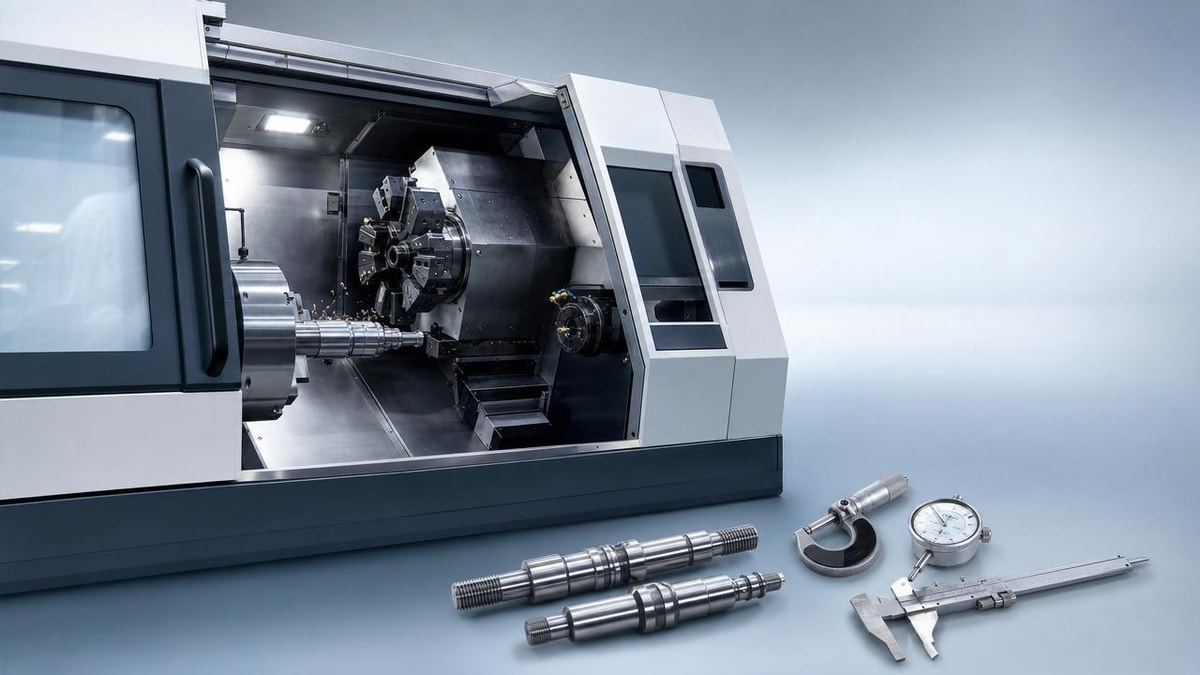
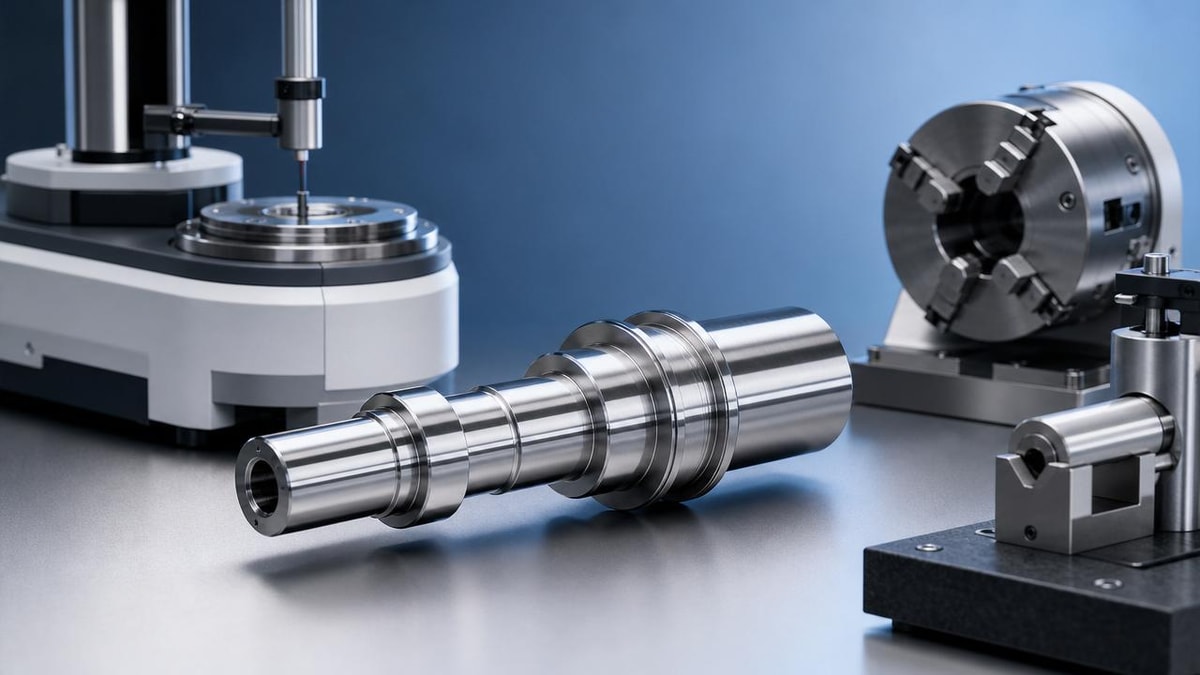
A high precision lathe can unlock tighter tolerances, better surface finishes, and lower rework rates—but beyond a certain point, added precision may drive up costs faster than it improves output. For financial decision-makers, the real question is not how precise a machine can be, but how much precision delivers measurable returns in production efficiency, quality, and long-term equipment value.
Why the conversation around a high precision lathe is changing
In the CNC machine tool industry, the discussion has shifted from simple equipment capability to investment efficiency. For years, buying a high precision lathe was often seen as a straightforward upgrade path: better machine, better parts, stronger competitiveness. That logic still holds in some sectors, especially aerospace, medical devices, electronics, and advanced energy equipment. However, market conditions have changed. Manufacturers now face tighter capital controls, more complex customer requirements, shorter product cycles, and stronger pressure to connect production outcomes with financial performance.
This means the value of a high precision lathe is no longer judged only by micron-level performance. It is judged by how often that precision is actually used, whether it reduces total manufacturing cost, and how well it fits broader production strategy. In practical terms, the question is moving from “Can this machine reach the tolerance?” to “Will this level of precision improve margin, throughput, and customer retention enough to justify the premium?”
That shift matters for financial approvers. In many factories, machine tools are among the most capital-intensive assets on the floor. A high precision lathe may deliver impressive technical performance, but if the production mix does not consistently require that capability, the business may end up paying for underutilized accuracy, longer payback periods, and more expensive maintenance structures.
The strongest trend signal: precision demand is rising, but not evenly
One of the clearest industry signals is that precision requirements are rising across global manufacturing, but the increase is not uniform. Some segments require extremely tight tolerances because of safety, performance, or miniaturization needs. Others mainly need repeatable and stable machining at a commercially sensible cost. This distinction is critical when evaluating a high precision lathe purchase.
For example, a supplier producing high-speed spindle components, fuel system parts, or advanced sensor housings may benefit from investing in higher-end precision turning. By contrast, a producer focused on medium-complexity shaft parts, general industrial fittings, or routine batch machining may gain more from reliability, automation, and setup reduction than from ultra-fine precision beyond actual customer tolerances.
The trend, then, is not “always buy the highest precision available.” The real trend is targeted precision investment. Buyers are increasingly expected to match machine capability to actual part economics, customer standards, and future order structure.
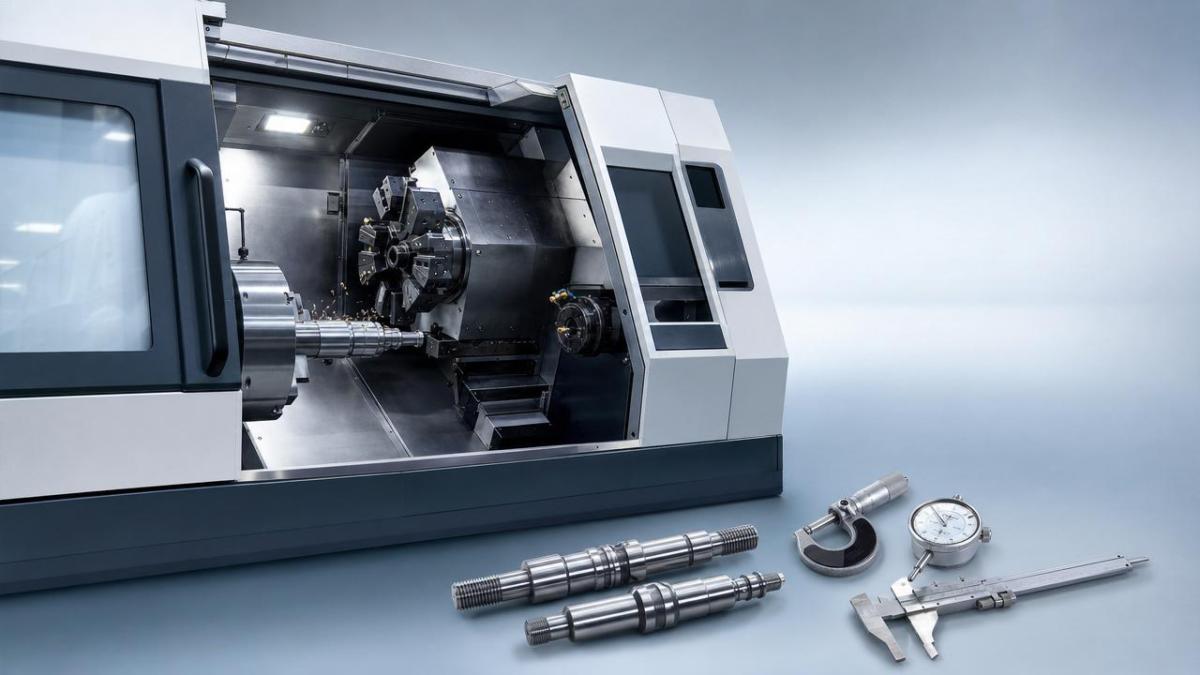
What is driving this shift in precision economics
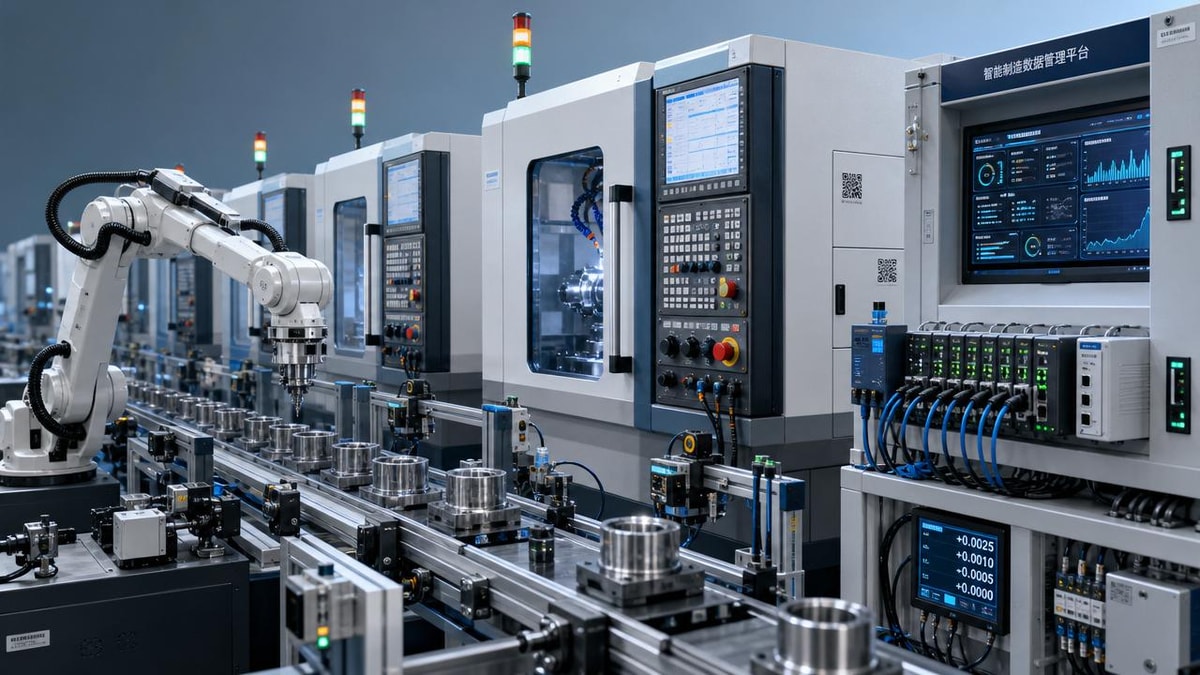
Several forces are reshaping how companies evaluate a high precision lathe. First, smart manufacturing has improved the visibility of production data. Firms can now compare machine utilization, cycle time stability, scrap rates, and maintenance costs more clearly than before. This transparency makes it easier to see whether added precision is creating value or just increasing asset cost.
Second, downstream industries are separating “critical tolerance features” from “commercially acceptable features” more carefully. In other words, not every dimension on a part needs the same level of control. A machine selected solely for peak precision may be excessive if only a limited number of jobs require that level of performance.
Third, automation is changing machine selection priorities. In some factories, unattended running, tool life monitoring, and stable thermal compensation create more financial value than chasing the smallest possible tolerance window. A high precision lathe still matters, but the market increasingly values a balanced machine package: precision, uptime, ease of programming, service support, and compatibility with digital workflows.
Fourth, global competition is intensifying cost scrutiny. Suppliers in China, Germany, Japan, South Korea, and other manufacturing centers continue to raise the quality baseline. This has made overinvestment more visible. If two shops can meet the same customer standard, the one with the more efficient capital structure often has the pricing advantage.
When extra precision creates value—and when it starts destroying it
For a financial approver, the practical issue is the inflection point. A high precision lathe creates value when tighter capability directly reduces a current business pain point or enables access to better revenue. Typical examples include lowering rejection rates on difficult materials, holding critical dimensions across long production runs, replacing secondary finishing operations, or winning contracts in industries with strict tolerance and traceability requirements.
However, precision starts destroying value when the machine is materially more capable than the work mix requires. That gap shows up in several ways: higher acquisition cost, costlier environmental controls, more demanding maintenance, a steeper training burden, slower returns on capital, and lower flexibility if utilization depends on a narrow category of parts. In such cases, the business is not buying productive precision; it is buying dormant capability.
This does not mean companies should avoid future-proofing. It means future-proofing should be selective. If your order pipeline suggests a clear move toward tighter tolerances or higher-value precision work, a high precision lathe may be a strategic position. But if future demand is uncertain, incremental investment or phased equipment planning may be financially safer than jumping to the top tier immediately.
Which stakeholders feel the impact most
The decision around a high precision lathe affects more than the production department. It changes cost structures, capability positioning, staffing needs, and even customer expectations. That is why the most successful equipment approvals increasingly involve cross-functional review.
For financial decision-makers, one important insight is that a high precision lathe should not be justified only by engineering enthusiasm. It should be justified by measurable business effects across departments. If quality savings exist but scheduling complexity rises sharply, the real benefit may be smaller than expected. If sales can convert the machine into entry to premium contracts, the value may be larger than current production data alone suggests.
Signals that a premium high precision lathe is likely justified
Certain conditions suggest that investing in a high precision lathe is not simply a technical preference but a financially sound move. These signals include repeated scrap tied to dimensional instability, customer RFQs increasingly requesting tighter tolerances, high spending on secondary finishing, quality claims linked to turning consistency, or bottlenecks caused by forcing difficult jobs onto machines with limited thermal stability.
Another strong signal is when machine precision directly supports a strategic market transition. A manufacturer moving from general subcontracting into aerospace subcomponents or precision energy systems may need a higher-grade lathe not just for immediate jobs but to establish credibility with future buyers. In that context, the equipment is part of market repositioning.
Still, even in these cases, procurement teams should test whether the expected gain comes from pure precision or from a package of features such as spindle rigidity, in-process measurement, automation readiness, software integration, and thermal control. The wrong purchase can happen when “high precision lathe” becomes a catch-all label for any premium machine, even when the actual need is process stability or reduced manual intervention.
Signals that the business may be overbuying precision
There are also warning signs that the proposed machine exceeds business reality. If most current parts operate comfortably within broader tolerances, if operators regularly struggle to fill available machine hours, or if the company lacks the inspection systems needed to verify ultra-tight machining results, a top-tier high precision lathe may not be the best next step.
Another caution signal appears when the payback model relies on unrealistic future work. Financial approvers should be careful with assumptions that depend heavily on winning speculative contracts, immediate premium pricing, or perfect machine utilization from day one. Precision investments often succeed when tied to existing demand visibility, not only to aspirational positioning.
It is also worth examining whether process discipline is the bigger issue. In some plants, poor fixturing, unstable tooling, inconsistent material input, or weak programming standards cause more variation than machine capability. In that case, a higher-end high precision lathe may mask organizational inefficiency rather than solve it.
How financial approvers can judge the next 3 to 5 years
A useful way to assess a high precision lathe is to think in stages rather than in a single purchase event. Over the next three to five years, ask whether your business is likely to move toward higher-value, lower-volume parts; mixed production with frequent changeovers; or large-scale repetitive output where repeatability matters more than extreme tolerance. Each path points to a different machine strategy.
The best evaluation framework usually includes five questions. First, what percentage of revenue truly depends on higher precision? Second, what quality cost can be removed if capability improves? Third, will the machine increase throughput or just improve a specification rarely monetized? Fourth, what service and training costs will accompany the purchase? Fifth, does the machine strengthen strategic competitiveness in target markets?
This stage-based view is especially relevant in the modern CNC machine tool market, where automation, digital monitoring, and production flexibility are advancing rapidly. A high precision lathe should be seen as part of a broader manufacturing system, not a standalone symbol of technical sophistication.
A practical decision direction for today’s market
The market direction suggests a balanced conclusion. Precision will continue to matter more in advanced manufacturing, and a high precision lathe will remain an important asset for companies serving demanding sectors. But the winning strategy is not maximum precision at any cost. It is fit-for-purpose precision supported by data, process readiness, and market clarity.
For finance leaders, that means approving equipment that aligns with where the business is clearly moving, not where it vaguely hopes to go. For operations teams, it means linking machine capability to actual production pain points. For company leadership, it means recognizing that in today’s environment, the smartest manufacturing investments combine technical performance with capital discipline.
If your organization wants to understand whether a high precision lathe is the right level of investment, focus on a few questions: Which parts truly require tighter tolerance? Where does scrap, rework, or finishing cost erode margin today? How much future demand is visible for higher-spec work? And can your existing process, talent, and quality systems fully use the machine’s capability? Those answers will usually reveal whether more precision is a competitive advantage—or simply too much.
PREVIOUS ARTICLE
NEXT ARTICLE
Recommended for You
 Industrial Machining Equipment Lead Times Are Changing AgainManufacturing Market Research Center
 Where Industrial Robotics Adds Value Beyond Simple Labor SavingsMachine Tool Industry Editorial Team
 Shaft Parts Machining Problems That Show Up After Final InspectionCNC Machining Technology Center
 Production Process Variations That Quietly Raise Scrap RatesCNC Machining Technology Center
 Industrial Automation Projects Fail When Data Is Added Too LateCNC Machining Technology Center
 CNC Metal Cutting Quality Drops Often Start With ClampingMachine Tool Industry Editorial Team


Aris Katos
Future of Carbide Coatings
15+ years in precision manufacturing systems. Specialized in high-speed milling and aerospace grade alloy processing.
▶
How Much Precision Is Too Much in a High Precision Lathe?Machine Tool Industry Editorial Team▶
Industrial CNC Upgrade Signs You Should Not Ignore in 2026Machine Tool Industry Editorial Team▶
ISO 23218-2:2026 Published for CNC Fixture Dynamic Repeatability TestingMachine Tool Industry Editorial Team▶
High precision lathe selection gets harder when part mix keeps changingMachine Tool Industry Editorial Team▶
Precision equipment downtime is rising in older lines: why?Machine Tool Industry Editorial Team
Mastering 5-Axis Workholding Strategies
Join our technical panel on Nov 15th to learn about reducing vibrations in thin-wall components.

Providing you with integrated sanding solutions
Before-sales and after-sales services
Comprehensive technical support