• Global CNC market projected to reach $128B by 2028 • New EU trade regulations for precision tooling components • Aerospace deman
NYSE: CNC +1.2%LME: STEEL -0.4%

Industrial CNC Upgrade Signs You Should Not Ignore in 2026
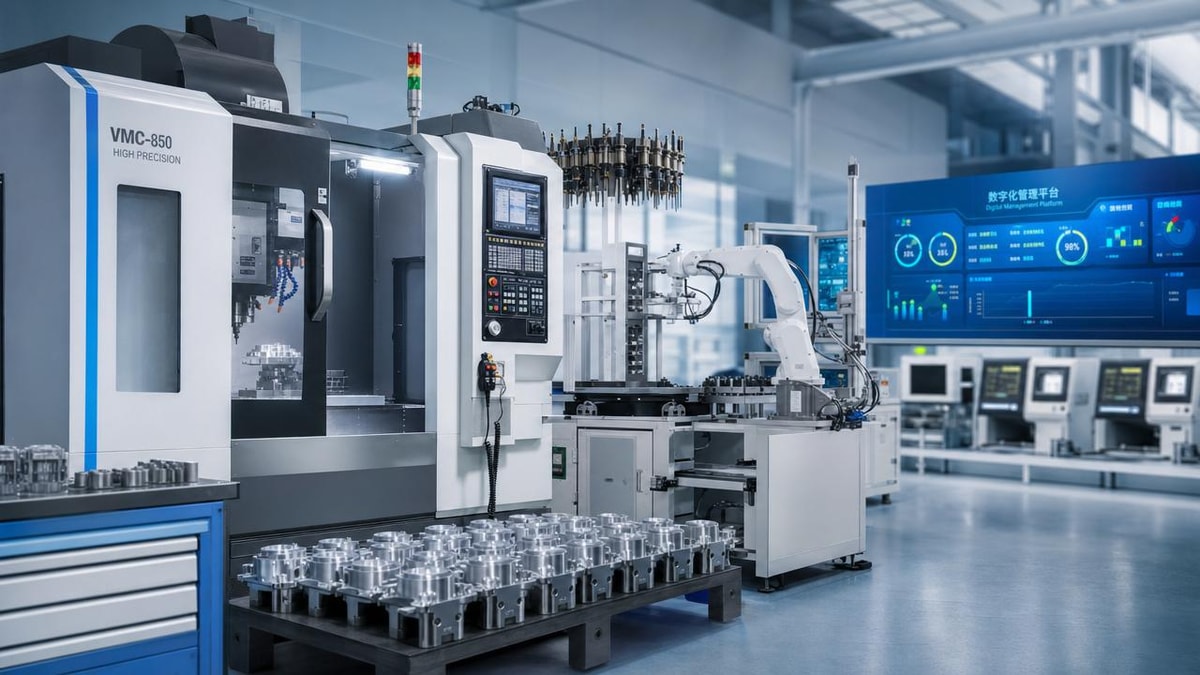
In 2026, delaying an industrial CNC upgrade can quietly erode productivity, precision, and competitiveness. For business decision-makers, the warning signs often appear in rising downtime, inconsistent part quality, higher maintenance costs, and limited digital integration. Understanding when your industrial CNC equipment is holding back operations is essential to protecting margins and preparing for smarter, faster manufacturing.
For manufacturers in automotive, aerospace, electronics, energy equipment, and general precision engineering, the decision is no longer only about replacing an old machine. It is about whether your current industrial CNC capacity can support tighter tolerances, shorter lead times, smaller batch variation, and more connected production environments across the next 3–5 years.
An upgrade may involve a new machining center, a retrofit of control systems, spindle improvement, automation integration, tooling optimization, or a full production cell redesign. The right timing matters. Upgrade too late, and losses accumulate through scrap, delivery risk, and labor inefficiency. Upgrade too early without a plan, and capital may be misallocated. The signs below help decision-makers judge when action becomes necessary rather than optional.
Operational Signs Your Industrial CNC Equipment Is Falling Behind
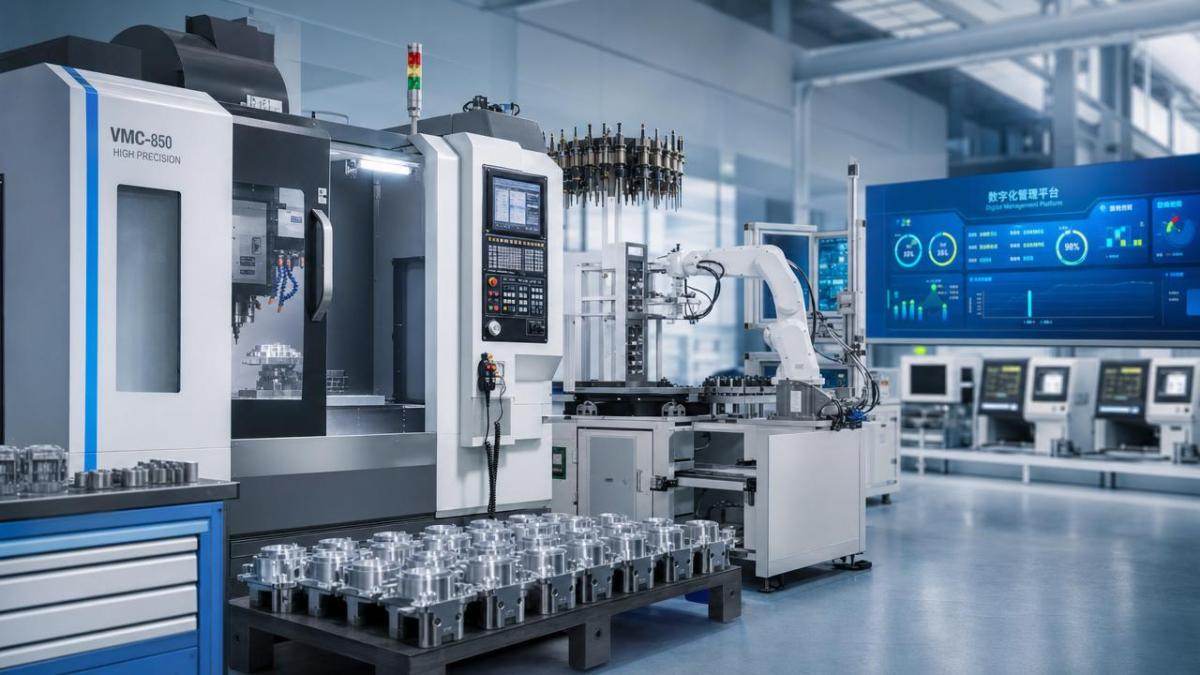
The first warning signs usually appear on the shop floor before they appear on a financial report. If machine utilization drops below planned levels, preventive maintenance turns into emergency repair, or operators spend more than 10%–15% of cycle time on manual intervention, your industrial CNC setup may already be constraining throughput.
Downtime Is Becoming a Recurring Cost Center
Unplanned downtime is one of the clearest upgrade signals. In many factories, a mature CNC platform can still run reliably, but once breakdown frequency rises to 2–3 incidents per month on a critical machine, the impact extends beyond maintenance. Scheduling buffers grow, expedited shipments increase, and customer confidence weakens.
Aging controls, spindle wear, unstable servo systems, and obsolete electrical components often create a chain reaction. Even when each repair seems manageable, the total effect can mean 20–40 lost production hours per month on a heavily loaded line. For decision-makers, that lost capacity should be compared directly with upgrade cost, not treated as a routine operating expense.
Typical downtime triggers
- Repeated alarm resets caused by aging controllers or I/O modules
- Spindle vibration affecting finish quality at higher RPM ranges
- Longer warm-up time before stable machining accuracy is achieved
- Replacement parts lead times extending from 7 days to 4–8 weeks
Part Quality Is No Longer Consistent Across Shifts
A second warning sign is quality drift. If the same program produces different results between day shift and night shift, or if tolerance performance changes after 2–3 hours of continuous operation, the machine may lack the thermal stability, feedback accuracy, or structural rigidity required for current production standards.
For many precision applications, a deviation beyond ±0.01 mm to ±0.02 mm may already affect fit, assembly efficiency, or downstream inspection yield. In sectors such as aerospace or electronics, even minor instability can force extra inspection steps, increase fixture correction, or reduce confidence in unattended machining.
Cycle Times Are Out of Step With Market Demands
Older industrial CNC assets can still be accurate, but not competitive. If a legacy machining center takes 18 minutes for a part now routinely completed in 11–13 minutes by newer equipment with better acceleration, tool management, and chip evacuation, that gap compounds quickly across weekly volume.
When production planners start reducing orders on a machine because setup is too slow or changeover is too complex, the issue is strategic rather than technical. An industrial CNC upgrade should be considered when the equipment can no longer support the required mix of high precision, short runs, and rapid switchover.
The table below helps quantify common operational symptoms and what they usually indicate in a CNC production environment.
The key takeaway is simple: one isolated issue may be repairable, but several issues appearing together usually mean the industrial CNC asset is no longer aligned with production goals. Decision-makers should assess these signals as a system, not as separate maintenance events.
Technology Gaps That Make an Industrial CNC Upgrade More Urgent in 2026
In 2026, competitiveness depends on more than cutting metal accurately. Manufacturers increasingly need connected machines, higher automation compatibility, better energy control, and faster data visibility. If your industrial CNC environment cannot support these functions, the cost of delay may be less visible but equally serious.
Limited Digital Integration Slows Decisions
A modern industrial CNC platform should provide machine status, cycle count, alarm history, tool life data, and production traceability with minimal manual input. If supervisors still depend on handwritten logs, spreadsheet updates, or end-of-shift reports, decisions are being made with delayed information.
Even a 12-hour delay in seeing machine performance trends can affect delivery planning and maintenance response. For multi-site operations or export-oriented manufacturers, poor visibility also weakens customer reporting, production scheduling, and cost control across plants.
Automation Readiness Is Inadequate
Many factories are not looking for full lights-out production, but they still need partial automation such as robotic loading, pallet systems, bar feeders, in-process probing, or automatic tool measurement. If a current machine cannot interface reliably with these systems, labor costs and night-shift constraints remain high.
For example, if one operator can manage only 1 machine because loading is manual and setup confirmation is repetitive, while an upgraded cell could support 2–4 machines with automated handling, the labor productivity gap becomes material. This is especially important where skilled machinists are scarce and wages are rising.
Older Machines Consume More Energy and Floor Time
Energy usage is not always the top driver, but in high-volume operations it matters. Newer industrial CNC equipment often improves power management, idle-state efficiency, coolant control, and cycle optimization. A reduction of 8%–15% in energy use per machine may not justify investment by itself, but combined with better throughput and lower scrap, it strengthens the business case.
Floor space efficiency also matters. A newer multi-axis or multitasking machine can consolidate 2 or 3 operations into 1 setup, reducing work-in-process transfer, fixture inventory, and queue time between departments.
The comparison below outlines where older and newer industrial CNC capabilities often differ in practical manufacturing terms.
For business leaders, the biggest issue is not whether a machine still runs. It is whether the industrial CNC platform can fit into a more connected, automated, and flexible production model without creating bottlenecks elsewhere in the factory.
How to Evaluate Whether You Need a Retrofit or Full Replacement
Not every upgrade requires a new machine purchase. In some cases, retrofitting an industrial CNC asset can extend useful life by 3–7 years. In others, replacement is the only cost-effective route. The correct decision depends on machine structure, control obsolescence, spare parts access, required tolerances, and future production plans.
When Retrofit Makes Sense
A retrofit is often practical when the machine base and guideway geometry remain sound, but the controller, drives, spindle components, sensors, or HMI are outdated. This is common for robust machine frames that still have mechanical integrity but poor connectivity or recurring electrical faults.
Typical retrofit scope may include 4 to 6 major elements: CNC control replacement, servo update, spindle repair, encoder renewal, lubrication system modernization, and safety interface improvement. Lead time can range from 2–6 weeks for planning and parts preparation, followed by 1–3 weeks of on-site implementation depending on complexity.
When Full Replacement Is More Rational
Replacement is usually more rational when machine rigidity is compromised, geometric wear is advanced, spare parts are difficult to source, or required process capability has moved far beyond original design. If your customers now expect tighter tolerances, faster turnaround, or automated traceability, a legacy platform may not justify repeated patchwork investment.
A useful rule is to compare the next 24 months of expected repair cost, downtime loss, and quality-related loss against the capital required for a new industrial CNC solution. If the older machine continues to absorb major service spending while still failing to meet output requirements, replacement should move higher on the priority list.
Four decision checkpoints for executives
- Can the current machine consistently hold the tolerance band your next 2 years of contracts require?
- Are spare parts and technical support available within an acceptable service window, such as 48–72 hours for critical failures?
- Can the machine connect to planned automation or production monitoring systems without excessive customization?
- Will the upgrade improve total output enough to protect margin within a realistic payback period?
Implementation Priorities for a Successful Industrial CNC Upgrade
Once the need for an industrial CNC upgrade is clear, execution becomes the next challenge. Many projects underperform not because the equipment is wrong, but because the upgrade is planned too narrowly around machine price instead of total production impact.
Start With Process Bottlenecks, Not Catalog Features
Decision-makers should identify where output is currently being lost: spindle time, setup, fixturing, tool life, metrology, operator availability, or material flow. A 5-axis machine may look attractive, but if your largest loss comes from repeated part loading and queue time, automation and pallet strategy may deliver more value than axis count alone.
Define Upgrade Success in Measurable Terms
Set measurable targets before procurement. Common targets include reducing setup time by 25%–40%, improving OEE by 10–20 points, lowering scrap by 1%–3%, or increasing unattended runtime by 2–6 hours per shift. These metrics help align suppliers, engineering teams, and production managers around outcomes that matter commercially.
Prepare People, Tooling, and Data Together
An industrial CNC upgrade is not complete when the machine is installed. Training, tooling strategy, post-processor verification, fixture compatibility, maintenance planning, and data connection all need preparation. In many plants, 30–60 days of stabilization after installation is normal before full productivity is achieved.
It is also wise to plan acceptance in 3 stages: installation verification, process capability trial, and production handover. This reduces the risk of approving equipment that runs test parts well but struggles under real scheduling conditions.
Common Procurement Mistakes to Avoid
- Choosing based only on purchase price rather than cost per qualified part
- Ignoring service response time and spare parts availability
- Underestimating integration needs with robots, MES, or inspection systems
- Buying excess complexity that operators cannot use productively in the first 6 months
For companies facing rising downtime, unstable quality, weak digital visibility, or labor-intensive setups, an industrial CNC upgrade in 2026 is often less about expansion and more about protecting operational resilience. The strongest investment cases come from matching machine capability to actual production goals, future automation plans, and realistic maintenance economics.
If your current equipment is limiting precision, lead time, or scalability, now is the right time to evaluate retrofit options, replacement paths, and production-line integration requirements. Contact us to discuss your application, get a customized industrial CNC upgrade plan, and explore solutions that fit your manufacturing priorities.
Recommended for You
 Industrial Machining Equipment Lead Times Are Changing AgainManufacturing Market Research Center
 Where Industrial Robotics Adds Value Beyond Simple Labor SavingsMachine Tool Industry Editorial Team
 Shaft Parts Machining Problems That Show Up After Final InspectionCNC Machining Technology Center
 Production Process Variations That Quietly Raise Scrap RatesCNC Machining Technology Center
 Industrial Automation Projects Fail When Data Is Added Too LateCNC Machining Technology Center
 CNC Metal Cutting Quality Drops Often Start With ClampingMachine Tool Industry Editorial Team

Aris Katos
Future of Carbide Coatings
15+ years in precision manufacturing systems. Specialized in high-speed milling and aerospace grade alloy processing.
▶
How Much Precision Is Too Much in a High Precision Lathe?Machine Tool Industry Editorial Team▶
Industrial CNC Upgrade Signs You Should Not Ignore in 2026Machine Tool Industry Editorial Team▶
ISO 23218-2:2026 Published for CNC Fixture Dynamic Repeatability TestingMachine Tool Industry Editorial Team▶
High precision lathe selection gets harder when part mix keeps changingMachine Tool Industry Editorial Team▶
Precision equipment downtime is rising in older lines: why?Machine Tool Industry Editorial Team
Mastering 5-Axis Workholding Strategies
Join our technical panel on Nov 15th to learn about reducing vibrations in thin-wall components.

Providing you with integrated sanding solutions
Before-sales and after-sales services
Comprehensive technical support