• Global CNC market projected to reach $128B by 2028 • New EU trade regulations for precision tooling components • Aerospace deman
NYSE: CNC +1.2%LME: STEEL -0.4%

Industrial lathe capacity looks adequate until tool change delays show
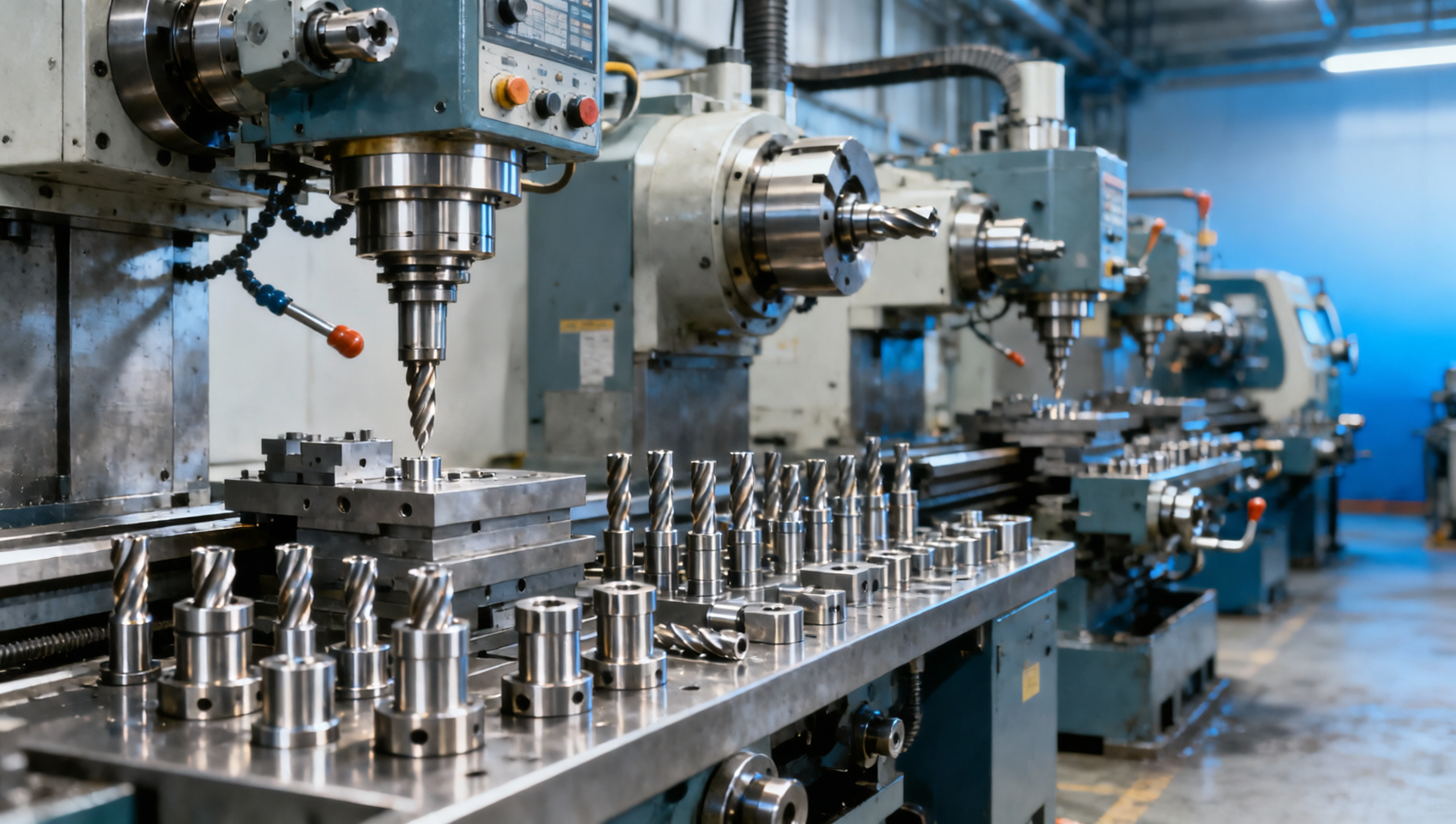
Industrial lathe capacity often appears sufficient on paper, yet real bottlenecks emerge when tool change delays disrupt the production process. In today’s metal machining and industrial CNC environments, improving automated lathe efficiency is critical for CNC production, cost control, and delivery reliability. This article explores how hidden downtime affects CNC metalworking performance and what manufacturers can do to strengthen automated production.
For researchers, operators, buyers, and manufacturing leaders, the issue is not only spindle power or machine count. A workshop may have 6, 12, or even 30 CNC lathes installed, but output still falls short when non-cutting time expands across every shift. Tool indexing delays, turret positioning errors, offset verification, manual presetting, and poor tool availability can quietly reduce actual capacity by 10% to 25%.
This gap between rated capacity and usable capacity matters across automotive, aerospace, energy equipment, and electronics supply chains. Delivery windows are tighter, batch sizes are more variable, and component complexity keeps increasing. In that environment, tool change performance is no longer a minor maintenance detail. It is a core production, purchasing, and planning variable.
Why lathe capacity calculations often miss the real constraint
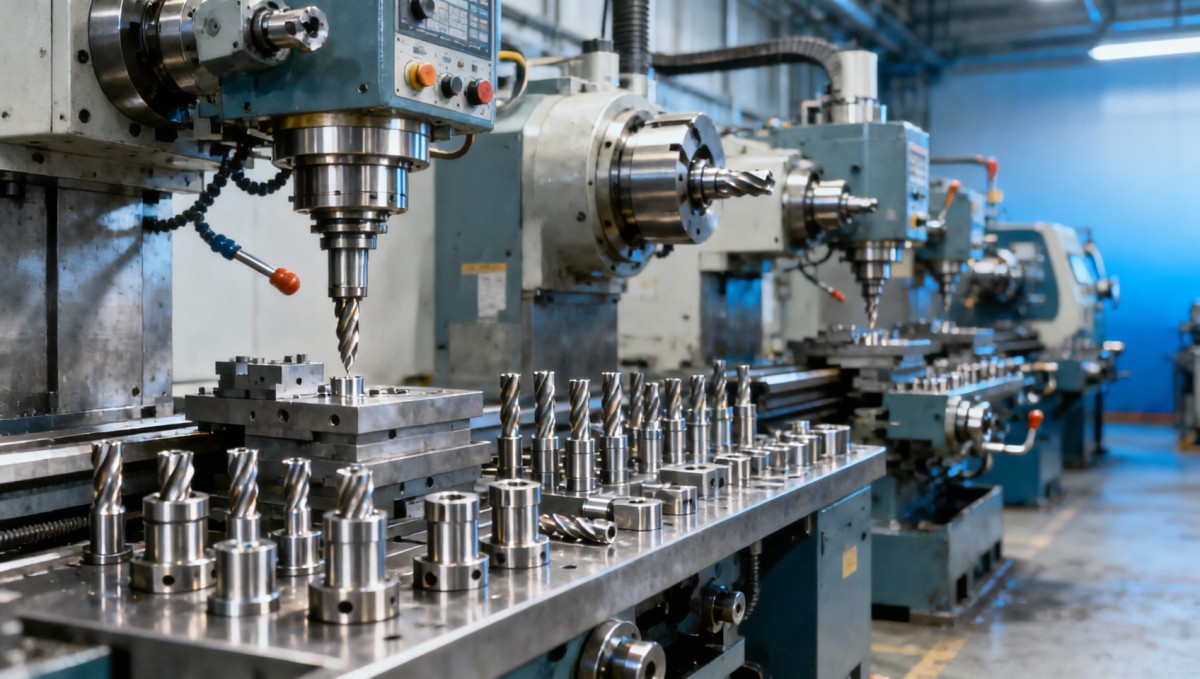
Many capacity plans are built from simple assumptions: available machine hours, target cycle time, scrap allowance, and shift count. That approach works for rough budgeting, but it often underestimates how much time is consumed outside metal cutting. A CNC lathe running a nominal 90-second cycle may lose 8 to 20 seconds per part if multiple tools are changed, checked, or re-indexed during the process.
The effect is especially visible in mixed production. A line producing shafts, threaded fittings, and precision discs may require 6 to 14 tools per setup. If each tool change or confirmation event adds only 3 to 7 seconds, the cumulative delay across 500 parts per shift becomes significant. In some cells, hidden tool-related losses exceed the planned buffer for the entire day.
For operators, these delays show up as repeated interruptions rather than a dramatic stoppage. For planners and decision-makers, the danger is that ERP or production scheduling systems still report acceptable capacity because they track machine availability, not actual productive engagement at the spindle. As a result, promised lead times may be based on theoretical throughput rather than verified shop-floor performance.
This issue becomes more severe when tolerances tighten. In components requiring repeatability in the range of ±0.01 mm to ±0.02 mm, tool wear checks, offset updates, and insert confirmation become unavoidable. The tighter the tolerance band, the more often the process pauses for intervention. What looked like excess machine capacity on paper may disappear after the first 2 weeks of production.
Common hidden losses behind tool change delay
- Manual tool presetting that adds 5 to 15 minutes at each setup change.
- Turret indexing or alignment delays of 1 to 3 seconds per cycle in older machines.
- Tool life inconsistency that triggers unplanned insert replacement during peak production.
- Operator confirmation steps caused by poor tool management or unclear offset records.
- Waiting for replacement holders, inserts, or fixtures due to weak inventory coordination.
Why this matters for purchasing and investment decisions
When buyers compare CNC lathes, they often focus on spindle speed, turning diameter, bar capacity, and controller brand. Those are important, but they do not fully explain output. In high-mix environments, a machine with faster turret response, better tool management integration, and more stable repeatability may outperform a higher-powered alternative by 8% to 18% in real production.
The table below shows how rated and effective capacity can diverge when tool change delays are included in operational analysis.
The key conclusion is simple: installed capacity is not the same as effective capacity. Any factory evaluating expansion, automation, or supplier performance should include tool change delay as a measurable production variable rather than treating it as background noise.
How tool change delay affects cost, delivery, and process stability
Tool change inefficiency affects more than output volume. It also raises unit cost, reduces schedule reliability, and increases operator workload. A delay of 10 seconds may sound small, but on a line producing 8,000 to 12,000 parts per month, it can translate into dozens of lost machine hours. If overtime is used to recover shipments, the apparent cost of the delay becomes even higher.
For procurement teams, this means machine price should not be separated from throughput consistency. A lower-cost lathe that requires frequent manual intervention may create higher annual operating expense through labor, late delivery penalties, more tool consumption, and unstable batch quality. The financial difference can emerge within 12 to 18 months, especially in 2-shift or 3-shift production.
Process stability is also affected because delayed tool changes often indicate deeper issues: weak standardization, poor presetting discipline, outdated holders, or inconsistent tool life tracking. Once the process relies on operator judgment rather than controlled tool management, variation rises. That can increase first-article approval time, raise scrap risk, and make unattended machining harder to trust.
In export-oriented manufacturing, delivery reliability may be the biggest consequence. A customer may accept a quoted 4-week lead time only if the supplier can maintain stable cycle performance over repeated orders. When actual output drops by 12% in the second or third week due to tool handling inefficiency, the supplier’s planning credibility weakens, even if the machines themselves are technically adequate.
Operational impact by business role
Different stakeholders see the same problem from different angles. Operators feel interruption, planners see missed targets, buyers see poor asset utilization, and executives see margin pressure. Aligning these views is important before investing in additional CNC lathes or automated production cells.
The pattern across these roles is consistent: if tool change performance is not measured, factories may invest in more capacity when the real need is better control of existing CNC production conditions.
How to evaluate and reduce hidden downtime in automated lathe production
The first step is to separate cutting time from non-cutting time with enough detail. Instead of recording only overall cycle time, manufacturers should track at least 4 categories: spindle cutting, turret indexing, tool verification, and unplanned intervention. Even a 2-week observation period can reveal whether the core problem is machine mechanics, tooling strategy, or workflow discipline.
Factories running automated lathes or robot-assisted loading should also review tool life management. Automated loading does not solve a poor tooling process. If insert life varies widely, unattended production will still stop. A practical benchmark is to keep tool life variation within a predictable band, such as 10% to 15% for stable materials and controlled roughing conditions.
Setup optimization is another major lever. Preset tool stations, standardized holders, digital offset records, and grouped part families can reduce changeover losses. In medium-batch manufacturing, cutting setup time from 45 minutes to 25 minutes may create more usable capacity than buying one additional lathe, especially when floor space, power supply, and operator staffing are already constrained.
Maintenance should be linked directly to tool change performance. Turret repeatability, hydraulic stability, lubrication condition, and clamping consistency all affect how quickly and accurately tools can be indexed. A preventive review every 500 to 1,000 operating hours is often more effective than waiting for visible failure, because performance decline usually starts before breakdown occurs.
A practical 5-step improvement path
- Measure real cycle breakdown for 10 to 14 production days, not just one sample shift.
- Identify the top 3 sources of non-cutting time, such as indexing delay, manual offset checks, or insert replacement frequency.
- Standardize holders, presetting methods, and tool records across the cell or line.
- Match tool strategy to production mode, distinguishing prototype, medium batch, and high-volume runs.
- Review the effect monthly using output per shift, schedule adherence, and scrap trend as control indicators.
Selection points when upgrading machines or cells
When comparing CNC machine tools, buyers should ask practical questions: How fast is turret indexing under actual load? How stable is repeatability after 6 months? Does the control support reliable tool life management? Can preset data be transferred digitally? Is the machine easy to maintain during 2-shift or 3-shift operation? These points often matter more than marketing claims about maximum speed.
A good evaluation framework combines machine specifications with process evidence. Whenever possible, compare target parts, target materials, and target batch sizes. A lathe optimized for long continuous turning may not perform equally well in a high-mix environment with frequent tool calls and short cycle repetition.
Choosing the right tooling and automation strategy for different production scenarios
Not every factory needs the same response to tool change delays. The right solution depends on product mix, tolerance level, order frequency, and labor model. A subcontract machining shop handling 20 to 50 part numbers per month faces different priorities than an automotive supplier producing one family of shafts in volumes above 30,000 units per quarter.
For high-mix, low-to-medium volume work, flexibility matters most. Quick-change holders, standardized tool carts, digital setup sheets, and presetting discipline can shorten response time without excessive capital spending. For high-volume production, automated tool monitoring, more stable insert strategy, and stronger linkage between CNC control and tool life data usually offer better returns.
Tolerance-sensitive industries such as aerospace or energy equipment machining may need a more conservative approach. In these cases, the goal is not simply faster tool changes. It is repeatable and verifiable tool changes. A controlled 4-second tool event that protects concentricity and dimensional stability may be preferable to an aggressive but unstable 2-second changeover.
Procurement teams should also consider service support. If the supplier cannot provide commissioning guidance, spare parts planning, tooling compatibility advice, and response within 24 to 72 hours for critical issues, the factory may struggle to realize the full value of the equipment. Support capability is part of capacity, even though it is rarely shown in brochures.
Recommended strategy by production type
The following comparison helps align tooling and automation choices with actual manufacturing conditions rather than generic assumptions.
This comparison shows that the best CNC metalworking strategy is context-specific. Faster tool changes only create value when they match the process, labor skill level, and part quality requirement of the factory using them.
FAQ: key questions before expanding lathe capacity or changing suppliers
Before adding machines or changing machine tool suppliers, manufacturers should ask targeted questions about real production behavior. The wrong capacity decision can lock in unnecessary capital cost for 3 to 5 years, while the real issue remains unresolved on the shop floor.
How do we know if tool change delay is severe enough to justify action?
If non-cutting time exceeds 15% of total cycle time on a repeated basis, or if output misses plan by more than 8% for 2 consecutive weeks without material shortage or labor absence, tool change delay deserves focused review. Another warning sign is when operators regularly intervene between cycles even though the lathe is considered automated.
Is buying another CNC lathe the best solution?
Not always. If the existing machines lose 10% to 20% of capacity due to setup inefficiency, inconsistent tooling, or maintenance gaps, process improvement may be cheaper and faster than expansion. Additional equipment makes sense when demand is stable, labor coverage is available, and current utilization remains high even after non-cutting losses are corrected.
Which indicators should buyers request from suppliers?
Buyers should request evidence on turret response, repeatability over time, maintenance intervals, controller support for tool management, spare parts availability, and realistic commissioning lead time. A practical supplier review should cover at least 6 items: machine rigidity, indexing performance, digital integration, maintenance accessibility, local service response, and compatibility with intended tooling systems.
What is a reasonable implementation timeline for improvement?
A basic improvement program often takes 3 phases. Phase 1 is measurement, usually 1 to 2 weeks. Phase 2 is standardization of tooling and setup methods, often 2 to 4 weeks. Phase 3 is verification and optimization, which may take another 2 to 6 weeks depending on part complexity, shift pattern, and supplier coordination.
Industrial lathe capacity should never be judged only by machine count or catalog specifications. In modern CNC production, hidden tool change delays can reduce throughput, increase cost, and weaken delivery performance long before a factory appears fully loaded. The most effective response is to measure real non-cutting time, align tooling strategy with production type, and evaluate machine tool options using process-based criteria rather than headline parameters alone.
If your team is assessing CNC lathe efficiency, planning automation upgrades, or comparing machine tool suppliers for precision manufacturing, now is the right time to review actual tool change performance. Contact us to discuss your production scenario, request a tailored solution, or explore more machining and smart manufacturing strategies for reliable growth.
PREVIOUS ARTICLE
NEXT ARTICLE
Recommended for You
 What causes chatter in metal machining and how to stop itCNC Machining Technology Center
 Industrial CNC lead times are shifting in 2026Manufacturing Market Research Center
 When CNC industrial upgrades cut output instead of raising itMachine Tool Industry Editorial Team
 Automated lathe errors that often start with bar feedingMachine Tool Industry Editorial Team
 Why CNC metalworking scrap rates rise on thin wall partsCNC Machining Technology Center
 CNC cutting speed or finish quality: where losses beginCNC Machining Technology Center

Aris Katos
Future of Carbide Coatings
15+ years in precision manufacturing systems. Specialized in high-speed milling and aerospace grade alloy processing.
▶
Industrial lathe capacity looks adequate until tool change delays showMachine Tool Industry Editorial Team▶
Industrial CNC maintenance gaps that lead to sudden downtimeMachine Tool Industry Editorial Team▶
Precision Machine Tool Updates highlight new backlash compensation methods for ball screwsMachine Tool Industry Editorial Team▶
Heavy-duty Machining Center for mold making: Why hydrostatic guideways outperform linear rails under sustained loadMachine Tool Industry Editorial Team▶
Machine tool for aerospace: Why thermal growth compensation requires real-time sensor fusionMachine Tool Industry Editorial Team
Mastering 5-Axis Workholding Strategies
Join our technical panel on Nov 15th to learn about reducing vibrations in thin-wall components.

Providing you with integrated sanding solutions
Before-sales and after-sales services
Comprehensive technical support