• Global CNC market projected to reach $128B by 2028 • New EU trade regulations for precision tooling components • Aerospace deman
NYSE: CNC +1.2%LME: STEEL -0.4%

Industrial Automation Investment Is Shifting to Modular Cells
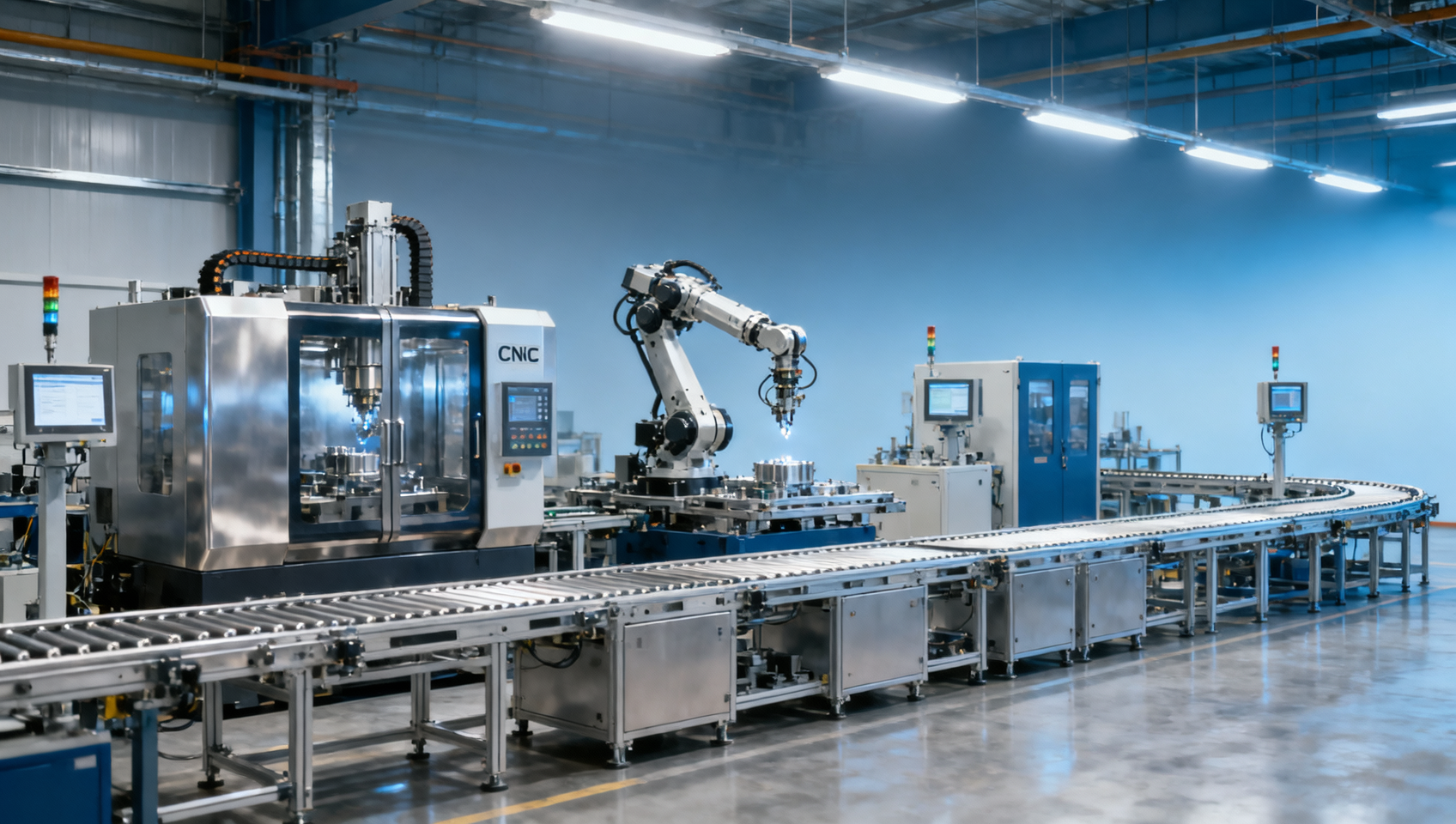
As Global Manufacturing priorities evolve, investment is moving from rigid lines to modular cells that improve the production process, support automated production, and reduce risk. For companies in the Manufacturing Industry, this shift is reshaping industrial CNC, CNC milling, CNC cutting, and automated production line planning, while creating new opportunities for flexible metal machining, industrial automation, and faster response to changing demand.
Why modular cells are gaining investment priority in industrial automation
For many manufacturers, the biggest problem is no longer whether to automate, but how to automate without locking capital into a fixed layout for 7–10 years. Traditional transfer lines and rigid automated production line systems can deliver high output, but they are harder to rebalance when product mix changes, batch sizes shrink, or new part geometries appear. Modular cells answer this problem by dividing production into scalable units built around CNC machine tools, robot handling, fixtures, inspection, and digital control.
This matters across automotive manufacturing, aerospace, energy equipment, and electronics production. In these sectors, industrial CNC and precision machine tools must increasingly process both stable legacy parts and newly introduced variants. A modular CNC milling or CNC cutting cell can be deployed in 1 station, then expanded to 2–4 linked stations as volume rises. That reduces the risk of overbuilding capacity too early while still supporting automated production.
Investment teams also favor modular structures because commissioning can often be staged. Instead of waiting for a full line to be completed, a plant can start with a single machining center, CNC lathe, or multi-axis machining system, then add loading robots, tool management, gauging, and traceability functions in later phases. This phased model supports cash-flow discipline and allows engineering teams to validate cycle time, spindle utilization, and operator interaction before wider rollout.
For buyers and plant managers, modular cells are not just a layout trend. They are a practical response to volatile demand, labor constraints, and shorter product life cycles. In metal machining environments, they help shorten changeover windows, isolate downtime, and simplify maintenance planning. When one cell is serviced, another can continue producing, which is harder to achieve in a tightly coupled rigid line.
What changes in the investment logic?
The core shift is from maximum theoretical throughput to resilient throughput. A rigid line may still be the right answer for very stable, high-volume parts with long demand visibility. However, many procurement teams now evaluate automation using 3 questions: how fast can the system be installed, how easily can it be repurposed, and how much production risk is concentrated in one asset chain. Modular cells usually score better on these decision points.
- Lower expansion risk: capacity can be added in stages rather than purchased all at once.
- Better product flexibility: one cell can be optimized for shafts, another for discs, another for structural parts.
- Improved maintenance isolation: faults in one module are less likely to stop the entire factory flow.
- Faster process validation: pilot production can begin before a full-scale system is expanded.
Modular cells vs rigid lines: which production model fits your workload?
The right answer depends on part stability, takt requirements, tolerance demands, and expected engineering change frequency. A rigid line can still make sense when the part family is narrow, annual volume is highly predictable, and cycle balance is well proven. But where product diversity, export uncertainty, or customer-specific machining routes are involved, modular cells usually provide a more practical route for industrial automation and CNC cutting integration.
In CNC machine tool investment, many users underestimate the cost of future changes. A fixed line may look attractive at the quotation stage, yet retooling can become expensive if fixtures, guarding, robot reach, pallet logic, and material flow were designed for only one part family. By contrast, modular cells often use standardized interfaces for grippers, tool magazines, probing routines, and communication protocols, making later adaptation easier within a 2–6 week modification window rather than a major line rebuild.
The comparison below helps purchasers, users, and decision-makers evaluate where each model performs best. It is not a universal ranking. It is a planning tool for matching automation architecture to business reality, especially in flexible metal machining and precision manufacturing environments.
The table shows why modular automation is becoming a preferred investment route in sectors where demand signals are less stable than they were five years ago. The key is not to assume one model is always superior. The right choice comes from expected batch size, engineering change rate, and the financial tolerance for underused capacity.
Where rigid lines still make sense
If you are producing a highly standardized component with minimal geometric change for 24–36 months, a rigid automated production line may still deliver the best cost per part. This is common for mature automotive subcomponents, some bearing rings, or long-run energy equipment parts. In those cases, dedicated transfer logic and fixed balancing can outperform flexible systems.
However, decision-makers should still test one scenario: what happens if volume drops by 20% or product mix doubles within 12 months? If the line becomes difficult to rebalance under those conditions, modular deployment deserves serious consideration before capital is approved.
Which manufacturing scenarios benefit most from modular CNC and automated cells?
Not every shop floor needs the same automation architecture. The strongest use cases for modular cells are operations handling multiple part families, precision tolerances, and changing schedules. In global CNC machining, this includes plants where a machining center may process one family of housings in the morning and another family of structural parts in the next shift. It also includes factories adding traceability, in-process measurement, and robotic loading without replacing every legacy machine at once.
For operators, modular layouts often improve workflow clarity. Material entry, machining, deburring, gauging, and unloading can be organized into smaller islands with clearer responsibilities. For procurement teams, this creates a cleaner upgrade path. A company can connect one CNC milling cell to a pallet system today, then integrate automated inspection or tool presetting after 3–6 months once process stability is confirmed.
The application fit is especially strong where precision machine tools must serve both output and flexibility. Aerospace parts, energy components, electronics fixtures, and mixed automotive programs often require that balance. The challenge is not just spindle power or feed rate. It is how quickly the cell can switch between qualified process recipes while maintaining acceptable utilization and repeatable quality.
Typical use cases in precision manufacturing
- Multi-part workshops producing shafts, discs, and structural parts in small-to-medium batches across 2 or 3 shifts.
- Plants adding robot tending to existing CNC lathes or machining centers without redesigning the whole workshop.
- Factories facing customer-driven engineering changes every quarter and needing shorter fixture replacement windows.
- Export-oriented manufacturers that must balance uncertain order releases with high equipment utilization targets.
Application planning table for buyers and engineers
The following matrix can be used during project definition meetings. It helps map production conditions to a practical modular cell strategy, especially when evaluating CNC cutting, industrial CNC, and flexible automated production line investments.
This type of scenario planning reduces the chance of buying automation that is either too rigid for future demand or too complex for current staffing. It also helps align engineering, operations, and finance before quotation comparison begins.
What should procurement teams check before buying a modular cell?
A modular project should not be approved on machine count alone. Purchasers need to evaluate the cell as a system: CNC machine tool capability, automation compatibility, process stability, maintenance access, spare parts support, and software openness. In many tenders, the real gap between suppliers is not spindle speed or robot brand. It is whether the solution can maintain quality over multiple product variants with realistic staffing levels.
A disciplined evaluation usually covers at least 5 core checkpoints. First, confirm part range and tolerance class. Second, define the expected batch profile over the next 12–24 months. Third, verify how changeover will be executed and documented. Fourth, review interface readiness for MES, traceability, or quality systems where required. Fifth, understand service response, commissioning scope, and operator training depth. These points affect real ownership cost more than headline equipment price.
Procurement should also ask how the supplier handles cell evolution. Can the same architecture support one robot now and two robots later? Can a machining center be replaced by a higher-spec model without redesigning all guarding and material flow? Can the fixture base and communication layer be standardized? These questions determine whether the modular concept is genuine or only a sales label.
A practical procurement checklist
- Define the part envelope, material type, tolerance band, and target cycle time range before requesting quotations.
- Request a clear modular roadmap showing what is included in phase 1 and what can be added in phase 2 or phase 3.
- Check fixture philosophy, tool management logic, and changeover steps for mixed production rather than one reference part only.
- Confirm operator training scope, preventive maintenance items, and typical spare parts categories for the first 12 months.
- Review communication readiness for common industrial protocols and quality data collection if digital integration is planned.
Supplier evaluation table
The following table can help purchasing teams compare modular CNC and automation proposals in a more structured way. It is useful when several vendors offer similar-looking cells but very different long-term flexibility.
A structured checklist improves quotation review quality and helps procurement avoid a common mistake: selecting the lowest initial price without evaluating adaptation cost, engineering support, and long-term cell usability.
Implementation risks, compliance points, and common misconceptions
Modular automation reduces some risks, but it does not eliminate the need for disciplined implementation. The most common problem is assuming modular cells are simple by default. In reality, success depends on process definition, fixture repeatability, robot reach planning, safety design, and software coordination. A cell that is easy to expand on paper can become hard to manage if interfaces were not standardized from the start.
Compliance also matters. Depending on the destination market and application, manufacturers may need to consider machine safety requirements, electrical compliance, guarding, emergency stop logic, documentation, and traceability rules. Where export projects are involved, procurement should clarify documentation expectations early, including manuals, component lists, inspection records, and any customer-specific acceptance protocol. Waiting until FAT or site installation often causes delays of 2–8 weeks.
Another misconception is that modular cells always have higher per-part cost than rigid lines. That may be true in some ultra-stable, very large-volume programs. But in mixed production, hidden costs from line inflexibility can offset the apparent savings. These include idle stations, expensive line-wide stoppages, complex retooling, and the need to hold more specialized spare parts for a single configuration.
Common mistakes during planning
- Sizing the cell around one ideal part instead of the actual family of parts expected over the next 12–24 months.
- Ignoring operator workflow, chip evacuation, tool replenishment, and maintenance access when reviewing layouts.
- Treating robot integration as a separate project rather than part of the core process design.
- Delaying data and traceability planning until after the machining process has already been frozen.
FAQ for research, operations, and purchasing teams
How do I know whether a modular CNC cell is suitable for my factory?
It is usually suitable when you handle multiple part types, expect periodic engineering changes, or want phased automation instead of a large one-time capital commitment. If your production mix changes every quarter, or if future capacity is uncertain, modular cells often provide a better balance between automation and adaptability. If your product is fixed and high-volume for 24 months or more, a dedicated line may still be competitive.
What delivery and implementation timeline is typical?
The schedule depends on machine type, automation content, tooling readiness, and documentation complexity. In general terms, a standard stand-alone or lightly automated cell may move faster than a multi-station integrated solution. Buyers should separate 4 phases in planning: technical clarification, manufacturing and integration, factory acceptance, and site commissioning. This phased view gives a more realistic timeline than one single promised date.
What should operators focus on after installation?
Operators should focus on recipe selection accuracy, fixture verification, tool condition, alarm response steps, and first-piece confirmation. In modular automated production, daily stability depends on disciplined handover between shifts and clear maintenance escalation paths. Training should include not only machine use, but also robot safety zones, basic recovery logic, and quality checkpoints.
Are modular cells only for large factories?
No. They are often a practical option for medium-sized manufacturers because they allow staged investment. A company can begin with one CNC machine tool plus loading automation, then add gauging, pallet handling, or a second module later. This lowers the entry barrier compared with a full rigid line and can make industrial automation more realistic for growing suppliers.
Why work with a platform focused on CNC machining and precision manufacturing?
When investment is shifting toward modular cells, buyers need more than product brochures. They need market insight, technology judgment, and the ability to compare machining, tooling, automation, and international supply options in one place. A platform dedicated to global CNC machining and precision manufacturing can help shorten that learning curve by connecting industry news, technical interpretation, procurement logic, and trade visibility.
This is especially valuable for companies reviewing CNC lathes, machining centers, multi-axis machining systems, cutting tools, fixtures, and automated assembly systems together rather than as isolated purchases. A cell performs as a production system, so sourcing decisions should also be made as a system. Decision-makers often need support on 6 fronts at once: process fit, equipment architecture, supplier comparison, delivery timing, compliance expectations, and future expansion potential.
If you are evaluating modular automation for metal machining, flexible production lines, or smart factory upgrades, the most useful next step is a focused technical discussion. You can contact us to review part characteristics, target output, CNC machine configuration, robot integration options, expected delivery windows, documentation needs, and quotation comparison points. We can also help you clarify whether a stand-alone cell, linked modular cell, or more dedicated automated production line is the better fit for your workload.
For practical project progress, prepare 4 items before reaching out: part drawings or process description, estimated batch range, quality or traceability requirements, and your preferred implementation schedule. With that information, discussions on parameter confirmation, product selection, custom solution planning, sample support, certification expectations, and budget communication become far more efficient and decision-ready.
PREVIOUS ARTICLE
NEXT ARTICLE
Recommended for You
 Global Manufacturing Lead Times Improve but Not EverywhereGlobal Machine Tool Trade Research Center
 Machine Tool Market Inventory Pressure Is Building AgainGlobal Machine Tool Trade Research Center
 Metal Lathe vs CNC Milling for Low Volume Round PartsCNC Machining Technology Center
 CNC Cutting Gas Choice Affects More Than Edge FinishCNC Machining Technology Center
 CNC Metalworking Shops Face New Pressure on TraceabilityManufacturing Policy Research Center
 Automated Lathe Cycle Time Gains Can Hide Quality LossesCNC Machining Technology Center

Aris Katos
Future of Carbide Coatings
15+ years in precision manufacturing systems. Specialized in high-speed milling and aerospace grade alloy processing.
▶
Industrial Automation Investment Is Shifting to Modular CellsManufacturing Market Research Center▶
Why some industrial lathe investments take longer to pay backManufacturing Market Research Center▶
Automated production is expanding in parts with stable repeat demandManufacturing Market Research Center▶
Precision equipment buyers assumed AI-assisted alignment was standard—turns out only 37% of models deliver itManufacturing Market Research Center▶
Industrial CNC adoption hit a plateau in Q1 2026—not from cost, but from operator readiness gapsManufacturing Market Research Center
Mastering 5-Axis Workholding Strategies
Join our technical panel on Nov 15th to learn about reducing vibrations in thin-wall components.

Providing you with integrated sanding solutions
Before-sales and after-sales services
Comprehensive technical support