• Global CNC market projected to reach $128B by 2028 • New EU trade regulations for precision tooling components • Aerospace deman
NYSE: CNC +1.2%LME: STEEL -0.4%

Precision Equipment ROI Depends on More Than Tolerance
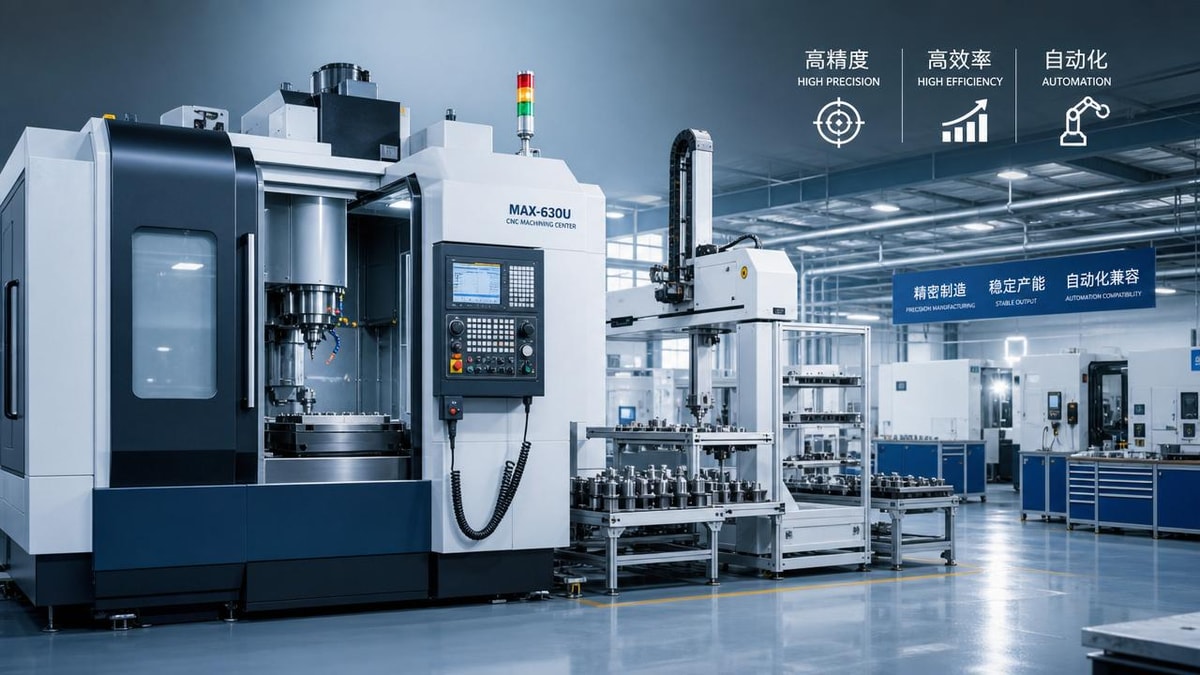
For financial approvers, the ROI of precision equipment is shaped by far more than tight tolerance alone. Long-term value depends on uptime, process stability, automation readiness, maintenance costs, and integration with broader production goals. In today’s CNC and precision manufacturing environment, smarter investment decisions come from evaluating total operational impact, not just technical specifications.
Why Scenario Differences Matter More Than a Single Accuracy Claim
A finance team reviewing a proposal for precision equipment is rarely approving a machine in isolation. It is approving a production capability, a cost structure, a risk profile, and often a future operating model. That is why the same machine can deliver strong returns in one factory and weak returns in another. The difference usually comes from application fit, not from brochure-level precision alone.
In the CNC machine tool industry, buyers often focus first on spindle speed, repeatability, or axis count. Those metrics matter, but financial approvers need a broader lens. A machining center used for aerospace components faces different priorities than a CNC lathe supporting high-volume automotive parts, and both differ from a flexible job shop serving mixed customer orders. Each scenario changes the real value of precision equipment.
For decision-makers in manufacturing, the core question is not simply, “Is this equipment precise?” It is, “Will this precision convert into sustainable throughput, lower scrap, stronger delivery performance, and lower total cost per qualified part in our operating environment?”
Where Precision Equipment Typically Creates the Most Value
Precision equipment appears across a wide range of industrial settings, but the value drivers differ sharply by business model. In complex manufacturing, the machine may protect quality and compliance. In mass production, it may reduce cycle variation and labor dependency. In export-oriented plants, it may support traceability, process documentation, and customer audit requirements.
The most common application scenarios include automotive component production, aerospace structural and rotating parts, electronics and small precision assemblies, energy equipment machining, and subcontract manufacturing with mixed batches. In each of these, the investment case should be built around use conditions rather than a generic claim about capability.
Scenario 1: High-Volume Production Lines Need Precision That Protects Throughput
In automotive manufacturing and other repeat-production environments, precision equipment only creates strong ROI when it supports output discipline. A machine with excellent tolerance capability but unstable runtime can become financially disappointing if it causes stoppages, setup delays, or inconsistent tool life.
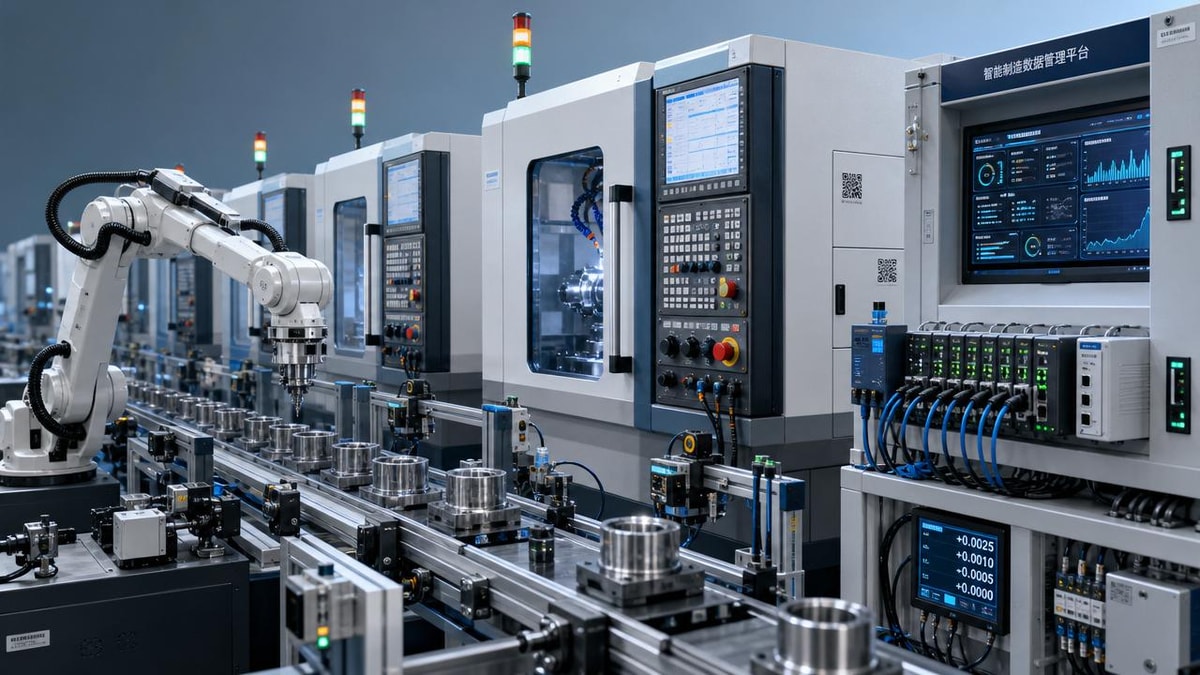
In this scenario, approvers should focus on practical indicators: mean time between failures, tool management integration, pallet systems, robotic loading readiness, spindle utilization, and operator dependency. Financial returns improve when precision equipment reduces variation without increasing supervision burden.
A useful test is simple: if production volume doubles, will the machine continue delivering stable output with manageable maintenance and staffing? If not, the equipment may be technically advanced but commercially misaligned.
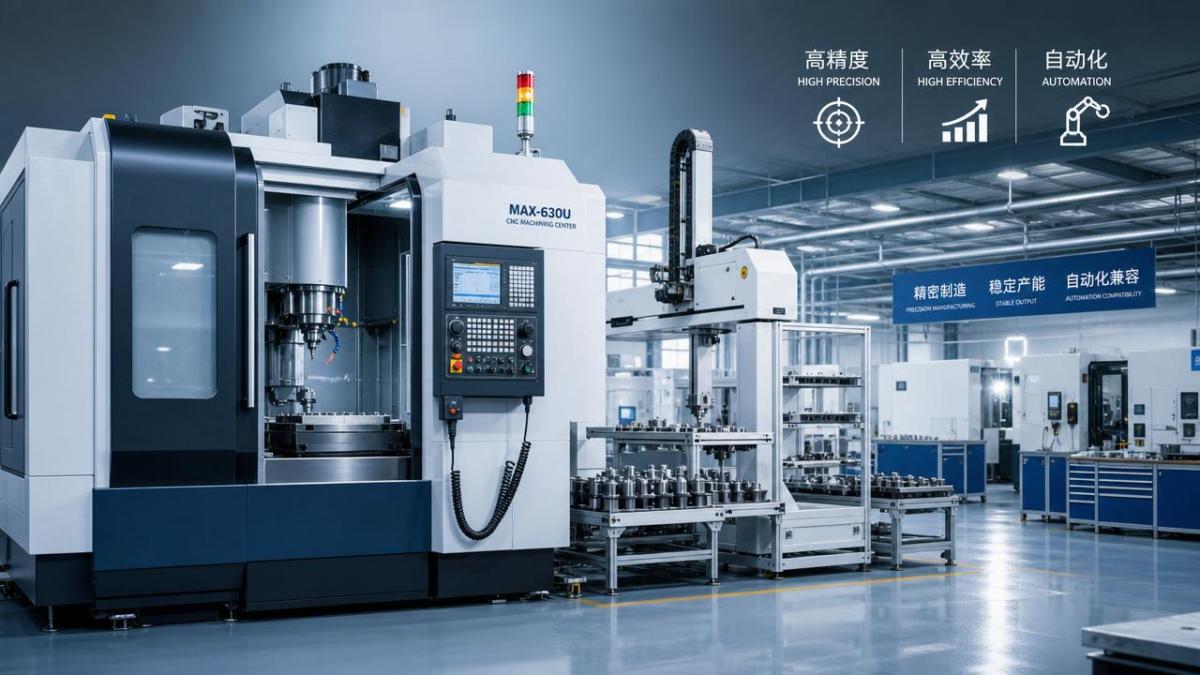
Scenario 2: Aerospace and Critical Parts Production Need Risk-Controlled Precision Equipment
For aerospace, medical-adjacent industrial supply, or any environment where parts are expensive and rejection risk is severe, the value of precision equipment lies in process confidence. Here, ROI is not mainly about short cycle time. It is about avoiding non-conformance, documentation gaps, material waste, and delayed customer approval.
Financial approvers should ask whether the machine supports in-process verification, data capture, stable thermal behavior, and proven consistency across long production runs. If a single scrapped part has high material or regulatory cost, a premium investment in precision equipment can be justified even with lower daily output.
This is also where service support matters. Downtime in critical-part production often affects downstream certification, export delivery, and customer trust. A lower-priced machine with weaker global service may carry hidden financial exposure that does not appear in the initial quotation.
Scenario 3: Mixed-Batch Manufacturers Need Flexibility More Than Maximum Specification
Contract manufacturers and job shops operate under a different logic. Their challenge is not only quality but constant switching between materials, geometries, quantities, and due dates. In this scenario, precision equipment generates return when it can stay productive across changing work orders.
That means setup time, CAM compatibility, fixture adaptability, operator learning curve, and program transfer capability may be more important than the most extreme tolerance number. A machine that handles 80 percent of order types efficiently can outperform a more specialized machine that sits idle between complex jobs.
Finance teams should therefore examine utilization assumptions carefully. If the business pipeline is diverse and volatile, precision equipment should be evaluated as a flexible revenue platform, not merely as a high-accuracy asset.
Scenario 4: Electronics and Small-Part Machining Demand Stability at Micro Scale
In electronics production and miniature precision components, problems often come from vibration, heat, burr control, and repeatability over very small features. Here, the ROI of precision equipment depends on yield protection. Minor inconsistencies can create large percentages of loss when parts are tiny, numerous, and highly sensitive to dimensional drift.
Approvers in this scenario should compare expected yield improvement against current scrap patterns. They should also review the environment around the machine: temperature control, tooling strategy, inspection flow, and operator discipline. Buying advanced precision equipment without matching process conditions can reduce expected return.
Scenario 5: Heavy Industry and Energy Equipment Need Durable Precision Over Long Operating Cycles
For energy equipment, large structural parts, and demanding industrial components, precision equipment must perform under heavy loads and long machining windows. In these settings, rigidity, serviceability, and lifecycle durability often carry more financial weight than top-end speed.
A financial approver should ask whether the machine’s design supports predictable maintenance, easy access to wear components, reliable spare parts supply, and stable accuracy retention over time. A machine that starts strong but degrades quickly can undermine ROI through escalating calibration, rework, and unplanned downtime.
How Different Business Priorities Change the Right Investment Decision
The same precision equipment proposal can look attractive or weak depending on the business objective behind it. If the company is expanding export orders, digital traceability and process consistency may justify higher upfront cost. If labor shortages are the issue, automation interfaces and unattended operation may drive the best return. If gross margin is under pressure, the key may be cycle optimization and scrap reduction.
This is why financial approval should align with business context, not just engineering preference. Precision equipment should be matched to one of several goals: protect quality, increase throughput, reduce labor dependence, support product complexity, improve flexibility, or strengthen customer confidence. Without that alignment, it is difficult to defend ROI assumptions.
A Practical Review Framework for Financial Approvers
- Identify the main production scenario: volume line, regulated part, mixed batch, micro-part, or heavy-duty machining.
- Define the financial target: lower unit cost, fewer rejects, higher utilization, faster delivery, or lower labor intensity.
- Check enabling conditions: operators, software, fixtures, inspection, automation support, and maintenance capability.
- Model downside risk: downtime cost, training delay, spare parts lead time, and integration challenges.
- Approve based on total operational fit, not isolated technical superiority.
Common Misjudgments When Buying Precision Equipment
One common mistake is overvaluing specification peaks that daily production never uses. Another is assuming that better precision automatically means better profitability. In reality, many factories lose money because they buy precision equipment that exceeds actual process needs while underinvesting in tooling, fixturing, automation, software integration, or preventive maintenance.
A second misjudgment is ignoring the cost of organizational readiness. New precision equipment may require retraining, quality procedure updates, digital connectivity, or stronger supplier support. If these hidden costs are omitted from the approval case, ROI projections become too optimistic.
A third error is evaluating price without considering lifecycle value. In the global CNC and precision manufacturing sector, a lower entry price may lead to higher downtime, slower support, weaker parts availability, and less effective scaling. For financial approvers, lifecycle reliability often matters more than initial discounting.
FAQ: Scenario-Based Questions Financial Teams Often Ask
Is premium precision equipment always worth it?
No. It is most justified when poor quality, downtime, or process instability creates significant financial loss. If the production mix is simple and tolerance demands are moderate, a more balanced solution may generate better ROI.
What matters most in an automation-driven factory?
Automation compatibility, consistent cycle performance, alarm stability, and low intervention rates often matter as much as nominal accuracy. Precision equipment in automated lines must work reliably within a broader system.
How should smaller manufacturers judge fit?
Smaller firms should prioritize versatility, ease of setup, local service response, and achievable utilization. Precision equipment should match realistic staffing and order patterns, not ideal future assumptions.
Choosing Precision Equipment by Business Scenario, Not Hype
The strongest investment decisions in the machine tool market come from matching precision equipment to actual production scenarios. High-volume plants need stability and automation readiness. Critical-part manufacturers need traceable consistency. Mixed-batch shops need flexibility. Electronics producers need micro-scale yield control. Heavy-industry users need durability across long cycles.
For financial approvers, the path forward is clear: define the production scenario, identify the economic bottleneck, verify operational readiness, and test ROI against real factory conditions. When precision equipment is assessed in that disciplined way, approval decisions become more strategic, less speculative, and far more likely to deliver measurable value.
Recommended for You
 Industrial Machining Equipment Lead Times Are Changing AgainManufacturing Market Research Center
 Where Industrial Robotics Adds Value Beyond Simple Labor SavingsMachine Tool Industry Editorial Team
 Shaft Parts Machining Problems That Show Up After Final InspectionCNC Machining Technology Center
 Production Process Variations That Quietly Raise Scrap RatesCNC Machining Technology Center
 Industrial Automation Projects Fail When Data Is Added Too LateCNC Machining Technology Center
 CNC Metal Cutting Quality Drops Often Start With ClampingMachine Tool Industry Editorial Team


Aris Katos
Future of Carbide Coatings
15+ years in precision manufacturing systems. Specialized in high-speed milling and aerospace grade alloy processing.
▶
Where the Manufacturing Industry Is Seeing Faster Automation PaybackManufacturing Market Research Center▶
Precision Equipment ROI Depends on More Than ToleranceManufacturing Market Research Center▶
India’s PLI Machine Tool Scheme Phase II Launches in 2026Manufacturing Market Research Center▶
Industrial Robotics investments look strong, but where is ROI fastest?Manufacturing Market Research Center▶
Industrial Robotics payback depends on one hidden variableManufacturing Market Research Center
Mastering 5-Axis Workholding Strategies
Join our technical panel on Nov 15th to learn about reducing vibrations in thin-wall components.

Providing you with integrated sanding solutions
Before-sales and after-sales services
Comprehensive technical support