• Global CNC market projected to reach $128B by 2028 • New EU trade regulations for precision tooling components • Aerospace deman
NYSE: CNC +1.2%LME: STEEL -0.4%

Where the Manufacturing Industry Is Seeing Faster Automation Payback
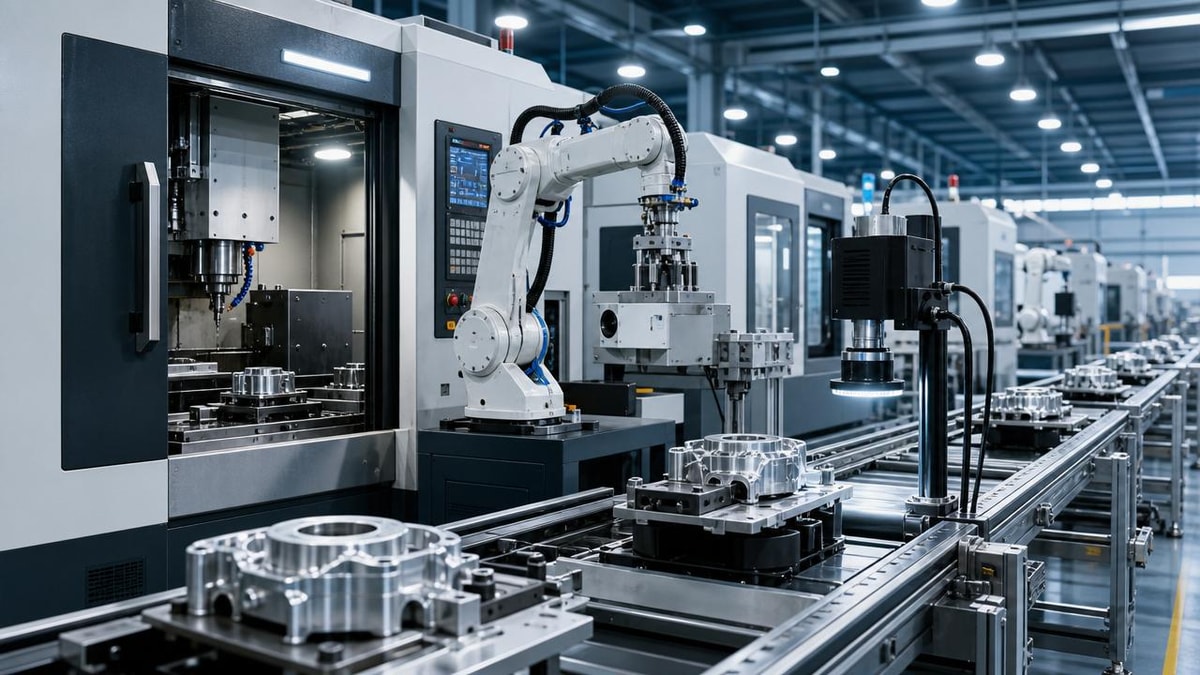
In the Manufacturing Industry, automation payback is arriving faster where precision, repeatability, and production scale directly affect margins. From CNC machining and automated assembly to smart production lines, manufacturers are prioritizing investments that reduce labor dependency, improve quality, and shorten cycle times. For business evaluators, understanding which segments deliver the quickest returns is essential to making smarter capital decisions.
Why scenario differences matter more than generic automation claims
Not every automation project in the Manufacturing Industry pays back at the same speed. The gap is often not caused by technology quality alone, but by operating context. A high-mix aerospace supplier, a mass-production automotive plant, and an electronics component maker may all invest in CNC systems, robots, vision inspection, or automated material handling, yet the return profile can be very different. Business evaluators should therefore avoid broad assumptions such as “automation always reduces cost” and instead ask where labor intensity, scrap risk, uptime pressure, and quality compliance create the strongest financial leverage.
In practical terms, the fastest automation payback usually appears where one or more conditions are already present: stable order volume, repetitive process steps, measurable quality losses, expensive downtime, or hard-to-fill skilled labor roles. In these situations, even moderate investments in CNC machine tending, inline gauging, pallet systems, robotic loading, or digital production monitoring can create visible savings within a short planning horizon. In less suitable settings, the same investment may still be strategic, but the payback period becomes longer and more dependent on future utilization.
The business backdrop: where payback tends to accelerate in the Manufacturing Industry
Across the Manufacturing Industry, three structural shifts are making automation economics more favorable. First, labor availability remains uneven, especially for skilled operators, setup technicians, and quality inspectors. Second, customers increasingly expect both traceability and consistency, which raises the hidden cost of manual variation. Third, modern equipment integration has improved. CNC controls, industrial robots, sensors, and MES-linked dashboards now connect more easily than in the past, reducing deployment friction.
For decision makers evaluating capital allocation, this means the best opportunities are often found at process bottlenecks rather than across the entire factory. A single constrained machining cell, an inspection-heavy assembly station, or a manually managed intralogistics flow can become the highest-yield entry point. The Manufacturing Industry is seeing faster automation payback not because every line is equally ready, but because targeted use cases are becoming easier to identify and quantify.
Typical application scenarios where automation pays back faster
The most attractive scenarios share one feature: they convert operational pain into measurable financial results. Below is a practical comparison for business evaluators reviewing opportunities in the Manufacturing Industry.
This scenario view is more useful than a generic technology list because it directly connects capital spending to business outcomes. In the Manufacturing Industry, fast payback often starts with a narrow process and expands only after the first cell or line proves its economics.
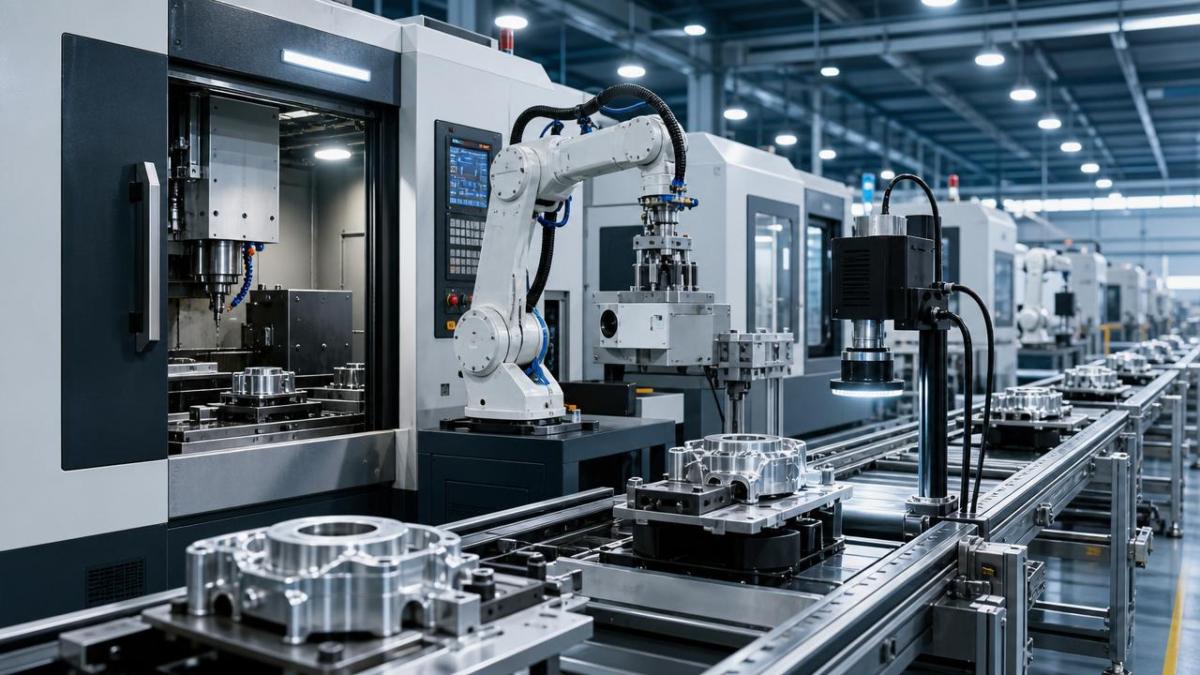
Scenario 1: High-volume CNC machining with repeatable part families
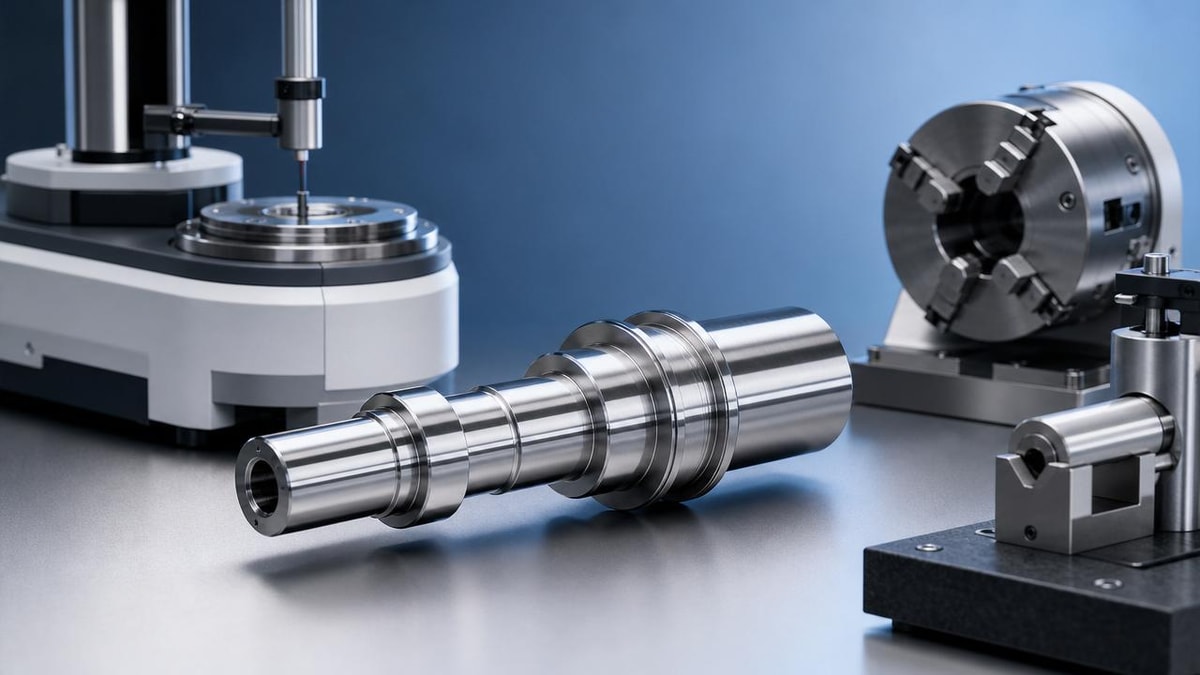
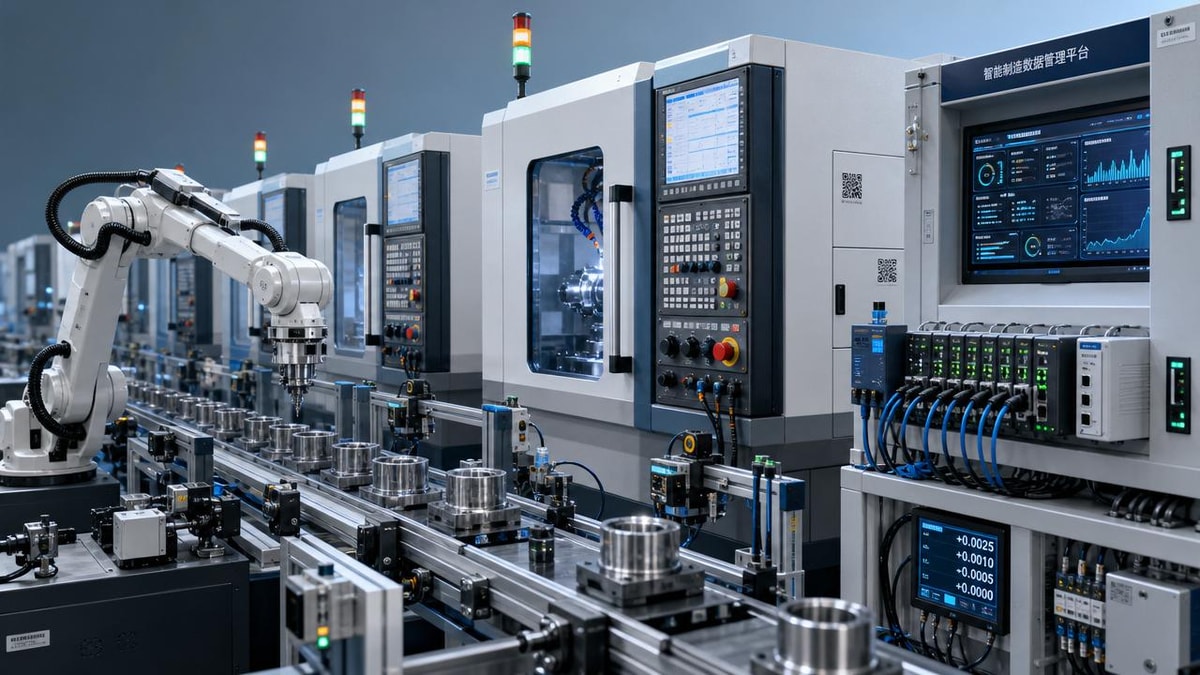
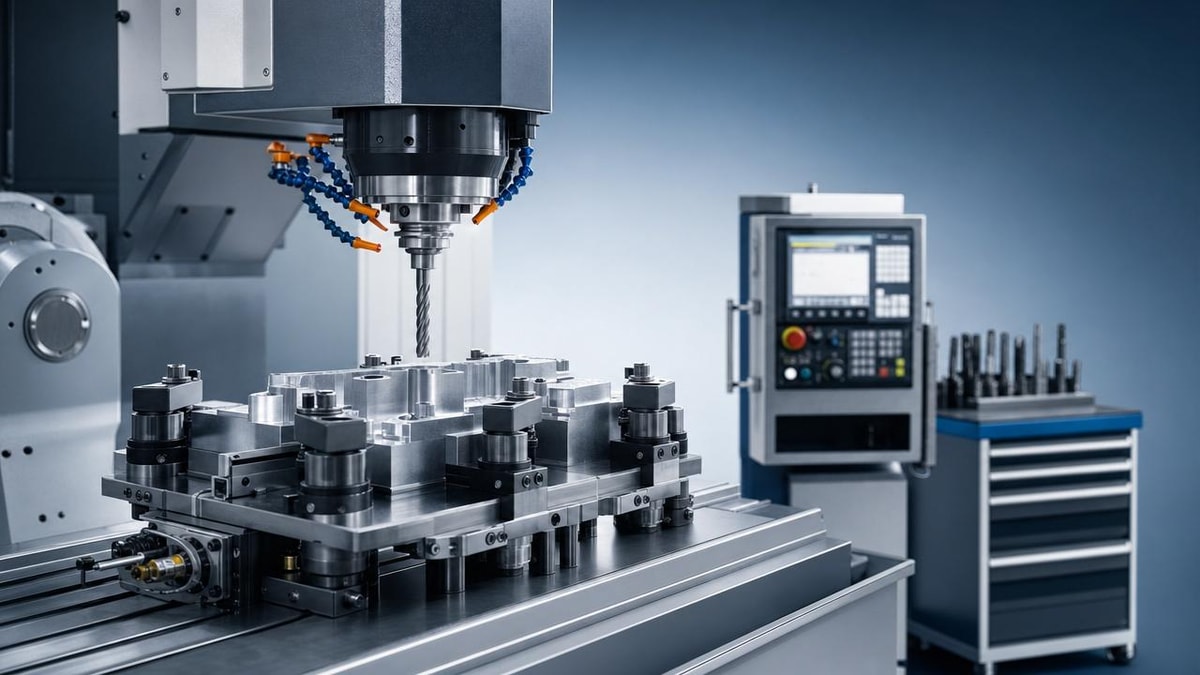
Among all automation opportunities in the Manufacturing Industry, high-volume CNC machining is one of the strongest candidates for rapid payback. This is especially true when manufacturers produce shafts, housings, discs, brackets, or similar parts in repeat batches with predictable tooling and fixture requirements. In such settings, robotic loading, bar feeders, pallet changers, tool life monitoring, and automatic gauging can raise spindle utilization without proportionally increasing labor.
The reason the return comes quickly is straightforward. CNC assets are expensive, and idle time is visible. If automation lifts machine running hours, shortens loading intervals, or reduces scrap from setup inconsistency, the value can be calculated clearly. For evaluators, the main checkpoints are machine occupancy, operator-to-machine ratio, overnight run potential, and scrap cost on high-value materials. If a shop already has stable scheduling and recurring part numbers, the automation case is usually stronger than in highly unstable, job-shop environments.
Best-fit conditions
This scenario fits suppliers serving automotive, industrial equipment, energy, and standardized component markets. It is less compelling when parts require constant engineering changes, highly manual fixturing, or frequent one-off setups. In those cases, flexible automation may still work, but payback should be modeled more conservatively.
Scenario 2: Assembly operations where quality variation erodes margin
Automated assembly creates faster payback when product quality depends on repeatable torque, alignment, insertion depth, adhesive application, or sequence control. In the Manufacturing Industry, these issues are common in electronics, appliance components, automotive subassemblies, and precision mechanical products. A manual process may appear inexpensive at first, but hidden costs emerge through rework, field failures, customer returns, and line stoppages caused by missed steps.
Business evaluators should focus on cost of poor quality, not just direct labor savings. A semi-automated cell with poka-yoke controls, torque traceability, and vision verification can outperform a labor-only model even when headcount reduction is modest. This is one reason the Manufacturing Industry is seeing faster automation payback in assembly-heavy segments: the financial upside often comes from defect prevention and compliance assurance rather than wage substitution alone.
Scenario 3: Inspection-intensive production with expensive downstream risk
Automation pays back especially fast when a defect discovered late in the process destroys too much value. Aerospace components, precision-machined parts, medical-adjacent hardware, and tight-tolerance industrial assemblies often fall into this category. Inline metrology, machine vision, laser measurement, and automatic SPC capture reduce the delay between defect creation and defect detection. That time compression is financially powerful.
For the Manufacturing Industry, this matters because every downstream step adds labor, machine time, and material exposure. If automated inspection catches drift early, the plant avoids both scrap multiplication and delivery risk. The strongest use cases are those with recurring inspection tasks, standardized pass/fail logic, and meaningful customer penalties tied to nonconformance. Where tolerances are critical and traceability is contractual, the return can be faster than many managers initially expect.
Scenario 4: Material handling and machine tending in labor-constrained plants
In many factories, the immediate automation bottleneck is not machining or assembly itself, but the movement around those processes. Parts wait to be loaded, pallets queue for transport, and operators spend too much time walking instead of adding value. In the Manufacturing Industry, robotic tending, conveyors, AGVs, and simple transfer systems often deliver quicker payback than more complex full-line transformations because the implementation scope is smaller and the labor waste is easy to observe.
This scenario is particularly relevant where absenteeism, shift coverage gaps, or ergonomics issues disrupt output. Evaluators should estimate not only labor reduction, but also uptime stabilization, injury risk reduction, and output recovery during off-shifts. If skilled operators are spending hours on repetitive loading and unloading, automation may unlock higher-value labor redeployment rather than direct elimination.
How needs differ by company type and production model
The same automation technology can produce different results depending on scale, product mix, and customer commitments. That is why business evaluators in the Manufacturing Industry should judge fit by operating model, not by brand or headline specification.
In short, larger and more repetitive operations usually justify deeper automation faster, while mixed-production companies should emphasize flexibility, changeover reduction, and visibility. The Manufacturing Industry rewards alignment between process pattern and automation architecture.
Common misjudgments that slow or distort payback expectations
A common mistake is to evaluate automation only through labor replacement. In reality, many of the best projects in the Manufacturing Industry succeed because they raise output, reduce defects, improve machine utilization, or protect customer delivery performance. Another mistake is ignoring upstream instability. If tooling is inconsistent, drawings change frequently, or production planning is chaotic, automation may expose process weakness rather than solve it.
A third error is over-automating too early. Some factories pursue fully integrated smart factory systems before validating one profitable use case. For business evaluators, a staged approach is often wiser: start with a bottleneck cell, establish baseline metrics, confirm actual savings, and then scale. This approach lowers risk and creates decision-quality data for future capital rounds.
A practical fit-check for business evaluators
Before approving automation in the Manufacturing Industry, ask five scenario-based questions. Is the process repetitive enough to standardize? Is labor availability or labor cost already limiting output? Does quality variation create measurable financial loss? Can utilization increase without waiting for uncertain demand? Is the equipment ecosystem ready for integration, including fixtures, data capture, maintenance support, and operator training?
If the answer is yes to at least three of these, the probability of faster payback is usually high. If only one or two apply, the case may still be strategic, but it should be framed around resilience, compliance, or future scalability rather than near-term financial acceleration.
FAQ: where should companies in the Manufacturing Industry start?
Which automation project usually pays back first?
Projects tied to repetitive CNC machine tending, bottleneck assembly steps, or inspection-heavy processes often pay back first because baseline losses are easy to measure and operational changes are contained.
Is automation only worth it for large manufacturers?
No. Smaller firms in the Manufacturing Industry can achieve attractive returns when they automate one stable product family, one constrained machine group, or one high-risk quality checkpoint instead of a full plant.
What should be measured before investment?
Track cycle time, uptime, scrap, rework, operator utilization, schedule adherence, and quality incidents. Without a reliable baseline, projected payback is often overstated or too vague for sound approval.
Final takeaway and next-step guidance
The Manufacturing Industry is seeing faster automation payback in scenarios where process repetition, quality sensitivity, and production pressure intersect. High-volume CNC machining, automated assembly, inline inspection, and labor-intensive material handling are among the strongest candidates because they convert known losses into measurable gains. For business evaluators, the key is not asking whether automation is broadly beneficial, but identifying which exact operating scenario creates the fastest and most dependable return.
A smart next step is to rank candidate processes by labor intensity, defect cost, downtime impact, and demand stability, then pilot the highest-scoring scenario first. That approach produces better capital discipline, clearer ROI evidence, and a more scalable automation roadmap for long-term competitiveness in the Manufacturing Industry.
PREVIOUS ARTICLE
NEXT ARTICLE
Recommended for You
 Industrial Machining Equipment Lead Times Are Changing AgainManufacturing Market Research Center
 Where Industrial Robotics Adds Value Beyond Simple Labor SavingsMachine Tool Industry Editorial Team
 Shaft Parts Machining Problems That Show Up After Final InspectionCNC Machining Technology Center
 Production Process Variations That Quietly Raise Scrap RatesCNC Machining Technology Center
 Industrial Automation Projects Fail When Data Is Added Too LateCNC Machining Technology Center
 CNC Metal Cutting Quality Drops Often Start With ClampingMachine Tool Industry Editorial Team


Aris Katos
Future of Carbide Coatings
15+ years in precision manufacturing systems. Specialized in high-speed milling and aerospace grade alloy processing.
▶
Where the Manufacturing Industry Is Seeing Faster Automation PaybackManufacturing Market Research Center▶
Precision Equipment ROI Depends on More Than ToleranceManufacturing Market Research Center▶
India’s PLI Machine Tool Scheme Phase II Launches in 2026Manufacturing Market Research Center▶
Industrial Robotics investments look strong, but where is ROI fastest?Manufacturing Market Research Center▶
Industrial Robotics payback depends on one hidden variableManufacturing Market Research Center
Mastering 5-Axis Workholding Strategies
Join our technical panel on Nov 15th to learn about reducing vibrations in thin-wall components.

Providing you with integrated sanding solutions
Before-sales and after-sales services
Comprehensive technical support