• Global CNC market projected to reach $128B by 2028 • New EU trade regulations for precision tooling components • Aerospace deman
NYSE: CNC +1.2%LME: STEEL -0.4%

Global Manufacturing is rebalancing around shorter supply routes
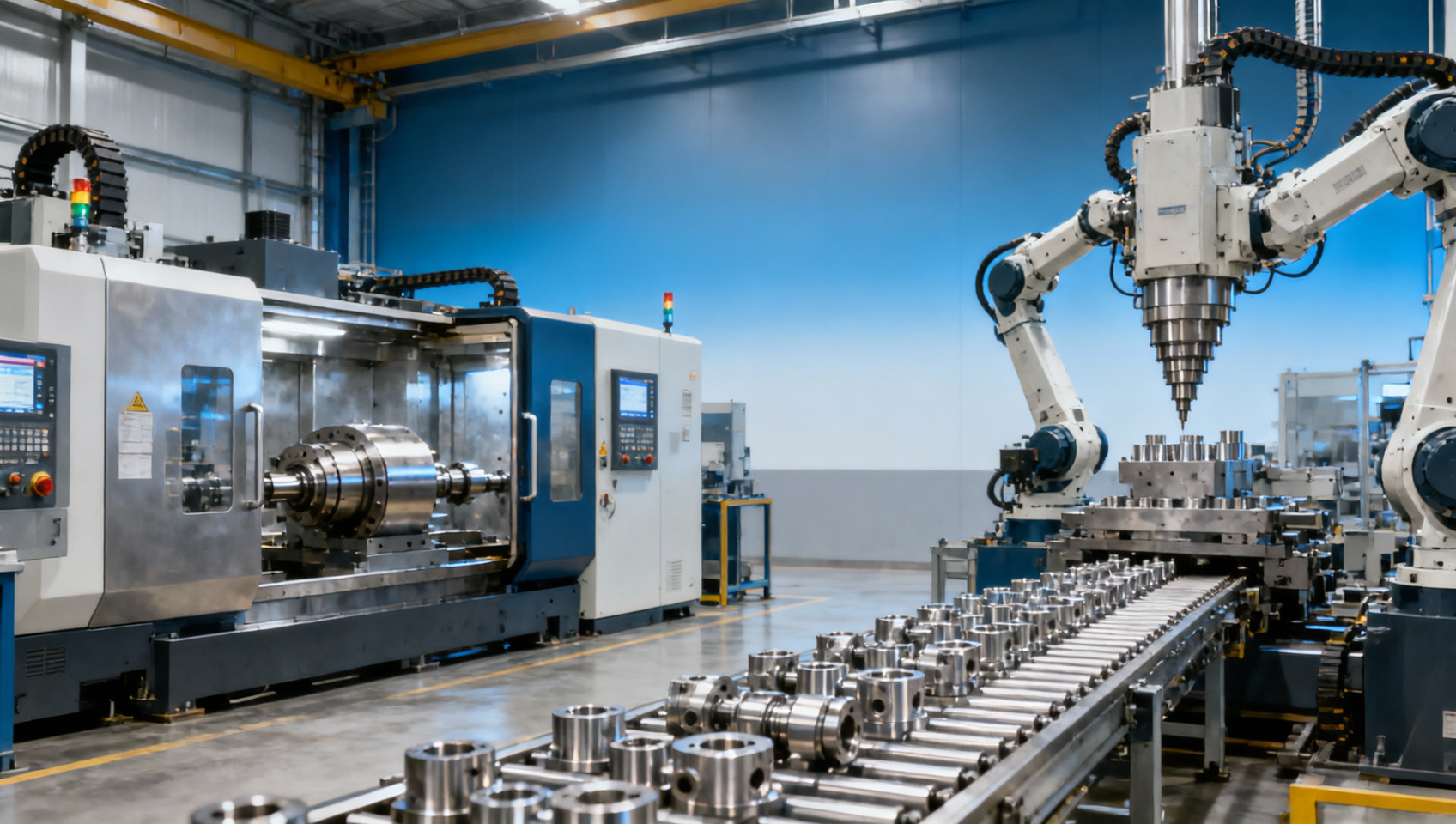
Global Manufacturing is rebalancing around shorter supply routes, pushing the Manufacturing Industry to rethink metal machining, industrial CNC deployment, and automated production strategies. From CNC milling and CNC cutting to automated production line upgrades, companies across the Machine Tool Market are seeking faster delivery, greater resilience, and smarter production process control.
For researchers, plant operators, sourcing teams, and senior decision-makers, this shift is no longer a theoretical trend. It is affecting lead times, machine selection, tooling strategy, inventory models, and even the location of new production cells. In sectors such as automotive, aerospace, electronics, and energy equipment, shorter supply routes are changing how parts are designed, machined, inspected, and delivered.
The practical question is not whether supply chains are becoming more regional, but how manufacturers can respond without losing cost control or machining quality. CNC lathes, machining centers, multi-axis systems, industrial robots, and flexible production lines now sit at the center of this response. Companies that align equipment capability with regional demand can often cut response cycles from 8–12 weeks to 2–6 weeks for many repeat components.
This article examines how shorter supply routes are reshaping machine tool investment, production planning, procurement standards, and factory execution. It focuses on the CNC machining and precision manufacturing landscape, with clear guidance for buyers, operators, and manufacturing leaders who need practical actions rather than broad market slogans.
Why shorter supply routes are changing manufacturing priorities
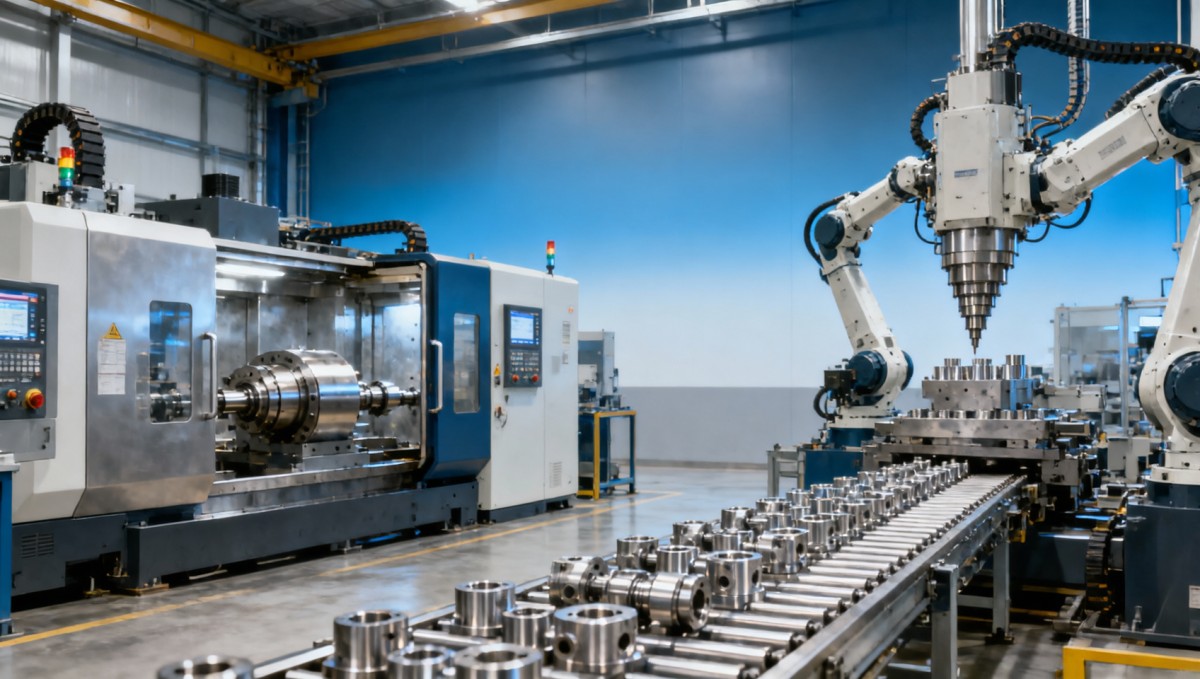
The move toward shorter supply routes is driven by three visible pressures: delivery risk, inventory cost, and demand volatility. When a critical machined part travels across multiple borders, every customs delay, freight bottleneck, or policy adjustment can add 5–15 days to the schedule. For high-mix manufacturing, that delay can stop an entire assembly line or force expensive buffer stock.
As a result, many manufacturers are balancing global sourcing with regional production capacity. This does not always mean full reshoring. In many cases, it means a hybrid model: core components are produced within 500–1,500 km of final assembly, while standard parts and non-critical items remain globally sourced. The CNC machine tool industry benefits directly because local machining capacity becomes a strategic asset rather than only a cost center.
Shorter routes also favor flexible machining. A plant serving regional customers often faces smaller batches, more frequent engineering changes, and shorter launch windows. A 3-axis machine may still fit simple work, but 4-axis and 5-axis machining centers, quick-change fixtures, and in-process probing become more valuable when setup reduction can save 20–40 minutes per changeover.
For procurement teams, the evaluation standard is expanding. Unit price still matters, but it now sits beside machine uptime, local service response, spare parts availability, and operator training support. A machine with a lower purchase price but a 10-day spare part wait may create more risk than a machine with a 5% higher upfront cost and a 48-hour service network.
What this shift means for CNC machining strategy
Manufacturers are increasingly redesigning capacity around responsiveness. Instead of one large distant supplier serving several regions, companies are building distributed machining capability through regional workshops, contract machining partners, or modular production lines. This requires a different approach to CNC deployment, including standardized programs, shared tooling libraries, and digital inspection records.
- Reduce lead-time exposure by placing high-turnover machining capacity closer to assembly plants.
- Use modular fixtures and tool presetting to support batch sizes from 10 pieces to 1,000 pieces.
- Adopt digital production tracking so regional sites can run the same process window and quality checks.
- Prioritize machines with stable repeatability, such as positioning accuracy in the micron-level range required by the application.
Typical decision drivers in regionalized manufacturing
The table below shows how manufacturing priorities shift when companies move from long supply routes to shorter regional ones. The differences are especially visible in CNC machining, where setup time, service response, and process repeatability affect both delivery performance and part quality.
The key conclusion is that shorter supply routes reward flexibility and process consistency more than pure volume economics. This is why investment is moving toward adaptable CNC systems, faster tool management, and integrated automation rather than only adding more basic machine capacity.
How CNC machine tools support regional and resilient production
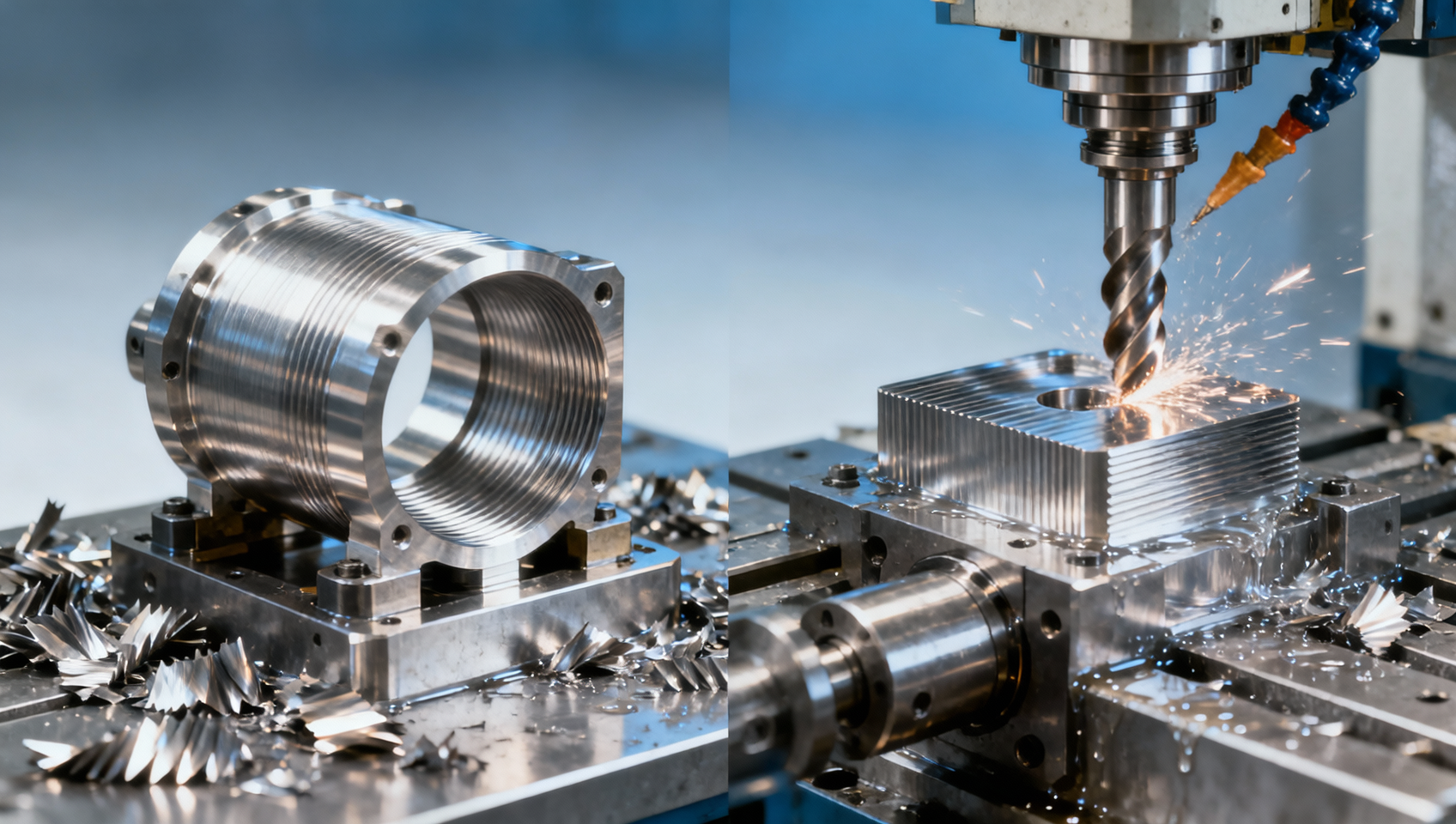
CNC machine tools are central to regional production because they allow manufacturers to localize precision work without sacrificing repeatability. A well-configured machining center can switch between part families, maintain tight tolerances, and support traceable quality records. In practical terms, this means fewer external dependencies and better control over urgent orders, prototype revisions, and short-run production.
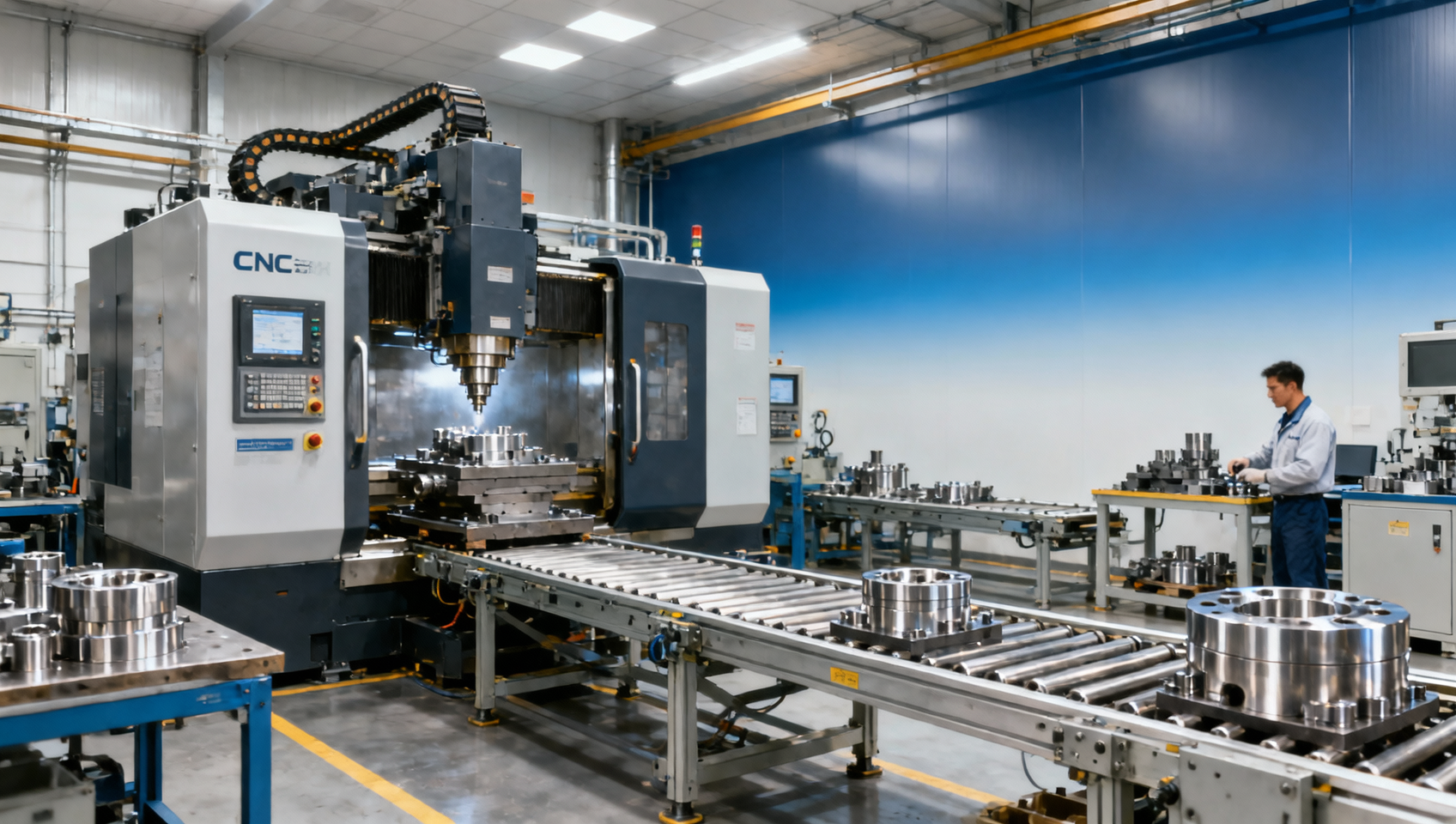
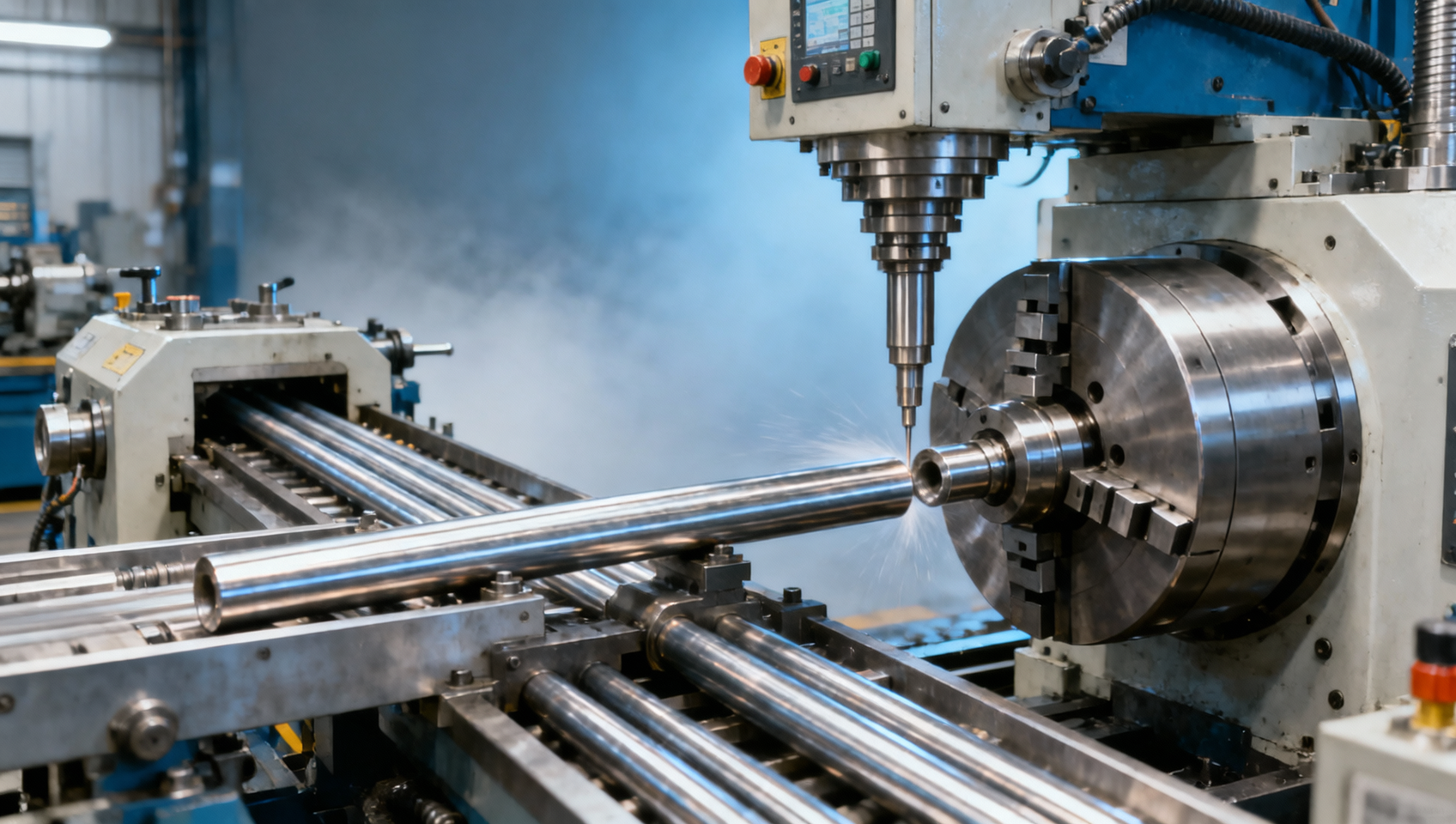
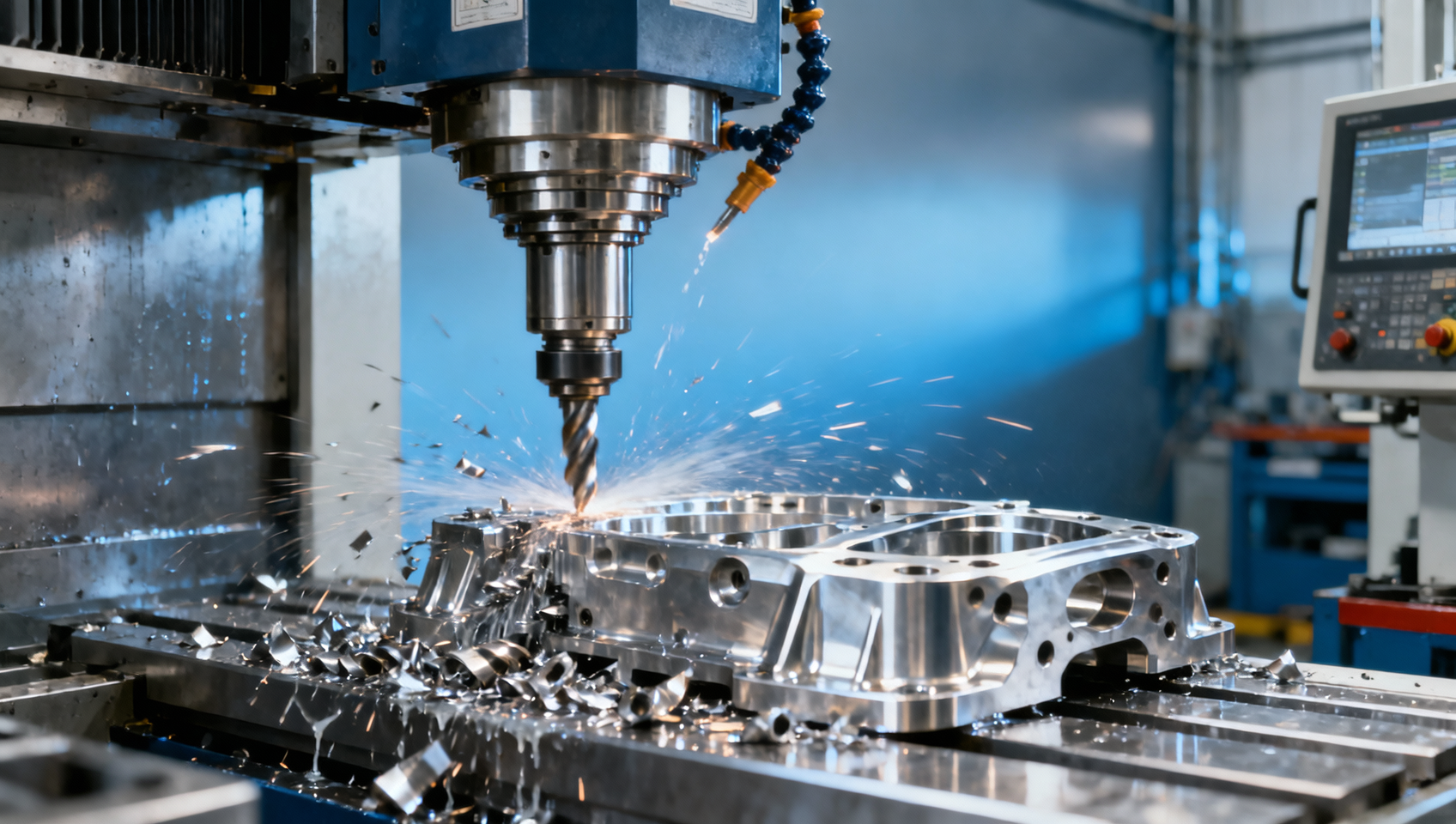
CNC lathes remain essential for shafts, sleeves, threaded parts, and rotational components used in motors, pumps, gear systems, and energy equipment. Machining centers handle prismatic parts, housings, and structural elements, while multi-axis systems reduce re-clamping and improve complex surface machining. For many factories, the real value lies in combining these assets into a flexible cell rather than purchasing isolated machines.
Automated production lines strengthen this model when demand becomes more stable. Robots can load and unload parts, vision systems can verify orientation, and in-line gauging can reduce manual inspection time by 15%–30%. However, automation should match product mix. For a plant with frequent part changes every 2–3 days, flexible automation often delivers better value than rigid transfer-style layouts.
Digital integration is another major factor. Regional manufacturing only works at scale when machine status, tool life, program versions, and inspection data are connected. Without that visibility, local plants may react faster but still generate inconsistent quality or hidden downtime. A smart factory approach does not need to be fully complex; even a staged rollout over 3 phases can produce measurable gains.
Equipment combinations that fit shorter supply routes
The right machine tool mix depends on part variety, tolerance requirements, and delivery urgency. The table below outlines practical equipment roles within regionalized manufacturing environments.
A common pattern is to start with one core machining center, one turning resource, and one inspection process, then add automation after demand stabilizes. This sequence reduces capital risk and allows operators to validate cycle times, tooling consumption, and preventive maintenance intervals before committing to broader line integration.
Implementation priorities for operators and plant teams
- Set machine utilization targets by product family, such as 65%–80% for stable planning without overloading key equipment.
- Use standardized work offsets, tool numbering, and inspection checkpoints to support production transfer between sites.
- Review coolant, tooling, and fixture supply every 30–60 days to prevent local shortages from disrupting short-route responsiveness.
- Build preventive maintenance windows around spindle hours rather than only calendar time for more accurate service planning.
What buyers and decision-makers should evaluate before investing
In a rebalanced manufacturing environment, equipment buying decisions should focus on total production value rather than only machine specifications. A machine tool that supports short delivery, stable machining, and rapid service response can improve revenue protection as much as direct productivity. This is especially important when one delayed part can hold up a larger assembly worth far more than the machining cost itself.
Procurement teams should begin with application clarity. Four questions matter most: What materials will be machined? What tolerance band is required? What batch size is typical? How often will setups change? A machine that performs well on carbon steel at medium tolerance may not deliver the same economics on aluminum, stainless steel, or high-value aerospace alloys requiring tighter thermal control and more advanced tooling.
Decision-makers should also map the cost of downtime. If the expected service response is 72 hours but the line can only tolerate 8 hours of disruption, the nominally lower-cost purchase may not be viable. Spare part availability, remote diagnostics, local training, and commissioning speed often determine whether a machine becomes a strategic asset or a recurring constraint.
Another common oversight is underestimating integration cost. Beyond the machine itself, buyers may need tool holders, cutters, probes, fixtures, software interfaces, chip handling, air supply, and metrology support. In many projects, these related costs can represent 15%–35% of the full implementation budget.
Procurement checklist for CNC and automation projects
The following checklist helps buyers compare suppliers and machine tool solutions in a structured way. It is particularly useful when evaluating equipment for regional manufacturing hubs or distributed production networks.
A disciplined procurement process usually combines technical review, process trial, and lifecycle support assessment. If possible, buyers should request sample machining validation, cycle-time estimates, and a maintenance plan covering the first 12 months. That reduces the gap between purchase promise and shop-floor reality.
Common buying mistakes
- Choosing the highest specification machine for low-complexity work, which raises capital cost without matching return.
- Ignoring tooling and fixture compatibility, leading to delayed ramp-up and extra procurement rounds.
- Comparing suppliers on purchase price only, without pricing downtime exposure and service reach.
- Overlooking operator skill levels, even though programming and setup capability often define actual productivity.
Practical implementation: from machine purchase to stable output
Successful regional manufacturing is built through execution discipline. Buying a CNC machine or an automated production line is only the first step. Stable output depends on planning the full launch sequence, including installation, test cuts, operator training, process qualification, and maintenance preparation. For many factories, the first 60 days after installation determine whether the project delivers the expected cycle time and quality level.
A practical rollout usually begins with part family prioritization. Instead of moving every product at once, manufacturers often start with 3–5 high-frequency components that offer predictable demand and manageable complexity. This makes it easier to establish fixture standards, tool life benchmarks, and quality checkpoints before expanding to mixed-part production.
Process validation should include both dimensional control and throughput review. It is not enough for a part to pass inspection once; the process should remain stable over repeated cycles, tool changes, and operator shifts. For critical work, manufacturers commonly review first-piece approval, mid-batch inspection, and final sampling as three separate control points.
Maintenance planning should also start early. Shorter supply routes reduce logistics time, but they also reduce tolerance for machine downtime because customers expect faster replenishment. Preventive maintenance intervals, spare parts stocking, lubrication checks, and spindle monitoring should be defined before full production begins, not after failures occur.
A 5-step launch path for regional CNC capacity
- Define target parts, material range, and tolerance requirements for the first 90 days of production.
- Complete installation readiness checks, including power, air, coolant, chip management, and floor layout.
- Run sample machining and inspection validation for at least 2–3 representative part types.
- Train operators, setters, and maintenance staff with role-specific tasks and escalation procedures.
- Track utilization, scrap rate, changeover time, and service events weekly during the startup phase.
Operational risks that can weaken short-route advantages
Regional capacity can still fail if implementation gaps are ignored. One major risk is unstable process documentation. If cutting parameters, tool offsets, and inspection routines are not standardized, the same part may produce different results across two local sites. Another risk is poor fixture planning, which can turn a theoretically fast response system into a setup bottleneck.
A third risk is over-automation. Companies sometimes invest in a highly automated line before understanding actual demand frequency. When product changeovers are frequent and lot sizes remain below 50 pieces, simpler flexible cells may outperform rigid automation. The best implementation balances machine capability, labor skill, and realistic order patterns.
FAQ: key questions about machine tool strategy in shorter supply networks
How do shorter supply routes affect CNC machine selection?
They increase the value of flexibility, uptime, and local support. Buyers should pay closer attention to setup reduction, spare parts response, and programming compatibility. In many cases, a machine that supports faster changeovers and local service within 24–72 hours is more valuable than a lower-cost model with limited support coverage.
Which industries benefit most from regionalized precision machining?
Automotive, aerospace, electronics, energy equipment, and industrial machinery all benefit because they depend on precise components with strict delivery schedules. These sectors often need short replacement cycles, engineering change responsiveness, and tolerance-controlled parts that are difficult to substitute quickly through long-distance sourcing.
What is a realistic delivery cycle for CNC equipment and line integration?
It varies by machine type, configuration, and region. Standard equipment may be available in 4–10 weeks, while customized systems or integrated automation projects may require 10–20 weeks. Installation and process qualification can add another 1–4 weeks depending on utility readiness, part complexity, and operator experience.
What should operators focus on after installation?
Operators should focus on stable setup routines, tool condition monitoring, coolant control, inspection discipline, and alarm response. During the first month, tracking changeover time, scrap causes, and machine stoppages often reveals more value than simply chasing maximum output. A stable 75% utilization rate is usually more useful than unstable peaks followed by frequent interruptions.
How can companies reduce risk when expanding regional machining capacity?
Start with a phased approach. Validate core parts first, standardize process files, confirm service access, and ensure that tooling and metrology are included in the project budget. It is also wise to define 3 levels of support: operator response, maintenance response, and supplier escalation, so issues can be resolved before they affect customer delivery.
Global manufacturing is not becoming simpler, but it is becoming more localized in how value is protected. Shorter supply routes are pushing companies to invest in machine tools, CNC machining systems, and automated production strategies that support responsiveness, quality control, and operational resilience. For buyers and decision-makers, the winning approach is usually not the cheapest machine or the most complex line, but the solution that matches part mix, service needs, and regional delivery goals.
If you are evaluating CNC equipment, precision machining capacity, or automated production line upgrades for a changing supply network, now is the right time to compare options with a clearer operational lens. Contact us to discuss your application, get a tailored solution, and explore machine tool strategies built for faster, smarter, and more resilient manufacturing.
PREVIOUS ARTICLE
NEXT ARTICLE
Recommended for You
 What causes chatter in metal machining and how to stop itCNC Machining Technology Center
 Industrial CNC lead times are shifting in 2026Manufacturing Market Research Center
 When CNC industrial upgrades cut output instead of raising itMachine Tool Industry Editorial Team
 Automated lathe errors that often start with bar feedingMachine Tool Industry Editorial Team
 Why CNC metalworking scrap rates rise on thin wall partsCNC Machining Technology Center
 CNC cutting speed or finish quality: where losses beginCNC Machining Technology Center

Aris Katos
Future of Carbide Coatings
15+ years in precision manufacturing systems. Specialized in high-speed milling and aerospace grade alloy processing.
▶
Global Manufacturing is rebalancing around shorter supply routesManufacturing Market Research Center▶
Manufacturing Industry margins are tightening under energy pressureManufacturing Market Research Center▶
Global Manufacturing report shows widening gap in CNC metalworking lead times across regionsManufacturing Market Research Center▶
Digital Manufacturing Technology for smart factory: Where MES integration breaks down firstManufacturing Market Research Center▶
Where global manufacturing hubs are shifting CNC cutting capacity — and whyManufacturing Market Research Center
Mastering 5-Axis Workholding Strategies
Join our technical panel on Nov 15th to learn about reducing vibrations in thin-wall components.

Providing you with integrated sanding solutions
Before-sales and after-sales services
Comprehensive technical support