• Global CNC market projected to reach $128B by 2028 • New EU trade regulations for precision tooling components • Aerospace deman
NYSE: CNC +1.2%LME: STEEL -0.4%

Manufacturing Industry margins are tightening under energy pressure
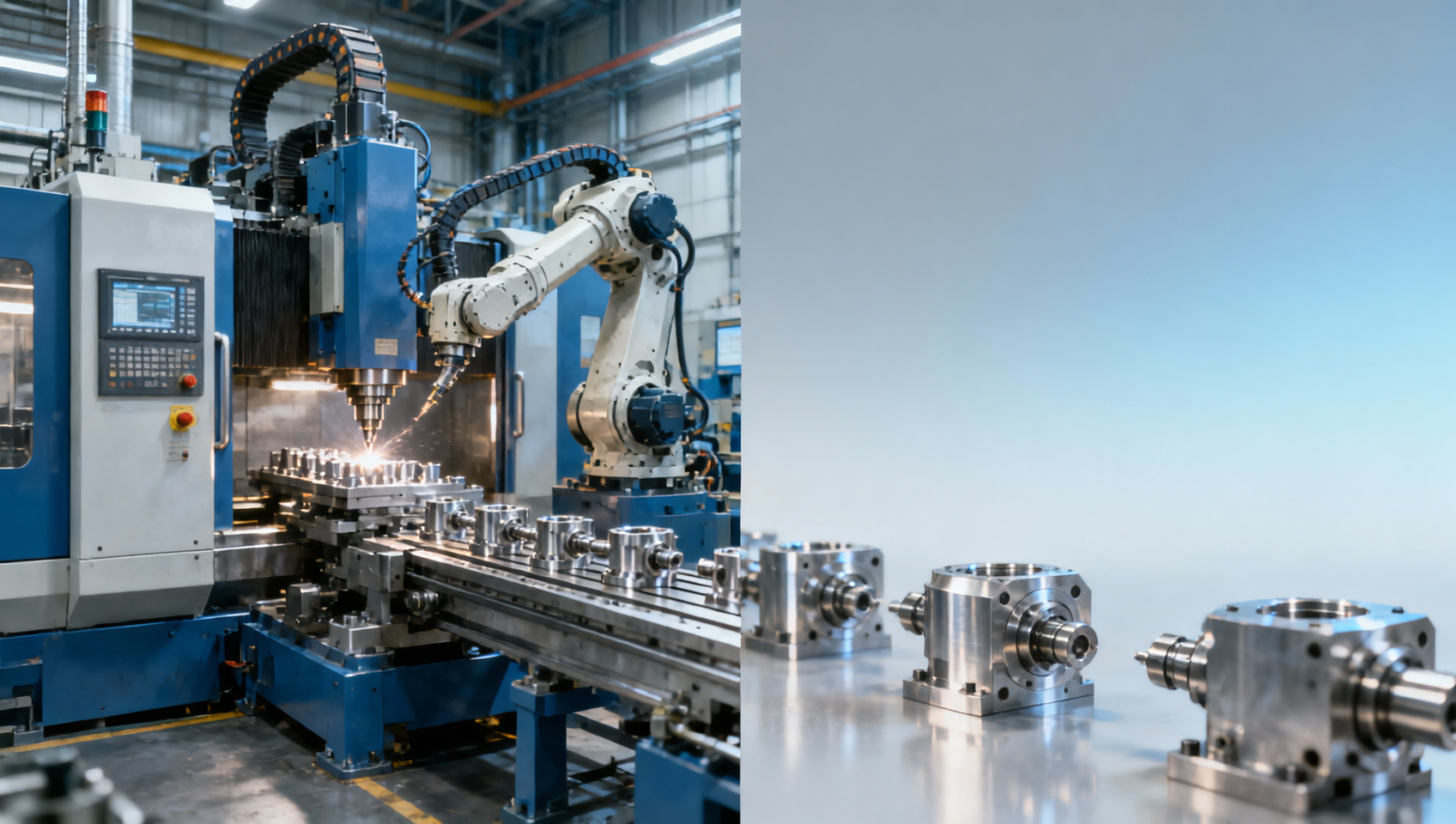
As energy costs surge, the Manufacturing Industry is facing tighter margins and rising pressure to improve every Production Process. From metal machining and CNC milling to automated production and Industrial Automation, manufacturers are rethinking how industrial CNC systems, automated lathes, and smarter CNC production can reduce waste, boost efficiency, and protect profitability in the evolving Global Manufacturing landscape.
For researchers, machine operators, procurement teams, and business leaders, the question is no longer whether energy costs matter. The question is how quickly a factory can adapt without sacrificing precision, throughput, or delivery reliability. In CNC machining and precision manufacturing, even a 5% to 12% rise in utility spending can materially affect job pricing, machine utilization, and the economics of high-mix, low-volume production.
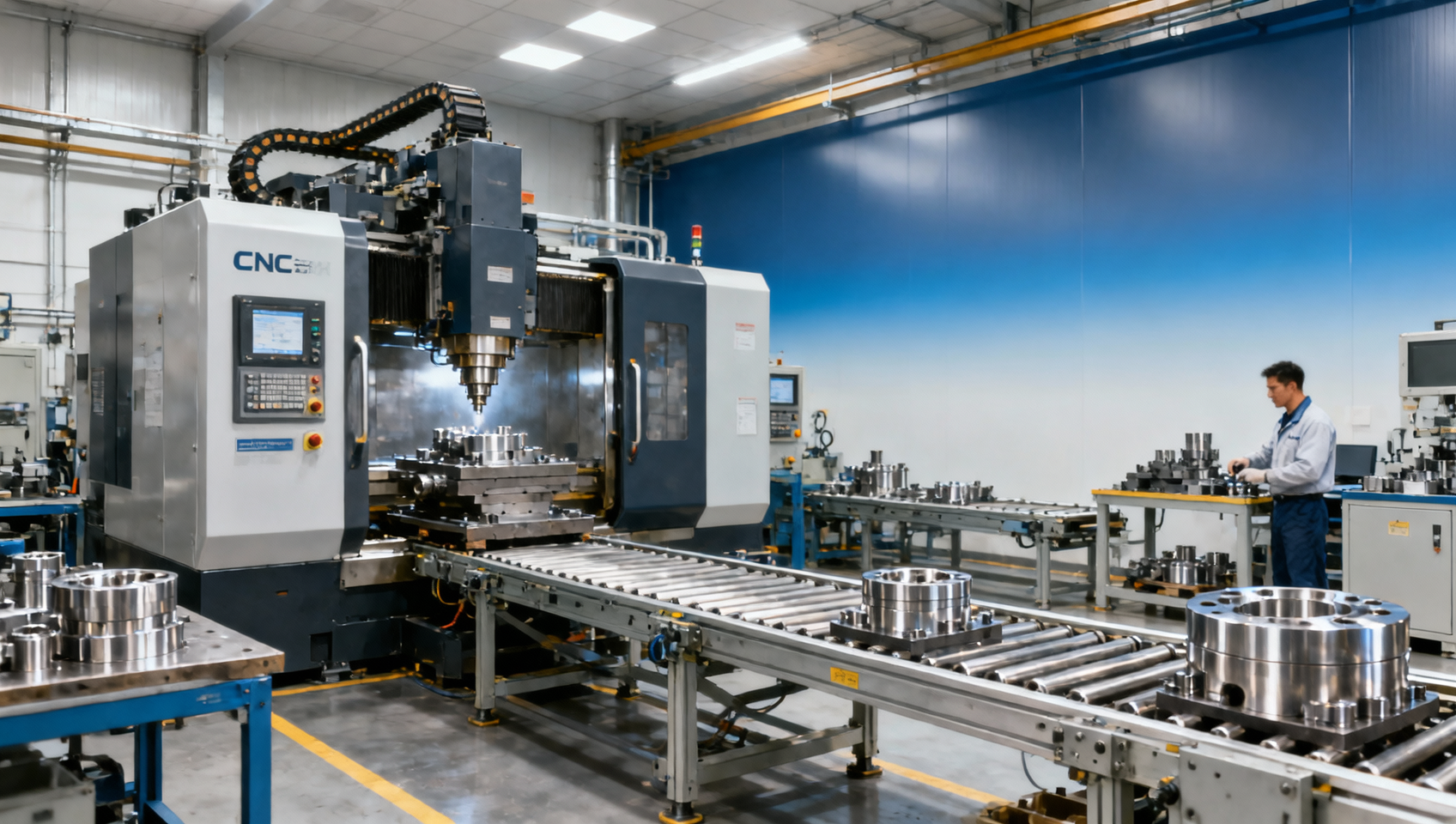
This pressure is especially visible in operations running CNC lathes, machining centers, multi-axis systems, industrial robots, and automated production lines. These assets create value through speed and accuracy, but they also consume significant power across spindle loads, compressed air systems, coolant units, chip handling, and climate control. When energy prices remain volatile for 6 to 18 months, manufacturers must respond with sharper process control and smarter equipment strategy.
The most resilient manufacturers are not relying on a single fix. They are combining equipment selection, preventive maintenance, scheduling logic, automation upgrades, tooling optimization, and digital monitoring to protect margins. In today’s global machine tool market, profitability increasingly depends on how efficiently a plant converts every kilowatt, machine hour, and labor hour into stable output.
Why energy pressure is reshaping manufacturing economics
Energy is no longer a background operating expense. In many machining environments, it has become a strategic cost driver alongside labor, raw material, tooling, and logistics. A factory producing automotive shafts, aerospace brackets, energy equipment housings, or electronic structural parts may operate 2 to 3 shifts per day, making electricity use a direct factor in contribution margin on every order.
The impact is most severe where cycle times are long, spindle loads are high, or support systems are inefficient. A 15 kW to 40 kW machining center does not only consume power during cutting. It also draws energy during idle time, warm-up, coolant circulation, lubrication, tool changes, and standby states. Across 20 to 50 machines, idle and non-cutting energy can quietly erode profitability.
Manufacturers serving global supply chains also face a second layer of pressure: customers are demanding stable pricing even as operating costs rise. Procurement teams want shorter lead times, tighter tolerances, and more traceability, but they may resist price adjustments of 3% to 8%. This forces suppliers to recover margin through process efficiency rather than commercial negotiation alone.
In sectors such as aerospace, energy equipment, and precision electronics, rejecting parts due to dimensional drift or surface defects is especially costly. When power instability, thermal expansion, or rushed process settings increase scrap rates from 1% to 3%, the financial loss goes beyond material waste. It includes machine time, labor time, tooling wear, and delayed shipment risk.
The table below shows where energy pressure typically affects manufacturing margins and why the issue cannot be solved through one department alone.
The key lesson is clear: energy pressure affects machining strategy, maintenance planning, procurement standards, and quoting discipline at the same time. Plants that measure only total electricity spend often miss the deeper issue, which is energy consumed per good part shipped.
The shift from price competition to efficiency competition
Global manufacturing clusters in China, Germany, Japan, and South Korea continue to expand technical capability, but competition is no longer based only on hourly rates or machine count. Buyers increasingly compare suppliers by process stability, utilization rate, automation maturity, and ability to control total production cost over a 12-month sourcing cycle.
That means a plant with fewer but better-optimized machines can outperform a larger shop with weak scheduling and high idle loss. Margin defense now depends on disciplined execution, not only installed capacity.
Where CNC machining operations lose energy and margin
In precision manufacturing, the biggest losses are not always obvious. Many factories focus on spindle power during cutting, but total energy performance is shaped by the full process route, from setup and fixturing to chip removal and inspection. This is why operators and production managers need to view the entire manufacturing cell, not just the machine nameplate.
A common example is low spindle utilization. If a machining center runs for 10 hours but actively cuts material for only 4 to 5 hours, then more than 50% of the available production window is being consumed by setup, waiting, probing, tool changes, material handling, or idle running. In high-energy markets, this becomes a direct margin leak.
Tooling also plays a major role. Worn tools increase cutting force, spindle load, vibration, and heat generation. In practical terms, a tool that should be replaced after 80 to 120 parts may continue to run beyond its stable window, causing poor surface finish, dimensional drift, or longer cycle time. This does not just reduce quality; it raises energy consumed per acceptable part.
Another hidden issue is compressed air leakage and unnecessary auxiliary load. Air systems, conveyors, pumps, and chillers often run continuously even when production is intermittent. In some workshops, support systems can account for 20% to 30% of total electricity use. Without audit data, these losses remain invisible.
High-loss points in a typical CNC production line
- Extended warm-up and idle time at shift changes, often 30 to 60 minutes per machine each day.
- Excessive setup variation between operators, which can add 10% to 18% to non-cutting time.
- Tool wear not tracked by part count or load condition, leading to unstable cutting and scrap.
- Underused automation such as bar feeders, pallet changers, or robotic loading in repeat jobs.
- Coolant and filtration systems left at full operating mode during low-load periods.
The comparison below helps illustrate how operational choices affect both energy use and margin retention in CNC environments.
For plant managers and procurement teams, the message is practical: before investing in new capacity, measure the losses inside current capacity. In many cases, recovering 8% to 15% efficiency from existing assets is faster and less risky than expanding floor space or adding another machine too early.
A useful rule for internal review
If a shop cannot identify machine-level energy patterns, setup duration by part family, and scrap cost by process step within 30 days, it will struggle to make effective decisions on automation or equipment upgrades. Data visibility comes before major capital spending.
Practical strategies to protect margins without slowing production
Margin protection does not mean cutting output. The goal is to produce the same or greater value with lower waste, fewer interruptions, and more stable conversion cost. For most CNC and automated manufacturing operations, the fastest gains come from disciplined process improvement rather than dramatic restructuring.
First, optimize scheduling by grouping similar materials, tooling requirements, and fixture setups. This can reduce repeated warm-up cycles, shorten setup time, and improve spindle-on ratio. In mixed production, batching jobs by process similarity often saves 5% to 10% in non-cutting time within one quarter.
Second, review automation where repetition is high. Automated loading, pallet handling, bar feeding, and in-process probing are especially effective when part families are stable and cycle times exceed 3 to 5 minutes. Automation is not only about reducing labor. It also improves consistency, allows lights-out windows, and raises output per kilowatt in many cases.
Third, align maintenance with actual risk. Preventive maintenance every 250 to 500 operating hours is common for key checks such as lubrication, coolant quality, filter condition, axis response, and spindle health. Delayed maintenance often appears to save cost, but it usually increases energy waste, unplanned stoppage, and process instability.
Fourth, improve process engineering. Tool path optimization, fixture rigidity, cutting parameter tuning, and thermal control can reduce cycle time while protecting dimensional accuracy. Even a 6% reduction in cycle time across a high-volume part can materially improve annual margin when repeated over thousands of units.
Priority actions for different roles
- Operators should monitor idle time, tool wear signals, coolant condition, and setup variation between shifts.
- Procurement teams should compare machines and automation options by total operating cost over 3 to 5 years, not purchase price alone.
- Production managers should track utilization, scrap, energy per part family, and first-pass yield weekly.
- Executives should prioritize projects with measurable payback windows, often 12 to 24 months for practical efficiency upgrades.
When retrofit makes more sense than replacement
Not every plant needs to buy new machines immediately. If core assets still deliver acceptable geometric accuracy and uptime, retrofitting drives, controls, sensors, or loading systems may provide a better return. This is especially true when lead times for new equipment stretch to 16 to 32 weeks and floor layout changes would disrupt production.
However, if machines show chronic thermal drift, excessive standby consumption, unstable repeatability, or limited connectivity, replacement may be justified. The decision should be based on measurable production loss, maintenance burden, and long-term flexibility rather than age alone.
How buyers should evaluate CNC equipment and automation under energy pressure
Procurement decisions are more complex when energy costs are volatile. Buyers need to balance technical performance, price, delivery time, and operating efficiency. In CNC machining, two machines with similar cutting envelopes may perform very differently in actual cost per part once standby consumption, control features, support systems, and maintenance access are considered.
For purchasing teams, the best starting point is a structured evaluation framework. Instead of asking only whether a machine can hit tolerance, ask how it performs over a full operating cycle: startup, warm-up, active cutting, idle time, tool change frequency, chip evacuation, operator interface, and preventive maintenance interval. These details affect real factory economics.
Decision-makers should also consider whether the machine fits future automation and data integration plans. A machine that supports remote monitoring, production dashboards, alarm history, and interface compatibility can create long-term value even if the initial price is 8% to 12% higher. Integration flexibility matters when building a smart factory roadmap over 2 to 5 years.
The table below outlines practical procurement criteria for buyers comparing CNC machines, lathes, machining centers, or automated production cells.
The strongest buying decisions usually come from cross-functional review. Operators identify usability issues, engineers confirm process capability, procurement compares total cost, and management aligns the purchase with business growth targets. This reduces the risk of buying equipment that looks competitive on paper but underperforms in daily production.
Common buying mistakes during cost pressure
One common mistake is selecting the lowest-priced machine without evaluating power demand, control logic, maintenance accessibility, or upgrade path. Another is overspecifying equipment for a part mix that does not justify the added capital cost. Buyers should also avoid assuming that all automation projects deliver quick returns; payback depends on repeatability, uptime, and scheduling discipline.
A practical checkpoint is to review expected utilization, target parts, staffing model, and required tolerance range before final approval. If these four variables are unclear, the purchase decision is not yet mature.
Implementation roadmap, risk control, and frequently asked questions
Factories rarely improve margins through technology alone. Results come from a structured rollout that links data collection, process correction, equipment strategy, and workforce execution. A practical roadmap usually spans 3 stages: baseline measurement, targeted improvement, and scaled deployment. Each stage should have clear ownership and review intervals of 2 to 4 weeks.
During the baseline stage, plants should measure machine utilization, energy-intensive support loads, scrap by part family, and maintenance interruptions. In the second stage, teams can test process changes such as revised schedules, tool life controls, fixture upgrades, or automation at one pilot cell. In the third stage, successful changes can be standardized across similar lines.
Risk control is essential. If new settings reduce cycle time but increase tool breakage, the gain is not real. If automation improves loading speed but creates bottlenecks in inspection or material flow, the line remains unbalanced. Every change should be judged by throughput, first-pass yield, downtime, and energy consumed per acceptable output.
For global manufacturers and suppliers, implementation should also account for sourcing flexibility. Spare parts availability, local service response, operator training time, and software compatibility can determine whether an upgrade succeeds within 60 to 90 days or drifts into expensive delay.
FAQ: What manufacturers and buyers ask most often
How can a factory reduce energy cost without buying new machines?
Start with utilization, idle control, tool life management, compressed air leakage checks, and setup standardization. Many plants can recover 5% to 15% efficiency through process discipline alone before major capital investment becomes necessary.
Which operations are most suitable for automation under margin pressure?
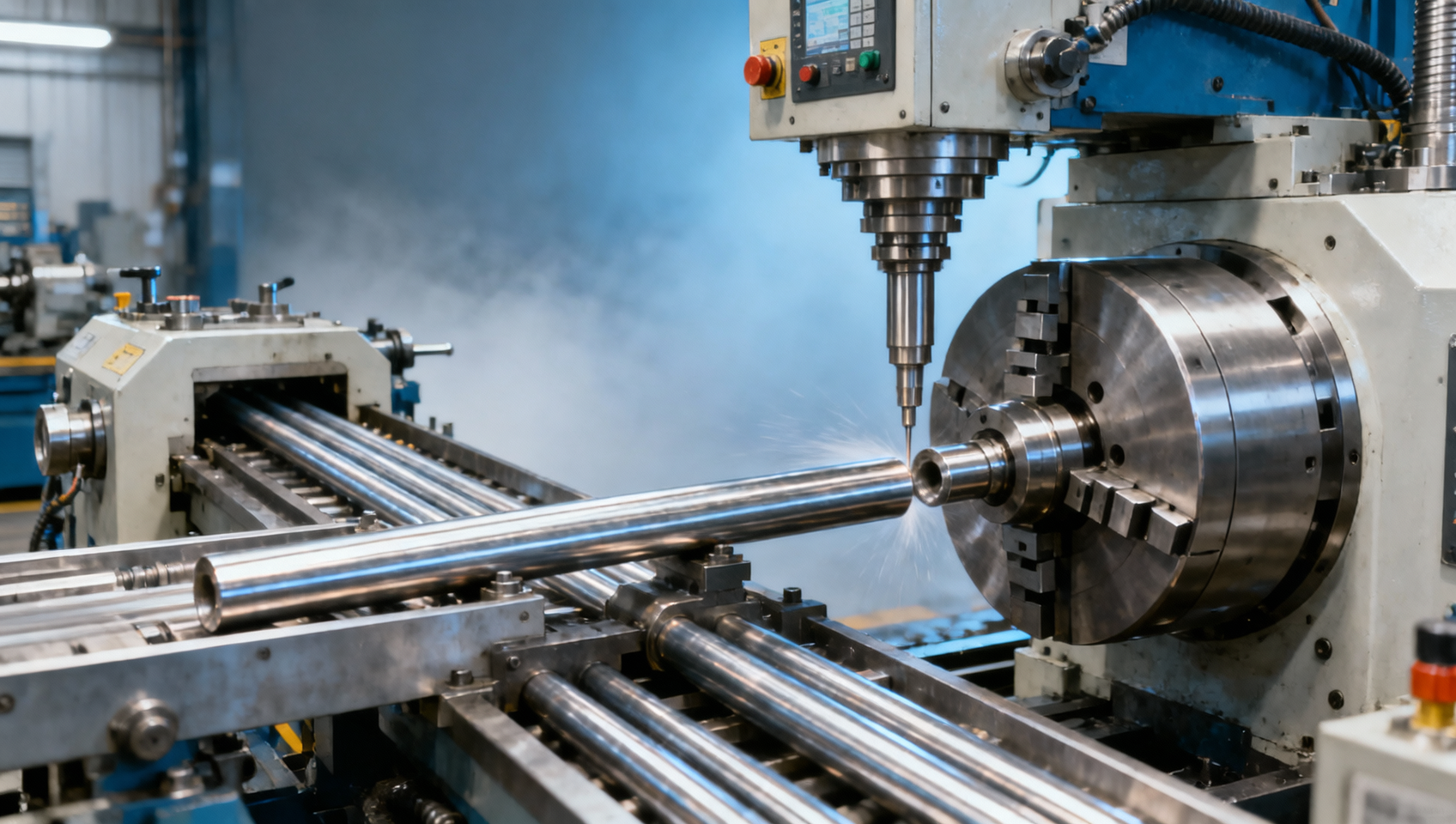
Repeat jobs with stable part geometry, cycle times above 3 minutes, predictable loading orientation, and frequent shift coverage are strong candidates. CNC turning, bar-fed shaft production, palletized machining, and repetitive fixture loading often provide the clearest returns.
What should procurement teams request from equipment suppliers?
Request operating power profile, maintenance intervals, consumable requirements, training scope, spare part lead times, integration options, and recommended production scenarios. These details are more useful than headline speed figures alone.
How long does a practical efficiency improvement project usually take?
A focused internal project can show early results in 4 to 8 weeks. Larger equipment upgrades or automation projects may require 3 to 6 months including planning, installation, training, and process stabilization.
Energy pressure is tightening margins across the manufacturing industry, but it is also pushing the sector toward better discipline, smarter CNC production, and stronger operational visibility. From metal machining and automated lathes to multi-axis machining and industrial automation, the manufacturers that protect profitability are those that measure losses accurately, optimize existing assets, and invest selectively in equipment and process improvements.
If your team is evaluating CNC machines, automation upgrades, or production optimization strategies, now is the right time to compare options based on total operating performance rather than purchase price alone. Contact us to get a tailored solution, discuss product details, or explore more manufacturing efficiency strategies for your application.
Recommended for You
 What causes chatter in metal machining and how to stop itCNC Machining Technology Center
 Industrial CNC lead times are shifting in 2026Manufacturing Market Research Center
 When CNC industrial upgrades cut output instead of raising itMachine Tool Industry Editorial Team
 Automated lathe errors that often start with bar feedingMachine Tool Industry Editorial Team
 Why CNC metalworking scrap rates rise on thin wall partsCNC Machining Technology Center
 CNC cutting speed or finish quality: where losses beginCNC Machining Technology Center

Aris Katos
Future of Carbide Coatings
15+ years in precision manufacturing systems. Specialized in high-speed milling and aerospace grade alloy processing.
▶
Global Manufacturing is rebalancing around shorter supply routesManufacturing Market Research Center▶
Manufacturing Industry margins are tightening under energy pressureManufacturing Market Research Center▶
Global Manufacturing report shows widening gap in CNC metalworking lead times across regionsManufacturing Market Research Center▶
Digital Manufacturing Technology for smart factory: Where MES integration breaks down firstManufacturing Market Research Center▶
Where global manufacturing hubs are shifting CNC cutting capacity — and whyManufacturing Market Research Center
Mastering 5-Axis Workholding Strategies
Join our technical panel on Nov 15th to learn about reducing vibrations in thin-wall components.

Providing you with integrated sanding solutions
Before-sales and after-sales services
Comprehensive technical support