• Global CNC market projected to reach $128B by 2028 • New EU trade regulations for precision tooling components • Aerospace deman
NYSE: CNC +1.2%LME: STEEL -0.4%

Industrial Robotics is expanding fastest where labor is unstable
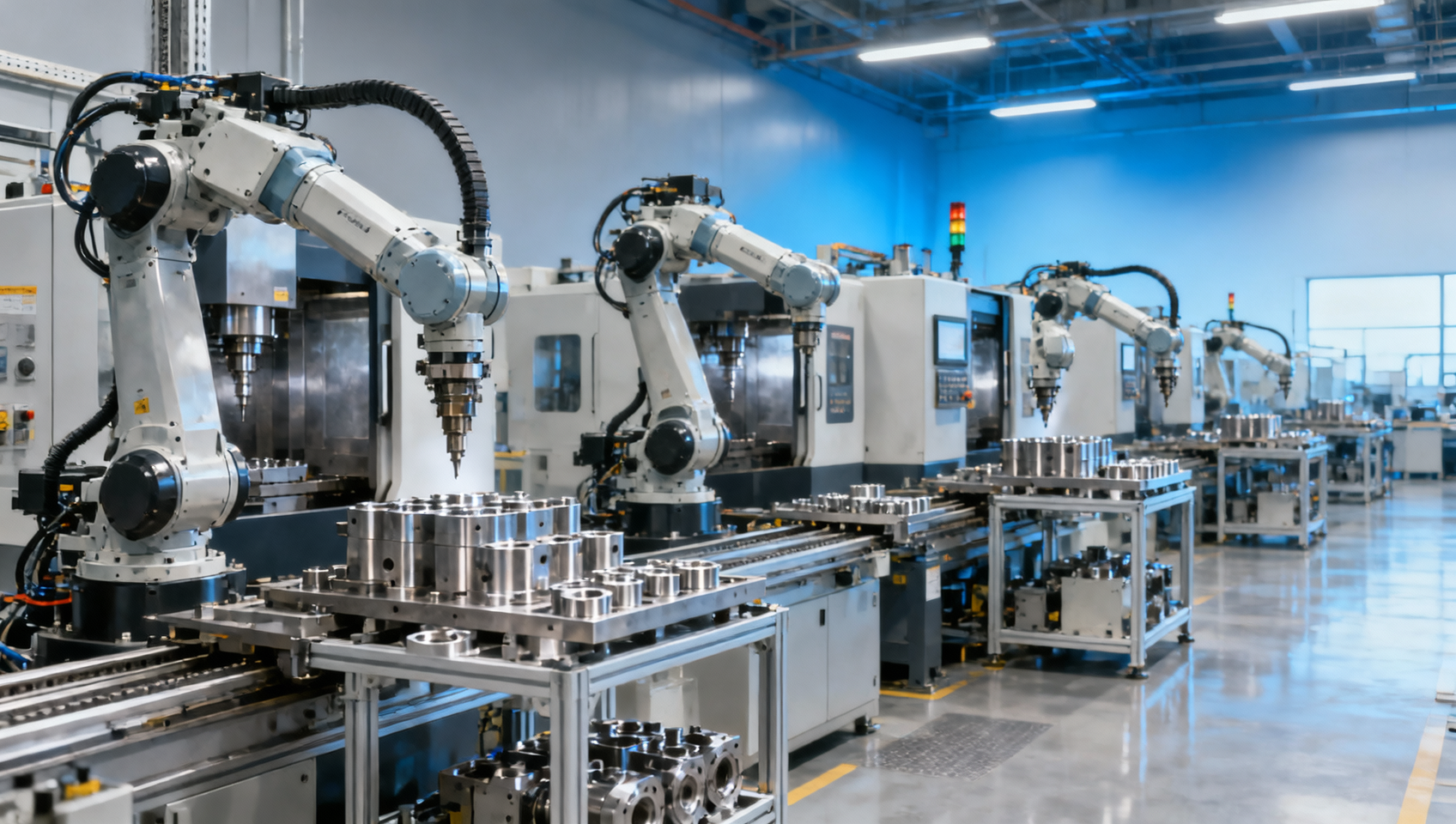
Industrial Robotics is growing fastest in regions where labor volatility disrupts the production process, pushing manufacturers to accelerate industrial automation and automated production line upgrades. Across the Global Manufacturing landscape, companies in metal machining, industrial CNC, CNC milling, and CNC cutting are investing in flexible, high-precision systems to protect output, reduce dependency on unstable labor, and strengthen competitiveness in the evolving Machine Tool Market.
For researchers, operators, procurement teams, and business decision-makers, the question is no longer whether automation matters, but where it creates the fastest operational return. In CNC machining and precision manufacturing, unstable labor can interrupt spindle utilization, delay shift scheduling, increase scrap rates, and weaken on-time delivery performance within as little as 2 to 6 weeks.
Industrial robots are therefore expanding fastest in markets where manufacturers need continuity, repeatability, and scalable output. This trend is especially visible in automotive parts, aerospace components, electronics housings, energy equipment, and contract machining environments that rely on multi-shift production, tight tolerances, and predictable cycle times.
In the CNC machine tool industry, robotics is no longer a stand-alone investment. It is increasingly tied to machine tending, automated loading and unloading, pallet change, in-line inspection, tool handling, and flexible production cell design. When labor stability becomes uncertain, these functions move from optional upgrades to core production infrastructure.
Why labor instability is accelerating robot adoption in CNC manufacturing
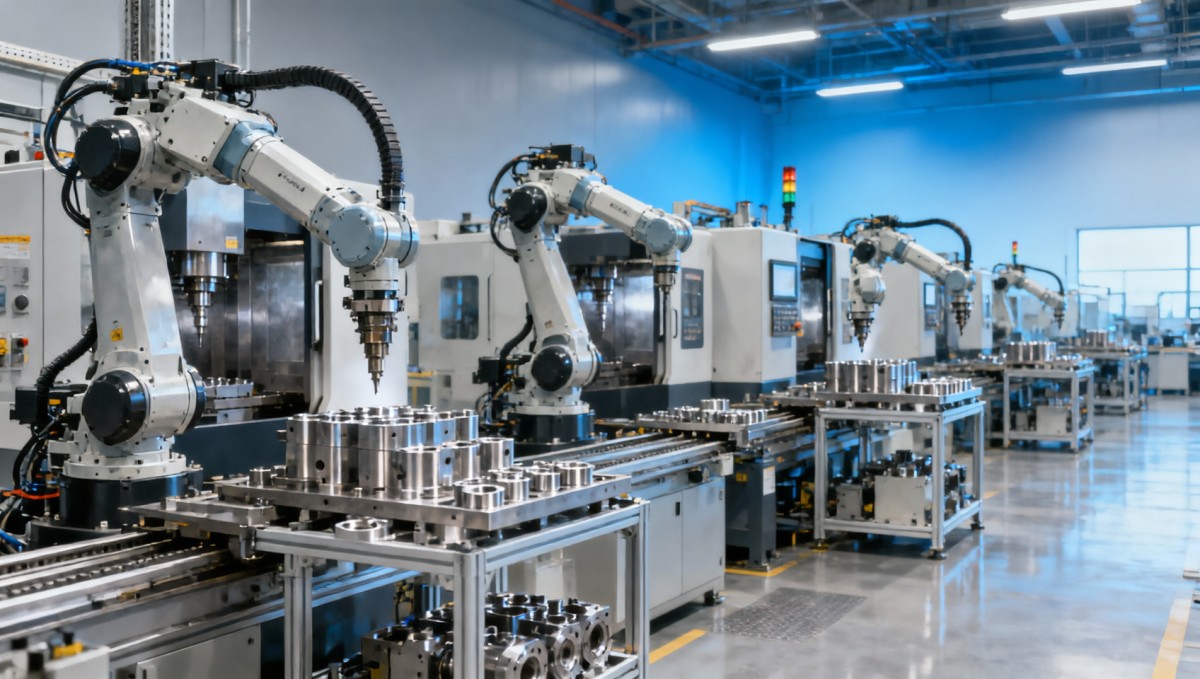
Labor instability affects manufacturing in several measurable ways. The first is output fluctuation. A CNC shop running 2 shifts with 12 operators may lose 15% to 25% of planned capacity if absenteeism, turnover, or training gaps reduce machine coverage. The second is quality inconsistency, especially when new operators rotate across setup-intensive processes such as CNC milling, turning, deburring, and part transfer.
Industrial robotics addresses these issues by standardizing repetitive motion and reducing dependence on manual handling. In a machine tending cell, a robot can maintain part loading rhythm within seconds, not minutes, and support unmanned or lightly staffed periods of 4 to 8 hours depending on part type, fixturing, and material flow design. That consistency matters when delivery commitments are linked to daily throughput.
For procurement teams, the trigger is often not labor cost alone. It is labor uncertainty combined with rising precision requirements. In industries using CNC lathes, machining centers, and multi-axis systems, manual intervention between operations can increase positioning errors, surface damage risk, or takt time variation. Robotics helps stabilize those transition points across high-mix and medium-volume production.
Decision-makers also look at the broader impact on equipment utilization. A machining center designed for 18 to 22 hours of daily use rarely reaches that level if labor is unstable during shift changes, weekends, or night runs. A well-integrated robot cell can extend productive runtime, improve machine occupancy, and support a more predictable cost per part over a 12- to 36-month investment horizon.
The main operational pressure points
The most common pressure points appear in labor-intensive transfer steps rather than in cutting itself. Shops often find that the spindle is capable, the tooling is qualified, and the CNC program is stable, but part loading, orientation, unloading, and tray management create the real bottleneck. This is why robotic expansion is strongest in facilities where production stability depends on repetitive handling more than on manual machining skill.
- Shift gaps that leave 1 to 3 machines unattended for 30 to 90 minutes at a time.
- Operator turnover that lengthens training cycles to 2 to 8 weeks for safe machine operation.
- Rising scrap or rework caused by inconsistent loading direction, clamping sequence, or part placement.
- Overtime costs linked to labor shortages during demand peaks, especially in export-oriented factories.
How the impact differs by production model
The speed of robotics adoption is not identical across all manufacturers. High-volume suppliers usually automate first because part repetition improves payback. However, flexible robotic systems are now gaining ground in small-batch and mixed-part environments due to faster gripper changes, vision-assisted positioning, and modular cell layouts that reduce conversion time from several hours to under 30 minutes in some applications.
Where industrial robotics creates the strongest value in the machine tool market
Not every process benefits equally from robotics. The strongest value appears where part flow is repetitive, machine uptime is commercially critical, and manual handling adds either quality risk or scheduling risk. In the machine tool market, that usually includes CNC turning cells, vertical machining centers, horizontal machining lines, grinding transfer stations, and secondary finishing or inspection interfaces.
For operators and plant engineers, the practical value lies in reducing manual burden while improving process discipline. A robot does not replace every skilled task. Instead, it absorbs repetitive loading cycles, supports safer handling of heavy or hot parts, and enables operators to supervise 2 to 4 machines rather than remain tied to one manual loading position throughout the shift.
For sourcing teams, application fit should be reviewed against part geometry, payload, spindle cycle time, fixture repeatability, and upstream-downstream connection. A robot cell may be technically feasible, yet commercially weak if the production batch is too small, the part family is too diverse, or the setup discipline is not mature enough to support stable automation.
The table below outlines where robotics typically brings the fastest and most reliable benefit across CNC and precision manufacturing environments.
The key takeaway is that robotics delivers the fastest value where labor instability directly affects spindle time, material flow, and process repeatability. In these areas, automation is not simply a labor-saving tool. It becomes a production assurance tool for the wider CNC and precision manufacturing operation.
Industries adopting fastest
Automotive suppliers often lead because of batch stability and strict delivery windows. Aerospace and energy equipment manufacturers are increasingly following, especially for heavy parts, traceable production cells, and night-shift continuity. Electronics machining also shows strong growth where compact parts, tight tolerances, and high repetition support fast robotic integration.
How buyers should evaluate a robotics solution for CNC and automated production lines
A robotics project should be evaluated as a production system, not as a single machine purchase. Buyers need to review the robot, gripper, fixture, CNC interface, safety enclosure, part buffer, and data logic together. If one element is underspecified, overall cell performance may fall short even when the robot itself is capable.
Procurement teams should begin with 4 core questions: What is the target part family, what is the expected cycle time, how many unattended hours are required, and what level of changeover flexibility is necessary? These four points usually determine whether a simple tending cell, a palletized system, or a flexible robotic line is the right direction.
Operators and maintenance personnel should also be involved early. A technically advanced cell may struggle if tool access is poor, HMI logic is too complex, or routine recovery after alarm events takes 20 minutes instead of 3. Real-world usability has direct influence on overall equipment effectiveness and on whether the system is trusted on the shop floor.
The following table provides a practical evaluation framework for buyers comparing industrial robotics options in the CNC machine tool environment.
This comparison shows that selection should focus on process fit and serviceability, not only on robot brand or headline speed. A stable automation cell is built around compatible cycle logic, realistic payload margins, and practical recovery procedures that production teams can manage without depending on external engineers every time an interruption occurs.
A 5-step buyer checklist
- Define part range by weight, geometry, surface sensitivity, and batch size.
- Measure actual spindle idle time over at least 10 to 14 production days.
- Review fixture repeatability and loading consistency before automating transfer.
- Ask for a simulated or trial cycle with real parts, not only a conceptual proposal.
- Confirm training, spare parts availability, and alarm recovery process before purchase approval.
Common sourcing mistake
A common mistake is selecting a robot based on maximum speed while ignoring the full material handling loop. In practice, tray replenishment, part orientation, jaw cleaning, and machine door timing often determine the real cycle. Buyers who map the complete loop typically make better long-term investments than those who focus only on robot motion specifications.
Implementation, integration, and risk control in real production environments
Once the equipment is selected, implementation quality determines whether the project reaches expected output. In CNC and automated production line applications, a typical integration schedule runs 6 to 16 weeks depending on cell complexity, guarding requirements, peripheral devices, and acceptance criteria. Simpler tending cells may be faster, while multi-machine flexible cells require more commissioning time.
Manufacturers should plan integration in three phases: pre-engineering, installation and testing, then production ramp-up. The first phase should confirm part presentation, CNC communication signals, safety logic, and failure recovery paths. The second phase validates dry cycles and loaded cycles. The third phase measures real production against targets such as output per shift, downtime frequency, and defect rate.
Risk control is essential because labor instability may shift pressure from staffing to maintenance and process discipline. If preventive maintenance is weak, robots can still underperform. Daily checks, weekly lubrication review where applicable, gripper inspection, and routine sensor cleaning are basic but necessary. A 10-minute daily inspection can prevent much longer stoppages during continuous operation.
Another implementation risk is over-automation. Some factories try to automate a process with unstable tooling life, inconsistent incoming blanks, or poor fixture repeatability. In such cases, the robot exposes existing process weakness rather than solving it. Good project planning therefore starts with process stabilization, then automation, not the other way around.
Recommended implementation flow
- Verify part consistency, fixture repeatability, and tool life baseline for at least 2 production weeks.
- Confirm cell layout, buffer quantity, and safety clearance before equipment fabrication begins.
- Run factory acceptance tests with target parts and at least 50 to 200 repeat cycles where practical.
- Conduct on-site commissioning with operator and maintenance participation, not engineering only.
- Track the first 30 days of live output using cycle adherence, alarm frequency, and manual intervention rate.
Key risks to watch during ramp-up
The early ramp-up period often reveals issues such as gripper wear, part nesting inconsistency, unstable sensor positions, or mismatch between robot sequence and CNC door cycle. These are usually solvable within days or weeks, but only if responsibilities are clear. Plants should assign one production owner, one maintenance owner, and one supplier contact to avoid slow issue resolution.
Future trends: flexible cells, digital integration, and smarter purchasing decisions
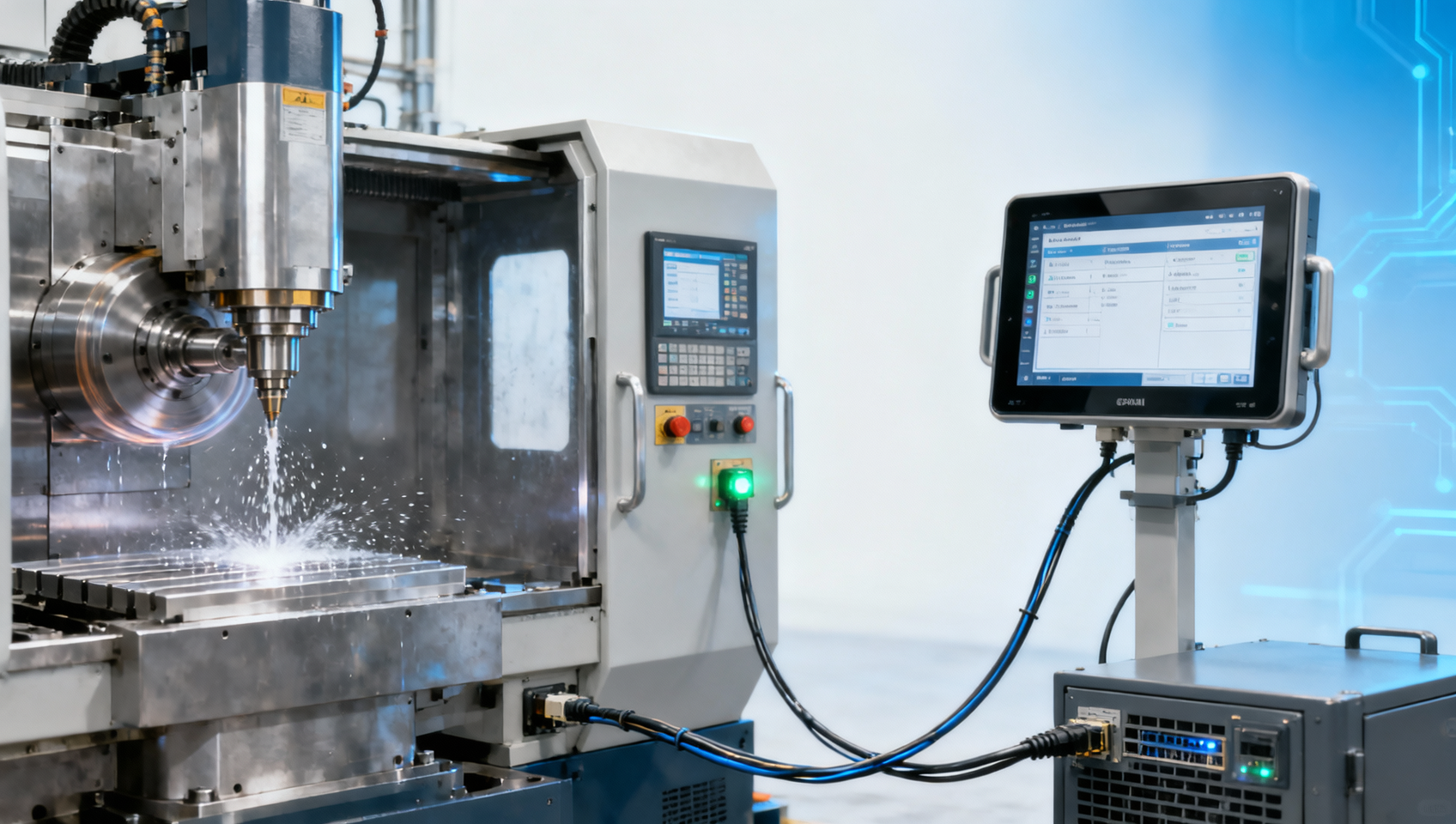
The next phase of industrial robotics growth in global manufacturing will be shaped by flexibility as much as by labor pressure. Manufacturers increasingly want cells that can handle multiple part families, connect with MES or production dashboards, and deliver usable operating data such as cycle variance, stop reasons, and utilization by shift. This is particularly relevant in modern machine tool clusters across Asia and Europe.
For CNC machining businesses, the combination of robotics and digital visibility is becoming more important than either element alone. A cell that runs automatically but offers poor status feedback can still cause planning delays. In contrast, a connected cell can help teams identify whether downtime comes from tooling, material shortage, feeder interruption, or operator response lag within minutes rather than at the end of a shift.
Buyers should also expect more interest in modular automation. Instead of investing immediately in a fully integrated line, some plants begin with one robot on one high-impact machine group, then expand to 2, 4, or 6 connected stations as the process proves stable. This staged approach reduces capital risk while building internal automation competence.
In markets where labor remains unstable, robotics adoption is likely to remain strongest in operations where precision, output continuity, and machine utilization directly affect competitiveness. For the CNC machine tool industry, this means industrial robots will continue moving from isolated productivity tools to central infrastructure for reliable, high-efficiency automated production.
FAQ for buyers and production teams
How do I know if my CNC process is ready for robotics?
A process is usually ready when part presentation is consistent, fixtures repeat accurately, cycle time is stable, and the manual loading task is repetitive. If cycle variation is already high or blank quality changes too often, stabilize those issues first. A 2-week baseline review is a practical starting point.
What payback window is commonly considered acceptable?
Many manufacturers review automation projects within a 12- to 36-month window, depending on labor pressure, machine value, shift pattern, and output risk. Higher-value machining processes with expensive spindle time often justify faster investment than lower-value manual transfer operations.
Can robotics work in high-mix, low-volume production?
Yes, but success depends on changeover design. Recipe-based control, quick-change grippers, standardized fixtures, and clear part family grouping are essential. If changeovers take more than 30 to 60 minutes too often, the business case becomes weaker unless the parts are high value or labor risk is severe.
What should operators be trained on first?
The priority should be safe restart procedure, basic alarm recovery, gripper inspection, part loading confirmation, and HMI recipe selection. For most cells, an initial 2- to 5-day training period is more useful than a highly theoretical program that does not match daily production tasks.
Industrial robotics is expanding fastest where labor instability creates measurable production risk, especially in CNC machining, machine tending, and automated production line applications. The strongest results come from matching the robot system to real process conditions, selecting with clear operational metrics, and implementing with disciplined integration and maintenance planning.
For information researchers, operators, sourcing teams, and enterprise decision-makers, the most effective approach is to evaluate robotics as part of a broader manufacturing strategy that includes machine utilization, quality consistency, labor resilience, and digital visibility. If you are planning upgrades in metal machining, industrial CNC, CNC milling, or CNC cutting, now is the right time to assess where automation can protect output and improve long-term competitiveness.
Contact us now to discuss your production scenario, get a tailored automation plan, and explore more solutions for CNC machine tools, precision manufacturing, and smart factory expansion.
PREVIOUS ARTICLE
Recommended for You
 Heavy-duty Machining Center for mold making: Why coolant filtration standards evolve faster than OEM manualsMachine Tool Industry Editorial Team
 Quick-change Fixture Design for CNC turning: Why clamping force consistency drops after 200 cyclesCNC Machining Technology Center
 5 Axis Machining for impeller manufacturing: Why toolpath smoothing affects surface fatigue lifeCNC Machining Technology Center
 Lean Production Process implementation: Where value stream mapping fails to expose hidden machine downtimeManufacturing Market Research Center
 Modular Tooling System for flexible manufacturing: Why interface repeatability degrades faster than expectedMachine Tool Industry Editorial Team
 Industrial Automation control system for CNC machines: When cybersecurity updates disrupt scheduled maintenanceMachine Tool Industry Editorial Team

Aris Katos
Future of Carbide Coatings
15+ years in precision manufacturing systems. Specialized in high-speed milling and aerospace grade alloy processing.
▶
Digital Manufacturing Technology for smart factory: Where data latency breaks real-time control loopsManufacturing Market Research Center▶
Industrial Robotics Adoption Is Rising Beyond Automotive PlantsManufacturing Market Research Center▶
Automated Production Needs Flexibility More Than Speed NowManufacturing Market Research Center▶
Global Manufacturing in 2026 may favor regional over distant supplyManufacturing Market Research Center▶
What is pushing the Manufacturing Industry toward flexible output?Manufacturing Market Research Center
Mastering 5-Axis Workholding Strategies
Join our technical panel on Nov 15th to learn about reducing vibrations in thin-wall components.

Providing you with integrated sanding solutions
Before-sales and after-sales services
Comprehensive technical support