• Global CNC market projected to reach $128B by 2028 • New EU trade regulations for precision tooling components • Aerospace deman
NYSE: CNC +1.2%LME: STEEL -0.4%

Shaft Parts machining gets expensive when runout is ignored
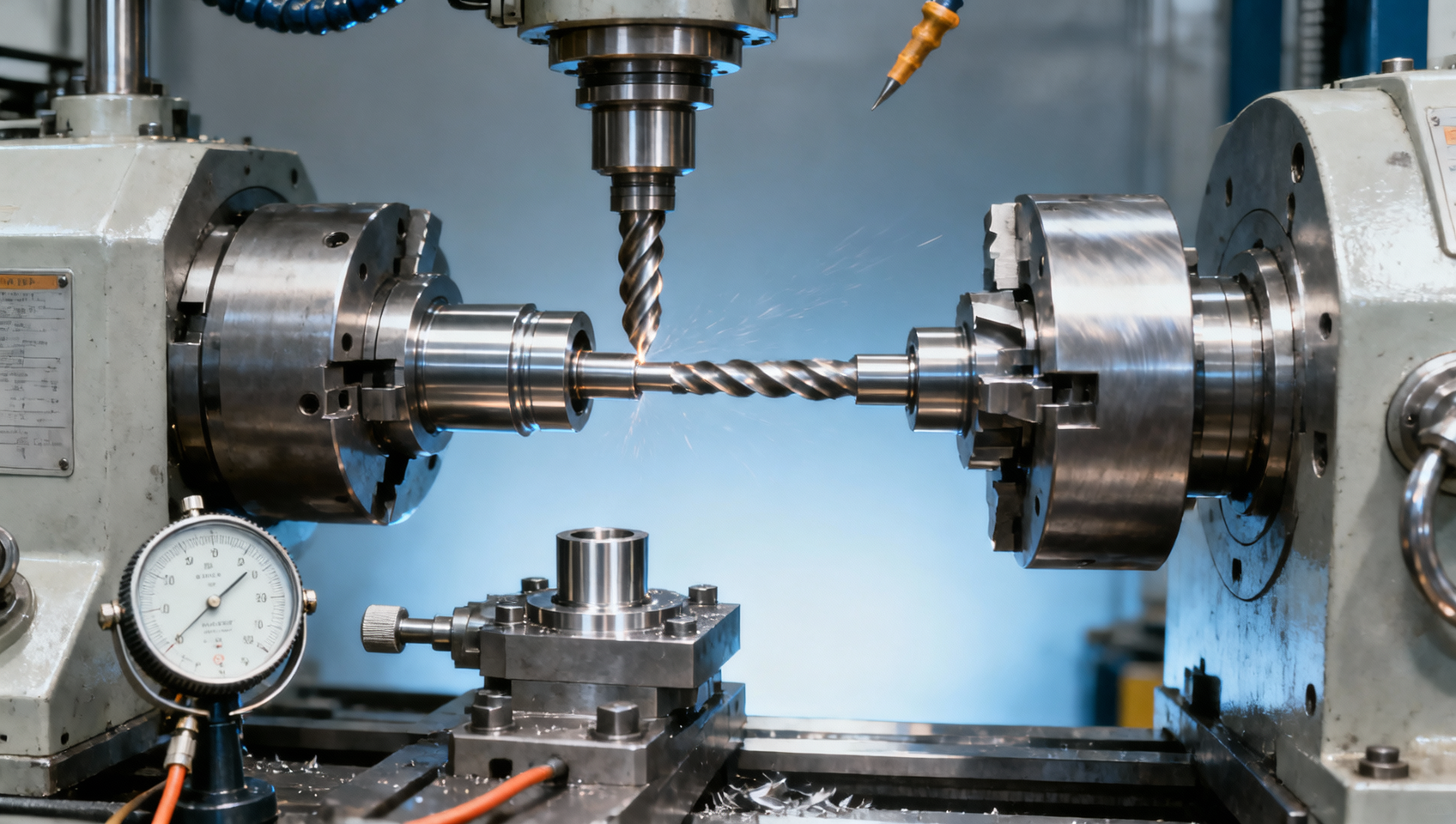
In the Manufacturing Industry, ignoring runout in Shaft Parts can quietly drive up costs across metal machining, CNC production, and automated production lines. For buyers, operators, and decision-makers working with industrial CNC, automated lathe, or CNC milling systems, understanding this hidden issue is essential to improving accuracy, tool life, and production process efficiency in today’s Global Manufacturing environment.
Runout is often treated as a minor spindle or workholding detail, yet in shaft machining it directly affects concentricity, bearing fit, surface finish, and downstream assembly performance. A deviation of just 0.01 mm to 0.05 mm can change whether a part passes inspection, whether a cutting tool lasts 500 parts or only 180, and whether a production cell maintains takt time or falls behind schedule.
For research-oriented readers, this topic matters because runout links machine capability, fixture quality, process planning, and inspection strategy. For operators, it influences setup stability and scrap. For procurement teams, it changes the true cost per part. For business leaders, it affects delivery reliability, warranty exposure, and margin control in high-precision manufacturing.
Why runout becomes a hidden cost driver in shaft parts machining
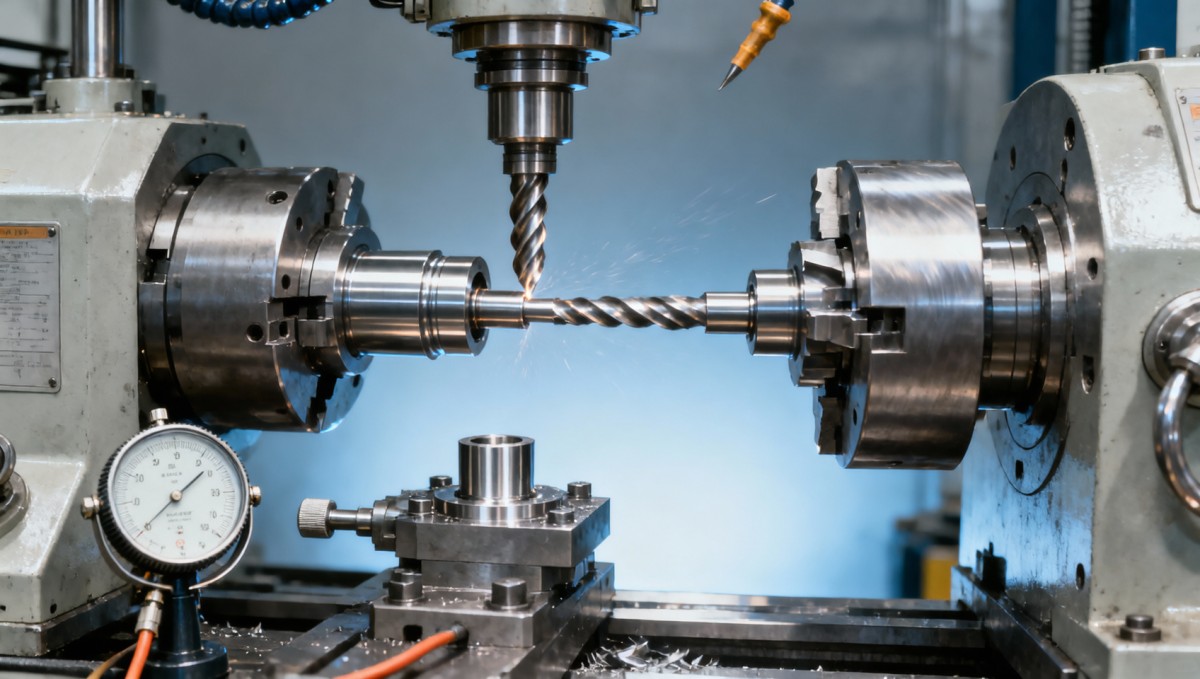
Runout refers to the total variation of a rotating surface or axis relative to a reference centerline. In shaft parts machining, it usually appears as radial runout, axial runout, or a combined effect caused by spindle condition, chuck accuracy, collet wear, fixture alignment, bar stock straightness, or part clamping distortion. Even when dimensional tolerances look acceptable on paper, poor runout can still create unstable cutting behavior.
The cost impact is rarely limited to one station. A shaft with excessive runout may first cause chatter during turning, then uneven stock removal during grinding, then imbalance during rotation testing, and finally poor fit in bearings, seals, or couplings. What appears as a 5-minute machine adjustment issue can turn into rework across 3 to 5 operations, increasing labor time and WIP inventory.
In automated production lines, runout also affects process consistency. A robot-fed CNC lathe or multi-axis machining cell depends on predictable datum control. If one batch of shaft blanks carries 0.08 mm runout while the process was set for 0.02 mm, the line may experience more tool offsets, unstable cycle times, and inspection failures. That means OEE losses, not just dimensional problems.
The most expensive consequence is often indirect cost. Scrap material, machine downtime, operator intervention, insert consumption, and delayed shipments can easily exceed the visible machining cost. In medium-volume production, a scrap increase from 1.5% to 4% may erase the margin advantage of an otherwise competitive quotation. This is why runout should be discussed early, before RFQ approval and process release.
Where the extra cost usually appears
- Shorter tool life due to uneven cutting load on inserts, drills, and grinding wheels.
- Higher scrap and rework rates when concentric diameters or bearing seats miss tolerance bands such as 0.01 mm to 0.03 mm.
- Longer setup time because operators need repeated chuck adjustment, jaw correction, or probing compensation.
- Assembly issues in motors, pumps, gearboxes, and transmission systems where dynamic balance and shaft alignment are critical.
Typical cost patterns by runout level
The table below shows a practical way many manufacturers assess the relationship between runout and production risk in shaft parts. Values vary by material, machine type, and tolerance class, but the pattern is consistent across turning, milling, and grinding environments.
A key takeaway is that acceptable runout is application-dependent. A general transmission shaft may tolerate more than a high-speed rotor shaft, but once the part includes bearing journals, seal diameters, or precision spline references, the allowable window becomes much tighter. Procurement and engineering teams should therefore align runout expectations with actual function, not with generic machine claims.
How runout affects precision, tool wear, and throughput on the shop floor
On the shop floor, runout is not only a measurement issue but a force-distribution issue. When a shaft blank rotates off-center, one section of the cutting edge engages deeper than intended. This creates cyclical load peaks, which are especially damaging in stainless steel, alloy steel, and hardened materials above 35 HRC. Operators may notice noise, burr variation, poor roundness, or inconsistent chip formation before they see obvious dimensional failure.
Tool life often drops faster than expected because the insert is no longer cutting under balanced conditions. In rough turning, this may mean a 20% to 40% reduction in edge life. In finish turning or cylindrical grinding, the penalty can be worse because the process depends on stable engagement and minimal vibration. Once chatter starts, surface roughness can move from Ra 0.8 to Ra 1.6 or higher, pushing parts out of specification.
Throughput suffers as soon as operators compensate manually. Every extra touch-off, jaw cleaning cycle, or dial indicator check adds seconds or minutes. In a line producing 400 to 800 shaft parts per shift, even 25 seconds of additional setup correction per part can remove several machine hours of productive capacity each week. That hidden capacity loss often costs more than a better collet, spindle service, or fixture upgrade.
Inspection also becomes more complex. If runout is unstable, in-process probing may show fluctuating values that confuse root-cause analysis. A part might pass diameter checks at one angular position but fail concentricity or total indicated runout during final inspection. This leads to disputes between production, quality, and maintenance teams unless the measurement method is standardized from the start.
Common symptoms operators should not ignore
- Visible variation in chip color or thickness during a full spindle rotation.
- Tool wear concentrated on one side of the insert rather than evenly across the edge.
- Diameter drift that cannot be solved with offset correction alone.
- Repeated bearing-seat or seal-surface failures despite using the same CNC program.
- Grinding burn, taper inconsistency, or imbalance issues in downstream operations.
Practical monitoring points
A practical control plan usually includes 4 checkpoints: spindle nose condition, chuck or collet repeatability, blank straightness, and first-piece runout verification on the functional diameter. For high-precision shaft parts, many factories check at startup, after every tool change, and once every 30 to 60 pieces in stable production. The exact frequency depends on tolerance, material, and automation level.
If the part is used in automotive, aerospace support equipment, energy systems, or high-speed rotating assemblies, it is wise to monitor not only finished diameter but also concentricity between datum features. This reduces the risk of passing a dimensionally correct but functionally misaligned part into assembly.
How buyers and engineers should evaluate runout risk before placing an order
Many sourcing problems begin in the quotation stage. Buyers often compare unit price, delivery time, and declared machine capacity, but they do not ask how the supplier controls runout on shaft parts. That omission matters when the application includes high-speed rotation, multiple bearing journals, or tight coaxial relationships. A lower quote can become expensive if the supplier lacks process discipline.
A better RFQ should define at least 5 technical points: shaft function, critical diameters, runout or concentricity tolerance, inspection method, and reference datum. Without these details, suppliers may estimate based on standard turning tolerance rather than on the actual assembly requirement. This creates misunderstanding, especially when one party thinks 0.03 mm TIR is acceptable while the end-use application requires 0.01 mm.
Decision-makers should also look beyond machine count. A workshop with 10 CNC lathes is not necessarily more capable than one with 4 well-maintained machines, qualified workholding, and strong in-process inspection. Runout control depends on the entire chain: raw material straightness, clamping method, process routing, machine maintenance, and final measurement discipline.
For international trade and cross-border sourcing, runout control becomes even more important because rework cycles are slower and claim handling is more expensive. A shipment that fails after 2 to 4 weeks of transit can disrupt maintenance plans, assembly schedules, and spare-parts commitments. Preventive qualification is therefore more cost-effective than corrective negotiation.
Supplier evaluation checklist for shaft parts
The following comparison framework helps buyers, engineers, and procurement teams assess whether a supplier can manage runout risk in a realistic production environment rather than only on a sample basis.
When suppliers can clearly answer these questions, buyers reduce both technical and commercial risk. A strong supplier will usually explain the control method, acceptance range, and corrective action path in a practical way, not just claim “high precision.” That level of transparency is valuable for long-term partnerships and repeat orders.
Questions worth adding to the RFQ
- What is the target runout on the key functional diameter after final machining?
- Is the value measured between centers, in a chuck, or on a dedicated inspection fixture?
- What is the normal first-article approval cycle, such as 3 to 7 working days?
- What corrective action is used if runout drifts during a batch of 200, 500, or 1,000 pieces?
Process controls that reduce runout and protect part margin
Reducing runout does not always require major capital investment. In many cases, process discipline delivers the fastest return. Start with incoming material control. Straightness checks on bar stock or forgings can prevent eccentric blanks from entering precision operations. If raw material variation is high, pre-turning, stress relief, or intermediate datum creation may be needed before finish machining critical journals.
Next, review the workholding strategy. Long and slender shafts often perform better between centers or with a steady rest than in a standard 3-jaw chuck alone. Soft jaws machined in place can improve repeatability, while collet systems may reduce distortion on smaller diameters. The right choice depends on shaft length-to-diameter ratio, material hardness, stock allowance, and whether the process includes turning, milling, drilling, or grinding in one setup.
Machine condition also matters. Spindle taper cleanliness, jaw wear, hydraulic pressure stability, and turret alignment should be checked on a schedule, not only after a problem appears. In many production environments, weekly verification and monthly deeper maintenance provide a good baseline. For critical shaft components, especially those under 0.02 mm TIR requirement, more frequent verification may be justified.
Finally, connect machining with inspection. If operators use one datum and quality inspectors use another, runout control will remain unstable. A common process sheet should define where the part is referenced, where the dial indicator or probe contacts, and what threshold triggers adjustment. This alignment reduces disputes and shortens root-cause resolution time.
A practical 5-step control routine
- Check incoming blank straightness and visible end-face distortion before loading.
- Verify spindle and fixture condition at shift start, including clamping repeatability.
- Measure first-piece TIR on the actual functional diameter, not only on a non-critical surface.
- Monitor wear-related drift after defined intervals such as every 30, 50, or 100 parts.
- Record adjustment actions so future batches can start with proven setup values.
Control strategy by production scenario
Different production modes require different levels of runout control. The table below outlines a useful planning approach for prototype work, medium-batch production, and automated high-volume manufacturing.
The main lesson is that runout reduction should be managed as a system. Better tooling alone will not solve a poor clamping method, and a precise machine will not compensate for bent material or inconsistent inspection practice. When these controls are aligned, manufacturers protect both part quality and gross margin.
FAQ: common questions about shaft parts runout, cost, and sourcing decisions
How much runout is acceptable for shaft parts?
There is no single answer because acceptable runout depends on function. General mechanical shafts may allow 0.03 mm to 0.05 mm TIR on non-critical surfaces, while precision bearing journals, motor shafts, or high-speed rotating parts may require 0.005 mm to 0.015 mm. The important step is to define the value on the drawing with a clear reference datum and measurement method.
What is the most common mistake when buying machined shaft parts?
The most common mistake is evaluating only unit price and basic dimensional tolerance while ignoring coaxiality, runout, and assembly function. This often leads to a supplier selection that looks economical during quoting but creates hidden cost in inspection, rework, and field performance. Asking 4 or 5 capability questions during sourcing usually prevents this problem.
Can runout be corrected after machining?
Sometimes, but not always economically. Secondary grinding, straightening, or selective rework may recover some parts, especially if enough stock remains. However, if the shaft already includes finished journals, keyways, splines, or hardened surfaces, correction becomes expensive and may reduce structural integrity. Preventive control is usually cheaper than post-process recovery.
What delivery impact should buyers expect if runout problems appear?
If the issue is detected early, corrective action may add 2 to 5 working days for fixture adjustment, process validation, and re-inspection. If detected after batch completion or shipment, the impact can extend to 2 to 4 weeks depending on transport, claim handling, and remake scheduling. This is why first-article approval and in-process monitoring are critical for international orders.
Which industries should pay the closest attention to shaft runout?
Automotive manufacturing, aerospace support equipment, energy machinery, pumps, gearboxes, motors, precision automation, and electronics production equipment all depend on reliable shaft performance. In these sectors, small runout errors can affect vibration, heat generation, seal life, and overall assembly reliability, making control essential rather than optional.
Ignoring runout in shaft parts machining is expensive because it weakens every stage of production: cutting stability, dimensional control, inspection consistency, assembly quality, and delivery reliability. For manufacturers using CNC lathes, machining centers, and automated production lines, the smartest approach is to treat runout as a process-level cost variable, not just a metrology detail.
If you are comparing suppliers, optimizing a machining process, or reviewing shaft part quality for a new project, focus on measurable controls such as TIR targets, workholding method, inspection frequency, and corrective action flow. Clear technical alignment early in the project can reduce scrap, protect tool life, and improve production efficiency.
To discuss shaft parts machining requirements, evaluate runout-sensitive applications, or get a more practical sourcing and process plan, contact us today for tailored support, product details, and additional precision manufacturing solutions.
PREVIOUS ARTICLE
NEXT ARTICLE
Recommended for You
 Heavy-duty Machining Center for mold making: Why coolant filtration standards evolve faster than OEM manualsMachine Tool Industry Editorial Team
 Quick-change Fixture Design for CNC turning: Why clamping force consistency drops after 200 cyclesCNC Machining Technology Center
 5 Axis Machining for impeller manufacturing: Why toolpath smoothing affects surface fatigue lifeCNC Machining Technology Center
 Lean Production Process implementation: Where value stream mapping fails to expose hidden machine downtimeManufacturing Market Research Center
 Modular Tooling System for flexible manufacturing: Why interface repeatability degrades faster than expectedMachine Tool Industry Editorial Team
 Industrial Automation control system for CNC machines: When cybersecurity updates disrupt scheduled maintenanceMachine Tool Industry Editorial Team

Aris Katos
Future of Carbide Coatings
15+ years in precision manufacturing systems. Specialized in high-speed milling and aerospace grade alloy processing.
▶
Automated Lathe Cycle Time Gains Can Hide Quality LossesCNC Machining Technology Center▶
Automated Lathe Setup Errors That Lead to Scrap PartsCNC Machining Technology Center▶
Automated lathe setup errors that quietly ruin part consistencyCNC Machining Technology Center▶
Vertical lathe or horizontal setup for heavy parts?CNC Machining Technology Center▶
Shaft Parts machining gets expensive when runout is ignoredCNC Machining Technology Center
Mastering 5-Axis Workholding Strategies
Join our technical panel on Nov 15th to learn about reducing vibrations in thin-wall components.

Providing you with integrated sanding solutions
Before-sales and after-sales services
Comprehensive technical support