• Global CNC market projected to reach $128B by 2028 • New EU trade regulations for precision tooling components • Aerospace deman
NYSE: CNC +1.2%LME: STEEL -0.4%

Metal lathe taper problems often trace back to one setup issue
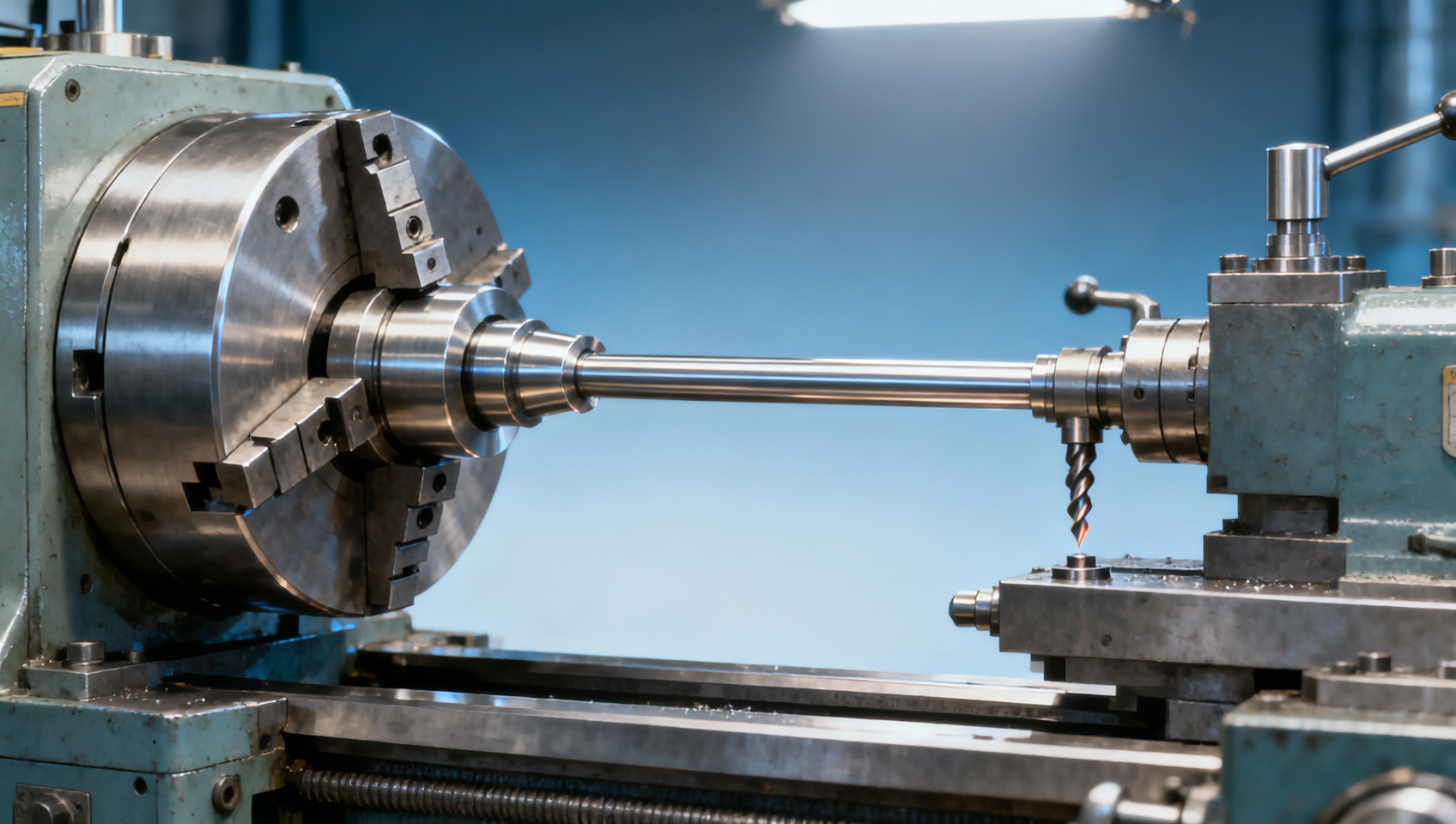
In metal machining, a taper problem on a metal lathe is often blamed on tooling or wear, but one setup mistake is frequently the real cause. For operators, buyers, and manufacturing decision-makers working in industrial CNC and automated production, understanding this issue can improve CNC metalworking accuracy, protect shaft parts quality, and reduce costly production process errors.
In both manual and CNC turning, unwanted taper means the diameter changes along the length of the workpiece when it should remain straight. On shaft parts, hydraulic rods, bearing seats, and precision sleeves, even a small taper of 0.02 mm over 100 mm can trigger assembly problems, noise, sealing failure, or rejection during final inspection.
The issue matters beyond the shop floor. For procurement teams, recurring taper can signal hidden machine condition problems, weak installation control, or poor operator training. For plant managers, it affects scrap rate, cycle efficiency, and delivery reliability. For technical buyers comparing CNC lathes, the ability to maintain straightness over 300 mm, 500 mm, or longer parts is a practical performance indicator.
A common pattern across workshops is simple: the machine, toolholder, insert, and even spindle bearings are inspected first, while one setup error is missed. In many cases, the actual cause is incorrect alignment between the workpiece support condition and the turning axis, especially when tailstock use, center alignment, chuck clamping, or workholding pressure is not verified under real production conditions.
Why taper on a metal lathe is often a setup problem first
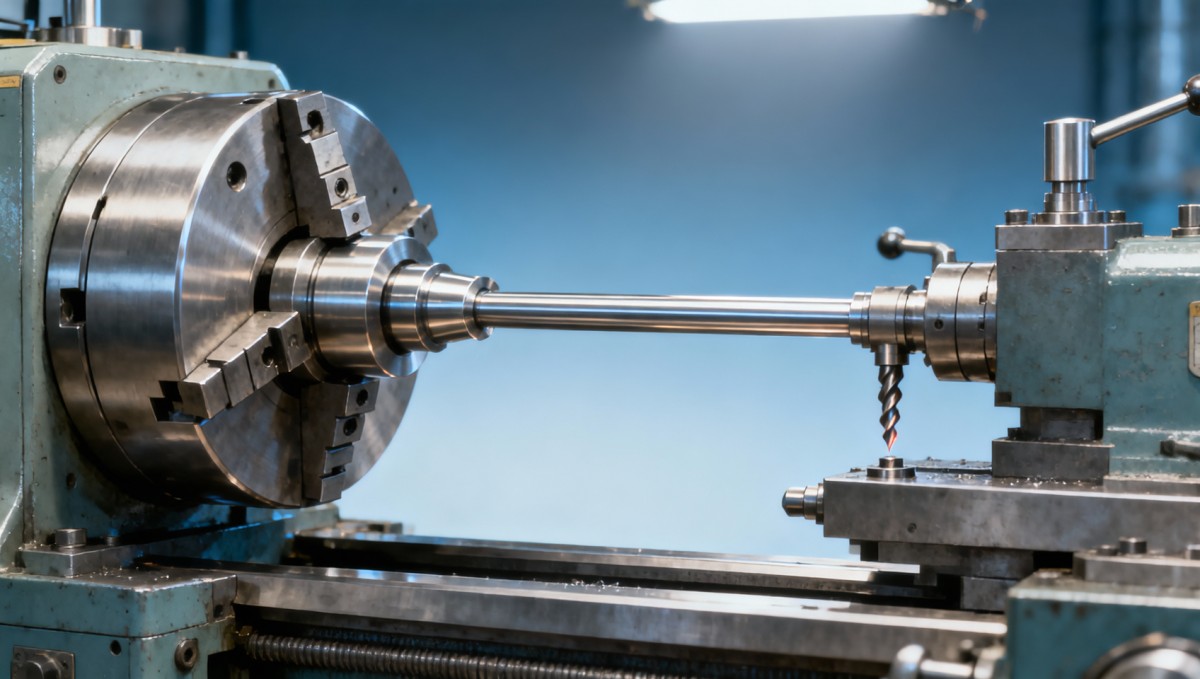
Before replacing inserts or calling for major service, it is worth reviewing setup basics. A taper defect can come from wear, thermal drift, or guideway issues, but in everyday production the first root cause is often misalignment introduced during part loading or support setup. This is especially true for shaft work above 3:1 length-to-diameter ratio, where even light deflection or offset becomes visible after one pass.
On many shop floors, the most frequent mistake is assuming that if the part is held securely, it is also aligned correctly. Secure clamping and correct alignment are not the same. A 3-jaw chuck can grip tightly while still introducing runout or uneven deformation. A tailstock can support the part while still pushing it slightly off axis. On parts between 150 mm and 600 mm long, these small offsets are enough to create measurable taper.
Another reason this issue is misunderstood is that taper symptoms often look like tool wear. The finish may degrade gradually, the diameter change may appear consistent, and the operator may notice the issue only at final measurement. However, if the taper direction stays repeatable across 5, 10, or 20 parts, the setup should be checked before changing cutting parameters.
In CNC environments, setup-related taper can also be hidden by offsets and compensation. A machine may produce acceptable short parts but fail on longer workpieces. This creates a false impression that the machine is accurate enough. In reality, the setup stack-up error only becomes visible when the cutting length increases beyond 80 mm, 120 mm, or more.
The one setup issue that causes repeated taper
The most common setup issue is poor centerline alignment between the spindle axis and the supported workpiece condition. This usually appears in one of four forms: tailstock offset, incorrect center height, workpiece distortion from chuck pressure, or support pressure from a live center that is too low or too high. In practical machining terms, the cutting axis and the actual part axis are no longer the same line.
When this happens, the tool removes material from a part that is rotating under slight angular error. The result is not random. It produces a predictable diameter change from one end to the other. On a finishing pass of 0.2 mm radial depth, this can already be enough to exceed straightness or cylindricity tolerance on precision components.
Common shop-floor signs
- Diameter near the chuck is consistently larger or smaller than the tailstock end by 0.01 mm to 0.08 mm.
- The same taper direction appears across multiple batches, even after insert replacement.
- Short test cuts pass, but parts longer than 200 mm fail final measurement.
- Surface finish appears acceptable, yet straightness or fit with mating parts is poor.
The table below shows how setup-related taper differs from machine-wear-related taper. This distinction helps operators and buyers avoid unnecessary maintenance spending and focus on the highest-probability cause first.
The practical takeaway is clear: repeatable taper on similar jobs usually points to setup before it points to catastrophic machine wear. That is why a structured setup check can save hours of troubleshooting and prevent unnecessary replacement of inserts, centers, or even machine components.
How operators should diagnose taper before changing tools or parameters
A disciplined diagnosis process reduces guesswork. In most production cells, the fastest method is to inspect the setup in a fixed sequence rather than changing three or four variables at once. A useful rule is to verify geometry, support, clamping, and measurement method within the first 15 to 30 minutes after taper is detected.
Start with a test bar or a known straight workpiece. If the lathe uses a tailstock, check center alignment under actual working pressure, not just free contact. Too much pressure can bend slender parts; too little can create unstable support. For smaller shafts in the 20 mm to 50 mm diameter range, this difference is often enough to shift the result by several hundredths of a millimeter.
Next, compare diameters at two or three fixed distances, such as 20 mm from the chuck, midpoint, and 20 mm from the free end. This gives a profile rather than a single pass-fail reading. If the taper is linear, alignment is suspect. If the error changes irregularly, look more closely at deflection, vibration, or thermal movement during longer cycle times.
Measurement discipline also matters. If the part is measured while still warm after a long cut, thermal growth can hide or exaggerate taper. On precision jobs, allowing 3 to 10 minutes of cooling before final micrometer checks can produce a more reliable result, especially on steel shafts over 250 mm long.
A practical 5-step diagnostic sequence
- Check chuck grip and jaw condition, then confirm runout at the clamped section.
- Verify tailstock center alignment and apply only the pressure required for stable support.
- Make a light test cut across a controlled length, such as 100 mm or 150 mm.
- Measure diameter at 2 to 3 positions using the same instrument and method.
- Repeat after re-clamping once; if the taper pattern changes, the problem is likely in workholding.
What not to do
Do not immediately increase feed correction, offset values, or finishing passes to “average out” the error. That may hide the issue for one batch but usually causes instability in the next one. It is also risky to tighten the chuck further without checking distortion. Thin-wall or slender parts can become less accurate as clamping force rises.
For CNC turning centers integrated into automated lines, setup verification should be documented. A short checklist with 6 to 8 checkpoints can improve consistency across shifts and reduce dependence on one experienced operator. This is especially important in plants running 2-shift or 3-shift schedules.
The following table provides a quick operator reference for diagnosis. It can be adapted into a standard operating procedure for manual lathes, CNC lathes, and mixed production environments.
This type of structured diagnosis helps separate setup error from true equipment degradation. It also supports better communication between operators, maintenance technicians, and production supervisors when the problem affects output, delivery, or customer acceptance.
What buyers and plant managers should evaluate when taper becomes a recurring quality issue
For buyers and decision-makers, recurring taper is not only a machining problem. It is a production control issue that affects yield, labor time, and customer confidence. If a plant produces 200 shaft parts per week and even 5% require rework due to taper, the accumulated cost can include machine time, inspection time, late shipments, and possible assembly delays downstream.
When evaluating a CNC lathe, tailstock, chucking system, or turnkey turning cell, straightness capability should be reviewed together with setup repeatability. A machine may offer strong spindle power and good speed range, but if the support system, tailstock rigidity, or alignment maintenance process is weak, long-part performance will still suffer.
This matters in sectors such as automotive, energy equipment, aerospace support manufacturing, and industrial components, where long shafts, pins, rollers, and stepped parts are common. On these jobs, tolerance bands may be tight, and process capability must hold across 20, 50, or 100 parts without continuous manual correction.
Procurement teams should also look at training and support. In many cases, the machine itself is not the weak link; setup discipline is. Suppliers that can provide installation verification, geometry checks, operator training, and start-up support within the first 1 to 3 months often help reduce taper-related complaints far more effectively than suppliers focused only on hardware delivery.
Key purchasing and process-control criteria
- Workholding repeatability for the target part family, especially for shaft lengths above 150 mm.
- Tailstock or support system adjustment convenience and alignment stability over time.
- Machine geometry verification procedure during installation and after relocation.
- Availability of operator training, maintenance response, and process debugging support.
- Inspection plan for first article, in-process checks, and final dimensional validation.
The comparison below can help buyers assess whether taper risk is more likely to be reduced through setup control, accessory upgrades, or machine-level investment.
For most plants, the lowest-cost first move is not immediate replacement but controlled diagnosis plus setup standardization. If taper remains after that, accessory and machine-level decisions become easier and more evidence-based.
How to reduce taper risk in CNC turning cells and automated production lines
As manufacturing moves toward higher automation and digital integration, taper control must be built into the process rather than left to individual operator experience. In CNC turning cells connected to automated loading, robots, or flexible lines, repeatability depends on the full system: part presentation, clamping force consistency, center condition, probing routine, and in-process inspection logic.
One effective practice is to divide control into three layers. The first layer is machine geometry and support condition, checked on a scheduled basis such as monthly or quarterly depending on machine utilization. The second layer is setup verification at each batch changeover. The third layer is in-process monitoring, where sample checks are made every 10 parts, 20 parts, or according to tolerance risk and part value.
For higher-mix production, standardizing setup documentation is critical. A digital setup sheet with jaw type, projection length, tailstock position, support force notes, and measurement points can shorten troubleshooting time by 30 minutes or more per event. It also improves handover quality between day shift and night shift teams.
Where long shafts or slender components are common, process engineers should also review whether a steady rest, different clamping strategy, or revised roughing-finishing sequence would reduce distortion. Sometimes the best fix is not a new lathe but a better support method matched to part geometry and tolerance class.
Recommended control framework
- Verify machine and tailstock condition at a planned interval such as every 1 to 3 months.
- Use a first-piece approval routine with at least 2 diameter checkpoints over the machined length.
- Record clamping method, jaw condition, center type, and support notes for each part family.
- Set an escalation trigger, such as repeated taper on 3 consecutive parts or one dimension drift beyond tolerance trend.
- Review data after each batch to identify whether the issue is setup-related, part-related, or equipment-related.
FAQ for common search and decision scenarios
How much taper is considered unacceptable?
That depends on the part drawing, fit class, and functional requirement. In many general turning applications, a visible taper of 0.02 mm over 100 mm may already be too much for bearing fits, sealing surfaces, or precision assembly shafts. Critical parts often require tighter process control and repeated measurement at multiple points.
Can taper be caused by the chuck even if the machine is new?
Yes. A new CNC lathe can still produce taper if the jaw condition, clamping force, or part loading method distorts the workpiece. New equipment improves the baseline, but setup and workholding still determine whether that accuracy reaches the actual part.
When should a buyer consider machine replacement?
If taper persists across multiple part types, multiple operators, and multiple verified setups, and if service checks confirm broader geometry instability, then replacement or major refurbishment should be considered. This is more likely when the machine has high utilization, repeated crash history, or declining repeatability over 2 to 5 years of intensive production.
What is the fastest way to reduce taper complaints in production?
Usually, the fastest method is a documented setup audit: check chucking, support alignment, center pressure, test-cut measurement, and re-clamping repeatability. In many workshops, this can reveal the dominant cause within one shift, without waiting for a major machine service intervention.
Turning taper insight into better process reliability and purchasing decisions
A metal lathe taper problem is often treated as a tooling issue because that is the most visible variable. Yet in real production, one setup mistake frequently causes the repeatable error: the workpiece is not supported and aligned on the same effective centerline as the turning axis. Once that fact is understood, troubleshooting becomes faster and investments become more precise.
For operators, the priority is disciplined diagnosis. For buyers, the priority is evaluating workholding, support stability, and service capability alongside machine specifications. For plant managers, the priority is converting individual experience into a repeatable control method that works across batches, shifts, and part families.
In the CNC machine tool industry, higher precision, automation, and digital integration are raising expectations for process stability. Reducing taper is not only about correcting one defect. It is about improving shaft part quality, lowering rework, and building more predictable manufacturing performance across the entire production line.
If you are reviewing lathe accuracy problems, comparing CNC turning solutions, or planning process improvements for long or precision parts, now is the right time to assess your setup control method. Contact us to discuss your machining scenario, get a tailored solution, or learn more about CNC turning, workholding optimization, and precision manufacturing support.
PREVIOUS ARTICLE
NEXT ARTICLE
Recommended for You
 What causes chatter in metal machining and how to stop itCNC Machining Technology Center
 Industrial CNC lead times are shifting in 2026Manufacturing Market Research Center
 When CNC industrial upgrades cut output instead of raising itMachine Tool Industry Editorial Team
 Automated lathe errors that often start with bar feedingMachine Tool Industry Editorial Team
 Why CNC metalworking scrap rates rise on thin wall partsCNC Machining Technology Center
 CNC cutting speed or finish quality: where losses beginCNC Machining Technology Center

Aris Katos
Future of Carbide Coatings
15+ years in precision manufacturing systems. Specialized in high-speed milling and aerospace grade alloy processing.
▶
Metal lathe taper problems often trace back to one setup issueCNC Machining Technology Center▶
Vertical lathe or horizontal setup for oversized ring partsCNC Machining Technology Center▶
Metal lathe finish problems often come from worn slidewaysCNC Machining Technology Center▶
Shaft parts manufacturers noticing vibration-induced surface finish issues at >8000 rpmCNC Machining Technology Center▶
Metal lathe users discovering coolant delivery inconsistencies in multi-axis setupsCNC Machining Technology Center
Mastering 5-Axis Workholding Strategies
Join our technical panel on Nov 15th to learn about reducing vibrations in thin-wall components.

Providing you with integrated sanding solutions
Before-sales and after-sales services
Comprehensive technical support