• Global CNC market projected to reach $128B by 2028 • New EU trade regulations for precision tooling components • Aerospace deman
NYSE: CNC +1.2%LME: STEEL -0.4%

Vertical lathe or horizontal setup for oversized ring parts
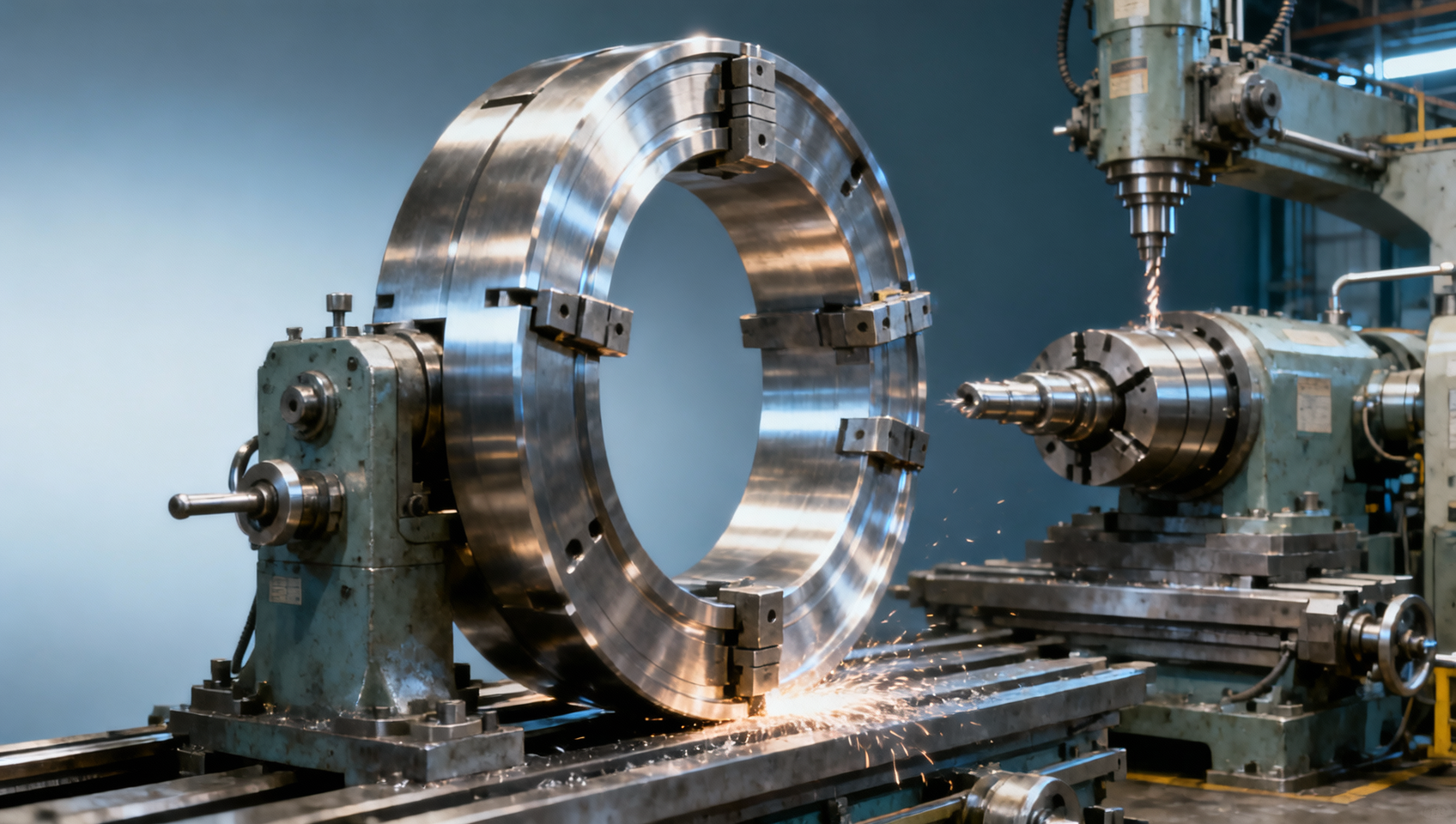
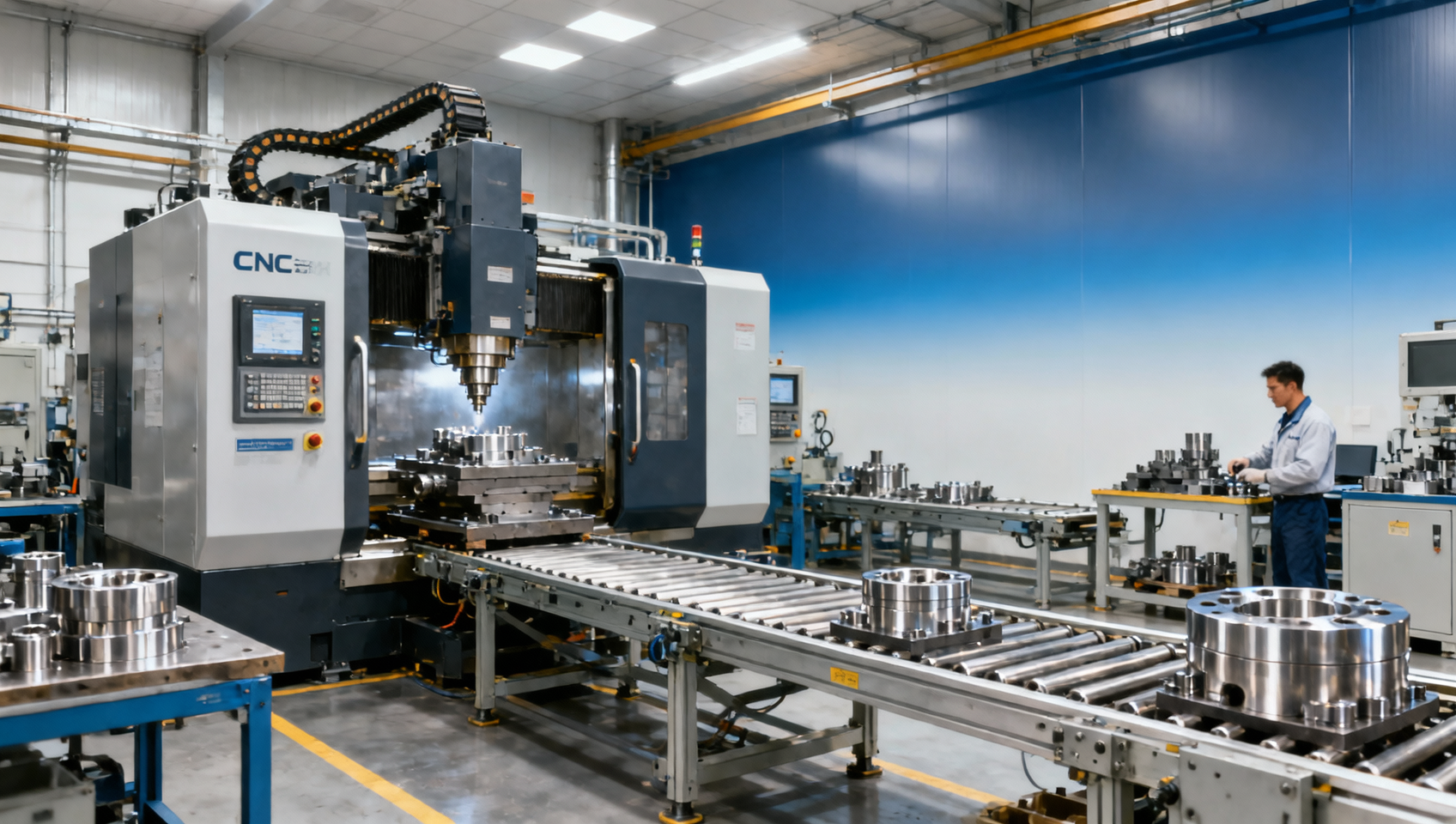
Choosing between a vertical lathe and a horizontal setup for oversized ring parts directly affects accuracy, stability, and overall production efficiency. In metal machining and industrial CNC environments, the right machine layout influences CNC cutting performance, fixturing, tool access, and automated production flow. This article examines how vertical lathe and industrial lathe solutions compare for large-diameter components in today’s Global Manufacturing and Manufacturing Industry.
For engineers, operators, sourcing teams, and plant managers, the question is rarely about machine preference alone. It is about workpiece diameter, wall thickness, weight distribution, clamping reliability, floor space, loading method, and how a machine fits into a broader CNC machining strategy. Oversized ring parts used in bearings, flanges, turbine components, energy equipment, and heavy transport systems often range from 800 mm to more than 5,000 mm in diameter, and each range creates different process risks.
A poor layout decision can increase runout, reduce tool life by 15% to 30%, create unstable chip evacuation, or introduce loading delays that undermine throughput. A suitable layout, by contrast, supports better balance, fewer setup corrections, safer handling, and more predictable cycle times. The comparison below focuses on practical machining realities rather than generic machine descriptions.
How machine orientation changes the machining behavior of oversized rings
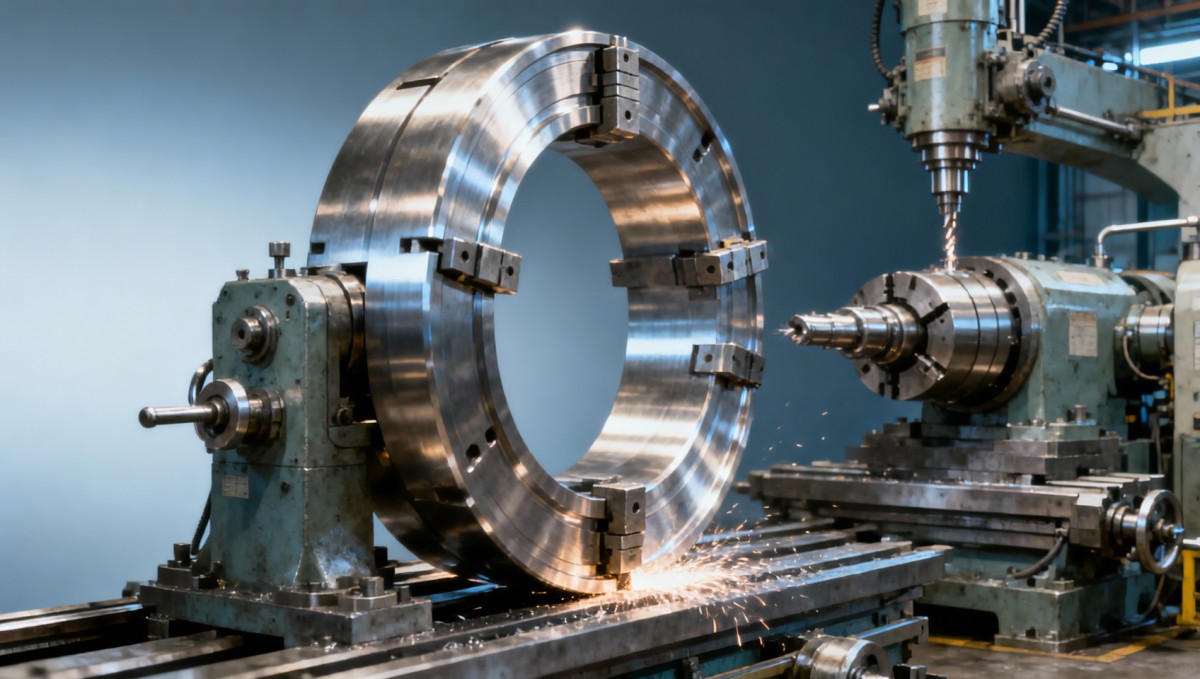
The main difference between a vertical lathe and a horizontal setup lies in how gravity acts on the ring part. On a vertical lathe, the workpiece sits on the table or chuck face, so its own weight helps stabilize large-diameter parts. On a horizontal machine, gravity acts sideways across the spindle axis, which can be acceptable for many shafts and medium-size rings but becomes more challenging as diameter increases and wall sections become thinner.
This difference matters most when ring parts exceed roughly 1,200 mm to 1,500 mm in diameter, especially if the part has a high diameter-to-thickness ratio. In those cases, horizontal setups may require more elaborate support devices, tailstock adaptation, steady rests, or custom mandrels to maintain concentricity. A vertical lathe often reduces this fixturing burden and lowers the risk of distortion during roughing and finishing.
Operators also feel the impact in daily production. Tool access on a vertical machine is often more straightforward for facing, boring, and outer diameter turning on large rings. Chips tend to fall away from the cutting zone more naturally, which can improve surface consistency and reduce recutting. On some horizontal arrangements, chip buildup around the lower area of the ring can become a recurring issue, especially in ductile materials or long-cycle roughing passes.
Another factor is dynamic stability. Large ring parts may not have a perfectly uniform mass distribution, especially after casting or pre-machining. When the component rotates in a horizontal setup, imbalance can amplify vibration, affecting surface finish and spindle load. Vertical lathes usually tolerate these conditions better, although they also require careful table load verification and foundation planning when part weight rises into the 5-ton to 30-ton range.
Typical machining effects by orientation
The following comparison highlights how orientation influences real cutting and setup behavior for oversized ring parts in industrial CNC applications.
The key conclusion is not that one machine is universally better. It is that vertical lathes tend to gain a stronger advantage as diameter, weight, and distortion risk increase, while horizontal setups remain efficient when ring sizes are moderate, tolerances are manageable, and existing shop infrastructure favors horizontal turning.
When a vertical lathe is the better choice
A vertical lathe is typically the better choice when oversized ring parts are heavy, thin-walled, difficult to clamp, or prone to deformation. This is common in wind power bearing rings, large flanges, slewing rings, pressure vessel components, and aerospace structural rings. In these applications, maintaining roundness within 0.05 mm to 0.20 mm over a large diameter can be difficult if the fixturing system introduces uneven load.
Vertical machines also simplify handling in many workshops. Instead of lifting a ring and aligning it along a horizontal spindle axis, the operator or crane system can lower the part directly onto the table. That can reduce loading complexity by 1 to 2 handling steps and improve safety for workpieces above 2 tons. In operations with repeated batches, this handling efficiency can be just as valuable as cutting speed.
From a process planning perspective, vertical lathes are well suited for combined operations on the face, inner diameter, and outer diameter of large rings. If a job requires rough facing, finish turning, boring, and groove machining in one setup, vertical orientation often improves accessibility and reduces repositioning. Fewer setups usually mean fewer cumulative alignment errors.
Another advantage is consistency over long cycle times. Oversized ring machining may involve roughing passes lasting 20 to 60 minutes and total process times of 2 to 6 hours per part. Under these conditions, stable clamping and predictable thermal behavior matter more than headline spindle speed. Vertical machines often provide a more forgiving platform for that kind of sustained heavy-duty turning.
Use cases where vertical lathes usually outperform horizontal setups
- Ring parts above 1,500 mm diameter with relatively thin cross-sections.
- Components weighing 3 tons to 20 tons where loading stability is a major concern.
- Parts requiring concentricity and face runout control after a single clamping cycle.
- Applications involving cast or forged rings with uneven material distribution.
- Production cells where overhead crane loading is already part of the process flow.
Operational benefits for users and buyers
For operators, the benefit is reduced setup difficulty and improved visual access to the part. For procurement teams, the value lies in lower fixture complexity and reduced scrap risk on expensive workpieces. For decision-makers, the return often comes from better first-pass yield, fewer setup corrections, and easier integration into heavy-duty production lines serving energy equipment, bearing manufacturing, and large industrial assemblies.
When a horizontal setup still makes sense for large ring parts
Horizontal setups should not be dismissed simply because the workpiece is large. In many manufacturing plants, a horizontal CNC lathe or turning center is already installed, operators are trained on it, and support tooling is available. If ring parts fall in the 600 mm to 1,200 mm range, have sufficient wall thickness, and can be clamped with a rigid expanding mandrel or dedicated fixture, a horizontal setup may remain highly economical.
This is particularly true for mixed production environments where the same machine handles shafts, hubs, sleeves, and moderate-size rings. A horizontal machine may offer faster spindle acceleration, easier bar or shaft-related workflow, and lower initial investment than a large vertical lathe. For batch sizes of 20 to 200 pieces, that flexibility can outweigh the geometric advantages of a vertical machine.
There are also cases where a horizontal arrangement is preferred because of part geometry. If the ring includes features that benefit from sub-spindle support, live tooling integration, or synchronized turning operations within a compact cell, a horizontal turning center may fit better into the production line. In automated manufacturing, the machine is only one element of the cost equation; loading, part transfer, and downstream inspection also matter.
However, the success of a horizontal setup depends on disciplined process control. The fixture must support the ring without ovalizing it. Rotational balance must be checked, especially above 800 rpm for medium-size rings. Tool overhang should be minimized, and the process may require trial cuts to verify runout and wall deflection before the final cycle is approved.
Decision factors for horizontal machining viability
The table below can help sourcing teams and production planners assess whether a horizontal machine is still a practical choice for a given oversized ring project.
In short, horizontal turning remains a rational option when the part envelope is controlled, support tooling is mature, and the business case favors machine flexibility. Once fixturing becomes complex or repeatability begins to suffer, the economics can quickly shift toward a vertical lathe.
Selection criteria for buyers, engineers, and production managers
A sound machine decision should be based on a structured review rather than a single parameter. Diameter is important, but it is only one of at least 6 critical selection factors: part weight, wall thickness, tolerance target, loading method, batch size, and downstream process integration. Buyers who compare machines only by swing size or table diameter often underestimate the true cost of setup time and process instability.
Start by defining the ring family, not just one part. If the current job is 1,800 mm but the next 12 months include parts from 900 mm to 2,500 mm, the equipment should be chosen for that production envelope. Also calculate the expected tolerance class. If the process must repeatedly hold face runout below 0.08 mm and roundness below 0.10 mm, machine rigidity and fixture repeatability become board-level investment issues, not only shop-floor concerns.
The loading path is another decisive point. A machine that appears cost-effective may require additional crane motion, custom lifters, or manual intervention that adds 8 to 15 minutes per cycle. Over 4,000 parts per year, that time loss can exceed several hundred production hours. Procurement teams should therefore evaluate machine layout together with material handling and automation compatibility.
Maintenance and operator skill should also be included early. Large vertical lathes may require stronger foundations and more floor planning, while horizontal machines with elaborate supports may need more frequent setup verification. The best choice is usually the one that delivers stable quality with the least process variation, not necessarily the highest cutting parameter on paper.
A practical 5-step evaluation process
- Measure the largest and smallest ring dimensions expected over the next 12 to 24 months.
- Classify parts by weight bands such as below 1 ton, 1 to 5 tons, and above 5 tons.
- Review tolerance requirements for OD, ID, roundness, and face runout.
- Map loading, unloading, and in-process inspection time per part.
- Compare machine investment against fixture cost, scrap risk, and labor intensity.
Common purchasing mistakes
- Choosing based on nominal swing size without checking actual fixture envelope.
- Ignoring part family variation and buying for one project only.
- Underestimating foundation, crane access, and coolant management requirements.
- Assuming an existing horizontal lathe can handle oversized rings without dedicated support tooling.
For many organizations in global manufacturing, the most reliable procurement approach is to request trial machining or simulation on representative ring geometries before final approval. Even a 2-part validation run can reveal clamping deformation, vibration behavior, and real cycle time differences more clearly than a specification sheet.
Implementation, risk control, and long-term production performance
Once the machine orientation is selected, implementation discipline determines whether the expected gains are actually achieved. For oversized ring parts, the first 3 areas to control are fixture design, cutting parameter validation, and thermal stability. A ring that passes setup measurement at room temperature can still drift after 90 to 120 minutes of roughing if support points and heat flow were not considered during process planning.
Fixture design should aim for repeatable load distribution rather than maximum clamping force. Over-clamping is a common source of ovality. In many cases, a moderate and uniform clamping strategy combined with accurate locating surfaces gives better results than aggressive chuck pressure. This is particularly important for forged and heat-treated rings where residual stress may be present before finishing.
Cutting conditions should be validated in stages. A practical sequence is roughing test, semi-finish verification, then final tolerance confirmation. This 3-step method helps identify chatter, insert wear, and thermal drift before high-value parts are exposed to unnecessary scrap risk. Depending on material and diameter, insert life on roughing operations can vary from 20 minutes to more than 90 minutes, so monitoring should be built into the process plan.
Long-term performance also depends on inspection strategy. For large ring components, checking only the final dimensions is not enough. Shops that maintain better repeatability often inspect after clamping, after roughing, and after finishing. That adds 2 or 3 control points, but it reduces the chance of discovering distortion only at the end of a 4-hour cycle.
Risk-control checklist for oversized ring machining
The following checklist can be used by production teams during machine commissioning, process transfer, or supplier evaluation.
The broader lesson is that orientation choice and process control must work together. A vertical lathe does not automatically solve poor fixture design, and a horizontal setup is not inherently unstable if engineered properly. What separates successful heavy-duty CNC production from costly trial-and-error is a consistent system covering setup, cutting, inspection, and handling.
FAQ for selection and deployment
How large does a ring part need to be before a vertical lathe becomes preferable?
There is no single cutoff, but many shops begin favoring vertical lathes when ring diameter moves beyond 1,200 mm to 1,500 mm, especially if the part is thin-walled, heavy, or difficult to balance. If custom supports become mandatory on a horizontal machine, the tipping point may come even earlier.
Can a horizontal CNC lathe machine oversized rings accurately?
Yes, provided the ring has adequate rigidity, the fixture is engineered for even support, and rotational balance is verified. Accuracy can be very good on medium-to-large rings, but the process margin usually narrows as diameter increases and wall thickness decreases.
What should procurement teams ask suppliers before buying?
Ask about effective work envelope, table or spindle load capacity, fixture recommendations, trial-cut availability, installation requirements, and typical cycle behavior for parts in your actual diameter and weight range. It is also useful to ask how the machine handles inspection checkpoints during cycles longer than 2 hours.
How long does implementation usually take?
For a standard installation with prepared utilities and handling equipment, machine setup and process validation may take 2 to 6 weeks. If custom fixtures, crane upgrades, or automation interfaces are needed, the timeline may extend further depending on plant readiness.
For oversized ring parts, the best choice between a vertical lathe and a horizontal setup depends on a practical mix of diameter, weight, geometry, tolerance target, handling method, and production volume. Vertical lathes generally provide stronger advantages for heavy, large-diameter, distortion-sensitive rings, while horizontal setups remain valuable for moderate sizes and flexible mixed production.
If your team is comparing CNC machine layouts for bearing rings, large flanges, energy components, or other industrial ring parts, a structured review of fixturing, loading, and process stability will prevent expensive misalignment between equipment and application. To discuss a suitable machine strategy, get a customized solution, consult product details, or explore more machining options for your production line, contact us today.
PREVIOUS ARTICLE
Recommended for You
 What causes chatter in metal machining and how to stop itCNC Machining Technology Center
 Industrial CNC lead times are shifting in 2026Manufacturing Market Research Center
 When CNC industrial upgrades cut output instead of raising itMachine Tool Industry Editorial Team
 Automated lathe errors that often start with bar feedingMachine Tool Industry Editorial Team
 Why CNC metalworking scrap rates rise on thin wall partsCNC Machining Technology Center
 CNC cutting speed or finish quality: where losses beginCNC Machining Technology Center

Aris Katos
Future of Carbide Coatings
15+ years in precision manufacturing systems. Specialized in high-speed milling and aerospace grade alloy processing.
▶
Metal lathe taper problems often trace back to one setup issueCNC Machining Technology Center▶
Vertical lathe or horizontal setup for oversized ring partsCNC Machining Technology Center▶
Metal lathe finish problems often come from worn slidewaysCNC Machining Technology Center▶
Shaft parts manufacturers noticing vibration-induced surface finish issues at >8000 rpmCNC Machining Technology Center▶
Metal lathe users discovering coolant delivery inconsistencies in multi-axis setupsCNC Machining Technology Center
Mastering 5-Axis Workholding Strategies
Join our technical panel on Nov 15th to learn about reducing vibrations in thin-wall components.

Providing you with integrated sanding solutions
Before-sales and after-sales services
Comprehensive technical support