• Global CNC market projected to reach $128B by 2028 • New EU trade regulations for precision tooling components • Aerospace deman
NYSE: CNC +1.2%LME: STEEL -0.4%

Why CNC Programming takes longer than the machining itself
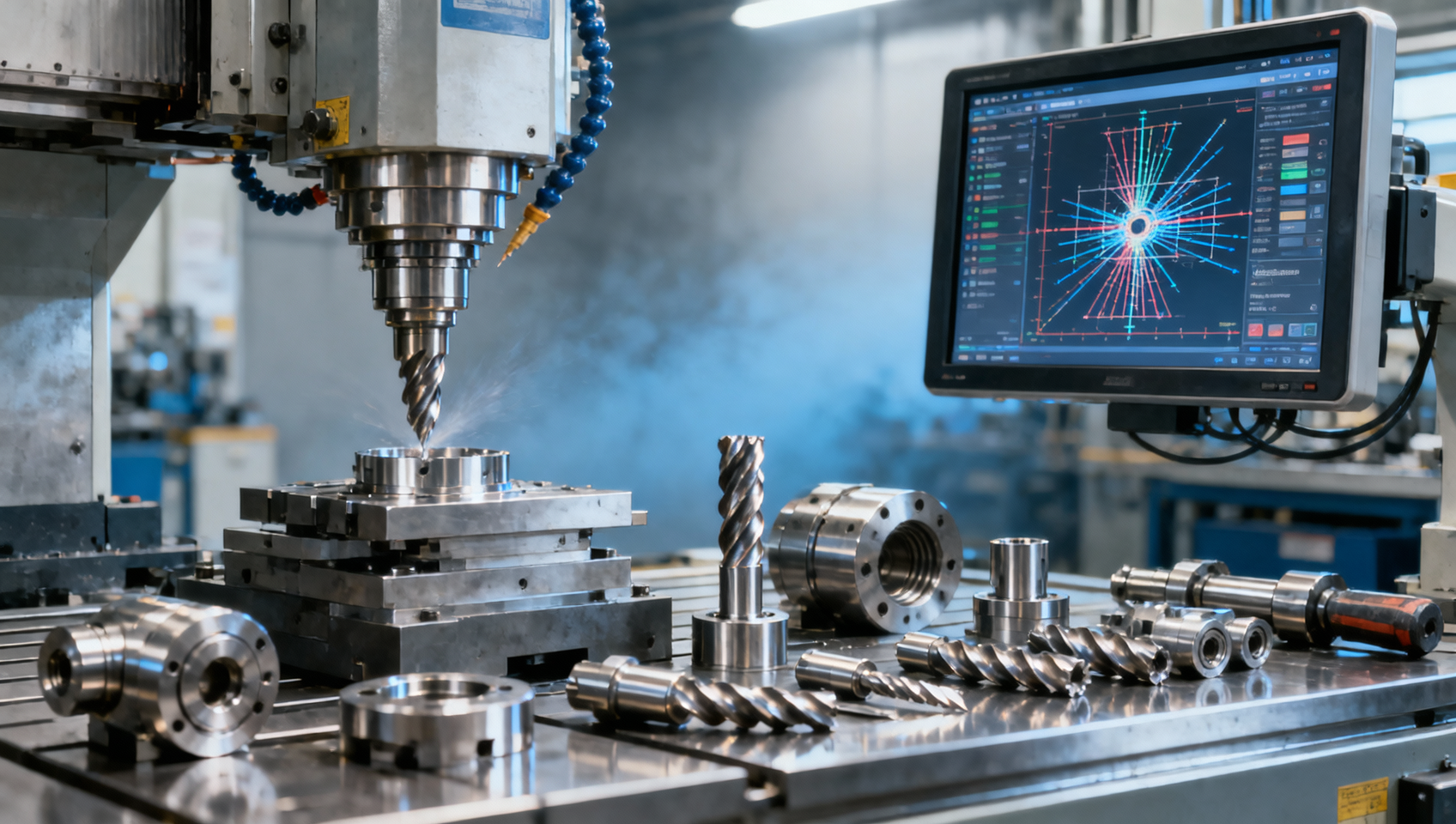
In metal machining, CNC Programming often takes longer than the actual CNC cutting because every production process must balance precision, tooling, machine behavior, and automated production goals. For buyers, operators, and manufacturing decision-makers, understanding this gap is essential to improving CNC production efficiency, reducing setup risk, and strengthening competitiveness in today’s Global Manufacturing and Machine Tool Market.
This is not a contradiction. A machined part may run in 8 minutes, 20 minutes, or 45 minutes on a CNC lathe or machining center, while the programming, verification, fixture planning, and trial adjustment can take several hours or even 1–2 days. In high-mix manufacturing, the more complex the geometry and the tighter the tolerance, the more engineering effort is required before the spindle ever starts cutting.
For research-oriented readers, this gap explains why quoting lead time and delivery time are not driven by machine runtime alone. For operators, it clarifies why setup sheets, offsets, and tool paths need repeated confirmation. For procurement teams and business leaders, it shows where hidden cost, risk, and production delays actually come from.
Why Programming Time Often Exceeds Machining Time
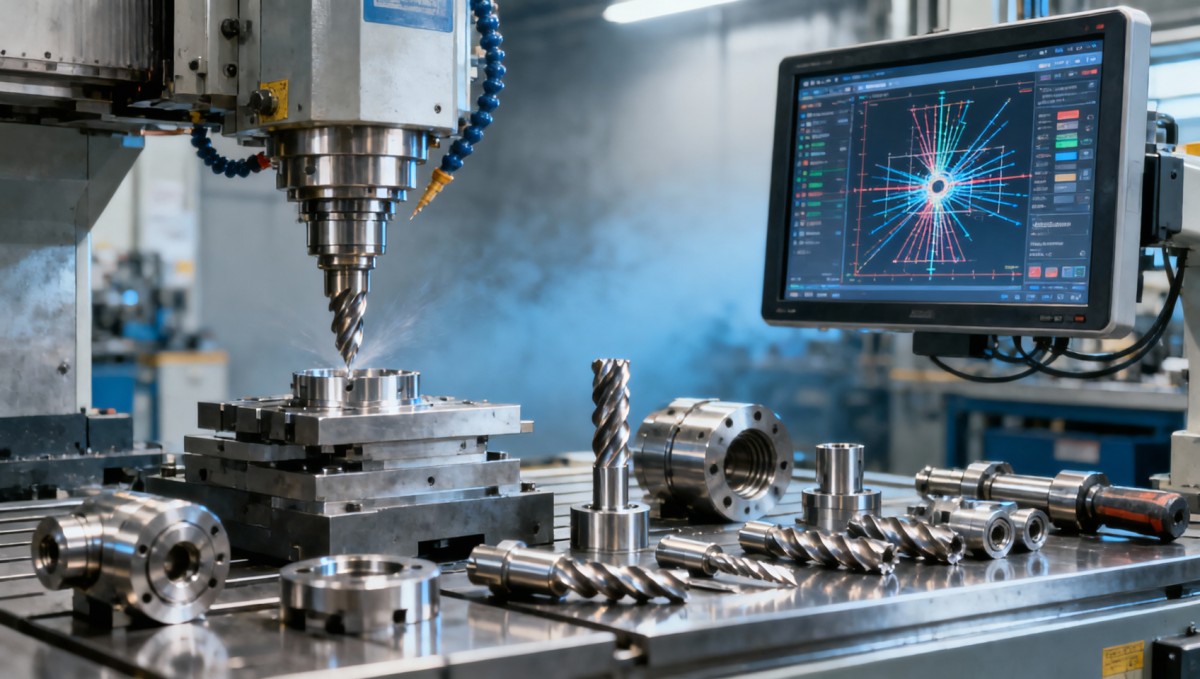
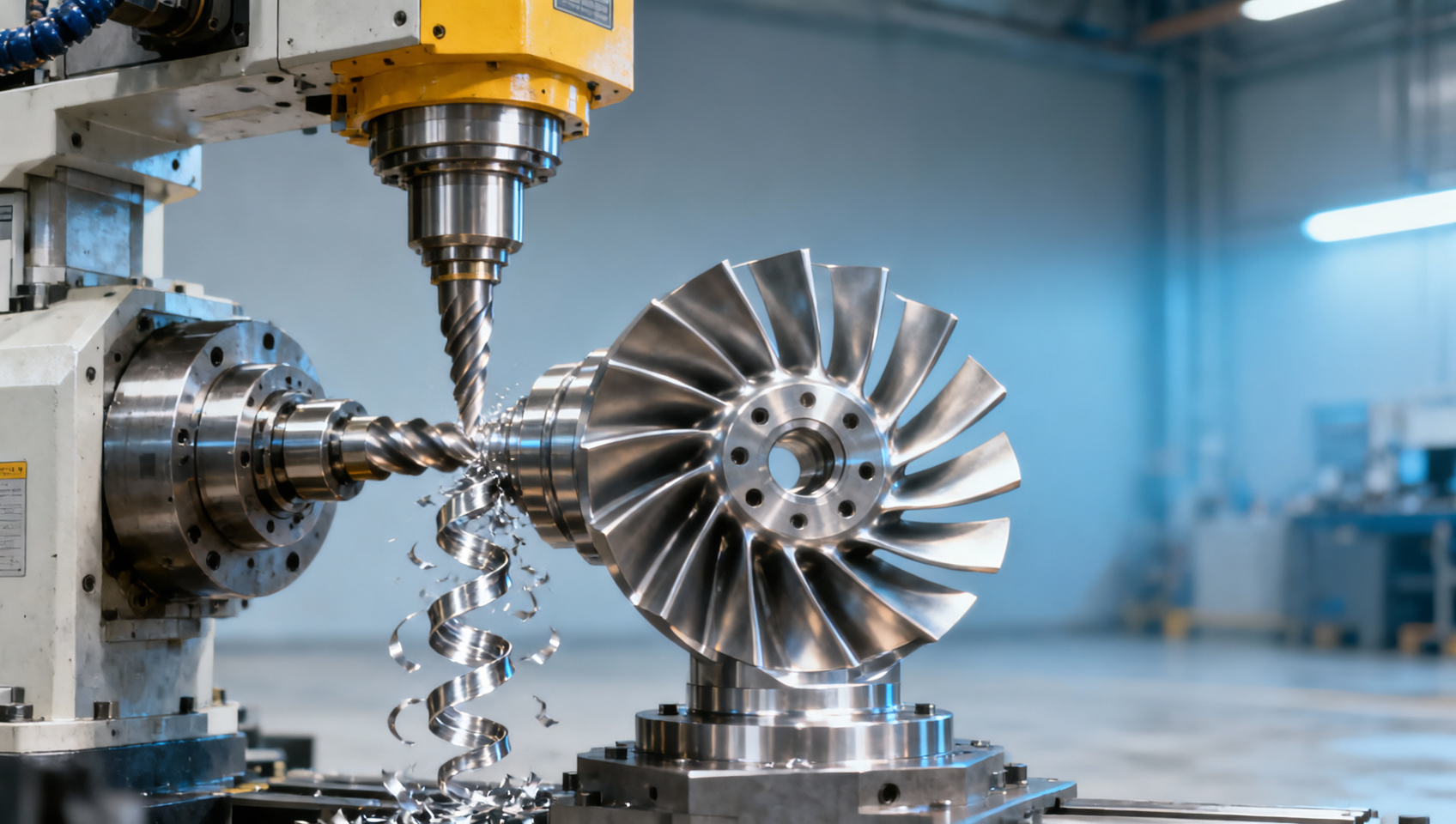
CNC programming is not just writing G-code. It includes drawing review, manufacturability analysis, process route planning, tool selection, cutting parameter definition, workholding strategy, collision avoidance, and first-run verification. On a 3-axis job with moderate complexity, programming may take 1–3 hours. On a 5-axis impeller, aerospace bracket, or tight-tolerance medical component, it can easily expand to 6–12 hours or more.
The actual machining cycle, by contrast, is repetitive once stabilized. If one part takes 18 minutes to cut and the order quantity is 200 pieces, the cycle becomes predictable. Programming time is front-loaded engineering time. It carries more uncertainty because each new part may involve different stock conditions, tool reach, tool deflection, machine kinematics, or fixture constraints.
Another reason is risk concentration. A programming mistake can scrap a part in seconds, damage a toolholder, or cause spindle collision. That is why programmers spend time simulating paths, reviewing tool entry and exit, checking safe Z heights, and optimizing stepovers and stepdowns. In shops working with materials such as stainless steel, titanium, or hardened alloy, one poor decision in feed rate or radial engagement can shorten tool life by 20%–50%.
In modern production, programming also supports automation goals. If the job must run overnight, on a pallet system, or across multiple machines, the programmer is not only making the part; they are building a stable process. That means creating robust tool libraries, standard work offsets, probing routines, and recovery logic so the process can repeat with minimal operator intervention.
Key tasks hidden inside “programming”
- Part interpretation: reviewing GD&T, critical surfaces, datums, and finish requirements before CAM work begins.
- Process planning: deciding roughing, semi-finishing, finishing, drilling, tapping, and secondary operation sequence in 3–7 logical stages.
- Tooling strategy: selecting end mills, inserts, holders, stick-out length, and expected tool life for each feature.
- Verification: simulation, post-processor review, dry run, first article confirmation, and often 1–3 rounds of adjustment.
Typical time split in different job types
The table below shows why programming time is often proportionally larger on low-volume or high-complexity work. It helps buyers and managers understand that machine hour rate alone does not reflect the full cost of a part.
The pattern is clear: as geometry complexity rises, planning and verification increase faster than spindle runtime. This is especially relevant in aerospace, energy equipment, electronics fixtures, and prototype manufacturing where part variation is high and repeat batches are limited.
What Makes CNC Programming So Time-Intensive in Real Production
Programming time expands when process variables multiply. A part with 30 holes is not difficult only because of the feature count. The real issue is whether those holes require different depths, thread sizes, positional tolerances, or angled access. A drawing with ±0.01 mm tolerance and Ra 0.8 finish naturally requires more careful strategy than a general industrial bracket with ±0.1 mm tolerance.
Machine characteristics also matter. The same CAM path may behave differently on a vertical machining center, a horizontal machine, or a mill-turn platform. Acceleration, jerk control, spindle power, control system behavior, tool magazine capacity, and probing functions all influence how aggressively a path can be programmed. Shops with mixed machine fleets often spend extra 15%–30% programming time adapting programs for different controllers and post-processors.
Workholding is another hidden driver. A programmer cannot choose cutting paths independently from fixturing. If a part needs 2 setups instead of 1, or soft jaws instead of a standard vise, the program must account for different origins, clamp avoidance, and accessible tool angles. In thin-wall components or long shafts, clamping force and support points can directly change dimensional stability during roughing and finishing.
Material behavior further complicates the job. Aluminum usually allows faster roughing and shorter cycle development. Stainless steel, Inconel, or hardened steel demands more conservative engagement, toolpath smoothing, and thermal control. Tool wear compensation may need to be built into the process from the first run, especially where unattended production is expected over 4–8 hours.
Main variables that extend programming duration
- Feature complexity: undercuts, deep cavities, blended surfaces, and multi-angle drilling increase CAM and verification time.
- Tolerance level: tighter than ±0.02 mm generally requires more process checkpoints, tool control, and trial adjustment.
- Setup count: moving from 1 setup to 3 setups can increase engineering work much more than the machine cycle itself.
- Automation requirement: lights-out machining needs safer toolpaths, probing routines, and exception handling.
- Documentation quality: incomplete 2D drawings or unstable CAD files can add hours before cutting starts.
A practical misconception in quoting
Many buyers compare suppliers by asking only for machine runtime or unit piece price. That approach works for stable, repeat orders in volumes above 500 or 1,000 pieces. It fails on prototypes, spare parts, or customized assemblies where engineering preparation can be 30%–60% of total job effort. A shop with a higher quote may in fact be pricing in simulation, fixture reliability, and lower startup risk.
How Programming Time Affects Cost, Delivery, and Procurement Decisions
For procurement teams, the programming-versus-machining gap explains why low-volume parts often appear “expensive” even when the raw material is common and the cut time looks short. If a component requires 5 hours of process engineering and 12 minutes of cycle time, the first 5 pieces will carry a much higher cost burden than the next 500 pieces. This is why batch size has a direct impact on pricing strategy.
Lead time is affected in the same way. A supplier may have free machine capacity but still quote 7–10 days because the bottleneck is engineering review, programming queue, fixture preparation, and first article validation. In precision manufacturing, machine availability and programming availability are two different resources. Ignoring that distinction often leads to unrealistic delivery expectations and repeated rescheduling.
For enterprise decision-makers, this issue matters at the business model level. Shops serving automotive service parts, energy equipment maintenance, and industrial custom components often face high-mix, low-volume demand. In these environments, reducing programming time by even 20% can improve order response, machine utilization, and gross margin without buying another machine tool.
Operators also feel the effect. A rushed or incomplete program increases setup questions, manual edits, prove-out time, and scrap risk. Good programming reduces the number of trial cuts, stabilizes offsets, and shortens the path from setup to first qualified part. In practice, that can save 30–90 minutes per new job on the shop floor.
How different stakeholders should evaluate the issue
The following comparison helps different roles assess where programming time creates value and where it creates avoidable delay.
A useful conclusion from this table is that programming should be treated as a measurable production asset, not as invisible overhead. Once tracked properly, companies can improve quotation logic, customer communication, and internal planning accuracy.
Questions buyers should ask suppliers
- Is there a separate non-recurring engineering charge for first-time CNC programming or fixture development?
- How many setups are expected, and how does that affect both lead time and repeat-order price?
- Will the supplier provide first article verification, simulation review, or process capability feedback?
- Can the programmed process be reused for repeat orders, and under what drawing revision conditions?
How Manufacturers Reduce Programming Bottlenecks Without Sacrificing Quality
Reducing programming time does not mean taking shortcuts. The goal is to standardize what can be standardized and reserve engineering effort for what is truly unique. Many efficient CNC manufacturers build template-based workflows for recurring part families such as flanges, shafts, valve bodies, housings, and fixture plates. This can reduce CAM preparation time by 15%–40% depending on feature similarity.
Tool libraries are one of the highest-return improvements. When the shop uses consistent holders, gauge lengths, insert grades, and cutting data windows, the programmer no longer starts from zero. Verified tool assemblies also reduce machine-side editing. In practical terms, a stable library can save 10–20 minutes per program on simple jobs and much more on multi-operation parts.
Standard fixturing has a similar effect. Modular vises, zero-point systems, soft-jaw conventions, and pallet standards reduce the uncertainty around work offsets and clamp zones. On a production line or flexible manufacturing cell, this makes the relationship between programming and setup much tighter. It also improves machine changeover, which is critical for small-lot precision production.
Digital simulation and machine-specific post-processors are equally important. A verified post can prevent wasted prove-out time, while simulation catches overtravel and holder interference before the job reaches the machine. For 4-axis and 5-axis applications, this level of verification is often the difference between a safe first run and a costly interruption.
A practical improvement roadmap
- Build standard process templates for the 10–20 most common part categories.
- Create a controlled tool database with approved cutting parameter ranges for each material group.
- Align CAD, CAM, setup sheets, and machine post-processors into one revision-controlled workflow.
- Use simulation and dry-run rules based on part complexity rather than operator preference alone.
- Review setup time, prove-out time, and scrap cause after each new part introduction.
Where investment usually pays back fastest
For most precision machining businesses, the fastest returns come from three areas: CAM standardization, tool library discipline, and fixture repeatability. These are often more cost-effective than immediately purchasing another machine. If new-job programming delays are blocking delivery every week, the bottleneck is engineering flow, not spindle count.
Common Misunderstandings, Risk Points, and FAQ for CNC Buyers and Operators
One common misunderstanding is that faster programming always means better productivity. In reality, overly compressed programming can push risk downstream to setup, trial cuts, and quality inspection. A program finished in 30 minutes but corrected three times at the machine is usually less efficient than a program prepared in 90 minutes and released correctly the first time.
Another mistake is to separate programming from manufacturability review. If design teams issue parts with deep pockets, sharp internal corners, excessive tolerance stacking, or inaccessible faces, programming time rises sharply and machining time often follows. Early design-for-manufacturing review can cut both engineering effort and production risk before procurement places the order.
A third risk is poor revision control. In CNC production, even a small drawing change such as a hole position shift, chamfer update, or finish requirement change can invalidate toolpaths, inspection points, or fixture references. Shops that do not control revision flow often lose hours in reprogramming, rechecking, and operator confusion.
FAQ: Does short machining time mean low total cost?
Not always. A part with a 9-minute cycle can still have high total cost if it requires 4 hours of CNC programming, custom jaws, and first article validation. Total cost should include engineering preparation, setup, tooling wear, inspection, and expected batch size.
FAQ: When is programming time most significant?
It is most significant in prototypes, spare parts, customized industrial components, and low-volume orders under 50–100 pieces. In these cases, non-recurring engineering can represent a large share of the first-order price and lead time.
FAQ: How can buyers reduce unnecessary programming cost?
Provide complete 3D files, clear 2D drawings, tolerance priorities, material specifications, and realistic batch forecasts. Standardizing part families, reducing unnecessary special features, and grouping similar orders can significantly improve repeat-order economics.
FAQ: What should operators look for in a well-prepared program?
A good CNC program should include clear tool calls, safe approach and retract logic, setup references, offset instructions, and enough process notes to support a stable first run. If the operator still needs extensive manual interpretation, the programming package is incomplete.
CNC programming often takes longer than machining because it carries the responsibility for process stability, quality assurance, tooling efficiency, and production repeatability. In modern machine tool and precision manufacturing environments, the real competitive advantage is not only faster cutting, but faster reliable preparation for cutting.
Whether you are sourcing precision parts, managing shop-floor operations, or planning capacity in a global manufacturing business, a clear view of programming effort leads to better quotations, better scheduling, and lower risk. If you want to evaluate CNC production capability, compare suppliers more effectively, or build a more efficient machining workflow, contact us to discuss your application, request a tailored solution, or learn more about practical CNC manufacturing strategies.
PREVIOUS ARTICLE
Recommended for You
 Heavy-duty Machining Center for mold making: Why coolant filtration standards evolve faster than OEM manualsMachine Tool Industry Editorial Team
 Quick-change Fixture Design for CNC turning: Why clamping force consistency drops after 200 cyclesCNC Machining Technology Center
 5 Axis Machining for impeller manufacturing: Why toolpath smoothing affects surface fatigue lifeCNC Machining Technology Center
 Lean Production Process implementation: Where value stream mapping fails to expose hidden machine downtimeManufacturing Market Research Center
 Modular Tooling System for flexible manufacturing: Why interface repeatability degrades faster than expectedMachine Tool Industry Editorial Team
 Industrial Automation control system for CNC machines: When cybersecurity updates disrupt scheduled maintenanceMachine Tool Industry Editorial Team

Aris Katos
Future of Carbide Coatings
15+ years in precision manufacturing systems. Specialized in high-speed milling and aerospace grade alloy processing.
▶
Metal Lathe vs CNC Milling for Low Volume Round PartsCNC Machining Technology Center▶
Production Process Mapping Still Misses the Real Delay PointsCNC Machining Technology Center▶
Why CNC industrial projects miss deadlines after quotingCNC Machining Technology Center▶
What causes unstable output in CNC production scheduling?CNC Machining Technology Center▶
Why CNC Programming takes longer than the machining itselfCNC Machining Technology Center
Mastering 5-Axis Workholding Strategies
Join our technical panel on Nov 15th to learn about reducing vibrations in thin-wall components.

Providing you with integrated sanding solutions
Before-sales and after-sales services
Comprehensive technical support