• Global CNC market projected to reach $128B by 2028 • New EU trade regulations for precision tooling components • Aerospace deman
NYSE: CNC +1.2%LME: STEEL -0.4%

Where a weak Production Process creates repeat quality issues
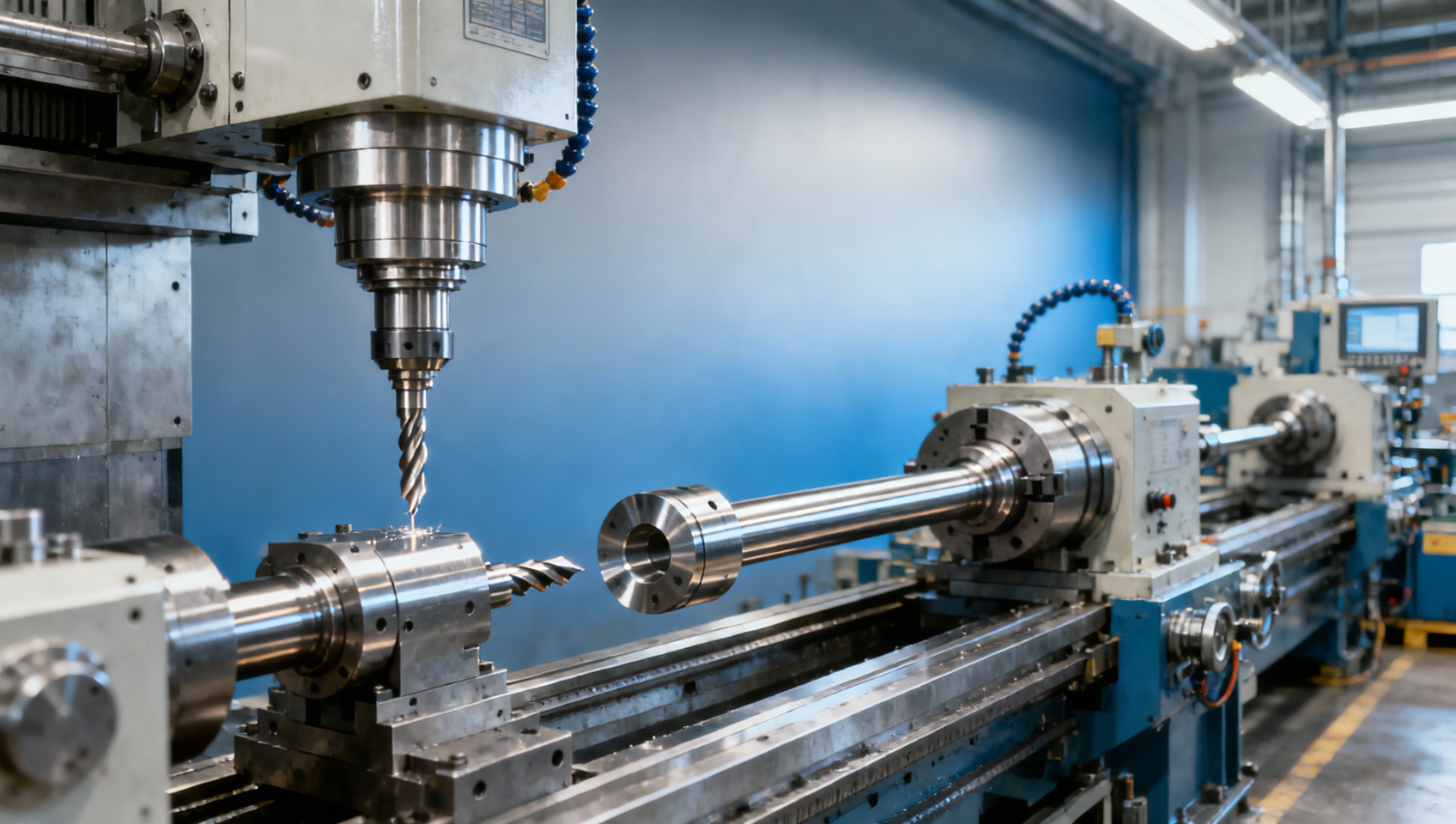
A weak Production Process can turn advanced metal machining into a source of repeat quality issues, even in highly automated production environments. Across industrial CNC, CNC milling, CNC cutting, and automated production lines, hidden process gaps can affect shaft parts, tool life, and final consistency. This article explores where CNC production fails, why defects keep returning, and how manufacturers can strengthen control in today’s Global Manufacturing landscape.
For researchers, machine operators, procurement teams, and business decision-makers, repeat defects are rarely caused by one machine alone. In most CNC environments, quality drift comes from a chain of weak controls: unstable material input, unclear setup standards, inconsistent tooling strategy, poor in-process checks, and delayed feedback between departments.
The cost impact is significant. A dimensional deviation of just 0.02 mm to 0.05 mm on a shaft part may trigger rework, assembly delays, or batch rejection, especially in automotive, aerospace, electronics, and energy equipment production. When the same issue returns across 2, 3, or even 5 batches, the real problem is usually the production process itself.
Understanding where these weaknesses appear helps companies reduce scrap, improve process capability, shorten troubleshooting cycles, and make better equipment and supplier decisions. This is especially important in global CNC manufacturing, where delivery windows often range from 2 to 8 weeks and quality instability can damage both margin and customer trust.
Where repeat quality issues usually begin in CNC production
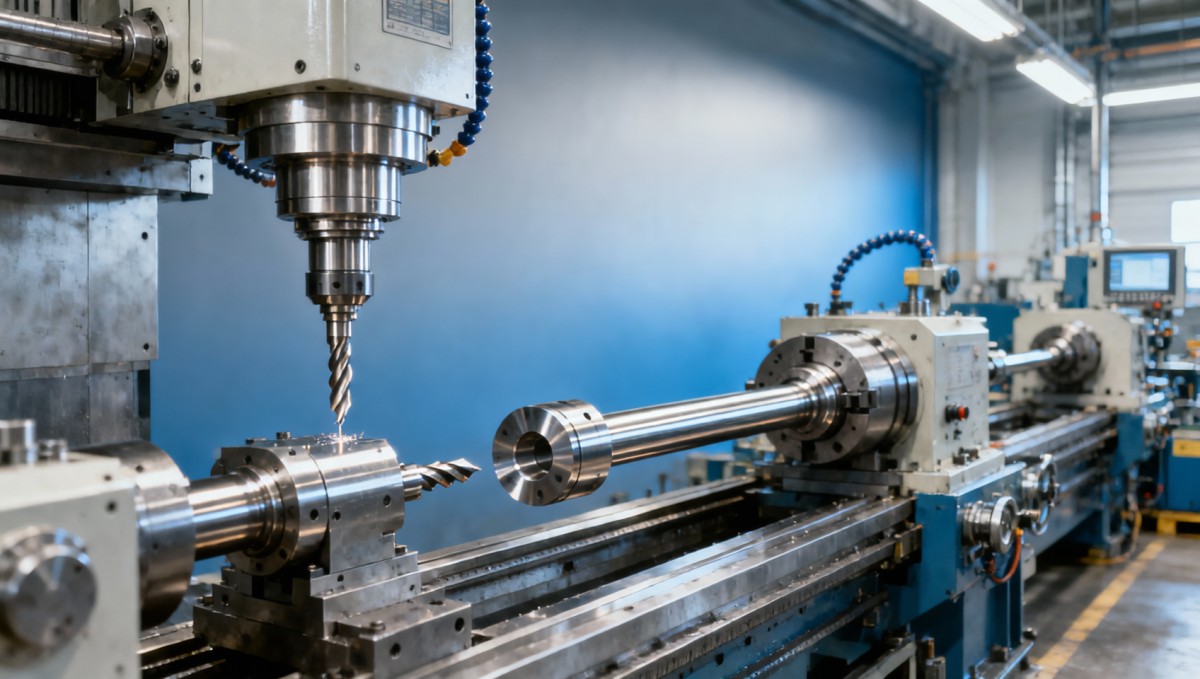
Repeat quality issues in CNC machining do not usually start at final inspection. They often begin much earlier, at process planning, fixture design, tool path selection, material preparation, and operator setup. A plant may run advanced CNC lathes, 3-axis or 5-axis machining centers, and automated loading systems, yet still experience recurring size variation, chatter marks, burrs, taper, or poor surface finish.
One common weakness is incomplete process definition. If key dimensions, clamping points, datum strategy, cutting parameters, and tool life limits are not standardized, each shift may run slightly differently. A 1% to 3% variation in spindle load, coolant concentration, or insert wear may seem small, but over 500 to 2,000 parts, that difference can produce a repeat defect pattern.
Another weak point is poor transfer between engineering and the shop floor. CAM programs may be technically correct, but if work instructions do not specify inspection frequency, first-piece approval, tool offset adjustment rules, or replacement intervals, operators are forced to rely on experience. That creates variation between people, machines, and batches.
Material variability is also underestimated. In shaft parts, discs, and precision structural components, hardness changes, residual stress, and bar straightness can affect machining stability. If incoming inspection checks only basic size and certificate data, process teams may miss the real causes of runout, distortion, or unstable cutting performance.
Typical early-stage process failures
Most repeat quality issues can be traced to a short list of recurring failures. These are usually operational rather than theoretical problems.
- No documented first-off validation for the first 3 to 5 parts after tool change or machine restart.
- Fixture repeatability not verified within a target range such as 0.01 mm to 0.03 mm.
- Tool replacement based on guesswork instead of actual wear trend, part count, or spindle load data.
- Inspection interval too long, such as every 100 parts when drift can begin after 20 to 30 parts.
The table below shows where weak production controls typically appear and how they create recurring defects in CNC manufacturing.
The key message is simple: repeat defects are often process-system failures, not isolated machine problems. Companies that only react at the inspection stage may solve one batch but fail to prevent the next one.
Why defects keep returning even after corrective action
Many factories take corrective action after a defect appears, yet the same problem returns within 1 to 4 weeks. This happens because the correction addresses the symptom, not the control loop. Replacing a tool, adjusting an offset, or retraining one operator may restore temporary stability, but if the root cause remains inside the production process, repeat quality issues will come back.
A major reason is the absence of closed-loop feedback. In efficient CNC production, process engineering, quality, maintenance, and operation teams need to share defect data quickly, ideally within the same shift or within 24 hours. If nonconformance reports are delayed for 3 to 7 days, the process may continue generating bad parts before anyone updates the setup standard.
Another reason is inconsistent measurement practice. If one shift uses a calibrated digital micrometer and another relies on a less stable gauge or measures at a different part temperature, the data may not be comparable. In precision metal machining, a temperature difference of 5°C to 10°C can influence interpretation of tight tolerances on long shaft components.
Weak preventive maintenance also drives recurring defects. Spindle condition, backlash, guideway wear, chuck force, hydraulic stability, and coolant cleanliness directly affect repeatability. If machine checks are done every 6 months but production intensity changes sharply, the maintenance interval may be too long for actual operating conditions.
Symptoms of a weak corrective-action system
The following signals suggest that a plant is treating repeat quality issues reactively instead of systematically.
- The same defect appears on at least 2 consecutive production lots.
- Inspection records show correction, but work instructions remain unchanged.
- Tooling, fixture, and machine maintenance records are stored separately and not linked to defect history.
- Operators solve problems by experience, but the solution is not standardized for the next shift.
A practical root-cause view
In CNC milling and CNC cutting lines, recurring issues typically come from 4 layers: process design, machine condition, human execution, and control timing. When manufacturers investigate only one of these layers, they miss the full defect mechanism.
For procurement teams, this matters during supplier evaluation. A supplier with advanced equipment but weak process discipline may deliver unstable quality. Asking about first-article approval, tool life management, in-process inspection frequency, and corrective-action response time often reveals more than a machine list alone.
The process controls that reduce repeat quality problems
Strong production control in CNC manufacturing does not always require a complete factory overhaul. In many cases, repeat quality issues drop when manufacturers improve 5 to 7 core controls: process standardization, tool management, fixture validation, machine capability checks, in-process inspection, shift handover, and data review. These controls create stability across batches, machines, and operators.
For shaft parts and precision discs, process sheets should define datum sequence, cutting speed, feed rate, depth of cut, coolant method, clamping force logic, and inspection points. If a turning pass uses 180 to 260 m/min or a finishing pass uses 0.05 to 0.15 mm/rev, the acceptable adjustment window should be documented rather than left open to interpretation.
Tool life control is especially important. Instead of waiting for surface finish to worsen, plants can set replacement rules by part count, wear threshold, or cycle trend. For example, an insert may be changed every 120 to 180 parts in roughing and every 60 to 100 parts in finishing, depending on material, machine rigidity, and tolerance demand.
Inspection frequency should match process risk. High-tolerance features may require first-piece approval, then checks every 10 to 20 parts until stability is proven, after which the interval can move to every 30 to 50 parts. Lower-risk dimensions can be sampled less often, but only after process capability is confirmed.
Core controls worth standardizing
The table below outlines practical production controls that help reduce recurring defects in CNC machining and automated production lines.
These controls are practical because they connect engineering intent with daily execution. Even without a full smart factory system, disciplined records and standard reaction plans can reduce repeat quality problems and shorten containment time from several days to a single shift.
Implementation priorities
- Start with the top 10 defect-causing features rather than trying to standardize every dimension at once.
- Define 3 levels of reaction: operator adjustment, quality confirmation, and engineering review.
- Review process data weekly for the first 4 to 8 weeks after control changes.
This phased method is easier to implement and gives procurement and management teams clearer evidence of process maturity before expanding production volume.
How buyers and decision-makers should evaluate production robustness
For buyers and business leaders, repeat quality issues are not only a factory problem. They are a sourcing risk, a delivery risk, and often a profitability risk. When evaluating CNC suppliers or planning internal capacity upgrades, the key question is not just whether a supplier owns CNC lathes, machining centers, industrial robots, or automated production lines. The more important question is whether the production process is controlled well enough to hold quality over time.
A supplier may produce acceptable samples, but volume stability is the real test. Buyers should ask how process capability is verified during pilot runs, how many parts are checked during first article and mass production, how tool life is managed, and how quickly the supplier responds to recurring defects. A response standard within 24 hours is much stronger than an informal update after several days.
For internal investment decisions, leadership teams should compare the cost of preventive process control against the cost of rework, late delivery, and customer complaints. In many machining businesses, a scrap increase of just 2% to 4% across a high-volume part family can absorb the savings expected from faster cycle time or reduced labor.
Decision-makers should also review process resilience under global manufacturing pressure. Multi-site production, export programs, and mixed-material jobs require stronger documentation and traceability. If process knowledge stays in one experienced operator’s memory rather than in standard documents and digital records, quality risk increases every time production shifts location or staffing changes.
Supplier and plant evaluation checklist
The following checklist helps procurement teams and plant managers assess whether a CNC production process is likely to create repeat quality issues.
For sourcing teams, these questions often reveal more long-term value than a small unit-price difference. A supplier with stronger production process control may offer lower total cost even if the initial quote is 3% to 8% higher.
Practical FAQ for reducing repeat defects in CNC manufacturing
Many companies know they have recurring quality problems but are unsure where to start. The questions below reflect common concerns from operators, engineers, purchasing staff, and management teams working in CNC machining, precision manufacturing, and automated production.
How often should in-process inspection be performed?
The answer depends on tolerance, stability, and defect history. For critical dimensions with tight control, checking the first 3 to 5 parts and then every 10 to 20 parts is common until the process is stable. For mature processes with lower risk, intervals may extend to every 30 to 50 parts, but only if trend data supports that decision.
What is the most common hidden cause of repeat quality issues?
In many CNC environments, the biggest hidden cause is not machine age but weak standardization. If offsets, tool change points, clamp conditions, and measurement methods are not controlled the same way across shifts, even a modern production line can produce repeat defects.
How long does it take to improve a weak production process?
Basic stabilization can often begin within 2 to 4 weeks if the team focuses on the highest-risk parts, the main defect types, and the top control gaps. Full process discipline across multiple machines or product families may take 2 to 3 months, especially when documentation, training, and maintenance routines all need upgrading.
What should buyers prioritize when selecting a CNC supplier?
Buyers should look beyond capacity and price. Priority areas include documented process control, traceability, inspection discipline, tool management, corrective-action speed, and experience with similar materials or tolerance levels. For precision shaft parts and structural components, these factors strongly influence long-term supply stability.
Can automation alone solve repeat quality problems?
No. Automation improves consistency only when the underlying production process is stable. If a weak setup or incorrect tool life limit is automated, the line may simply produce defects faster. Smart manufacturing works best when digital monitoring is combined with disciplined process standards and timely human response.
A weak production process is often the real reason repeat quality issues continue in CNC machining, CNC milling, CNC cutting, and automated production lines. The strongest manufacturers reduce risk by controlling the full chain: material input, setup, tooling, inspection, maintenance, data feedback, and operator execution.
For researchers, operators, buyers, and decision-makers, the goal is not only to fix the next defect but to build a process that remains stable across batches, shifts, and delivery cycles. Better production discipline supports lower scrap, more predictable quality, stronger supplier performance, and more reliable global manufacturing operations.
If you are reviewing CNC machining capacity, evaluating suppliers, or improving your own precision manufacturing process, now is the right time to examine where hidden process gaps are creating repeat issues. Contact us to discuss your application, get a tailored production improvement perspective, or learn more about practical solutions for stable CNC quality control.
PREVIOUS ARTICLE
Recommended for You
 Heavy-duty Machining Center for mold making: Why coolant filtration standards evolve faster than OEM manualsMachine Tool Industry Editorial Team
 Quick-change Fixture Design for CNC turning: Why clamping force consistency drops after 200 cyclesCNC Machining Technology Center
 5 Axis Machining for impeller manufacturing: Why toolpath smoothing affects surface fatigue lifeCNC Machining Technology Center
 Lean Production Process implementation: Where value stream mapping fails to expose hidden machine downtimeManufacturing Market Research Center
 Modular Tooling System for flexible manufacturing: Why interface repeatability degrades faster than expectedMachine Tool Industry Editorial Team
 Industrial Automation control system for CNC machines: When cybersecurity updates disrupt scheduled maintenanceMachine Tool Industry Editorial Team

Aris Katos
Future of Carbide Coatings
15+ years in precision manufacturing systems. Specialized in high-speed milling and aerospace grade alloy processing.
▶
Metal Lathe vs CNC Milling for Low Volume Round PartsCNC Machining Technology Center▶
Production Process Mapping Still Misses the Real Delay PointsCNC Machining Technology Center▶
Why CNC industrial projects miss deadlines after quotingCNC Machining Technology Center▶
What causes unstable output in CNC production scheduling?CNC Machining Technology Center▶
Why CNC Programming takes longer than the machining itselfCNC Machining Technology Center
Mastering 5-Axis Workholding Strategies
Join our technical panel on Nov 15th to learn about reducing vibrations in thin-wall components.

Providing you with integrated sanding solutions
Before-sales and after-sales services
Comprehensive technical support