• Global CNC market projected to reach $128B by 2028 • New EU trade regulations for precision tooling components • Aerospace deman
NYSE: CNC +1.2%LME: STEEL -0.4%

Cutting Tools Wholesale Buying Guide: MOQ, Lead Times, and Quality Checks to Compare
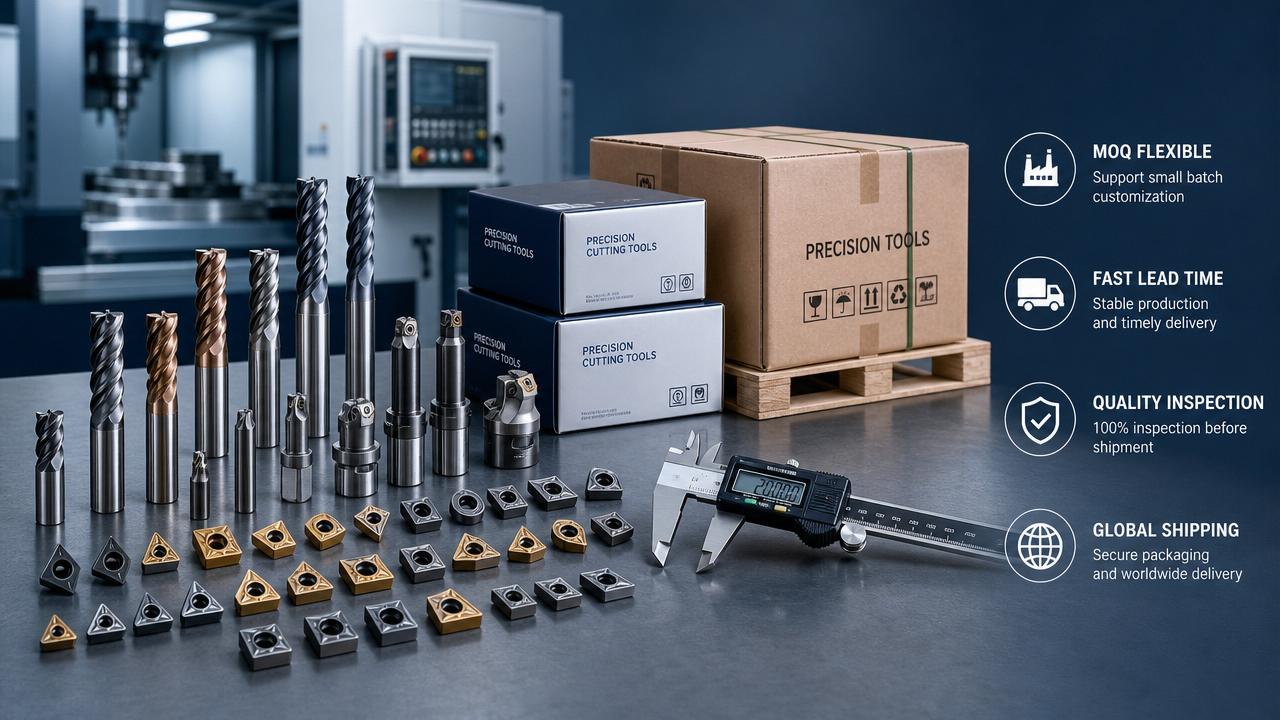
Cutting Tools Wholesale: What Buyers Should Compare First
For procurement teams, Cutting Tools Wholesale decisions affect cost, delivery reliability, and machining quality across every production cycle.
This guide helps buyers compare MOQ terms, lead times, and quality inspection standards with more confidence.
It also shows how to reduce sourcing risks while supporting stable performance in precision manufacturing.
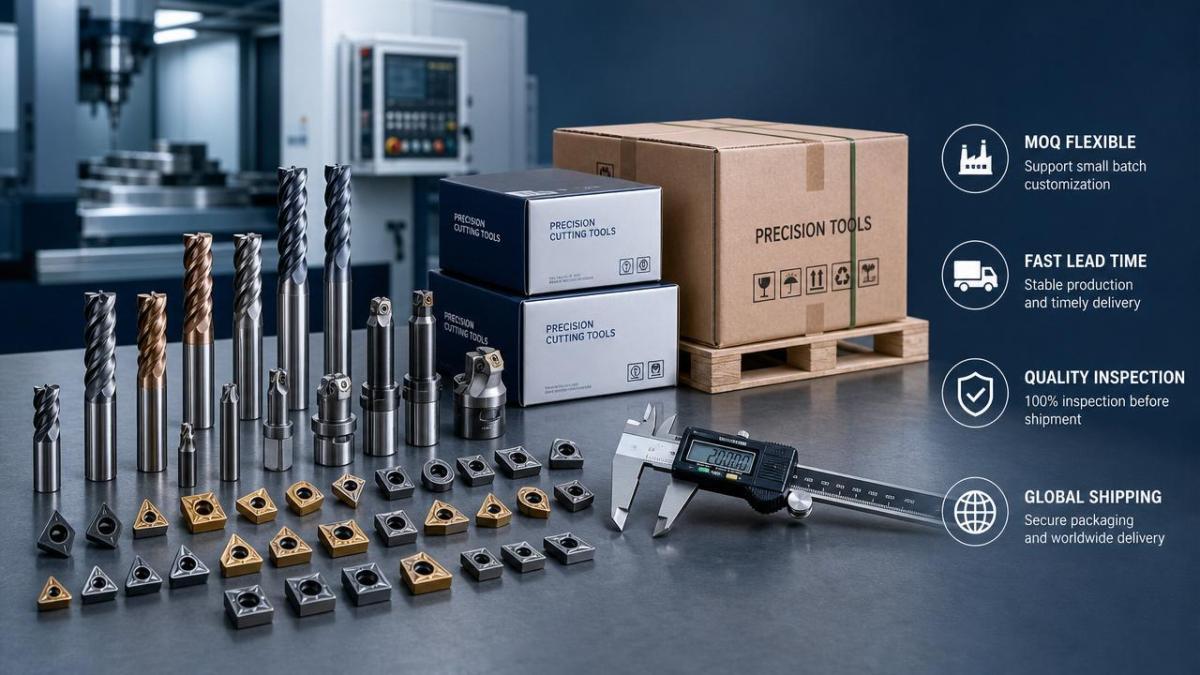
In today’s CNC market, tool sourcing is no longer only about unit price.
A cheaper insert can become expensive if tool life is unstable or delivery slips during peak production.
That is why a smart Cutting Tools Wholesale strategy looks at the full purchasing picture.
In actual sourcing work, three factors usually decide the result: MOQ, lead time, and quality consistency.
When these are compared carefully, supplier choices become clearer and negotiation becomes easier.
Why Cutting Tools Wholesale Requires a Broader Cost View
Many buyers start with price-per-piece, but that metric is too narrow for machining operations.
A useful comparison should include total cost per machined part and the hidden cost of downtime.
For Cutting Tools Wholesale, a supplier with stable edge retention may lower inventory pressure and scrap losses.
This matters even more in automotive, aerospace, electronics, and energy equipment manufacturing.
These sectors depend on repeatable tolerances, fast line balancing, and reliable replenishment schedules.
From recent market changes, the stronger signal is clear: procurement decisions now connect directly to production resilience.
- Unit cost affects budget, but tool life affects real operating cost.
- MOQ affects cash flow, warehousing, and consumption planning.
- Lead time affects schedule reliability and safety stock decisions.
- Quality variation affects scrap, spindle time, and customer complaints.
Seen this way, Cutting Tools Wholesale becomes a supply chain decision, not just a purchasing transaction.
How to Evaluate MOQ Without Trapping Cash
MOQ often looks simple on a quotation sheet, yet it can change the economics of the entire order.
In Cutting Tools Wholesale, suppliers may set different MOQs for standard tools, coated inserts, and custom geometries.
The best MOQ is not always the lowest one.
A low MOQ with unstable pricing may be worse than a moderate MOQ with predictable replenishment terms.
The practical question is whether order volume matches actual monthly tool consumption.
If demand is seasonal, fixed MOQ commitments can quietly lock up cash and shelf space.
Key MOQ checks before placing orders
- Ask whether MOQ applies per SKU, per grade, or per total order value.
- Confirm if mixed models can be combined within one Cutting Tools Wholesale order.
- Check whether trial orders have different MOQ rules.
- Review shelf life, coating stability, and packaging conditions for longer storage periods.
- Compare volume discounts against carrying cost, not price alone.
This also means buyers should separate standard tools from custom tooling during negotiations.
Standard end mills or inserts usually allow more flexible Cutting Tools Wholesale arrangements.
Custom specials often require larger commitments because setup cost is higher.
Lead Times: Compare Promise, Capacity, and Recovery Speed
Lead time is not only the number written in the quote.
For Cutting Tools Wholesale, buyers should separate quoted lead time from proven lead time.
A supplier may promise three weeks, yet regularly ship in five.
That gap matters when machine loading depends on exact tool availability.
In real operations, the better question is how a supplier performs during disruptions.
Raw material shortages, coating bottlenecks, customs delays, and peak-season congestion can all stretch supply cycles.
What to ask about lead times
- What is the average lead time for standard items over the last six months?
- What is the lead time for custom tools and regrind services?
- Which production steps are outsourced, such as coating or heat treatment?
- What safety stock is held for high-runner Cutting Tools Wholesale items?
- How are urgent replacement orders handled after tool failure or spec change?
A strong supplier usually provides both schedule transparency and a workable recovery plan.
That includes order tracking, partial shipment options, and clear escalation contacts.
For Cutting Tools Wholesale, speed matters, but predictability matters more.
Quality Checks That Actually Protect Production
Quality checks should go beyond a basic statement like “100% inspected.”
In Cutting Tools Wholesale, inspection needs to match the technical risk of the application.
For high-speed milling or tight-tolerance turning, small variations can quickly affect performance.
That is especially true for runout, coating adhesion, edge preparation, substrate consistency, and dimensional accuracy.
Useful quality checkpoints
- Material certificates for carbide grade or tool steel composition.
- Dimensional inspection reports for diameter, length, radius, and tolerance.
- Coating verification for thickness, adhesion, and lot consistency.
- Performance test records under actual or simulated machining conditions.
- Traceability by batch number, production date, and operator record.
If the application is critical, request first-article approval before full Cutting Tools Wholesale rollout.
A pilot batch often reveals problems that paperwork alone cannot catch.
Tool life testing, chip control behavior, and surface finish results should all be reviewed together.
A Simple Supplier Comparison Table for Cutting Tools Wholesale
A structured comparison prevents decisions from being driven by the lowest visible price.
Use a scorecard that reflects operational priorities, not just commercial terms.
This kind of scorecard makes Cutting Tools Wholesale decisions easier to defend internally.
It also helps align procurement, engineering, and production around the same priorities.
Common Sourcing Risks and How to Reduce Them
Even experienced teams can overlook risks when demand is urgent.
In Cutting Tools Wholesale, the most common issues are usually avoidable with better front-end checks.
- Unclear specifications cause mismatch between quoted tools and machining needs.
- Overcommitting to MOQ creates slow-moving stock and hidden cost.
- Accepting quoted lead times without history creates planning gaps.
- Skipping pilot validation increases the chance of field failure.
- Weak traceability makes claims and root-cause analysis harder.
A practical response is to build a short sourcing checklist before each major order.
That checklist should cover drawings, materials, coating type, tolerances, packaging, inspection records, and replenishment terms.
For long-term Cutting Tools Wholesale programs, quarterly supplier reviews also help.
They make performance trends visible before they become production problems.
Final Buying Checklist for Better Decisions
A reliable Cutting Tools Wholesale decision balances commercial logic with machining reality.
The strongest suppliers are not always the cheapest at first glance.
They are the ones that support stable production, consistent quality, and predictable supply.
Before confirming any Cutting Tools Wholesale order, verify these points
- Match MOQ with actual consumption and stock policy.
- Validate average lead times, not only quoted lead times.
- Request inspection and traceability records for critical items.
- Run pilot testing for new grades, coatings, or geometries.
- Compare total cost per part, not only purchase price.
- Review claim handling, technical support, and replenishment flexibility.
When these checks become standard practice, Cutting Tools Wholesale stops being reactive.
It becomes a more controlled, lower-risk way to support machining efficiency and long-term supply stability.
The next smart step is simple: shortlist suppliers using the same checklist, then compare facts before comparing price.
Recommended for You
 How Automated Precision Machining Maintains Tolerance in High-Mix ProductionCNC Machining Technology Center
 How to Evaluate a Machine Tool Factory Before Sourcing CNC EquipmentGlobal Machine Tool Trade Research Center
 CNC Programming Explained: From CAD Models to Reliable Shop-Floor ToolpathsCNC Machining Technology Center
 How Multi-Axis Machining Produces Complex Components With Fewer SetupsCNC Machining Technology Center
 How Does Precision Machining Differ From Standard Machining?CNC Machining Technology Center
 What Production Volume Justifies a CNC Turning Investment?Manufacturing Market Research Center




Aris Katos
Future of Carbide Coatings
15+ years in precision manufacturing systems. Specialized in high-speed milling and aerospace grade alloy processing.
▶
How to Evaluate a Machine Tool Factory Before Sourcing CNC EquipmentGlobal Machine Tool Trade Research Center▶
How to Evaluate a CNC Machine Tool Manufacturer for Precision and Service SupportGlobal Machine Tool Trade Research Center▶
What Affects Cost-Effective CNC Manufacturing? Key Drivers Behind Part Price and Lead TimeGlobal Machine Tool Trade Research Center▶
How to Evaluate a CNC Tooling System Supplier in Germany for Quality, Lead Time, and CostGlobal Machine Tool Trade Research Center▶
How to Evaluate a CNC Tooling System Supplier in Germany for Quality, Lead Time, and SupportGlobal Machine Tool Trade Research Center
Mastering 5-Axis Workholding Strategies
Join our technical panel on Nov 15th to learn about reducing vibrations in thin-wall components.

Providing you with integrated sanding solutions
Before-sales and after-sales services
Comprehensive technical support