• Global CNC market projected to reach $128B by 2028 • New EU trade regulations for precision tooling components • Aerospace deman
NYSE: CNC +1.2%LME: STEEL -0.4%

Automated Lathe vs Manual CNC Setup: Which Option Fits High-Volume Parts Production?
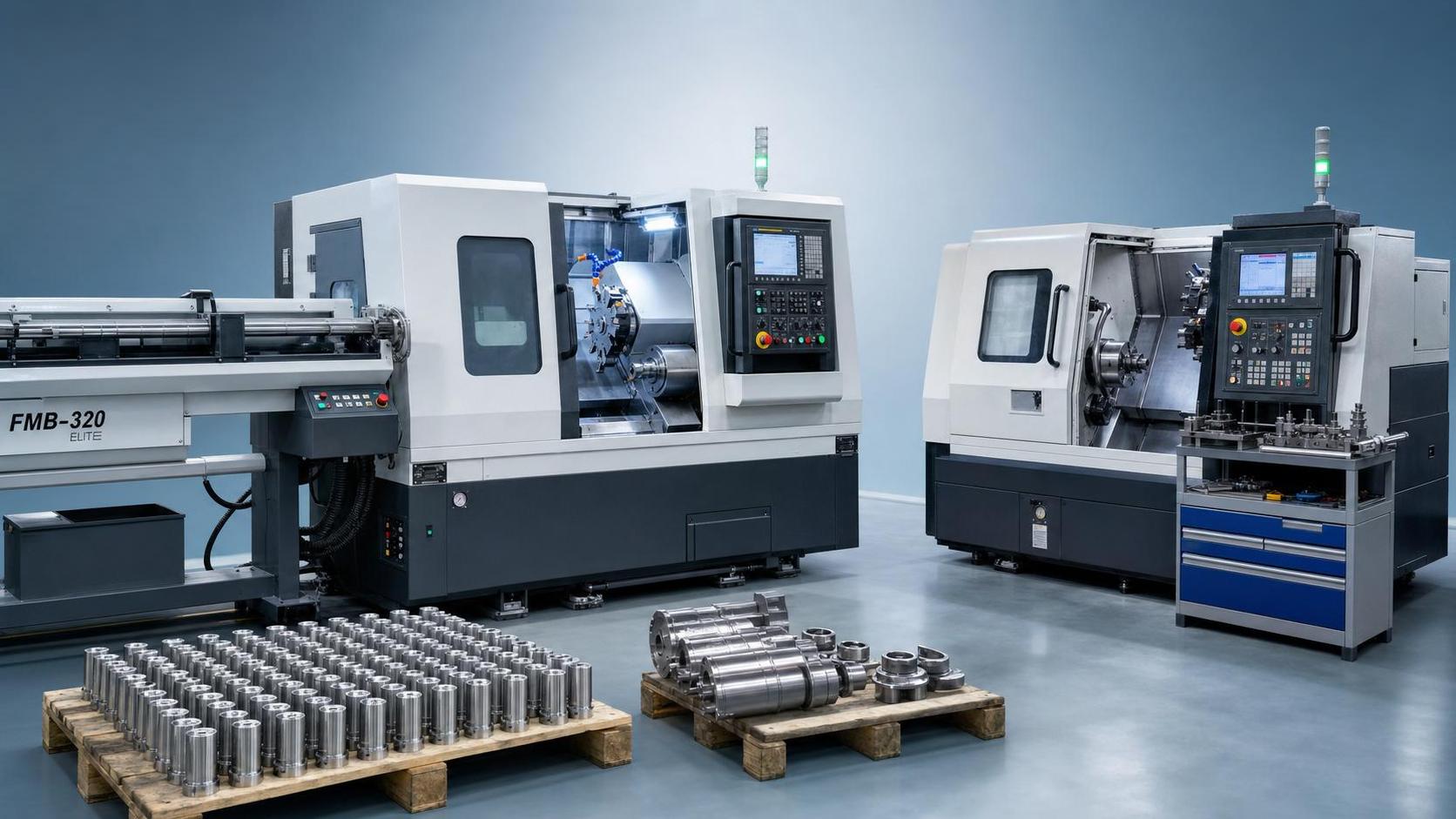
Automated Lathe vs Manual CNC Setup: Which Option Fits High-Volume Parts Production?
For manufacturers weighing speed, consistency, and labor efficiency, choosing between an automated lathe and a manual CNC setup can directly affect cost, output, and long-term competitiveness.
In high-volume parts production, the right solution depends on scale, part complexity, changeover frequency, and automation goals.
This article breaks down the real differences, so the decision becomes clearer and more practical.
Why the Automated Lathe Debate Matters More Now
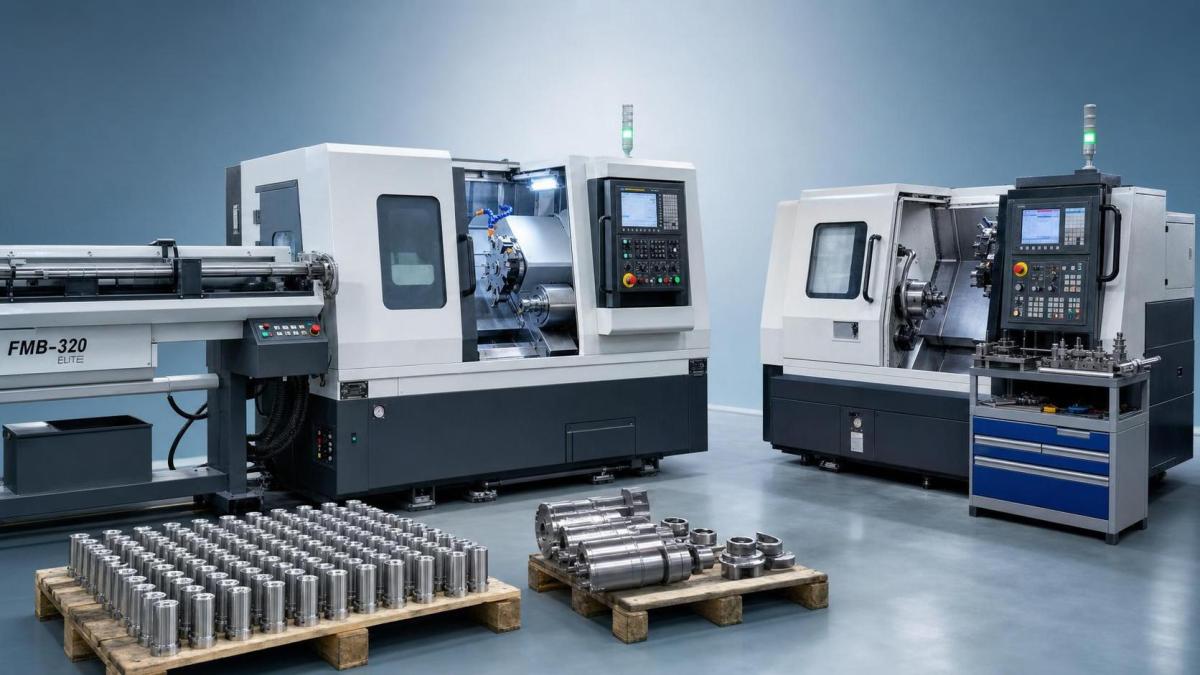
Across modern manufacturing, output targets are rising while skilled labor remains harder to secure.
That shift makes the automated lathe a serious option, not just a premium upgrade.
In automotive, electronics, energy equipment, and aerospace supply chains, repeatability now matters as much as raw machining speed.
A manual CNC setup still has value, especially when product variation is high or process flexibility matters more than labor reduction.
But in steady, high-volume work, the automated lathe often changes the economics of production in a meaningful way.
This is why the comparison is no longer about machine preference alone. It is about business fit.
What an Automated Lathe Really Offers
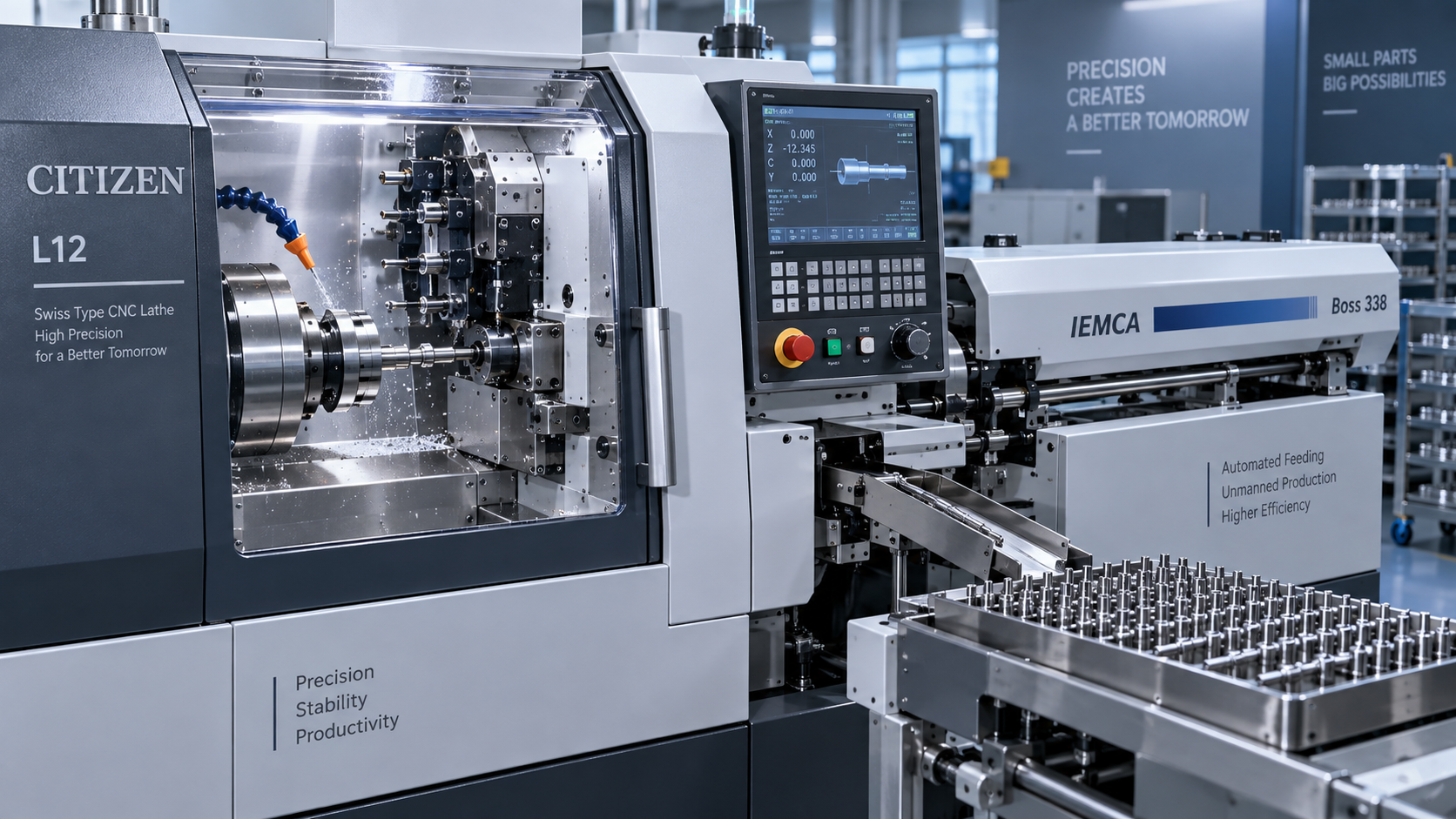
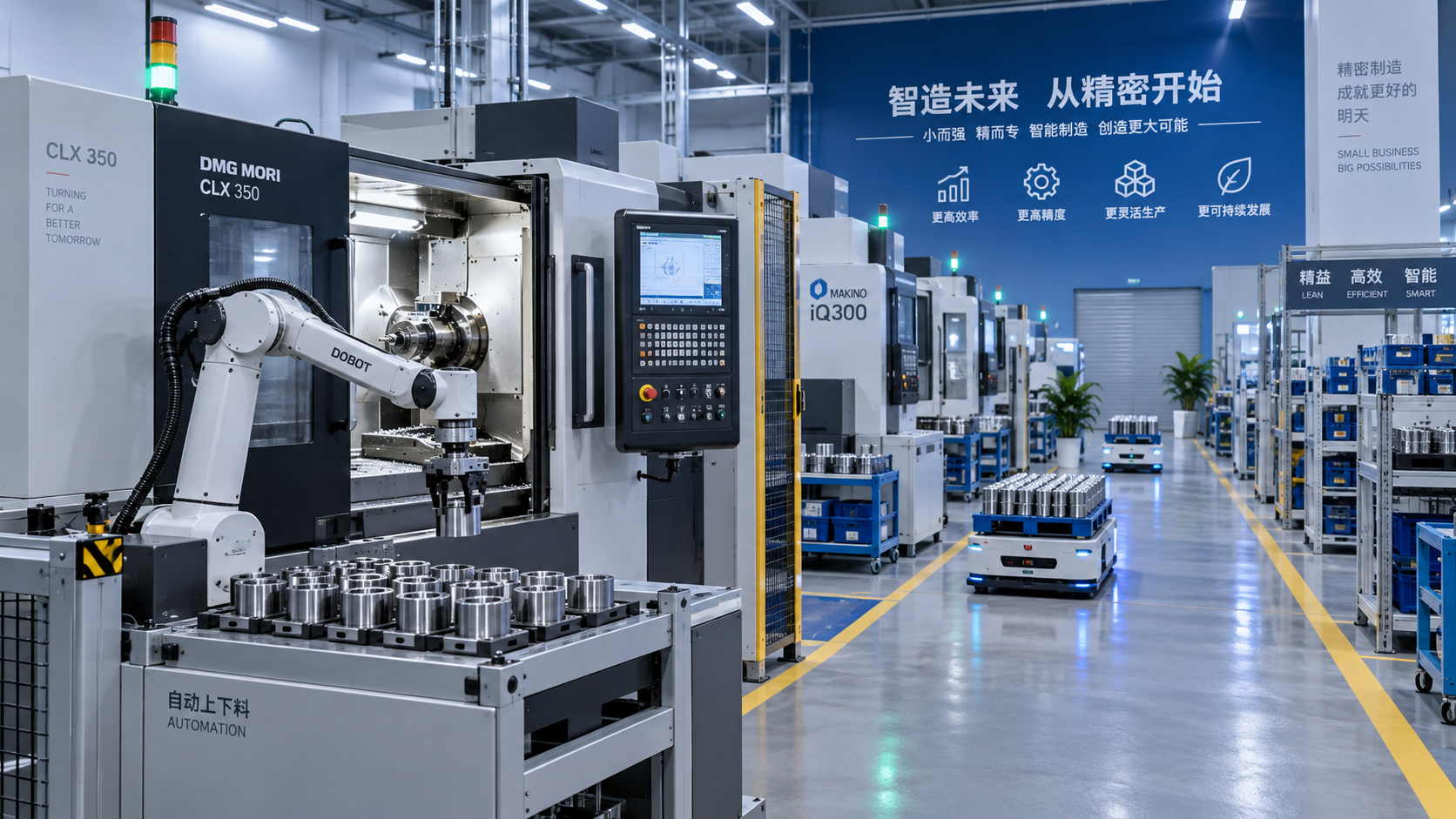
An automated lathe combines turning capability with feeding, loading, unloading, and often in-process monitoring.
In many cases, bar feeders, robotic handling, part catchers, and integrated inspection systems reduce human intervention.
That matters when parts are simple to moderately complex, and order volumes stay consistent for long periods.
The main advantage is not just automation. It is stable cycle repetition over extended production runs.
A well-configured automated lathe can run longer with fewer interruptions, lower handling time, and less operator dependency.
For high-volume shafts, bushings, connectors, sleeves, pins, and similar turned parts, that is a major advantage.
Core strengths of an automated lathe
- Higher unattended runtime during long production cycles.
- More consistent part-to-part quality across large batches.
- Lower labor input per finished component.
- Better support for lights-out or semi-automated shifts.
- Reduced loading variation and handling-related errors.
Where a Manual CNC Setup Still Makes Sense
A manual CNC setup does not mean outdated capability. In many shops, it means greater flexibility and faster adaptation.
Operators can adjust fixtures, offsets, tooling, and handling steps with less automation overhead.
That flexibility is useful when production includes short runs, frequent design changes, or mixed part families.
A manual CNC setup may also require lower upfront investment, which can protect cash flow in uncertain demand conditions.
For some manufacturers, that lower barrier matters more than peak output potential.
The tradeoff is that performance depends more heavily on operator availability, training, and consistency.
Best-fit situations for manual CNC setup
- Low to medium volumes with frequent setup changes.
- Prototype work or parts with unstable design revisions.
- Operations needing flexible intervention during machining.
- Facilities with limited automation budget.
- Production mixes that do not justify dedicated automation.
Automated Lathe vs Manual CNC Setup: Key Decision Factors
The right answer usually appears when decision-makers stop comparing machines in isolation and start comparing production conditions.
In practical terms, five factors shape the result most clearly.
1. Annual volume
If the same part runs continuously in large numbers, an automated lathe usually gains ground fast.
If order patterns fluctuate sharply, manual CNC setup may deliver better utilization.
2. Part complexity
Simple and repeatable turned parts suit an automated lathe very well.
Parts needing frequent intervention, special fixturing, or unstable cutting conditions may favor manual control.
3. Changeover frequency
Frequent setup changes reduce the payoff of automation, especially when each run is short.
Longer, stable runs improve the return on an automated lathe significantly.
4. Labor strategy
If labor shortages, rising wages, or night-shift coverage are pressing issues, automation becomes more attractive.
An automated lathe helps reduce dependence on manual loading and repeated operator tasks.
5. Quality risk
For tight tolerances across tens of thousands of parts, consistency is a profit issue, not only a technical one.
That is where an automated lathe often delivers stronger process control.
Cost Comparison Beyond the Purchase Price
Many buying decisions fail because they focus too much on initial machine price.
The better question is total production cost over the expected life of the program.
From a procurement perspective, the automated lathe often wins when demand is predictable and machine loading stays high.
Manual CNC setup can still be the smarter choice when volume assumptions are uncertain or product mix changes often.
Common Risks Buyers Overlook
The machine itself is only part of the investment decision.
Several risks tend to appear after installation, not before purchase.
- Underestimating programming, tooling, and integration time for an automated lathe.
- Ignoring part family variation that weakens automation efficiency.
- Assuming labor savings without planning training and maintenance support.
- Overlooking downtime costs tied to feeders, robots, or sensors.
- Choosing manual CNC setup without accounting for staffing instability.
In actual operations, the strongest projects align machine capability with workflow discipline, tooling strategy, and production planning.
A Practical Selection Framework
If the goal is a confident buying decision, use a simple evaluation sequence.
- Map the top parts by annual volume, margin, and tolerance sensitivity.
- Separate stable repeat parts from variable or engineering-change parts.
- Estimate labor hours per part under both production models.
- Calculate changeover losses, scrap exposure, and downtime impact.
- Review future automation goals, not only current machine needs.
This approach keeps the automated lathe discussion tied to output, quality, and payback instead of sales claims.
It also helps reveal whether manual CNC setup remains the more resilient near-term choice.
Which Option Fits High-Volume Parts Production Best?
For stable, repeatable, high-volume parts, the automated lathe usually offers the stronger long-term advantage.
It supports lower labor cost, better consistency, and more scalable output under modern manufacturing pressure.
For variable production, mixed part families, or uncertain order flow, manual CNC setup may still be the more rational investment.
The best decision is rarely about choosing the most advanced machine. It is about matching process stability with business goals.
Before moving forward, compare your highest-volume parts against labor exposure, changeover frequency, and tolerance risk.
That final comparison will show whether an automated lathe is the next smart step, or whether manual CNC setup still delivers the better return today.
Recommended for You
 When Does CNC Turning Pay Off? A Break-Even Guide by Annual Part VolumeMachine Tool Industry Editorial Team
 Machine Tool Standards by Country: What Importers Must Verify Before PurchaseManufacturing Policy Research Center
 CNC Lathe Quick Installation Guide: Alignment Checks Before First Production RunCNC Machining Technology Center
 How to Select a CNC Lathe for Small Parts Without Sacrificing Accuracy or Cycle TimeCNC Machining Technology Center
 How to Select a Slant Bed Lathe for High-Precision Shaft and Chuck WorkCNC Machining Technology Center
 Smart Manufacturing for Small Businesses: Where Automation Delivers the Fastest ROIMachine Tool Industry Editorial Team

Aris Katos
Future of Carbide Coatings
15+ years in precision manufacturing systems. Specialized in high-speed milling and aerospace grade alloy processing.
▶
Smart Manufacturing for Small Businesses: Where Automation Delivers the Fastest ROIMachine Tool Industry Editorial Team▶
How Smart Manufacturing Technology Improves OEE Across Industry 4.0 Production LinesMachine Tool Industry Editorial Team▶
How to Evaluate an Automation Line for Electronics Production Before InvestmentMachine Tool Industry Editorial Team▶
How to Evaluate an Automated Production Line for Output, Flexibility, and ROIMachine Tool Industry Editorial Team▶
How Smart Manufacturing Improves Traceability and Quality Control in Aerospace?Machine Tool Industry Editorial Team
Mastering 5-Axis Workholding Strategies
Join our technical panel on Nov 15th to learn about reducing vibrations in thin-wall components.

Providing you with integrated sanding solutions
Before-sales and after-sales services
Comprehensive technical support