• Global CNC market projected to reach $128B by 2028 • New EU trade regulations for precision tooling components • Aerospace deman
NYSE: CNC +1.2%LME: STEEL -0.4%

CNC Automation for High-Mix Production: Where It Improves Throughput and Changeover
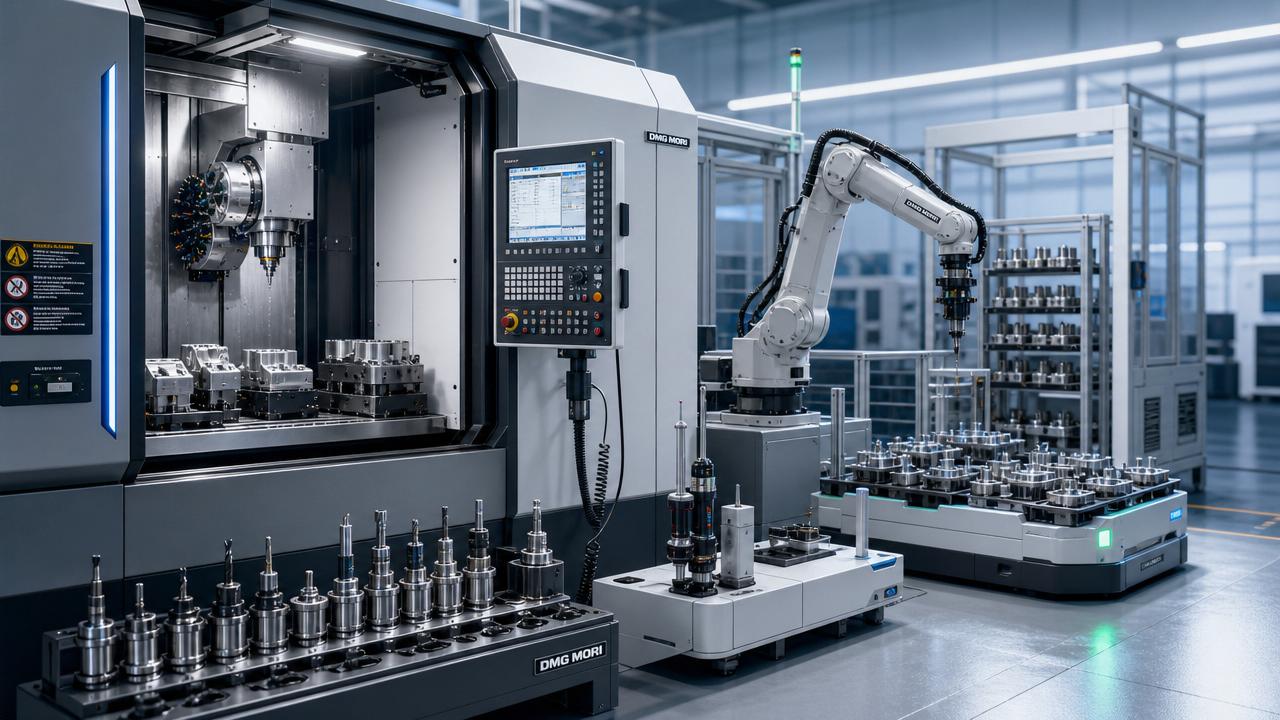
CNC Automation for High-Mix Production: Where It Improves Throughput and Changeover
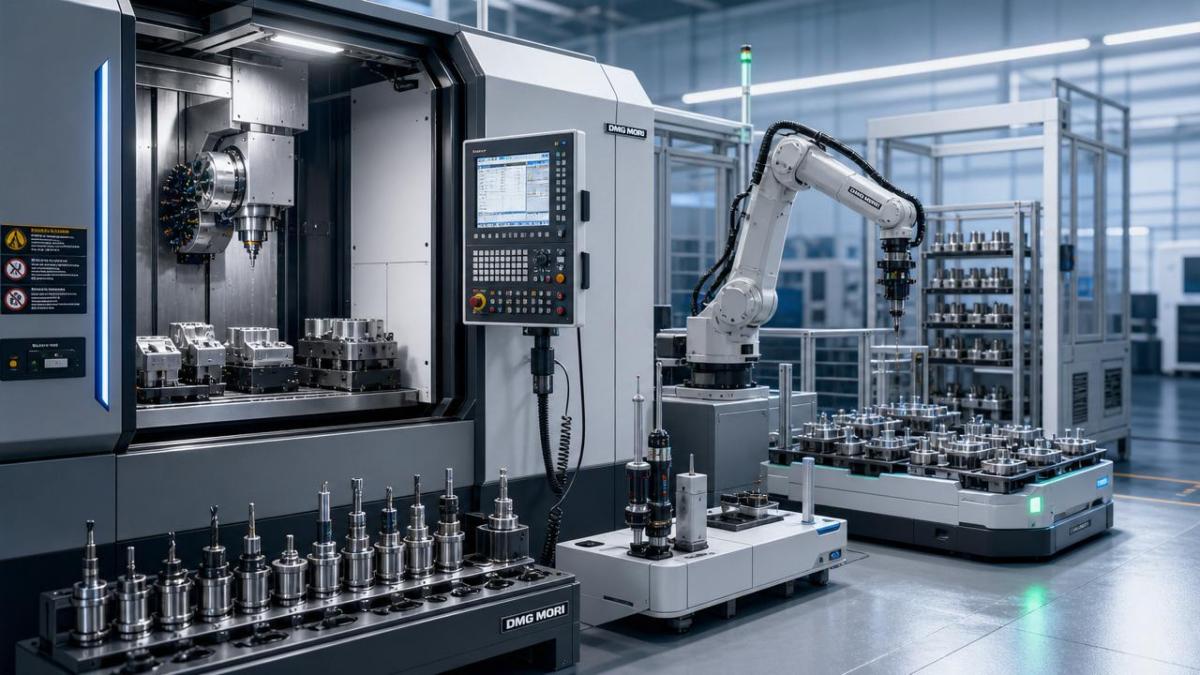
High-mix production puts pressure on every weak point in a shop.
Part numbers change often, setups vary, and delivery windows stay tight.
In that environment, CNC automation is not only about running faster.
Its real value appears when frequent changeovers stop hurting output.
It also matters when quality stays stable across short and varied runs.
That is why more manufacturers now evaluate CNC automation at the line level.
They want to know where it improves throughput without sacrificing flexibility.
The answer depends less on machine speed alone and more on workflow design.
In practical terms, CNC automation works best where repeatable decisions replace manual coordination.
That includes loading, tool preparation, fixture management, in-process checks, and program control.
From recent market shifts, the clearer signal is this.
Shops are no longer asking whether to automate at all.
They are asking which automation layer removes the most delay in mixed production.
Why High-Mix Production Challenges Traditional CNC Workflows
High-mix operations rarely fail because cutting capacity is too low.
They fail because support activities consume more time than expected.
A machine may finish one batch quickly, then wait for the next setup.
Operators search for tools, confirm offsets, reload fixtures, and check revision status.
Each task seems small, but together they reduce daily throughput.
This is where CNC automation creates measurable advantage.
Instead of treating every job as a fresh manual event, automation standardizes transitions.
That standardization reduces variation between shifts, machines, and product families.
It also gives managers a clearer view of where lost time really sits.
Typical bottlenecks in mixed production include:
- Unplanned setup variation between similar parts.
- Manual loading that creates idle spindle time.
- Frequent tool changes without preset control.
- Quality checks that happen too late in the process.
- Program version confusion across multiple machines.
- Fixture changes that depend on individual operator experience.
When these issues are visible, CNC automation becomes a throughput tool, not just an equipment upgrade.
Where CNC Automation Improves Throughput Most
Throughput gains in high-mix production usually come from time recovery.
That means less waiting, less checking, and fewer small interruptions.
The strongest CNC automation results often appear in five areas.
1. Automated Loading and Unattended Run Time
Robotic loading, pallet handling, and bar feeding reduce non-cutting time.
For short batches, even small loading delays add up fast.
CNC automation keeps machines productive during breaks, shift changes, and low-attention hours.
2. Tool Management and Presetting
Preset tooling shortens setup and lowers first-piece risk.
When tool data flows directly into the CNC environment, manual entry drops.
That prevents avoidable errors and speeds job release.
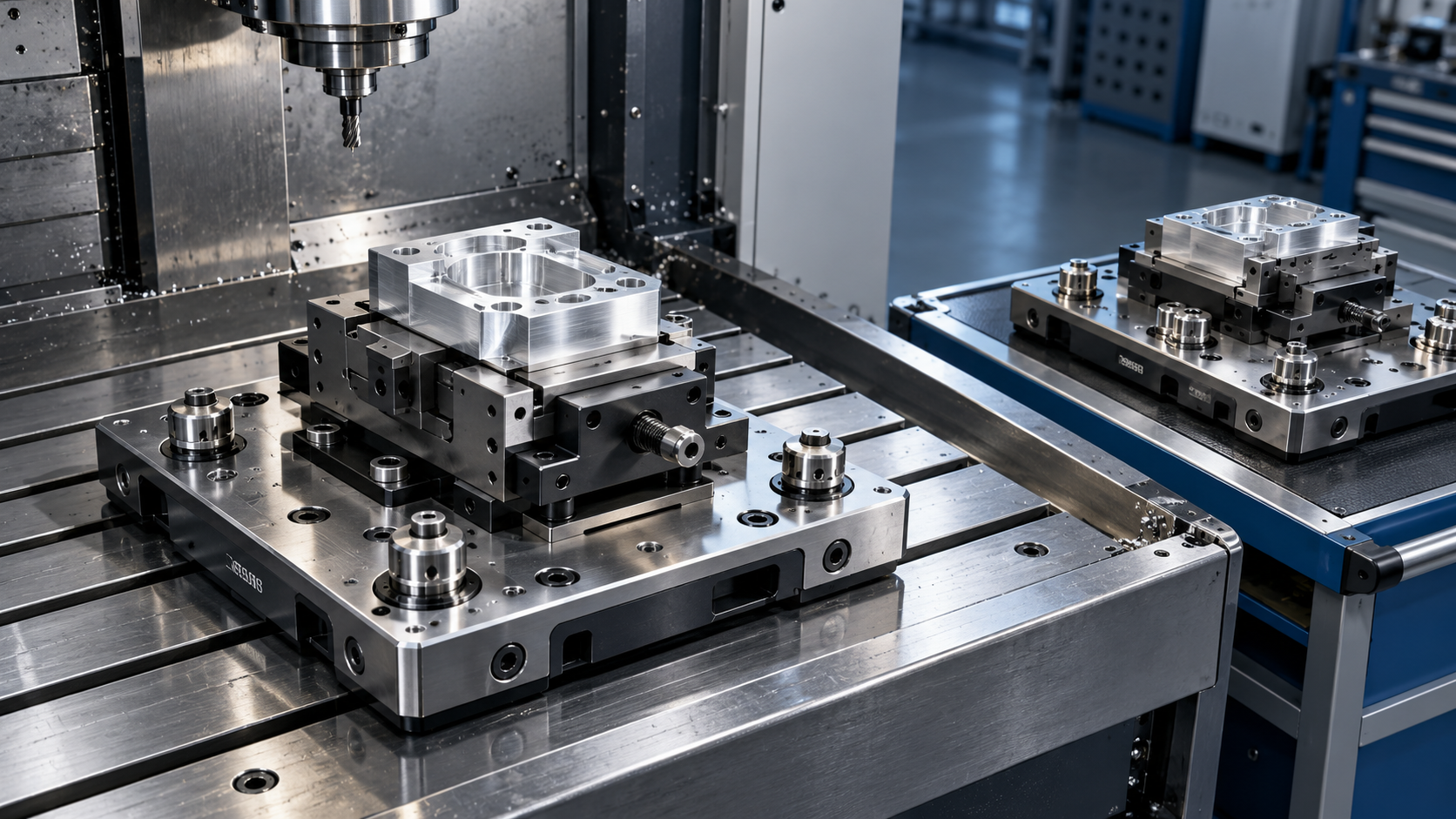
3. Standardized Fixtures and Quick-Change Systems
A fast spindle means little if fixturing still takes too long.
Quick-change clamping, modular bases, and zero-point systems reduce setup dependency.
This is one of the most practical CNC automation steps for varied part families.
4. In-Process Probing and Quality Control
In-process measurement reduces scrap and shortens inspection loops.
That matters even more when part geometry changes often.
CNC automation helps detect drift early, before a short run turns into a full rework event.
5. Program and Data Control
Digital program control matters more than many teams expect.
If the wrong revision reaches the machine, setup savings disappear immediately.
CNC automation supports controlled workflows from CAM release to machine execution.
How CNC Automation Reduces Changeover Time
Changeover time is often the hidden cost in mixed manufacturing.
A shop may quote based on cycle time, then lose margin during setup.
This also affects delivery reliability, especially when schedules change daily.
Effective CNC automation reduces changeover by moving work outside spindle time.
The most useful methods include:
- Prepare tools offline with verified offsets.
- Use modular fixtures built around repeatable interfaces.
- Store proven setup data by part family.
- Automate workholding checks and probing routines.
- Link scheduling, programs, and setup instructions digitally.
This approach changes the role of the operator as well.
Instead of rebuilding a process every time, the operator executes a controlled sequence.
That consistency is especially valuable across multiple shifts or newer teams.
In real operations, this is often where CNC automation pays back faster than expected.
Choosing the Right CNC Automation Scope
Not every high-mix factory needs a fully automated line.
In many cases, selective CNC automation delivers a better return.
The best investment point depends on part variety, batch size, labor availability, and scheduling volatility.
A useful way to evaluate scope is to rank delays by business impact.
Start with these questions:
- Which machines lose the most time between jobs?
- Which product families repeat often enough to standardize?
- Where does quality instability trigger rework or extra inspection?
- Which tasks rely too heavily on one experienced operator?
- Where do delivery misses begin in the current workflow?
This makes the CNC automation decision more operational and less theoretical.
It also helps avoid over-automation in low-value areas.
A phased roadmap often works best.
For example, many teams begin with fixturing, probing, and tool presetting before adding robotic handling.
Common Risks and How to Avoid Them
CNC automation can disappoint when it is treated like a standalone hardware purchase.
In high-mix production, the process model matters as much as the equipment.
Common risks include:
- Automating unstable processes before standard work exists.
- Ignoring tooling and fixture readiness.
- Assuming all part families fit one automation model.
- Underestimating program governance and data accuracy.
- Tracking utilization but not real throughput improvement.
The better approach is to define success in business terms first.
That may be shorter setup time, more completed orders per shift, lower scrap, or stronger schedule adherence.
Once those targets are clear, CNC automation can be matched to the actual constraint.
This also makes supplier evaluation much easier and far more objective.
A Practical Evaluation Framework
Before approving any CNC automation plan, compare current losses with the expected gains.
A simple evaluation table helps keep decisions grounded.
This kind of review brings clarity to budget discussions.
It also connects CNC automation directly to throughput, lead time, and delivery performance.
That connection is important in cross-functional decision making.
Operations, engineering, quality, and procurement need the same improvement logic.
Final Takeaway
In high-mix environments, CNC automation creates the most value where variation slows flow.
The biggest wins usually come from better changeovers, steadier quality, and fewer interruptions between jobs.
That means the right strategy is rarely just buying a faster machine.
It is designing a more repeatable production system around CNC automation.
A practical next step is to map one representative product family end to end.
Measure waiting time, setup loss, inspection delay, and data handoff risk.
Then apply CNC automation where those losses repeat most often.
That is usually the fastest route to higher throughput with less changeover friction.
Recommended for You
![]() AI Investment Lifts US September Equipment Demand; Core Capital Goods Orders Rise 0.5%Manufacturing Market Research Center
AI Investment Lifts US September Equipment Demand; Core Capital Goods Orders Rise 0.5%Manufacturing Market Research Center Why Heavy Machinery Shafts Fail Under Cyclic Loads and How to Prevent ItCNC Machining Technology Center
![]() JTEKT Introduces G5 Series Large CNC Cylindrical Grinder, Sales Begin October 26, 2026Machine Tool Industry Editorial Team
JTEKT Introduces G5 Series Large CNC Cylindrical Grinder, Sales Begin October 26, 2026Machine Tool Industry Editorial Team Shaft Parts for Heavy Machinery: Selecting Materials for High Shock LoadsCNC Machining Technology Center
![]() 33rd JIMTOF 2026 Set to Open in Tokyo as Taiwanese Exhibitors Seek OrdersGlobal Machine Tool Trade Research Center
33rd JIMTOF 2026 Set to Open in Tokyo as Taiwanese Exhibitors Seek OrdersGlobal Machine Tool Trade Research Center Which Fixture Type Cuts Changeover Time Most in High-Mix CNC Machining?CNC Machining Technology Center


Aris Katos
Future of Carbide Coatings
15+ years in precision manufacturing systems. Specialized in high-speed milling and aerospace grade alloy processing.
▶
FANUC Invests $18 Million in Largest U.S. Corporate Automation Training CenterMachine Tool Industry Editorial Team▶
Automated Production Machining: Which Parts and Batch Sizes Are a Good Fit?Machine Tool Industry Editorial Team▶
Choosing Automated Machine Tools for High-Mix, Low-Volume ProductionMachine Tool Industry Editorial Team▶
Choosing Industrial Robots for Warehouse Picking and PalletizingMachine Tool Industry Editorial Team▶
Digital Manufacturing for Smart Factories: Connecting Legacy Machines to MESMachine Tool Industry Editorial Team
▶
Mastering 5-Axis Workholding Strategies
Join our technical panel on Nov 15th to learn about reducing vibrations in thin-wall components.

Providing you with integrated sanding solutions
Before-sales and after-sales services
Comprehensive technical support