• Global CNC market projected to reach $128B by 2028 • New EU trade regulations for precision tooling components • Aerospace deman
NYSE: CNC +1.2%LME: STEEL -0.4%

How to Choose an Automation Line for the Pharmaceutical Industry by Process and Compliance Needs

How to Choose an Automation Line for the Pharmaceutical Industry by Process and Compliance Needs
Choosing the right Automation Line for Pharmaceutical Industry applications requires more than matching equipment to output targets.
The real challenge is balancing process fit, validation demands, cleanroom limits, traceability, and regulatory expectations.
A good line supports stable production today and still adapts to future products, audits, and expansion plans.
That is why selection should begin with process and compliance needs, not only with speed, layout, or purchase price.
Start with the Actual Manufacturing Process
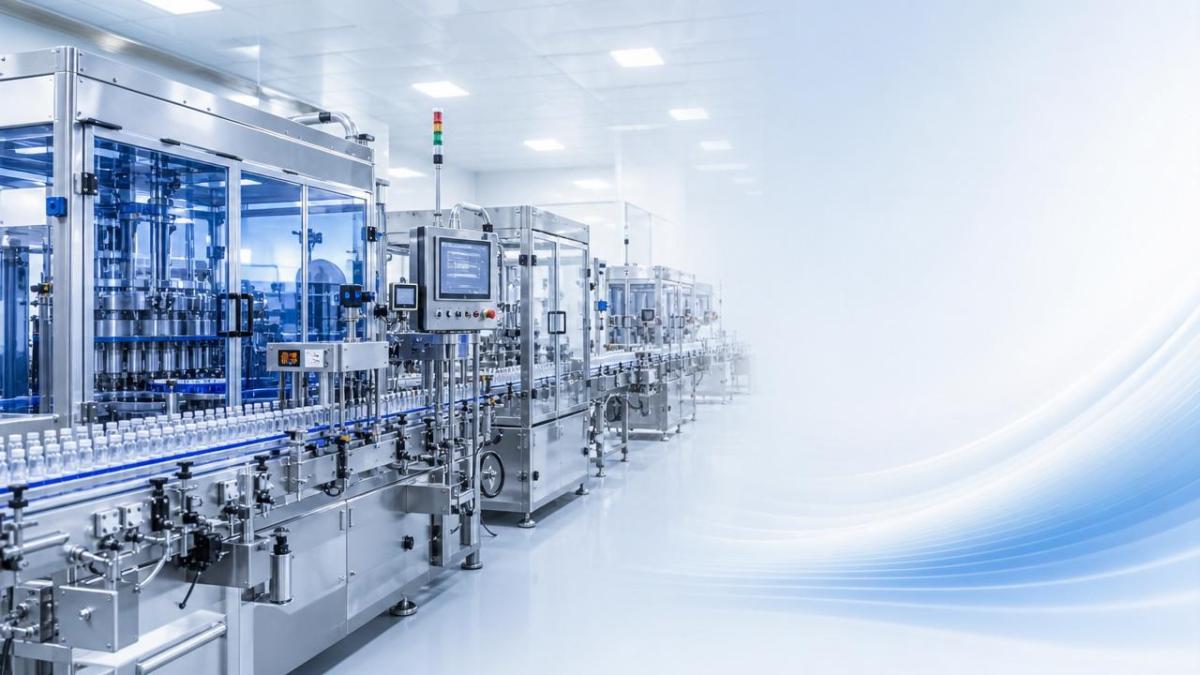
Every Automation Line for Pharmaceutical Industry projects should be mapped against the real production flow.
This seems obvious, yet many evaluation teams still start with vendor catalogs instead of process breakdowns.
Begin by defining each step clearly.
- Material feeding and identification
- Washing, depyrogenation, or sterilization interface
- Filling, dosing, or dispensing
- Stoppering, capping, sealing, or blistering
- Vision inspection and rejection
- Labeling, aggregation, and final packaging
Each process step has different risk points.
For sterile products, contamination control dominates the decision.
For oral solid dose lines, accuracy, dust control, and packaging integrity may carry more weight.
In practical terms, the best Automation Line for Pharmaceutical Industry use is the one that matches the process physics.
That includes product sensitivity, batch size, format change frequency, and material behavior during transport.
Define Product and Throughput Requirements Early
A line that looks flexible on paper may still fail under real production conditions.
That is why product and throughput definitions should come before technical comparison.
Key questions usually include the following:
- What dosage forms will run on the line?
- How many SKUs are expected within three to five years?
- What is the target OEE under validated conditions?
- How often will changeovers happen?
- Which container sizes and closure formats must be supported?
These inputs influence core choices such as line architecture, buffer design, robotics integration, and control software complexity.
For example, high-mix production often needs modular handling and faster recipe management.
High-volume production may favor dedicated stations with fewer moving variables.
This is where many teams make expensive mistakes.
They buy for maximum speed, then discover that cleaning, setup, and validation time reduce real output.
Match the Automation Line to Compliance Risk
Compliance is not an add-on for an Automation Line for Pharmaceutical Industry selection.
It is part of the design basis.
The required controls depend on product category, market destination, and inspection exposure.
At minimum, assess alignment with GMP, GAMP 5, 21 CFR Part 11 where applicable, and data integrity expectations.
Then go deeper into line-level compliance points.
- Electronic batch data capture
- Audit trail support
- User access control
- Recipe version management
- Alarm history and event logging
- Rejection confirmation and traceability
A strong vendor should explain how these functions work during normal operation, deviation handling, and validation activities.
If answers remain vague, the risk is already visible.
More importantly, compliance needs should shape the whole Automation Line for Pharmaceutical Industry strategy from URS to FAT.
Evaluate Cleanroom and Hygienic Design Details
From recent market changes, cleaner and simpler machine design has become a stronger buying factor.
This is especially true for aseptic, sterile, and high-care operations.
A suitable Automation Line for Pharmaceutical Industry setup should support the cleanroom, not fight it.
Look closely at surfaces, access points, cable routing, particle generation, and maintenance zones.
Useful review points include:
- Smooth surfaces and minimal dead corners
- Materials compatible with cleaning agents
- Separation between technical and product zones
- Tool-free access where possible
- Controlled lubrication and reduced particulate release
- Good integration with RABS or isolator systems
These details affect cleaning time, contamination risk, and intervention frequency.
In other words, hygienic design is not cosmetic engineering.
It directly influences validation effort and line uptime.
Check Integration, Data Flow, and Digital Readiness
An Automation Line for Pharmaceutical Industry projects now sits inside a wider digital manufacturing environment.
That means standalone machine performance is no longer enough.
The line should connect reliably with MES, ERP, serialization platforms, SCADA, and quality systems when required.
More noticeable now is the shift toward digital visibility.
Teams want live dashboards, downtime reasons, parameter history, and batch-level performance analytics.
When reviewing suppliers, ask for clarity on these points:
This matters because future compliance and productivity both depend on trusted data.
A line that cannot share clean data often becomes a bottleneck later.
Assess Validation Support and Supplier Capability
Even a technically strong Automation Line for Pharmaceutical Industry solution can underperform if supplier execution is weak.
Validation support is one of the clearest indicators of execution quality.
Review what the supplier provides across DQ, FAT, SAT, IQ, OQ, and documentation handover.
The stronger signal is not only document volume.
It is document clarity, revision control, and how well tests reflect real process risk.
A practical supplier review should cover:
- URS interpretation ability
- Risk assessment method
- Software validation documentation
- Spare parts and lifecycle support
- Training for operators, maintenance, and QA
- Response time for deviations and change requests
In many cases, line selection is really supplier selection.
This is especially true when production continuity depends on remote diagnostics, spare availability, and engineering support.
Use a Practical Decision Framework
To compare options fairly, build a weighted evaluation model.
This keeps the Automation Line for Pharmaceutical Industry decision tied to business reality.
A simple framework often works better than a very complex one.
- Define must-have compliance requirements first.
- Score process fit for current and future products.
- Review changeover time and operator burden.
- Evaluate validation readiness and document quality.
- Measure integration capability and data visibility.
- Compare total lifecycle cost, not just CAPEX.
This also means checking hidden cost drivers.
Examples include format parts, preventive maintenance, calibration effort, software licensing, and cleanroom intervention time.
A lower-priced line may become more expensive over its usable life.
Final Selection Should Reduce Risk, Not Add It
The best Automation Line for Pharmaceutical Industry choice is rarely the fastest or the most feature-heavy option.
It is the line that fits the process, supports compliance, and stays manageable in daily operation.
When process mapping, hygienic design, data integrity, and validation support align, long-term performance becomes much more predictable.
For that reason, selection should move step by step.
Start with the product, define the compliance boundaries, test supplier capability, and verify total operating impact.
That approach helps turn an Automation Line for Pharmaceutical Industry investment into a stable, scalable production asset.
If needed, the next practical step is building a URS-based scorecard before vendor comparison begins.
Recommended for You
 How Automated Precision Machining Maintains Tolerance in High-Mix ProductionCNC Machining Technology Center
 How to Evaluate a Machine Tool Factory Before Sourcing CNC EquipmentGlobal Machine Tool Trade Research Center
 CNC Programming Explained: From CAD Models to Reliable Shop-Floor ToolpathsCNC Machining Technology Center
 How Multi-Axis Machining Produces Complex Components With Fewer SetupsCNC Machining Technology Center
 What Production Volume Justifies a CNC Turning Investment?Manufacturing Market Research Center
 How Much Does CNC Programming Software Cost in 2026?CNC Machining Technology Center




Aris Katos
Future of Carbide Coatings
15+ years in precision manufacturing systems. Specialized in high-speed milling and aerospace grade alloy processing.
▶
How Smart Manufacturing Technology Improves OEE Across Industry 4.0 Production LinesMachine Tool Industry Editorial Team▶
How to Evaluate an Automation Line for Electronics Production Before InvestmentMachine Tool Industry Editorial Team▶
How to Evaluate an Automated Production Line for Output, Flexibility, and ROIMachine Tool Industry Editorial Team▶
How Smart Manufacturing Improves Traceability and Quality Control in Aerospace?Machine Tool Industry Editorial Team▶
Lean Production Process Implementation: Key Steps to Reduce Waste and Improve FlowMachine Tool Industry Editorial Team
Mastering 5-Axis Workholding Strategies
Join our technical panel on Nov 15th to learn about reducing vibrations in thin-wall components.

Providing you with integrated sanding solutions
Before-sales and after-sales services
Comprehensive technical support