• Global CNC market projected to reach $128B by 2028 • New EU trade regulations for precision tooling components • Aerospace deman
NYSE: CNC +1.2%LME: STEEL -0.4%

Yiheda Cuts Custom CNC Lead Times to 9 Days

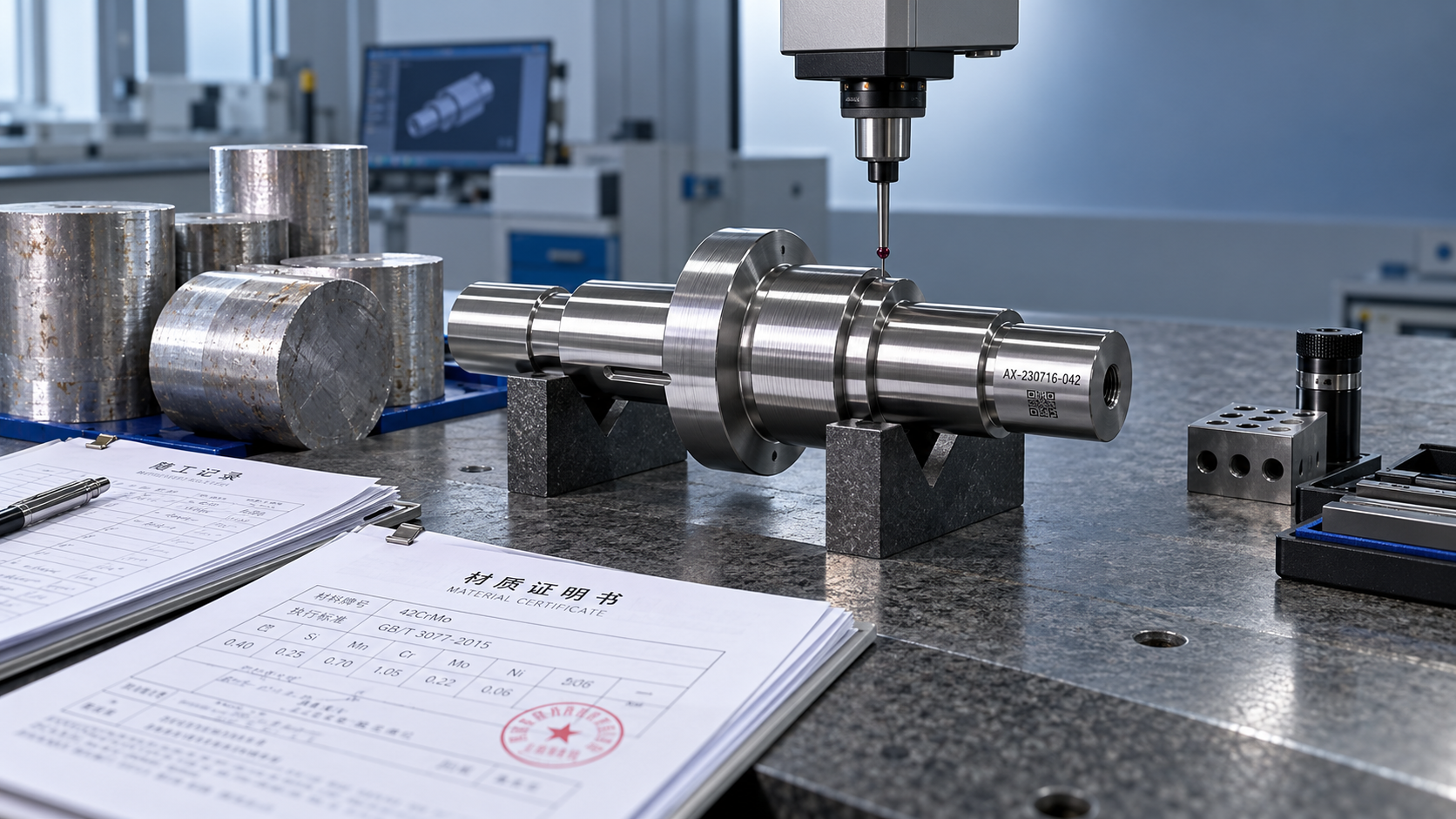
On June 10, 2026, Yiheda announced at the South China Industrial Expo that it has shortened delivery for custom CNC machining orders to 9–12 days and expanded AI-based quoting for overseas buyers. From an industry perspective, this is worth watching not as a standalone production update, but as an execution signal that procurement, quotation transparency, document readiness, and delivery commitments are becoming more tightly linked in cross-border small-batch manufacturing. The development is especially relevant to export-oriented CNC suppliers, overseas buyers managing pilot and low-volume orders, and supply-chain teams that must align technical files, surface treatment requirements, and production visibility with tighter response windows.
A shorter response cycle is now part of the commercial offer
According to the announced information, Yiheda stated on June 10, 2026 that its combined East China and South China flexible production network of more than 500 CNC machines can deliver custom machining orders in 9–12 days.
The company also stated that its AI quotation capability now covers more than 150 material types and over 50 surface treatment processes.
For overseas customers in Europe and the United States, the announced process allows uploads of 3D and 2D drawings, provides a quote within one minute, includes manual review within two hours, and offers online production scheduling visibility through the full process.
The announcement further stated that this capability improves the response flexibility of Chinese CNC suppliers serving overseas small and medium-sized manufacturers moving from trial production to small-batch orders and then to larger-volume demand.
Why this matters for procurement and cross-border execution
For overseas buyers, quoting speed begins to affect sourcing discipline
Analysis shows that when quoting can be generated quickly from uploaded 3D and 2D drawings, buyers may place greater weight on whether technical files are complete, version-controlled, and ready for immediate review. The practical impact is likely to fall on RFQ preparation, drawing consistency, surface treatment selection, and communication records tied to order confirmation. What deserves closer attention is whether faster quotation cycles also lead buyers to tighten expectations around traceability of revisions, final specifications, and delivery commitments.
For export-oriented CNC suppliers, delivery promises become a compliance-facing issue
Observably, a shorter lead-time offer is not only a manufacturing claim; it also affects how suppliers manage order acceptance, process review, and customer-facing commitments. The main pressure points are likely to appear in quotation accuracy, manual review controls, production scheduling visibility, and handoff between engineering and manufacturing. Suppliers operating in similar segments should pay attention to how technical documentation, process confirmation, and order records support any promised turnaround in case of quality, acceptance, or after-sales questions.
For supply-chain service teams, visibility requirements may rise with speed
From an industry perspective, online scheduling visibility can change expectations for coordination across procurement, production follow-up, and delivery communication. This may affect how service providers and sourcing intermediaries manage progress updates, document flow, and exception handling for small-batch urgent orders. The rule change reflected here is less about a published regulation and more about a market rule of execution: faster response is increasingly tied to demonstrable process visibility.
What companies should watch as this model gains attention
Check whether technical files are submission-ready
Analysis shows that fast quoting depends heavily on the quality of submitted 3D and 2D drawings. Companies handling custom parts should pay close attention to whether drawings, material selections, and surface treatment requirements are clearly aligned before RFQ submission, because any inconsistency can undermine both quoting speed and delivery certainty.
Review how delivery commitments are documented
What deserves closer attention is how lead-time promises are reflected in commercial documents, order confirmations, and internal approval steps. The announced capability may lead buyers to expect shorter and more transparent execution windows, so companies should monitor whether procurement terms, specification sign-off, and change-control records are robust enough to support such commitments.
Watch the linkage between visibility and accountability
Observably, full-process online scheduling visibility can raise expectations around status accuracy and milestone communication. Businesses involved in export machining should therefore focus on how production updates, exceptions, and customer notifications are recorded, especially where urgent low-volume orders may move quickly from sample stage to repeat orders.
Continue to verify compliance and downstream requirements
The announcement describes speed, coverage, and process visibility, but it does not provide detailed downstream execution standards for every order type. For that reason, companies should continue to watch customer-specific documentation requirements, qualification checks, product acceptance conditions, and any later clarification that may affect how fast-response machining services are evaluated in practice.
This looks more like an execution signal than a formal rule change
From an industry perspective, the most important meaning of this announcement is not that a new regulation has been issued, but that market expectations may be shifting toward faster quoting, shorter pilot-order delivery, and more visible scheduling in export CNC work. It is more appropriate to understand this as an execution signal within industry rules of trade and procurement rather than a completed change in formal policy.
Analysis shows that if overseas buyers increasingly treat rapid quotation and transparent scheduling as baseline requirements, then suppliers may need to adjust internal review, file management, and order-control practices accordingly. At the same time, the actual degree of market adoption still requires observation through customer behavior, procurement documents, and supplier execution performance.
A practical signal for small-batch export manufacturing
In summary, Yiheda's June 10, 2026 announcement points to a more compressed and digitally managed response model for custom CNC orders serving overseas small-batch demand. The industry significance lies in how this may reshape expectations around quoting speed, technical file readiness, scheduling transparency, and delivery accountability.
At this stage, it is more appropriate to read the development as a practical market signal with implications for procurement and execution, rather than as a fully settled industry rule. Continued attention should be given to how buyers, suppliers, and service partners translate these faster cycles into workable documentation, compliance alignment, and order-delivery discipline.
Basis of this article and points for further verification
This article is generated from the user-provided news title, event date, and event summary. The specific official source link was not provided in the input, so further verification is still needed.
For this type of development, commonly relevant source categories may include company announcements, regulatory releases, trade or customs authority information, industry association updates, standard-setting documents, and reporting by established industry media. Observably, the points that still require follow-up include later clarifications in official wording, customer-side execution standards, procurement document changes, market feedback, and how enterprises implement faster quotation and delivery commitments in practice.
Recommended for You
![]() Zhongshan Xiaolan Machinery Exhibition Opens With Global Product DebutsMachine Tool Industry Editorial Team
Zhongshan Xiaolan Machinery Exhibition Opens With Global Product DebutsMachine Tool Industry Editorial Team Automated Production Machining: Which Parts and Batch Sizes Are a Good Fit?Machine Tool Industry Editorial Team
![]() FANUC Links FIELD System Data with Copilot to Advance Shop-Floor Data UseCNC Machining Technology Center
FANUC Links FIELD System Data with Copilot to Advance Shop-Floor Data UseCNC Machining Technology Center Smart Manufacturing for Aerospace: Building Traceability Across CNC OperationsCNC Machining Technology Center
![]() Mitsubishi Electric Announces Physical AI System Linking Humanoid Robots and CNC MachinesMachine Tool Industry Editorial Team
Mitsubishi Electric Announces Physical AI System Linking Humanoid Robots and CNC MachinesMachine Tool Industry Editorial Team Precision Machining for Defense: Supplier Quality and Traceability ChecksManufacturing Market Research Center



Aris Katos
Future of Carbide Coatings
15+ years in precision manufacturing systems. Specialized in high-speed milling and aerospace grade alloy processing.
▶
Automated Production Machining: Which Parts and Batch Sizes Are a Good Fit?Machine Tool Industry Editorial Team▶
Choosing Automated Machine Tools for High-Mix, Low-Volume ProductionMachine Tool Industry Editorial Team▶
Choosing Industrial Robots for Warehouse Picking and PalletizingMachine Tool Industry Editorial Team▶
Digital Manufacturing for Smart Factories: Connecting Legacy Machines to MESMachine Tool Industry Editorial Team▶
Selecting Machine Tools for Automotive Parts: Accuracy, Throughput, and AutomationMachine Tool Industry Editorial Team
▶
Mastering 5-Axis Workholding Strategies
Join our technical panel on Nov 15th to learn about reducing vibrations in thin-wall components.

Providing you with integrated sanding solutions
Before-sales and after-sales services
Comprehensive technical support