• Global CNC market projected to reach $128B by 2028 • New EU trade regulations for precision tooling components • Aerospace deman
NYSE: CNC +1.2%LME: STEEL -0.4%

How CNC Control Systems Improve Automation Stability
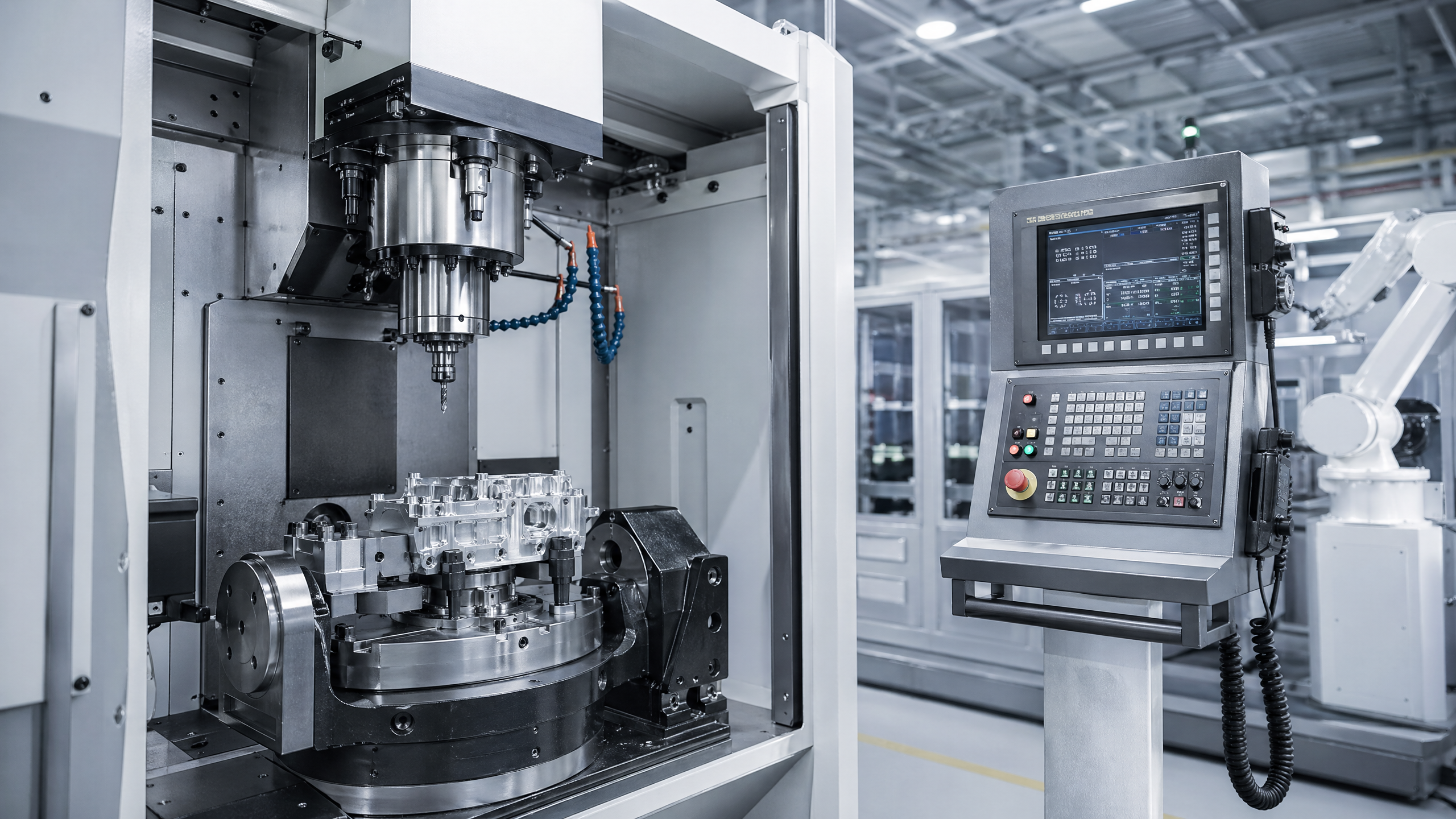
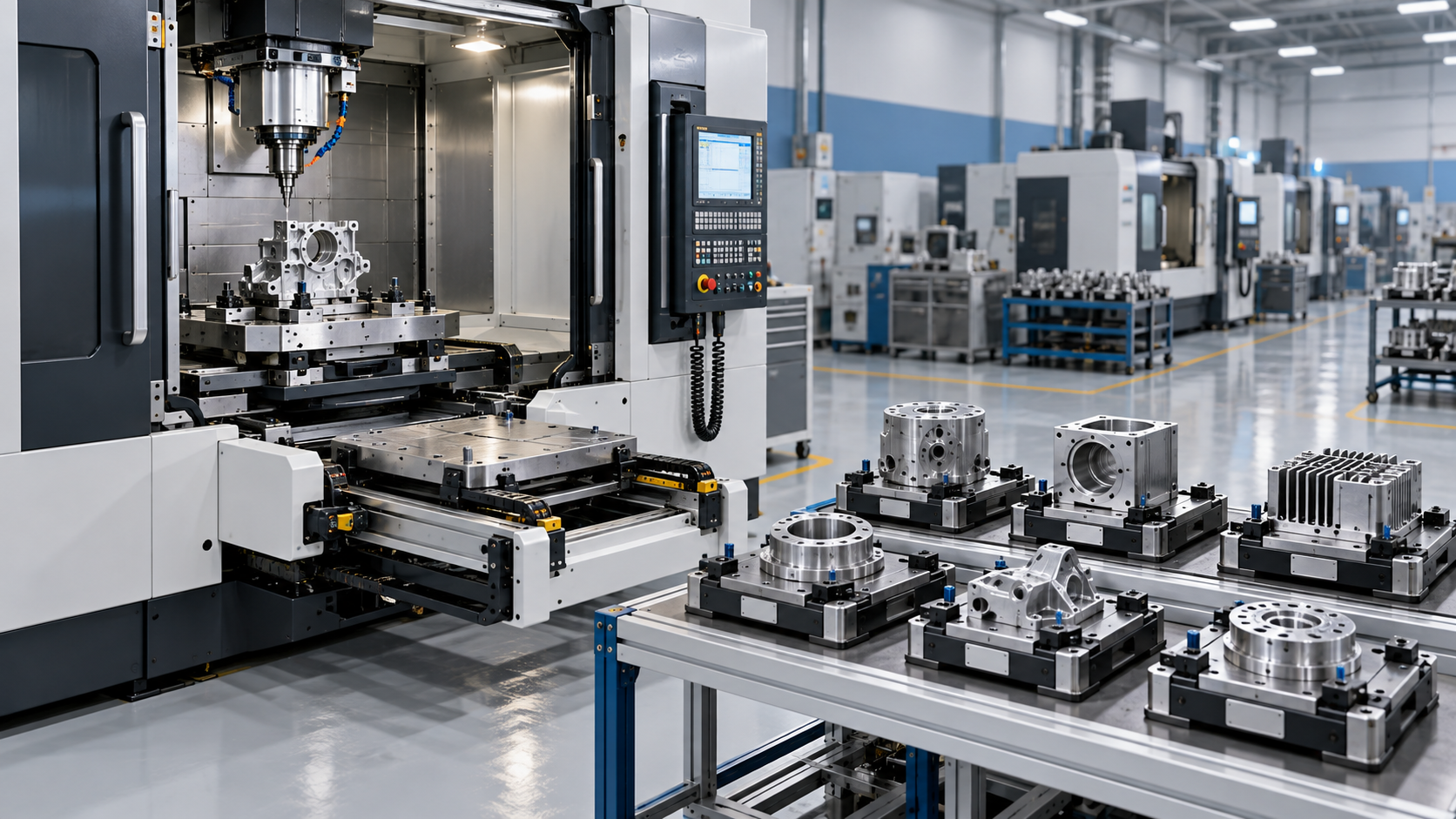
In modern manufacturing, CNC control systems are the backbone of automated CNC manufacturing, helping every CNC manufacturing factory achieve higher precision, faster response, and more stable output. From multi-axis CNC manufacturing for aerospace to cost-effective CNC manufacturing for automotive industry and electronics, smarter Industrial Automation control system for CNC machines can reduce downtime, improve consistency, and support reliable Digital Manufacturing Technology for smart factory growth.
Why does the CNC control system determine automation stability?
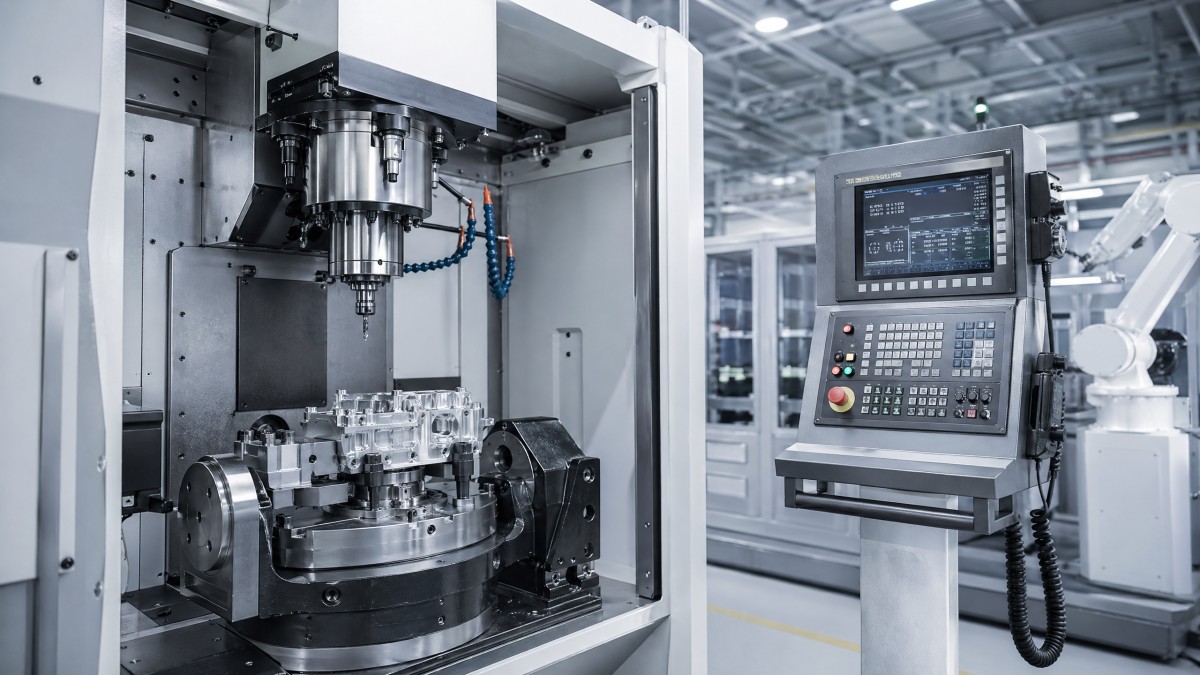
A CNC control system is not just an interface for programming tool paths. It is the coordination center that connects servo drives, spindles, feedback devices, safety logic, PLC functions, and shop-floor communication. When the control layer is stable, the machine reacts consistently across long production cycles, repeated shifts, and varying batch sizes. In automated CNC manufacturing, that stability directly affects dimensional repeatability, cycle continuity, and the ability to scale production without frequent manual intervention.
For operators, stable control means fewer sudden alarms, smoother acceleration, and more predictable machine behavior during 8-hour, 16-hour, or even 24/7 production schedules. For procurement teams, it means lower risk when comparing machine platforms from different suppliers. For business evaluators, it supports a clearer forecast of utilization, maintenance planning, and return on automation investment over a 3–5 year equipment lifecycle.
In sectors such as aerospace, automotive, energy equipment, and electronics, a machine may need to handle 3-axis, 4-axis, or 5-axis motion while maintaining feed stability and positional accuracy under changing loads. If the control system lacks processing speed, interpolation quality, or communication reliability, small disturbances can become visible quality issues. In large-volume production, even minor instability repeated over 500, 1,000, or 10,000 parts becomes a costly operational problem.
This is why many buyers no longer assess CNC machines only by spindle power or travel range. They also review controller architecture, drive compatibility, software expandability, and diagnostic functions. A modern Industrial Automation control system for CNC machines should support stable data exchange, practical alarm management, and traceable process control, especially in factories moving from stand-alone equipment to connected production cells.
Core stability functions that matter in real production
When users ask why one line runs more smoothly than another, the answer is often hidden inside control logic rather than mechanical structure alone. The most reliable CNC control systems usually combine high-speed processing, robust motion coordination, and practical fault recovery. These functions are critical when production includes short setup windows, mixed part families, and frequent shift changes.
- Fast block processing and interpolation support stable motion on complex contours, especially in mold work, aerospace parts, and precision structural components.
- Closed-loop or semi-closed-loop feedback helps reduce drift and improves repeat positioning during long runs and frequent tool changes.
- Built-in diagnostics, alarm history, and remote service capability shorten troubleshooting time from several hours to a more manageable maintenance window.
- Communication protocols for robots, loaders, probes, MES, or quality systems improve automation continuity across 4-step or 6-step production processes.
The practical value of these functions is simple: better machine response, fewer interruptions, and improved consistency between the first part and the last part in a shift. For factories managing multiple machine tools across different product lines, this consistency is often more valuable than peak speed alone.
Which technical indicators most affect CNC automation reliability?
Not every specification on a machine brochure has the same operational impact. If the goal is automation stability, users should focus on indicators that directly influence motion quality, error control, recovery speed, and system integration. In many procurement reviews, 5 core dimensions are more meaningful than a long list of generic performance claims: processing speed, axis coordination, feedback accuracy, interface compatibility, and diagnostic depth.
For example, machining centers used for high-mix production often require reliable program switching, fast homing, and stable communication with tool setters or robotic loaders. Multi-axis CNC manufacturing adds another layer of complexity because the controller must coordinate rotary and linear motion without introducing visible marks, overshoot, or unstable feed transitions. In such cases, control tuning and interpolation smoothness are not optional features; they are production-critical capabilities.
Environmental tolerance also matters. Typical workshops may operate around 10℃–35℃, with fluctuations in humidity, dust, vibration, and power quality. A control system designed for industrial use should manage these conditions through proper shielding, stable communication, and reliable cabinet integration. Stability in a clean demonstration room does not automatically translate to stability in a busy factory with loaders, coolant, chip accumulation, and around-the-clock operation.
The table below summarizes practical technical indicators that buyers and operators can use when evaluating a CNC control system for automated production. These are not absolute brand-specific values, but common review points used in precision manufacturing and machine tool integration projects.
A useful procurement approach is to ask suppliers for evidence tied to your process type: continuous contour machining, shaft turning, frequent tool changes, or linked robotic loading. Stability claims are only meaningful when linked to a real application scenario, operating cycle, and acceptable tolerance range.
How operators and maintenance teams can verify real-world stability
Before approving a machine, practical teams usually move beyond showroom demonstrations. They run representative parts, review alarm logs, and check how the system behaves after stops, resets, and program changes. A stable controller should recover without creating excessive setup time or hidden offset errors.
Recommended 4-point check during acceptance
- Run a typical workpiece for 20–50 cycles and compare dimensional consistency rather than a single successful sample.
- Simulate restart conditions after a pause, tool break alarm, or power interruption to see whether recovery is controlled and traceable.
- Check communication with probes, loaders, or shop-floor systems across at least one complete production sequence.
- Review alarm descriptions and troubleshooting clarity, because ambiguous alarms often increase downtime more than the fault itself.
These checks help users distinguish between theoretical machine capability and stable automated output. For production managers, this distinction strongly influences labor planning, spare parts strategy, and OEE improvement initiatives.
How do CNC control systems perform across different manufacturing scenarios?
Automation stability does not look the same in every sector. An aerospace supplier may prioritize multi-axis interpolation and traceability, while an automotive plant may focus on takt time, repeatability, and low intervention over high-volume cycles. Electronics and precision component manufacturers often care more about compact motion, micro-feature consistency, and short program changeover. That is why a good CNC control system should match both the machine architecture and the production rhythm.
In turning, milling, drilling, and hybrid cells, the controller acts as the timing engine that keeps all connected functions aligned. If the machine is integrated into a flexible production line, the control system must also support quick recipe switching, I/O coordination, and quality checkpoints. This becomes especially important when one line handles small batch orders in the morning and medium-volume production in the afternoon, all within the same 1-shift or 2-shift schedule.
Many factories now evaluate automation not only by machine speed but by process stability over 1 week, 1 month, and one preventive maintenance cycle. That longer view is essential in digital manufacturing technology, where a machine is expected to feed data into planning systems, maintain traceable status records, and support continuous improvement instead of isolated manual correction.
The comparison below helps information researchers, users, and procurement teams understand how CNC control system priorities shift across common application scenarios in the global precision manufacturing industry.
This scenario-based view makes procurement more precise. Instead of asking which controller is generally better, decision-makers can ask which control architecture is more stable for their actual workpiece family, automation level, and throughput target. That shift usually leads to better machine utilization and fewer hidden implementation risks.
Scenario-based warning signs buyers often overlook
A controller that performs well in stand-alone use may struggle once external devices are added. The risk is higher when a project includes robot loading, automatic measurement, pallet systems, or MES connectivity. Integration complexity can multiply quickly from 2 interfaces to 5 or more, and weak communication logic often shows up only after installation.
- Do not assume that multi-axis capability automatically means smooth five-axis production under real cutting load.
- Do not judge stability based only on no-load demonstrations; loaded cutting, restart logic, and data exchange are equally important.
- Do not ignore operator learning time. If interface logic is too complex, practical stability can drop during the first 2–6 weeks of production.
These checks are especially valuable for global sourcing projects, where machine delivery, integration, and after-sales coordination may involve suppliers from different countries and time zones.
What should procurement teams compare before choosing a CNC control solution?
Procurement teams often face a difficult balance: they need stable automation, controlled cost, acceptable lead time, and future scalability. In CNC machine tool projects, a cheaper controller can become expensive if it increases commissioning time, training burden, or downtime frequency. A more advanced option may also be excessive if the application is limited to straightforward 2-axis turning or standard 3-axis machining without networked automation.
A useful evaluation model is to divide the decision into 3 layers. First, confirm process fit: part complexity, axis count, tolerance expectation, and batch volume. Second, review system fit: robot interfaces, probing, tooling logic, and digital integration. Third, assess support fit: documentation, spare parts access, commissioning response, and operator training. This layered method reduces the risk of buying only on price or brand familiarity.
Lead time also matters. In many machine tool projects, controller configuration, cabinet integration, and software adaptation can affect delivery by 2–8 weeks depending on customization depth. If your plant is planning line expansion, relocation, or new part introduction, asking about these timing dependencies early can prevent a compressed commissioning schedule later.
The following table provides a practical procurement checklist for comparing CNC control systems in B2B automation projects. It is especially useful for buyers, business evaluators, and cross-functional engineering teams that need a shared decision framework.
This checklist is effective because it turns an abstract automation discussion into practical comparison points. It also helps align machine users with financial reviewers, who may focus less on speed and more on predictable operating cost, implementation risk, and useful service life.
A simple 5-step selection process
- List 3–5 representative parts, including tolerance expectations, cycle needs, and batch characteristics.
- Define the automation scope: stand-alone machine, robotic cell, or integrated production line.
- Check interface compatibility with existing tools, probes, software, and factory communication requirements.
- Review training, commissioning, and service response during the first production ramp-up period.
- Compare lifecycle cost over 3–5 years instead of comparing purchase price only.
For many companies, this process reveals that the best-value CNC control system is not necessarily the lowest-cost option. It is the one that fits the manufacturing task, lowers operational volatility, and supports expansion without frequent reengineering.
FAQ: common questions about automation stability in CNC manufacturing
How do I know whether a CNC control system is suitable for automated production?
Start with three checkpoints: motion stability under real load, integration with external devices, and recovery after interruptions. A controller may look capable on paper, but if it cannot coordinate with a robot, probing system, or loading unit in a full production sequence, its automation value is limited. Ask for a demonstration based on your process, ideally with a representative cycle repeated 20 or more times.
Also evaluate alarm transparency and restart behavior. In practical manufacturing, the ability to recover from tool alarms, program changes, or temporary stops often determines whether the line remains productive across an 8-hour shift or loses significant output due to manual intervention.
What is the usual implementation timeline for a CNC control upgrade or new automation-ready machine?
Typical timing depends on scope. A standard machine with a familiar control package may move from order confirmation to factory acceptance within several weeks, while a customized automated cell with robot interfaces, probing, and software mapping may require a longer 2–8 week integration impact beyond base machine preparation. Commissioning and operator training can add several more days or a few weeks depending on process complexity.
If your plant has a fixed launch date, ask suppliers to separate machine build time, control configuration time, and on-site commissioning time. This breakdown gives procurement and operations teams a more realistic planning window.
Is a higher-end CNC controller always necessary for stability?
Not always. For standard turning or conventional 3-axis machining with moderate complexity, a well-matched mid-range solution may deliver stable results and reasonable cost control. However, once you add 5-axis contouring, robotic loading, in-process measurement, or high-mix production, the control system’s processing capability and integration quality become more important.
The key is application matching. Overspecification increases cost and training demands, while underspecification creates hidden instability. Good selection depends on process requirements, not prestige alone.
What are common mistakes when evaluating CNC automation stability?
One common mistake is focusing only on spindle, travel, or purchase price while ignoring control logic and interface readiness. Another is approving a machine based on a short no-load demonstration without testing alarms, restarts, or connected devices. Teams also underestimate training time; even a capable control system can create instability if operators need 2–6 weeks to become confident with daily functions.
A better method is to evaluate the full operating chain: programming, motion response, measurement, loading, alarm handling, data communication, and maintenance access. Stability is not one feature. It is the result of the whole control environment working together.
Why work with us for CNC automation research, sourcing, and solution planning?
For global buyers and manufacturing professionals, CNC control system selection is rarely an isolated technical choice. It affects machine sourcing, production planning, automation integration, and long-term operating cost. Our platform focuses on the global CNC machining and precision manufacturing industry, connecting industry news, technology insights, market analysis, and international trade updates to help users make better-informed decisions.
We support practical evaluation rather than generic promotion. If you are comparing CNC machine tools, reviewing automated production line options, or assessing Digital Manufacturing Technology for expansion, you can consult us on key issues such as controller configuration, application matching, typical delivery windows, integration concerns, and procurement risk points across international supply channels.
You can also reach out for more specific topics: parameter confirmation for turning or machining centers, selection guidance for multi-axis CNC manufacturing, support on control system compatibility with robots or probing devices, common certification and compliance considerations, sample process discussion, and quotation communication for different project scales. This is especially valuable when your team must compare technical options and commercial feasibility at the same time.
If you are planning a new CNC manufacturing factory upgrade, replacing unstable equipment, or building a smarter automated CNC manufacturing line, contact us with your part type, production volume, axis requirement, and desired timeline. We can help you structure the right questions, shorten the screening process, and move toward a more stable, scalable CNC automation solution.
PREVIOUS ARTICLE
NEXT ARTICLE
Recommended for You
![]() Mitsubishi Electric Announces Physical AI System Linking Humanoid Robots and CNC MachinesMachine Tool Industry Editorial Team
 Precision Machining for Defense: Supplier Quality and Traceability ChecksManufacturing Market Research Center
![]() Nidec Machine Tool Launches MVR-5X Five-Axis Gantry MachineMachine Tool Industry Editorial Team
 Choosing a Precision Disc Parts Manufacturer in China: Tolerances and Quality ChecksManufacturing Market Research Center
![]() Siemens Executive Says AI Could Raise Factory Automation to 80%Manufacturing Market Research Center
 Choosing Automated Machine Tools for High-Mix, Low-Volume ProductionMachine Tool Industry Editorial Team


Aris Katos
Future of Carbide Coatings
15+ years in precision manufacturing systems. Specialized in high-speed milling and aerospace grade alloy processing.
▶
Choosing Automated Machine Tools for High-Mix, Low-Volume ProductionMachine Tool Industry Editorial Team▶
Choosing Industrial Robots for Warehouse Picking and PalletizingMachine Tool Industry Editorial Team▶
Digital Manufacturing for Smart Factories: Connecting Legacy Machines to MESMachine Tool Industry Editorial Team▶
Selecting Machine Tools for Automotive Parts: Accuracy, Throughput, and AutomationMachine Tool Industry Editorial Team▶
Smart Manufacturing for Small Businesses: Where Automation Delivers the Fastest ROIMachine Tool Industry Editorial Team
▶
Mastering 5-Axis Workholding Strategies
Join our technical panel on Nov 15th to learn about reducing vibrations in thin-wall components.

Providing you with integrated sanding solutions
Before-sales and after-sales services
Comprehensive technical support