• Global CNC market projected to reach $128B by 2028 • New EU trade regulations for precision tooling components • Aerospace deman
NYSE: CNC +1.2%LME: STEEL -0.4%

Precision Lathe Buying Guide: Key Accuracy, Spindle, and Material Factors
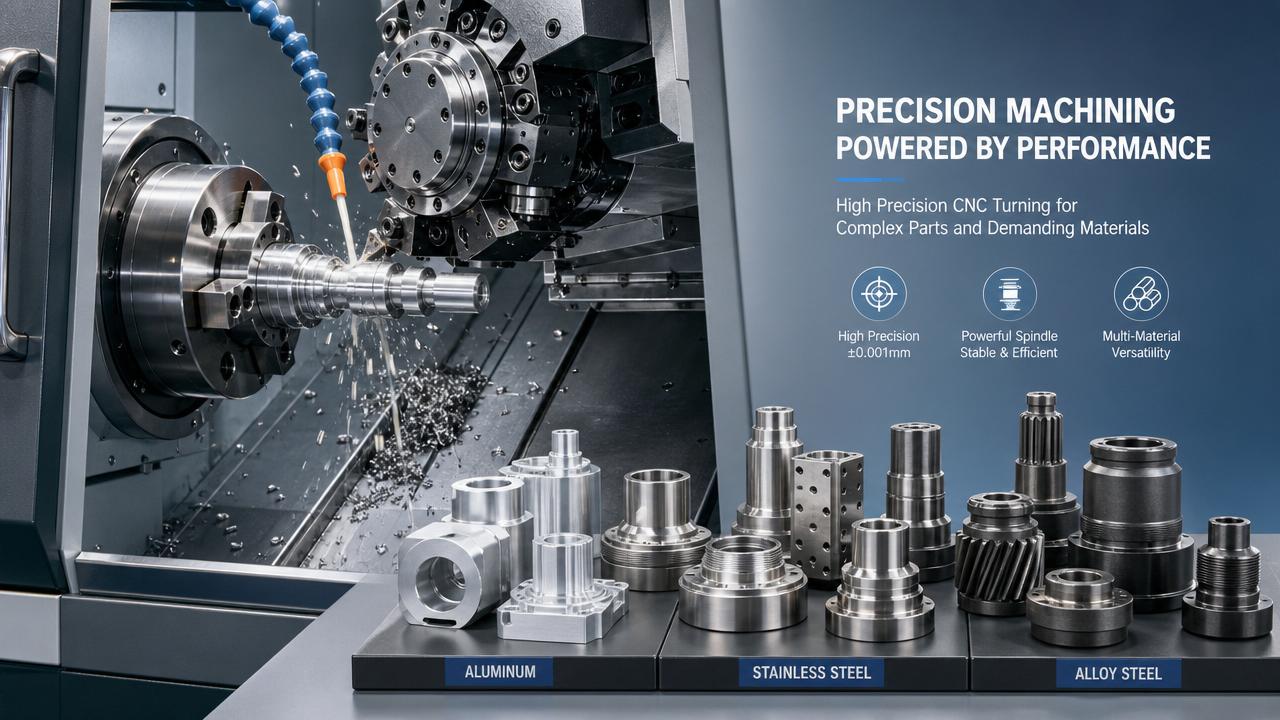
Why a Precision Lathe Purchase Deserves Careful Evaluation
Choosing the right precision lathe can directly affect machining accuracy, output stability, and long-term return on investment.
That sounds obvious, but many buying decisions still focus too much on price or headline specifications.
In real projects, a precision lathe must match part tolerance, material behavior, batch size, and future production plans.
A machine that looks strong on paper may still underperform if spindle rigidity, thermal control, or automation compatibility are weak.
This is why a practical buying process should combine technical review with commercial judgment.
For a precision lathe purchase, the most important question is not just what the machine can do once.
The better question is whether it can do it consistently, at scale, and with predictable operating cost.
From recent market changes, buyers are also paying more attention to energy use, digital monitoring, and service responsiveness.
That also means the best precision lathe is rarely the cheapest option in the short term.
It is usually the one that reduces scrap, avoids downtime, and supports stable production over several years.
Start with Accuracy Requirements, Not Catalog Claims
The first filter for any precision lathe should be actual accuracy needs.
Catalog numbers often show ideal test conditions, not real shop-floor performance.
A better approach is to compare the machine against the tolerances of your main parts.
Look closely at roundness, cylindricity, repeatability, surface finish, and thermal stability during long runs.
For shafts, sleeves, and bearing-related components, repeatability often matters more than one-time peak accuracy.
If a precision lathe cannot hold tolerance after several hours, inspection costs and scrap rates usually rise fast.
This is where machine structure becomes important.
Bed design, guideway quality, ball screw accuracy, and assembly consistency all influence real machining precision.
Ask suppliers for acceptance standards, test part records, and compensation methods for thermal drift.
If possible, request a sample cut using your own drawing and material.
That gives a much clearer picture than a generic demo piece.
- Confirm positioning accuracy and repeatability under loaded conditions.
- Check whether thermal compensation is standard or optional.
- Review inspection reports from similar applications.
- Match the precision lathe to the tightest critical dimensions, not average parts.
Evaluate Spindle Performance Beyond Speed
Spindle performance is one of the biggest decision factors in a precision lathe comparison.
Many buyers focus first on maximum rpm, but that only tells part of the story.
The more useful indicators are torque curve, bearing quality, rigidity, vibration control, and heat generation.
A high-speed spindle may be ideal for small precision parts, aluminum components, or fine finishing work.
But if your production includes alloy steel, stainless steel, or interrupted cutting, low-speed torque becomes more important.
This is especially true when cycle time and tool life both matter.
A stable precision lathe spindle should support both dimensional consistency and acceptable cutting efficiency.
Pay attention to spindle nose size, chuck compatibility, bar capacity, and balancing quality.
These details influence setup flexibility and future job expansion.
More importantly, ask how the spindle behaves over long production cycles.
A precision lathe that loses spindle stability after temperature rise can quietly damage both throughput and quality.
Material Compatibility Can Change the Best Precision Lathe Choice
Material type has a direct impact on machine selection.
In practice, the right precision lathe for brass fittings may not suit titanium shafts or hardened steel parts.
Different materials create different demands on spindle power, turret rigidity, coolant delivery, chip control, and tooling support.
For aluminum and copper alloys, speed and chip evacuation usually drive performance.
For stainless steel and heat-resistant alloys, rigidity and temperature control become more critical.
For difficult materials, a precision lathe should also support stable coolant pressure and reliable chip breaking.
Otherwise, tool wear rises, downtime increases, and part consistency drops.
This is a common issue when buyers evaluate only machine size and ignore material behavior.
It is also worth checking whether the machine builder has experience in your target sectors.
Automotive, aerospace, electronics, and energy applications often require very different machining strategies.
A supplier with relevant case studies can usually provide more realistic process advice.
- Map your top materials by annual production volume.
- Check whether the precision lathe supports suitable coolant and chip handling options.
- Estimate tooling cost changes by material family.
- Prioritize machines proven in similar part categories.
Look at Productivity, Automation, and Expansion Potential
A precision lathe decision should support current output and future flexibility.
That is becoming more important as factories move toward automation and digital production control.
If labor availability is uncertain, features like bar feeders, part catchers, gantry loading, and robot interfaces deserve attention.
These options may increase initial cost, yet they often improve utilization and consistency.
The same goes for tool capacity, live tooling, Y-axis capability, and sub-spindle design.
A more capable precision lathe can reduce secondary operations and simplify workflow.
This matters when lead time pressure is rising or floor space is limited.
More clearly now, buyers are also checking software connectivity.
Machine data capture, remote diagnostics, and maintenance alerts can support smarter production decisions.
Even a traditional machining environment benefits from better visibility into uptime, alarms, and cycle trends.
So when comparing one precision lathe to another, think beyond the first project and look at expansion potential.
Compare Total Cost, Service Risk, and Supplier Reliability
Technical fit is essential, but commercial risk can reshape the final decision.
A precision lathe with attractive specifications can still become expensive if support is weak.
That is why total cost of ownership should be part of every serious evaluation.
Look at spare parts availability, delivery lead time, training support, warranty terms, and local service coverage.
Downtime risk is often more costly than the purchase price difference between two machines.
For that reason, supplier responsiveness is not a soft factor.
It is a core part of precision lathe value.
You should also compare energy use, consumables, maintenance intervals, and expected resale value.
In some cases, a higher-end precision lathe delivers better economics because it cuts setup time and reduces quality losses.
A structured comparison helps keep the discussion objective.
- List your must-have technical requirements.
- Score each precision lathe on accuracy, spindle, and material fit.
- Add service, lead time, and spare parts access.
- Estimate operating cost over three to five years.
- Request a final sample test before approval.
A Practical Way to Make the Final Precision Lathe Decision
A good precision lathe buying decision is rarely based on one feature alone.
It comes from balancing machining accuracy, spindle behavior, material compatibility, automation potential, and supplier reliability.
When these factors are reviewed together, equipment comparisons become much clearer.
In actual business decisions, the safest choice is often the machine that performs predictably across multiple conditions.
That includes changing materials, longer shifts, tighter delivery windows, and future process upgrades.
Before signing, compare sample results, verify service commitments, and confirm real production assumptions.
A precision lathe is not just a machine purchase.
It is a long-term production asset that shapes quality, cost, and delivery performance.
If the evaluation process stays disciplined and practical, the final choice is far more likely to support both immediate output and long-term manufacturing goals.
Recommended for You
![]() FANUC Links FIELD System Data with Copilot to Advance Shop-Floor Data UseCNC Machining Technology Center
FANUC Links FIELD System Data with Copilot to Advance Shop-Floor Data UseCNC Machining Technology Center Smart Manufacturing for Aerospace: Building Traceability Across CNC OperationsCNC Machining Technology Center
![]() Mitsubishi Electric Announces Physical AI System Linking Humanoid Robots and CNC MachinesMachine Tool Industry Editorial Team
Mitsubishi Electric Announces Physical AI System Linking Humanoid Robots and CNC MachinesMachine Tool Industry Editorial Team Precision Machining for Defense: Supplier Quality and Traceability ChecksManufacturing Market Research Center
![]() Nidec Machine Tool Launches MVR-5X Five-Axis Gantry MachineMachine Tool Industry Editorial Team
Nidec Machine Tool Launches MVR-5X Five-Axis Gantry MachineMachine Tool Industry Editorial Team Choosing a Precision Disc Parts Manufacturer in China: Tolerances and Quality ChecksManufacturing Market Research Center


Aris Katos
Future of Carbide Coatings
15+ years in precision manufacturing systems. Specialized in high-speed milling and aerospace grade alloy processing.
▶
How to Select an Industrial Lathe for High-Volume Shaft ProductionMachine Tool Industry Editorial Team▶
When Does CNC Turning Pay Off? A Break-Even Guide by Annual Part VolumeMachine Tool Industry Editorial Team▶
How to Compare CNC Metal Lathe Brands ObjectivelyMachine Tool Industry Editorial Team▶
CNC Lathe Quick Installation Guide: How to Avoid Alignment and Wiring MistakesMachine Tool Industry Editorial Team▶
CNC Lathe Quick Installation Guide: Common Setup Mistakes and How to Avoid ThemMachine Tool Industry Editorial Team
▶
Mastering 5-Axis Workholding Strategies
Join our technical panel on Nov 15th to learn about reducing vibrations in thin-wall components.

Providing you with integrated sanding solutions
Before-sales and after-sales services
Comprehensive technical support