• Global CNC market projected to reach $128B by 2028 • New EU trade regulations for precision tooling components • Aerospace deman
NYSE: CNC +1.2%LME: STEEL -0.4%

ANCA Sets ISO 230-2:2023 Delivery Rule

Image Placement Plan
No image placeholders are planned for this article because the requested number of image placeholders is zero.
On April 21, 2026, ANCA announced a global delivery technical standard alongside the launch of its MicroX ULTRA ultra-small-diameter tool grinding machine at CCMT2026, a move that affects precision tool grinding equipment procurement, export delivery, certification review, and technical acceptance because machines shipped to Europe, the United States, and Japan must meet the updated ISO 230-2:2023 verification requirement before leaving the factory.
Confirmed Details of the ANCA Delivery Standard
ANCA, described in the provided event information as a global leader in precision tool grinding machines, officially introduced the MicroX ULTRA model at CCMT2026.
At the same time, the company released a global delivery technical standard for the model. Under this standard, all equipment exported to Europe, the United States, and Japan must complete third-party verification of full-travel positioning accuracy and repeat positioning accuracy before shipment.
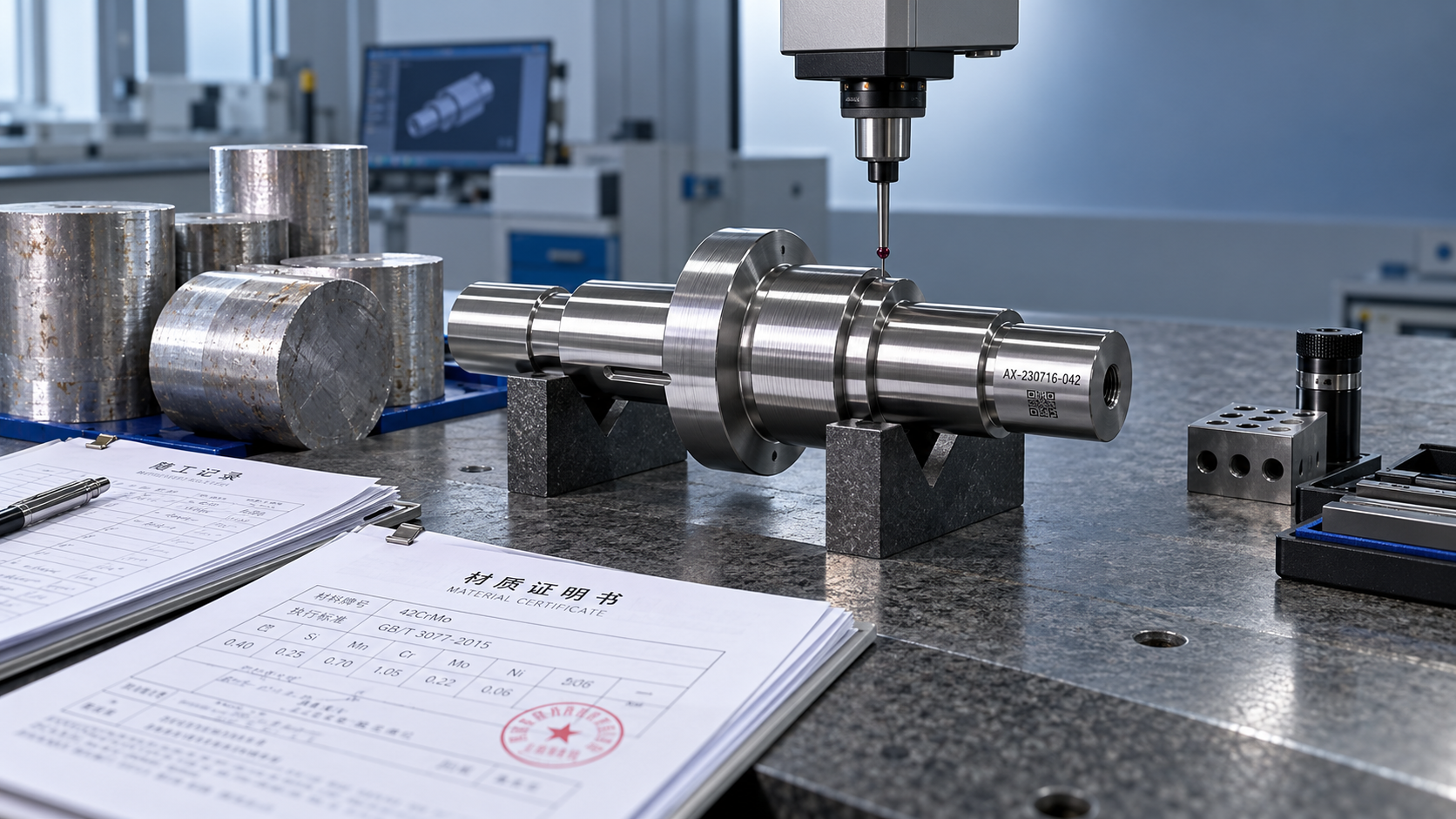
The verification must be carried out according to ISO 230-2:2023. The delivered equipment must also be accompanied by an English-language test certificate issued by a CNAS-accredited laboratory.
The standard is scheduled to take effect from June 2026 and will replace the previous requirement based on ISO 230-2:2012.
Where the Standard May Reshape Industry Workflows
Direct trade companies handling cross-border equipment orders
From an industry perspective, direct trade companies may be affected because the delivery condition for MicroX ULTRA machines shipped to Europe, the United States, and Japan now includes a defined third-party accuracy verification requirement. The impact is likely to appear in contract review, export documentation, delivery acceptance, customs-related document preparation, and customer communication.
These companies may need to pay closer attention to whether purchase contracts, commercial documents, and acceptance clauses clearly refer to ISO 230-2:2023 rather than the previous 2012 version. They may also need to check whether the English-language certificate from a CNAS-accredited laboratory is included in the shipment documentation package.
Procurement teams sourcing materials, parts, or production equipment
Analysis shows that procurement teams may be indirectly affected because higher delivery verification requirements can influence how buyers evaluate machine readiness, supplier documentation, and downstream production planning. Although the announced standard concerns the finished grinding machine rather than raw materials themselves, equipment procurement teams that support tool production may need to coordinate earlier with internal quality and engineering departments.
The affected business steps may include technical specification review, supplier qualification checks, acceptance criteria alignment, and delivery schedule planning. Procurement staff should monitor whether suppliers can provide documents aligned with ISO 230-2:2023 and whether the required third-party certificate is available before shipment.
Processing and manufacturing companies using precision grinding equipment
For manufacturers that rely on high-precision tool grinding machines, the updated delivery standard may affect equipment acceptance and process validation. The reason is that positioning accuracy and repeat positioning accuracy are directly connected to machine performance verification before the equipment enters production use.
Observably, manufacturers may need to adjust incoming equipment inspection procedures, internal quality files, and technical acceptance checklists. They should also confirm whether legacy references to ISO 230-2:2012 in internal specifications, tender documents, or factory acceptance procedures need to be updated to ISO 230-2:2023 for relevant purchases.
Supply chain service providers supporting logistics and documentation
Supply chain service providers may face additional coordination work because the required English-language certificate becomes part of the delivery documentation flow for covered export markets. This may affect pre-shipment document collection, document consistency checks, delivery handover, and after-sales traceability support.
What deserves closer attention is the timing of third-party verification. If the certificate must be completed before factory release, logistics providers and supply chain coordinators may need to align shipment booking and documentation deadlines with the testing and certificate issuance process.
Practical Points for Companies to Review
Update acceptance language from the 2012 edition to ISO 230-2:2023
Companies preparing to purchase or distribute the MicroX ULTRA for Europe, the United States, or Japan should review whether technical specifications, tender files, acceptance documents, and purchase contracts still cite ISO 230-2:2012. Where the new ANCA delivery standard applies, document language should be aligned with ISO 230-2:2023 to reduce ambiguity during factory acceptance and final delivery.
Confirm the third-party verification route before shipment
The announced standard requires third-party verification of full-travel positioning accuracy and repeat positioning accuracy before the equipment leaves the factory. Buyers and distributors should confirm who is responsible for arranging the verification, when it will be performed, and how the test result will be transferred into the final delivery package.
Check certificate format and laboratory accreditation status
The event information specifies that the equipment must be accompanied by an English-language test certificate issued by a CNAS-accredited laboratory. Companies should therefore check the certificate language, accreditation reference, equipment identification, tested accuracy items, and alignment with ISO 230-2:2023 before accepting the delivery file.
Build the new requirement into lead-time and risk planning
Because the standard takes effect from June 2026, procurement and trade teams may need to include verification time and certificate preparation in delivery schedules. From a risk-control perspective, orders planned around the transition from the 2012 edition to the 2023 edition should be reviewed carefully to avoid mismatches between contract requirements and factory delivery documents.
Industry Reading: A Shift Toward Documented Precision Compliance
Analysis shows that this update is more appropriately understood as a change in delivery compliance expectations rather than only a product launch announcement. By requiring ISO 230-2:2023 verification and an English-language certificate for equipment exported to Europe, the United States, and Japan, the standard places greater emphasis on documented accuracy evidence at the point of delivery.
From an industry perspective, such requirements may encourage equipment buyers to move from general performance claims toward traceable technical documents. This could affect how tenders are written, how distributors prepare delivery files, and how manufacturers validate incoming high-precision grinding equipment.
What deserves closer attention is the transition from ISO 230-2:2012 to ISO 230-2:2023. Without adding unprovided technical details, it is reasonable to say that a version change in a referenced standard can require companies to review internal acceptance templates, supplier evaluation procedures, and quality traceability records.
It is also important not to overstate the confirmed impact. The provided information concerns ANCA MicroX ULTRA equipment exported to Europe, the United States, and Japan under the announced delivery standard. Broader market effects, supplier cost changes, or changes in customer purchasing behavior remain analytical possibilities and should be observed through subsequent implementation.
Measured Conclusion
ANCA's MicroX ULTRA delivery standard highlights the growing importance of verified accuracy documentation in precision tool grinding equipment transactions. For companies involved in equipment trade, procurement, manufacturing, and supply chain coordination, the key issue is not only the machine model itself but also the shift to ISO 230-2:2023-based pre-shipment verification and certificate-backed delivery.
A rational conclusion is that the June 2026 implementation date gives market participants a defined point for reviewing contracts, specifications, acceptance procedures, and documentation workflows. The final industry impact will depend on how consistently the requirement is applied and how buyers incorporate it into procurement and quality systems.
Source Note and Follow-Up Items
This article is based on the information title, event date, and event summary provided in the input. Specific official source links were not provided in the input and should be verified continuously.
For events of this type, relevant verification may usually involve official company announcements, exhibition release materials, applicable ISO standard documentation, laboratory accreditation information, and procurement or tender documents. No specific source link is cited here because none was supplied in the input.
Further observation should focus on implementation details, certificate review practices, interpretation of the ISO 230-2:2023 requirement, changes in tender and technical specification wording, buyer feedback, and how delivery documentation is handled after the June 2026 effective date.
Recommended for You
![]() Mitsubishi Electric Announces Physical AI System Linking Humanoid Robots and CNC MachinesMachine Tool Industry Editorial Team
Mitsubishi Electric Announces Physical AI System Linking Humanoid Robots and CNC MachinesMachine Tool Industry Editorial Team Precision Machining for Defense: Supplier Quality and Traceability ChecksManufacturing Market Research Center
![]() Nidec Machine Tool Launches MVR-5X Five-Axis Gantry MachineMachine Tool Industry Editorial Team
Nidec Machine Tool Launches MVR-5X Five-Axis Gantry MachineMachine Tool Industry Editorial Team Choosing a Precision Disc Parts Manufacturer in China: Tolerances and Quality ChecksManufacturing Market Research Center
![]() Siemens Executive Says AI Could Raise Factory Automation to 80%Manufacturing Market Research Center
Siemens Executive Says AI Could Raise Factory Automation to 80%Manufacturing Market Research Center Choosing Automated Machine Tools for High-Mix, Low-Volume ProductionMachine Tool Industry Editorial Team



Aris Katos
Future of Carbide Coatings
15+ years in precision manufacturing systems. Specialized in high-speed milling and aerospace grade alloy processing.
▶
Nidec Machine Tool Launches MVR-5X Five-Axis Gantry MachineMachine Tool Industry Editorial Team▶
How to Select a Machine Tool for Aerospace Parts with Tight Tolerances?Machine Tool Industry Editorial Team▶
How to Compare Machine Tools for Small-Batch vs Mass Production JobsMachine Tool Industry Editorial Team▶
Multi-Axis Machine Tool Selection Guide: Travel, Spindle, Accuracy, and Control SystemMachine Tool Industry Editorial Team▶
How to Evaluate Precision Equipment for Tight-Tolerance Parts and Stable OutputMachine Tool Industry Editorial Team
▶
Mastering 5-Axis Workholding Strategies
Join our technical panel on Nov 15th to learn about reducing vibrations in thin-wall components.

Providing you with integrated sanding solutions
Before-sales and after-sales services
Comprehensive technical support