• Global CNC market projected to reach $128B by 2028 • New EU trade regulations for precision tooling components • Aerospace deman
NYSE: CNC +1.2%LME: STEEL -0.4%

CNC production equipment buyers are overlooking one hidden cost: retrofit readiness
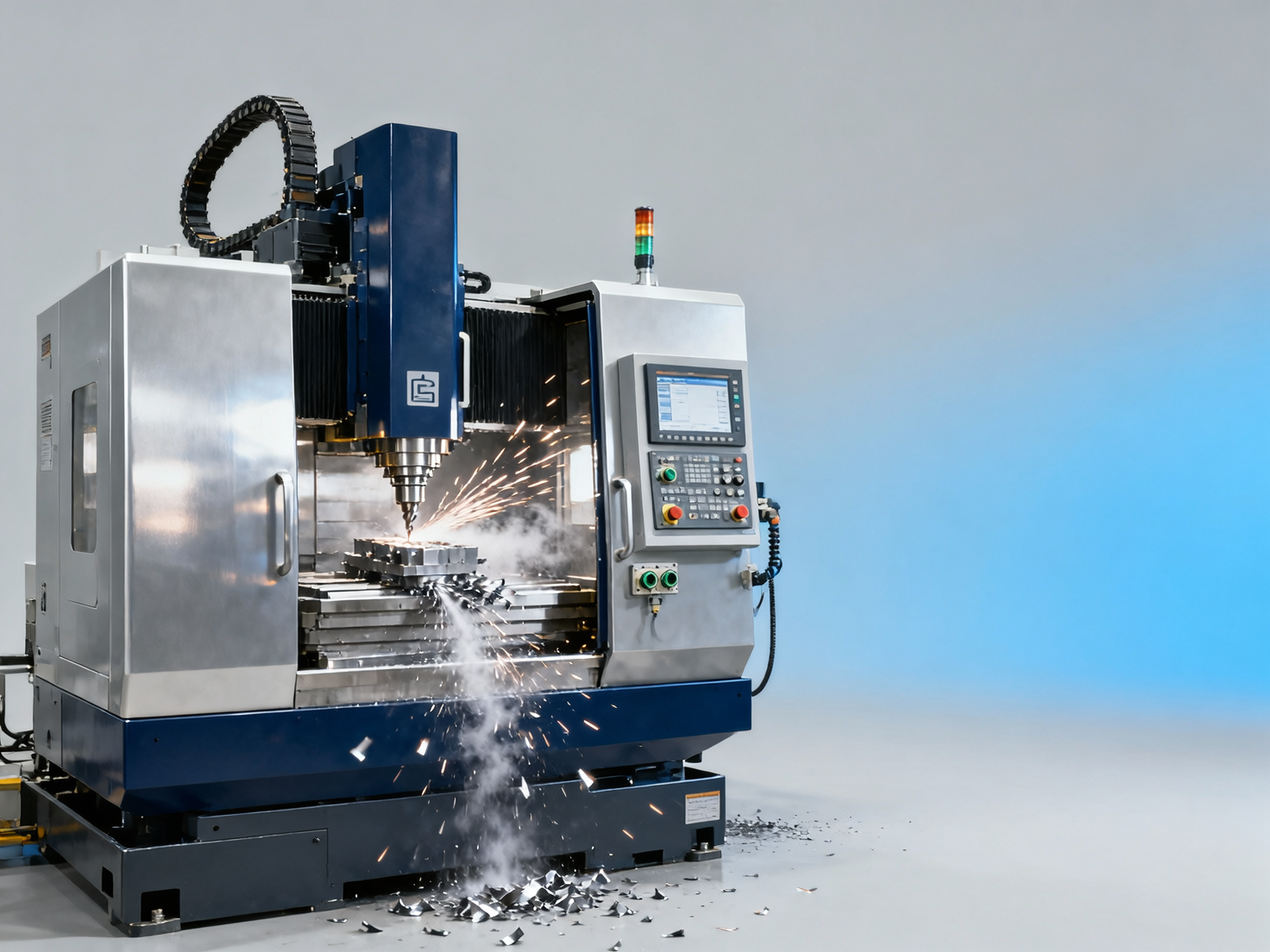
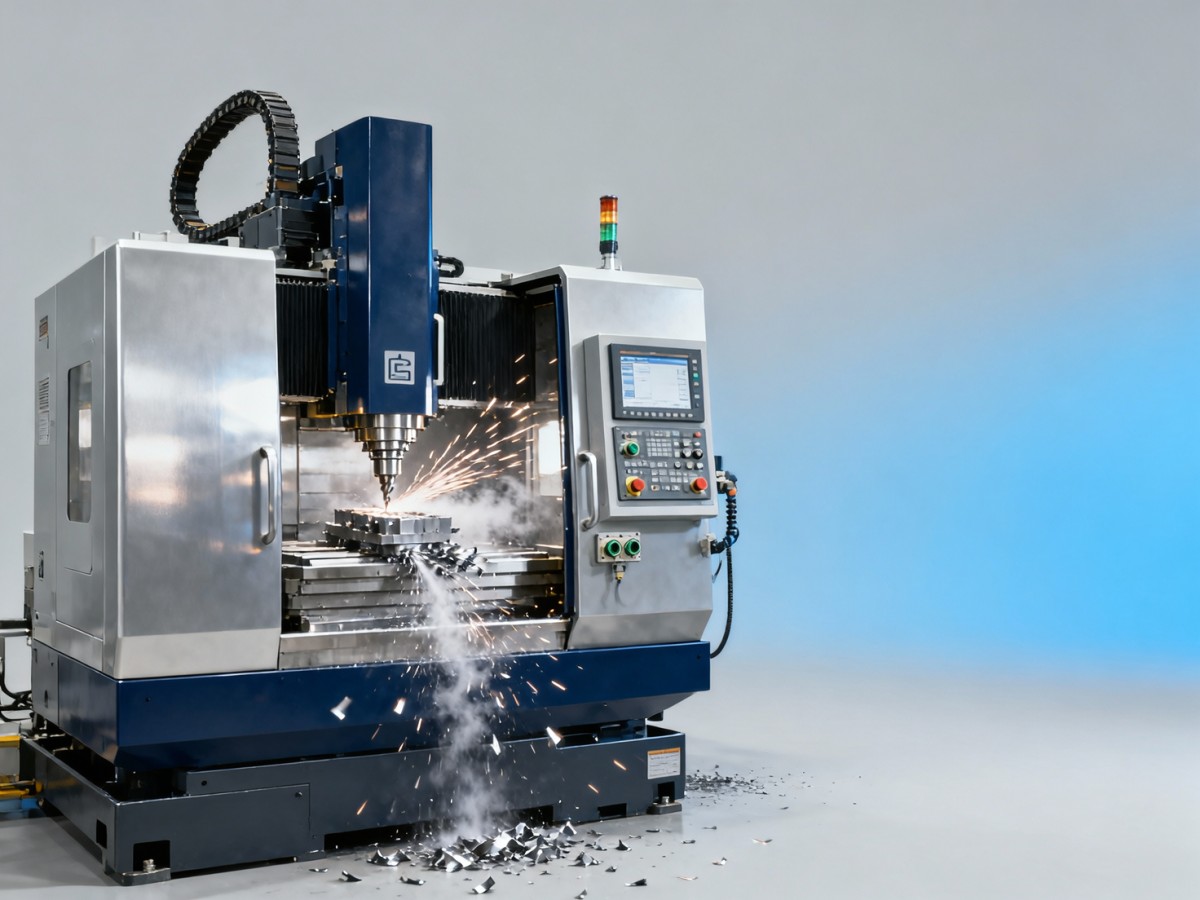
When sourcing CNC production equipment, buyers focus on specs, price, and throughput—but overlook a critical hidden cost: retrofit readiness. As industrial CNC systems evolve toward smarter, more connected automated industrial environments, legacy compatibility, control system upgrades, and integration with CNC metal cutting or industrial turning workflows add unexpected time and capital. Whether evaluating a high precision lathe, CNC metal lathe, or full-scale automated production line, lack of retrofit readiness undermines ROI, delays deployment, and increases long-term TCO. For procurement teams, operators, and enterprise decision-makers alike, this silent factor reshapes true value in CNC industrial machines and precision equipment.
What Retrofit Readiness Really Means for CNC Machine Buyers
Retrofit readiness refers to the degree to which a new or existing CNC machine tool can be seamlessly integrated into current infrastructure—without requiring extensive mechanical rework, proprietary controller replacements, or custom middleware development. It encompasses hardware modularity (e.g., standardized I/O interfaces), software openness (support for OPC UA, MTConnect, or ISO 14649), and firmware upgradability (e.g., ability to accept FANUC 31i-B5 or Siemens SINUMERIK ONE firmware updates without board-level replacement).
In practice, retrofit readiness determines whether adding a new 5-axis machining center to an existing automotive powertrain line takes 7–15 days—or 8–12 weeks. A study by the Association of Manufacturing Technology (AMT) found that 68% of mid-sized manufacturers experienced unplanned downtime averaging 11.3 days during CNC integration due to undocumented legacy protocol mismatches or unsupported PLC communication stacks.
Unlike traditional “machine-only” evaluation criteria, retrofit readiness is a cross-functional metric—it impacts electrical engineering timelines, IT network segmentation policies, operator training cadence, and even plant floor safety certification cycles. For example, integrating a new CNC lathe with embedded edge analytics requires not just Ethernet/IP support but also TLS 1.2+ encryption compliance and deterministic latency under 20ms—requirements often omitted from standard OEM datasheets.
The table above highlights how retrofit readiness directly maps to measurable operational variables—not abstract “future-proofing.” High-readiness systems reduce integration labor by 40–60%, cut commissioning time by ≥65%, and lower post-deployment validation costs by up to $42,000 per machine, according to AMT’s 2023 Integration Cost Benchmark Report.
Why Procurement Teams Miss This Cost—and How to Quantify It
Procurement professionals routinely evaluate CNC equipment using three pillars: initial purchase price, technical specifications (e.g., positioning accuracy ±0.002mm, spindle power 22kW), and throughput (parts/hour). Retrofit readiness rarely appears on RFQ checklists—even though it contributes 18–27% of total 5-year TCO for multi-machine deployments.
The oversight stems from structural gaps: OEM sales teams emphasize performance, not interoperability; engineering departments defer integration planning until after PO issuance; and finance models rarely allocate budget for “non-hardware enablement.” Yet field data shows that retrofit-related delays cost aerospace Tier-1 suppliers an average of $17,500 per week in idle labor and floor space utilization loss.
To quantify retrofit risk, procurement should require vendors to disclose six verifiable metrics before bid submission:
- Number of documented, tested PLC-to-CNC communication protocols (e.g., Modbus TCP, EtherCAT, CC-Link IE)
- Maximum supported MTConnect device model version and conformance test report ID
- Time required to flash new control firmware (measured across 3 firmware versions, including security patches)
- Availability of mechanical interface drawings (PDF + STEP) with GD&T annotations per ASME Y14.5–2018
- Minimum OS version required for OEM HMI software (e.g., Windows 10 IoT LTSC 2021 or later)
- Lead time for replacement I/O modules (standard stock vs. custom build)
Three Retrofit-Ready Design Principles Every CNC Buyer Should Demand
True retrofit readiness isn’t accidental—it’s engineered. Leading global suppliers (including DMG MORI, Okuma, and Haas Automation) now embed three architectural principles into new machine platforms:
- Hardware Abstraction Layer (HAL): A vendor-agnostic interface between motion controllers and peripheral devices (coolant pumps, bar feeders, robotic loaders). HAL-certified machines reduce third-party integration effort by 3–5 weeks per subsystem.
- Firmware Version Locking: Ability to maintain identical firmware across multiple machine generations (e.g., same FANUC 31i-B5 core across 2020–2024 vertical machining centers). Eliminates revalidation of G-code macros and probing routines during fleet refresh.
- Modular Safety Architecture: Compliance with ISO 13849-1 PL e / SIL 3 via plug-and-play safety I/O modules—not hardwired relays. Cuts safety certification time from 12–16 weeks to ≤5 business days when adding collaborative robots.
These features are non-negotiable for facilities running mixed-generation fleets—common in German automotive suppliers (where 42% of installed CNC lathes predate 2015) and U.S. job shops managing legacy Mori Seiki and modern Mazak units side-by-side.
Actionable Checklist: Evaluating Retrofit Readiness Before Purchase
Use this 7-point checklist during technical evaluation and site visits. Each item corresponds to a documented failure mode observed across 112 CNC integration projects (2022–2024):
This checklist transforms retrofit readiness from a vague concern into a scored, auditable requirement—enabling objective comparison across vendors and eliminating subjective “trust the brand” decisions.
Final Recommendation: Make Retrofit Readiness a Contractual Obligation
The most effective safeguard is contractual. Specify retrofit readiness as a deliverable—not a feature—with measurable acceptance criteria. Require vendors to provide signed affidavits confirming compatibility with your existing MES (e.g., Siemens Opcenter, Rockwell FactoryTalk), SCADA platform, and shop-floor networking topology before final payment.
Include liquidated damages: $1,200/day for each day beyond agreed integration window, capped at 5% of contract value. This aligns vendor incentives with your operational timeline—and turns retrofit readiness from a hidden cost into a managed, quantifiable KPI.
For procurement teams, operators, and enterprise decision-makers navigating today’s fast-evolving CNC landscape, retrofit readiness isn’t optional overhead—it’s the linchpin of scalable automation. Prioritize it early, measure it rigorously, and enforce it contractually.
Get your free Retrofit Readiness Assessment Kit—including vendor scorecard templates, integration timeline calculators, and ISO-compliant test scripts—for CNC metal lathes, machining centers, and automated production lines. Request your customized kit today.
Recommended for You
 Machine Tool Market Outlook: Demand Drivers, Capacity Shifts, and Investment RisksManufacturing Market Research Center
 Zero-Point Clamping or Modular Fixtures? Choosing a Faster CNC Changeover SystemCNC Machining Technology Center
 How to Cut CNC Fixture Changeover Time Without Sacrificing Part AccuracyCNC Machining Technology Center
 When Does CNC Turning Pay Off? A Break-Even Guide by Annual Part VolumeMachine Tool Industry Editorial Team
 Machine Tool Standards by Country: What Importers Must Verify Before PurchaseManufacturing Policy Research Center
 CNC Lathe Quick Installation Guide: Alignment Checks Before First Production RunCNC Machining Technology Center

Aris Katos
Future of Carbide Coatings
15+ years in precision manufacturing systems. Specialized in high-speed milling and aerospace grade alloy processing.
▶
Japan Subsidy Plan Narrows CNC Export OpeningsManufacturing Market Research Center▶
Industrial Robotics ROI: Cost Drivers, Integration Risks, and Payback Benchmarks for BuyersManufacturing Market Research Center▶
India’s 20% Rice Export Tax Lifts Demand for Processing EquipmentManufacturing Market Research Center▶
Anhui Growth Lifts Demand for High-End Machine ToolsManufacturing Market Research Center▶
China CNC Rate to Hit 75% by 2027Manufacturing Market Research Center
Mastering 5-Axis Workholding Strategies
Join our technical panel on Nov 15th to learn about reducing vibrations in thin-wall components.

Providing you with integrated sanding solutions
Before-sales and after-sales services
Comprehensive technical support