• Global CNC market projected to reach $128B by 2028 • New EU trade regulations for precision tooling components • Aerospace deman
NYSE: CNC +1.2%LME: STEEL -0.4%

Thailand Expo Puts Smart Manufacturing in ASEAN Focus

From June 17 to June 20, 2026, the Thailand International Manufacturing Expo opened at the IMPACT Exhibition Center in Bangkok, drawing attention to smart manufacturing equipment, photovoltaic energy storage, and auto parts. For industry participants, the event is worth watching not only because Chinese exhibitors accounted for more than 40% of the total, but also because the products on display and the channel cooperation intentions announced on site point to a more active procurement window in ASEAN for advanced machine tools, automation lines, and related industrial systems.
What the Bangkok exhibition confirmed
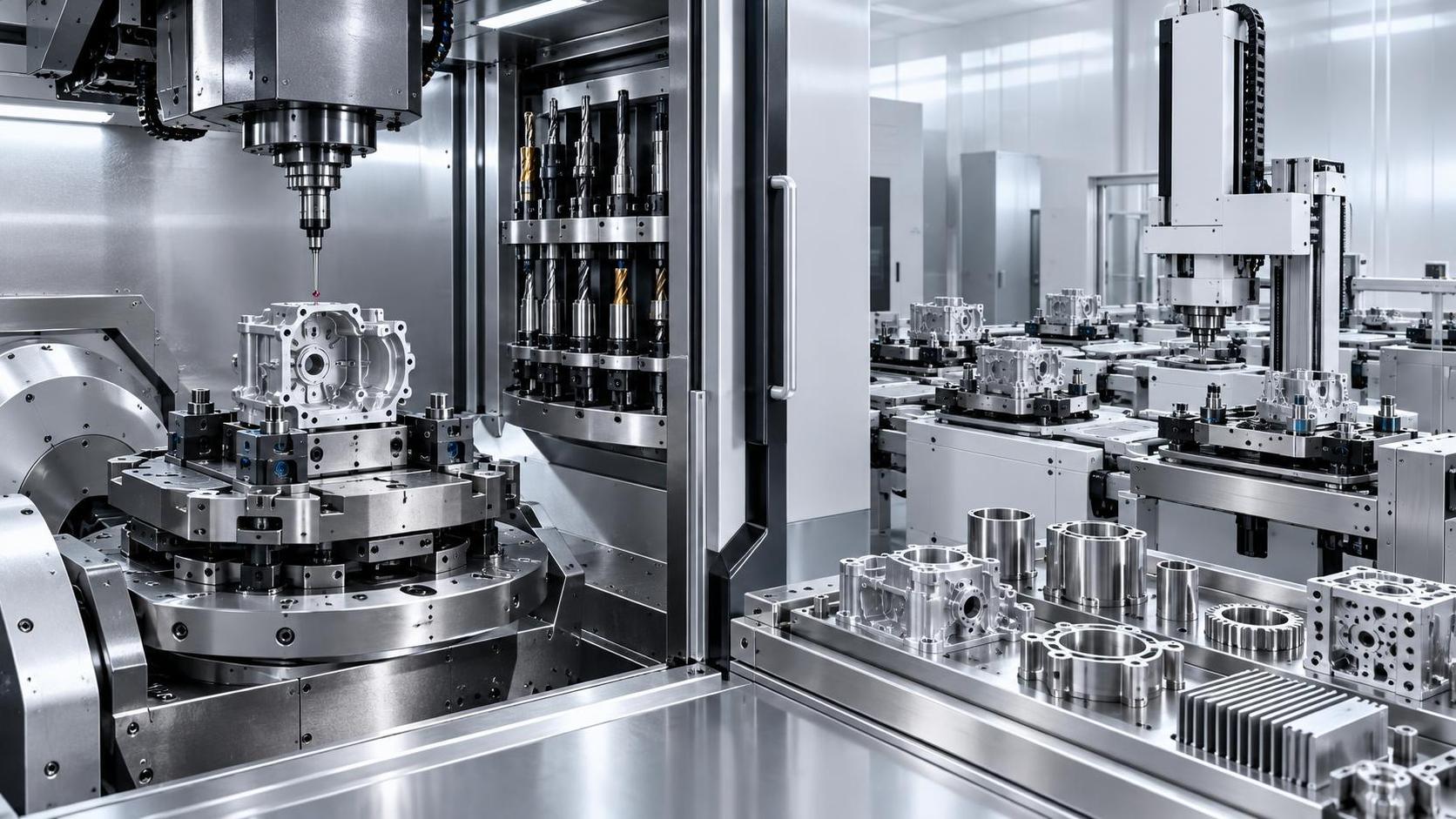
According to the provided event information, the Thailand International Manufacturing Expo opened on June 17, 2026, in Bangkok and runs through June 20. The exhibition focuses on smart manufacturing equipment, photovoltaic energy storage, and automotive components. Chinese companies represent more than 40% of all exhibitors. Their exhibits mainly include five-axis machining centers, intelligent tool management systems, and modular automated production lines. The event summary also states that multiple Southeast Asian channel cooperation intentions were reached on site.
Why different market participants are paying attention
Equipment buyers are seeing a clearer sourcing direction
From an industry perspective, buyers of industrial equipment may be affected first because the exhibition highlights specific categories rather than broad concepts. The presence of five-axis machining centers, tool management systems, and modular automation lines suggests that procurement discussions are moving toward practical production assets and integration capability. What deserves closer attention is whether buyers begin to compare suppliers not only by equipment specifications, but also by deployment fit, system compatibility, and delivery readiness for ASEAN projects.
Channel partners may gain a more central role
Analysis shows that distributors and regional channel operators are another group likely to be affected. The confirmed on-site cooperation intentions indicate that market access in Southeast Asia is not only about product display, but also about local commercial reach. The immediate business impact may appear in partner selection, territory coverage, after-sales coordination, and customer communication models. For channel businesses, the key change to watch is whether cooperation shifts from single-product representation to broader solution-based distribution.
Manufacturers and integrators need to read the product mix carefully
Processing manufacturers, automation integrators, and related service providers may also need to reassess demand signals. The combination of machine tools, intelligent tooling systems, and modular production lines suggests that customers are evaluating not just standalone equipment, but more complete production-side efficiency solutions. Observably, this can affect quotation structure, solution packaging, and project coordination across equipment, software, and line integration services.
What companies should watch next
Distinguish exhibition momentum from actual order conversion
Analysis shows that on-site cooperation intentions should not be treated as the same as completed commercial execution. Companies following the ASEAN market need to watch how these intentions develop into formal channel agreements, procurement processes, or delivery schedules. The practical question is not only who showed up at the event, but how quickly discussions translate into operational business arrangements.
Track demand around the featured product categories
What deserves closer attention is the concentration of exhibits in five-axis machining, intelligent tool management, and modular automation. Companies in manufacturing equipment, industrial components, and technical services should monitor whether these categories remain the core discussion points after the exhibition period. That matters for product positioning, sales prioritization, and resource allocation in Southeast Asia-facing business development.
Prepare for execution issues beyond product display
For suppliers and service providers, the next practical focus is execution preparedness. From an industry perspective, channel expansion typically puts pressure on documentation, partner coordination, delivery timing, and customer-facing technical communication. Even without additional confirmed details from the event, businesses involved in ASEAN expansion should pay close attention to supplier qualification materials, contract readiness, and service support arrangements tied to industrial equipment projects.
Watch how ASEAN is framed in future market communication
Observably, the event summary frames ASEAN as a new support point for the overseas expansion of higher-end Chinese machine tools. Companies should therefore pay attention to whether future official event updates, exhibitor statements, or market communications continue to emphasize ASEAN as a priority destination, or whether the message remains limited to this exhibition context. That distinction matters when assessing whether this is a durable regional push or an early-stage commercial signal.
How this signal should be interpreted for now
Analysis shows that this development is better understood as a meaningful market signal rather than a concluded industry shift. The confirmed facts point to visible Chinese exhibitor participation, a concentration on smart manufacturing-related categories, and early channel cooperation intentions in Southeast Asia. However, the available information does not yet confirm long-term sales outcomes, broader procurement conversion, or sustained regional expansion patterns. For that reason, the event currently serves more as an indicator of direction than as proof of settled market results.
What this means for the near-term industry reading
In practical terms, the exhibition suggests that ASEAN is attracting more serious attention in discussions around advanced manufacturing equipment and industrial distribution. A neutral reading is that the event strengthens the case for watching Southeast Asia as a developing commercial node for Chinese smart manufacturing suppliers, especially in machine tools and automation-related systems. It is more appropriate to understand this as an emerging business signal with operational implications, while keeping follow-up verification on channel progress and project execution.
Basis of this article and points for continued verification
This article is based on the user-provided news title, event dates, and event summary. For this type of industry update, relevant source categories would typically include official exhibition announcements, company disclosures, industry association releases, authoritative media coverage, and related technical or standards documentation. No specific official source link was provided in the input, so further verification is still needed. Continued observation should focus on any follow-up official statements, exhibitor updates, channel cooperation progress, and whether the highlighted product categories remain central in subsequent ASEAN market activity.
Recommended for You
 How to Select a CNC Lathe for Small Parts Without Sacrificing Accuracy or Cycle TimeCNC Machining Technology Center
 How to Select a Slant Bed Lathe for High-Precision Shaft and Chuck WorkCNC Machining Technology Center
 Smart Manufacturing for Small Businesses: Where Automation Delivers the Fastest ROIMachine Tool Industry Editorial Team
 How to Specify a CNC Lathe for High-Volume Automotive Shaft ProductionCNC Machining Technology Center
 How Automated Precision Machining Maintains Tolerance in High-Mix ProductionCNC Machining Technology Center
 How to Evaluate a Machine Tool Factory Before Sourcing CNC EquipmentGlobal Machine Tool Trade Research Center


Aris Katos
Future of Carbide Coatings
15+ years in precision manufacturing systems. Specialized in high-speed milling and aerospace grade alloy processing.
▶
Global Machine Tool Backlog Falls 12% as Automation Shifts DemandManufacturing Market Research Center▶
What Drives Machine Tool Price: 7 Cost Factors Buyers Should Compare Before OrderingManufacturing Market Research Center▶
Manufacturing Industry Cost Drivers in 2025: Labor, Energy, Freight, and Sourcing RisksManufacturing Market Research Center▶
CCMT2026 Ends With 40.2% Rise in Five-Axis Export PricesManufacturing Market Research Center▶
China CNC Localization Tops 50%, Pressuring FANUCManufacturing Market Research Center
Mastering 5-Axis Workholding Strategies
Join our technical panel on Nov 15th to learn about reducing vibrations in thin-wall components.

Providing you with integrated sanding solutions
Before-sales and after-sales services
Comprehensive technical support