• Global CNC market projected to reach $128B by 2028 • New EU trade regulations for precision tooling components • Aerospace deman
NYSE: CNC +1.2%LME: STEEL -0.4%

Industrial Robotics is growing fast, but where is the risk?
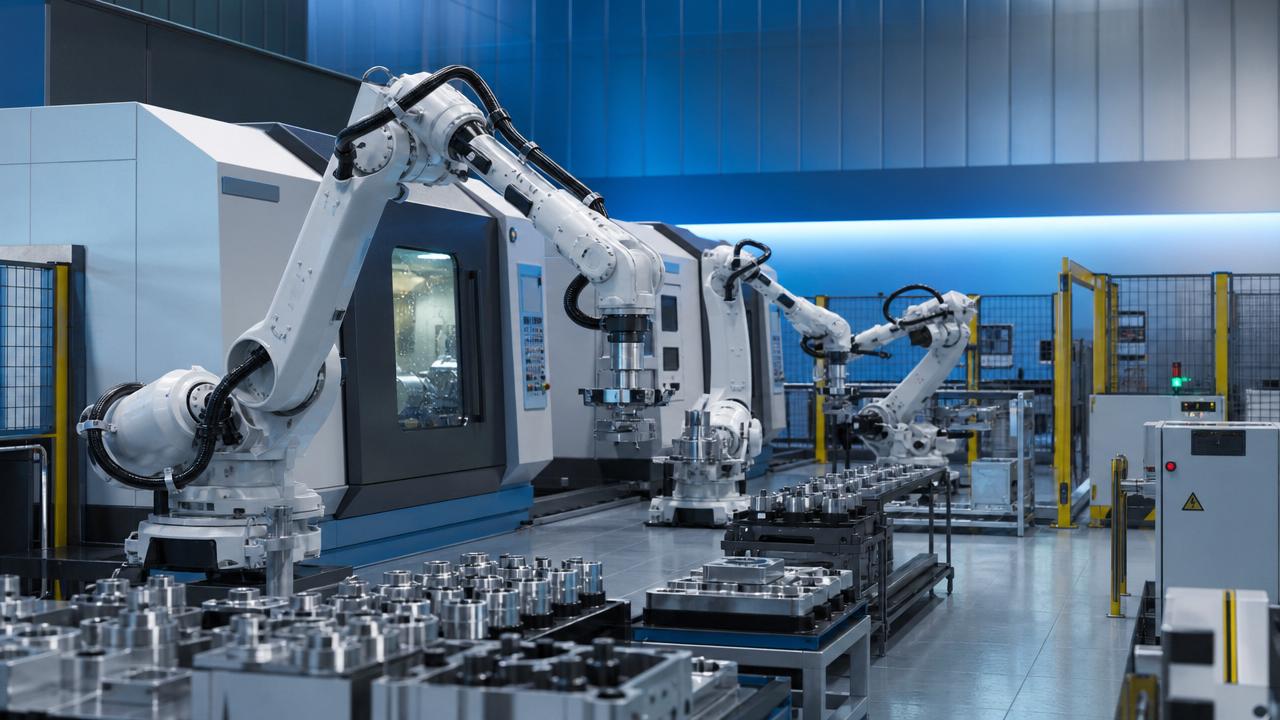
Industrial Robotics is transforming manufacturing at remarkable speed, driving efficiency, precision, and scalability across CNC machining and smart production. Yet for business decision-makers, the real question is not only where growth is happening, but where the risks are emerging—from supply chain dependence and integration costs to cybersecurity, workforce gaps, and operational resilience.
For companies investing in CNC machine tools, machining centers, automated cells, and flexible production lines, Industrial Robotics is no longer a future option. It is now part of the competitiveness equation in automotive, aerospace, electronics, energy equipment, and precision manufacturing.
The opportunity is clear: shorter cycle times, tighter repeatability, reduced labor pressure, and better process consistency. The challenge is equally clear: when robot deployment expands from one station to 10, 20, or even 50 interconnected assets, technical and commercial risks scale quickly.
For executive teams, the goal is not simply to adopt more automation. It is to identify where Industrial Robotics creates measurable operating value, where hidden risk accumulates, and how to build a resilient roadmap for production, sourcing, maintenance, and digital control.
Why Industrial Robotics Is Expanding So Fast in Modern Manufacturing
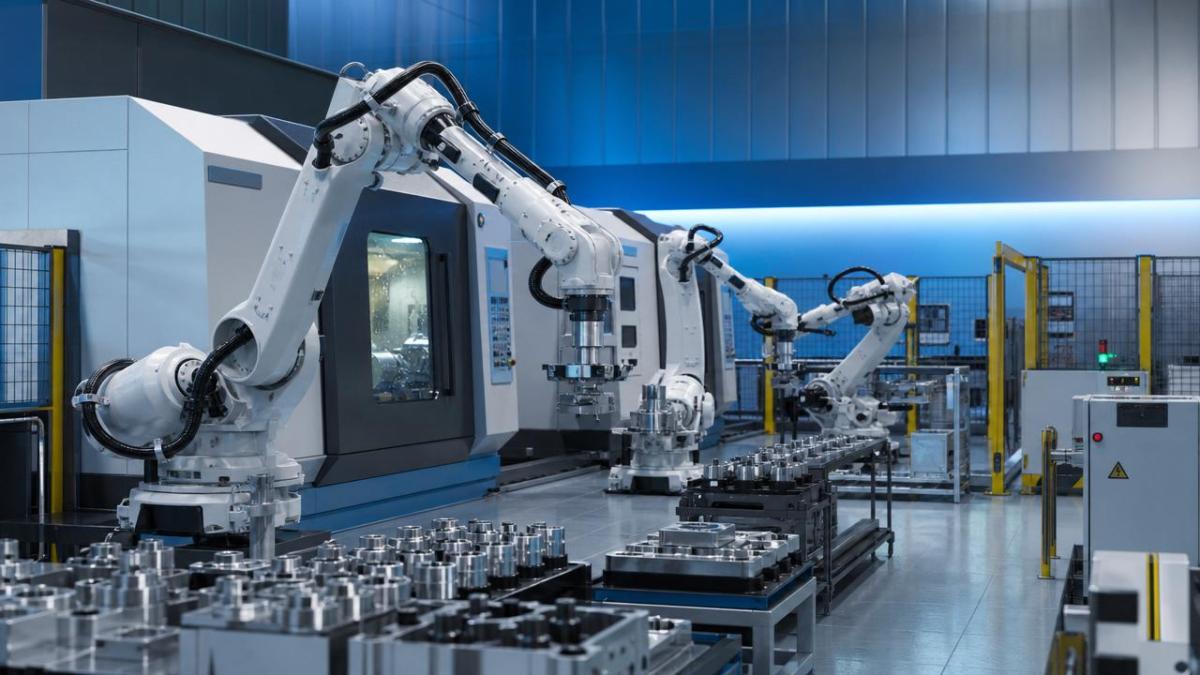
Industrial Robotics is growing fast because manufacturing economics have changed. In many sectors, customers expect shorter lead times, higher product variation, and tighter quality tolerances, often within delivery windows of 2–6 weeks instead of 8–12 weeks.
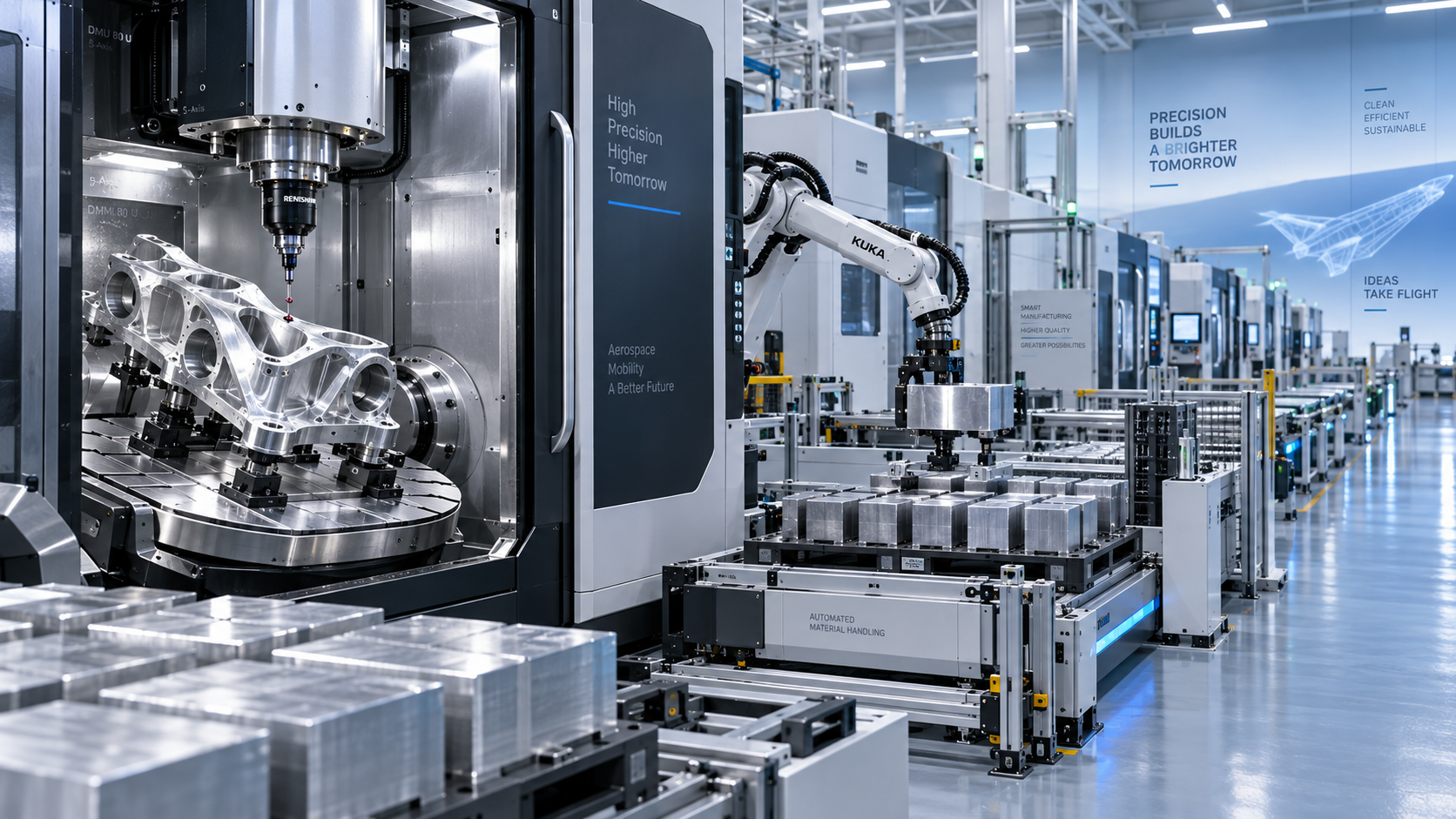
In CNC machining, robots help bridge this gap by automating repetitive handling tasks such as loading billets, unloading finished parts, pallet transfer, deburring support, and machine tending. A well-integrated cell can run 16–24 hours per day with fewer interruptions than a manual-only process.
The strongest demand comes from high-mix, precision-driven sectors
Automotive suppliers use robotic machining cells to stabilize output across large production batches. Aerospace firms rely on automated handling to support precision requirements and documentation discipline. Electronics manufacturers benefit from speed, traceability, and reduced contamination risk.
Even mid-sized factories are accelerating adoption. A plant with 20 CNC machines may start with 2 robotic tending cells, then expand to 5 or 6 stations once utilization improves and operator shortages become harder to manage.
Typical operational gains companies target
- Machine utilization improvement from 55%–70% to 75%–90%
- Part handling time reduction of 15%–40% per cycle
- Repeatability support in the range expected for precision automation workflows
- Lower dependence on manual staffing for night shifts and weekend production
These gains explain the momentum, but they do not guarantee success. Fast adoption often masks weak planning assumptions, especially when robotics is treated as a standalone purchase instead of a production system linked to tooling, fixtures, CNC control logic, and ERP or MES connectivity.
Where the Real Risk Emerges for Business Decision-Makers
The biggest risk in Industrial Robotics is not the robot arm itself. It is the gap between expected ROI and actual plant performance. That gap usually appears in five areas: integration cost, supplier dependence, cyber exposure, workforce capability, and downtime resilience.
Many companies approve robotics investments based on labor savings alone. In reality, the total cost picture includes end effectors, guarding, sensors, fixturing, software interfaces, commissioning, spare parts, training, and post-installation tuning over the first 3–12 months.
1. Integration risk is often underestimated
A robot can be purchased in weeks, but stable cell integration may take 8–20 weeks depending on process complexity. If CNC programs, part presentation, or fixture repeatability are inconsistent, the automation layer inherits those weaknesses and amplifies stoppages.
This is especially relevant in multi-axis machining and precision component production, where tolerances, chip evacuation, coolant conditions, and tool wear directly influence automated handling reliability.
2. Supply chain concentration can create exposure
If a factory relies on a narrow group of robot brands, servo suppliers, reducers, controllers, or vision components, a disruption in one region can delay service or replacement parts for 4–12 weeks. That risk increases when spare inventories are kept too lean.
For global manufacturers sourcing from China, Germany, Japan, and South Korea, regional diversification helps, but it also requires careful management of standards, compatibility, and after-sales support coverage.
3. Cybersecurity risk rises with digital integration
As Industrial Robotics connects with MES, SCADA, remote diagnostics, and cloud monitoring tools, production assets move closer to enterprise networks. Without segmented access, password controls, patch discipline, and vendor access policies, the attack surface expands quickly.
A single compromised interface may not destroy hardware, but it can halt production scheduling, disable cell communication, or corrupt process data. For plants running 24-hour cycles, even 6–8 hours of unplanned stoppage can materially impact output commitments.
The table below outlines where risk tends to concentrate and how decision-makers should evaluate it before scaling robotics across a plant or multi-site manufacturing network.
The key takeaway is that Industrial Robotics risk is manageable when it is treated as a system-level issue. Companies that assess only capital price often miss the variables that later erode ROI, especially during the first 6 months of operation.
How to Evaluate Industrial Robotics Before Expanding Investment
For enterprise buyers, a strong robotics decision framework should combine technical fit, operational resilience, and commercial discipline. The question is not whether automation is valuable, but whether a specific deployment matches the production profile of the plant.
Start with process suitability, not vendor enthusiasm
A robot cell makes the most sense where part flow is stable enough to automate and valuable enough to justify integration. If the process has daily design changes, unstable fixturing, or heavy manual inspection loops, the business case may weaken.
In CNC environments, decision-makers should review at least 6 factors: part family consistency, cycle time, payload, changeover frequency, tolerance sensitivity, and planned production hours per week.
A simple 4-step assessment model
- Map current machine utilization, labor input, and bottlenecks over 30–60 days.
- Identify tasks with repetitive handling, predictable orientation, and stable takt time.
- Estimate full deployment cost, including safety systems, interfaces, and support.
- Stress-test the ROI against downtime, training needs, and spare-part lead times.
The next table can help procurement teams, operations directors, and plant managers compare projects more objectively before approving a larger Industrial Robotics rollout.
The most successful buyers use these criteria to filter projects early. That prevents over-automation of unstable processes and helps direct capital toward cells that can deliver measurable throughput, consistency, and scheduling flexibility.
Implementation Risks in CNC and Precision Manufacturing Environments
Industrial Robotics becomes more complex when applied to high-precision manufacturing. In CNC machine tool environments, robots interact with machine doors, vises, chucks, probes, coolant, chips, fixtures, and tool-management systems. Small inconsistencies can trigger large operational losses.
Tolerance and fixturing issues are frequent failure points
If a workpiece is misaligned by even a small amount at the loading stage, downstream machining quality may drift, especially in parts requiring concentricity, flatness, or precise datum control. Robotic handling does not remove the need for fixture discipline; it increases the need for it.
This is why many integrators recommend pre-validation of part presentation, chuck repeatability, and gripping reliability before full deployment. A 2-week pilot often reveals more than a 20-page proposal.
Maintenance planning must match production intensity
A robot cell running one shift is very different from a cell operating 24/7. Preventive maintenance intervals, lubrication routines, gripper wear checks, and sensor cleaning schedules should reflect actual duty cycles, not nominal factory recommendations.
For many plants, a practical baseline is weekly visual inspection, monthly consumable review, and quarterly calibration or condition checks, with alarm trend analysis built into maintenance meetings.
Common implementation mistakes
- Automating a process before stabilizing machining variation
- Under-specifying grippers for oily, hot, or irregularly shaped parts
- Ignoring chip buildup and coolant contamination around sensing points
- Launching without operator escalation procedures for common fault codes
- Assuming one integrator can support all sites equally across regions
In global manufacturing groups, standardization helps reduce these issues. Using common interface logic, training modules, and spare-part lists across 3 or more plants can improve troubleshooting speed and reduce duplicated engineering work.
How Executives Can Build a Safer Industrial Robotics Strategy
A safer Industrial Robotics strategy starts with governance. Leadership teams should view robotics not as isolated capex purchases but as part of a broader manufacturing architecture that includes CNC assets, digital systems, suppliers, workforce development, and production continuity planning.
Build resilience into sourcing and service
When comparing suppliers, ask not only about payload, reach, or speed, but about regional service capability, spare-part availability, software support, and long-term compatibility. A lower upfront quote may become more expensive if response time is 72 hours instead of same-day support.
For critical lines, many manufacturers keep essential consumables and vulnerable components on site, enough for 30–60 days of continuity depending on lead time and production criticality.
Invest in workforce depth, not just hardware
One of the most overlooked risks in Industrial Robotics is the skills gap after go-live. Plants often train operators to start and stop cells, but not to recover from communication errors, fixture drift, or basic TCP verification issues.
A practical model includes 3 layers of competence: operator response, maintenance troubleshooting, and process engineering optimization. That structure reduces dependency on one or two expert individuals and improves shift-to-shift stability.
Treat cybersecurity as production insurance
If Industrial Robotics is connected, it should be governed. Access control, network segmentation, backup procedures, and vendor login review should be part of launch readiness, not an afterthought. In digitally integrated smart factories, cyber discipline supports uptime just as directly as spare parts do.
Executive checklist before scaling
- Confirm full life-cycle cost, not hardware cost alone.
- Validate process stability with pilot data or staged rollout evidence.
- Review service coverage by geography, shift pattern, and asset criticality.
- Establish OT security rules before external connectivity expands.
- Assign internal ownership across operations, maintenance, IT, and procurement.
Industrial Robotics will continue to expand across CNC machining, precision manufacturing, and smart factory environments because the productivity case is strong. But the companies that benefit most will be those that understand where risk accumulates first, especially at the intersection of integration, supply chain, digital systems, and workforce readiness.
For decision-makers, the right path is disciplined expansion: start with process fit, evaluate total deployment risk, secure service and cyber controls, and build repeatable standards for future rollout. That approach protects ROI while supporting long-term manufacturing resilience.
If you are assessing Industrial Robotics for CNC machine tools, automated production lines, or precision manufacturing operations, now is the time to compare options carefully and define a deployment model that matches your plant reality. Contact us to get a tailored solution, discuss project details, or explore more manufacturing automation strategies.
PREVIOUS ARTICLE
Recommended for You
 How to Select an Industrial Lathe for High-Volume Shaft ProductionMachine Tool Industry Editorial Team
 Selecting Machine Tools for Automotive Parts: Accuracy, Throughput, and AutomationMachine Tool Industry Editorial Team
 Industrial Machining: Selecting Processes for Tight-Tolerance Metal PartsCNC Machining Technology Center
 Manufacturing Technology Trends That Improve Throughput and Quality ControlManufacturing Market Research Center
 How to Design Cost-Effective Fixtures That Maintain Cycle Time in Mass ProductionCNC Machining Technology Center
 Is Learning CNC Programming Worth It for Shop Owners Seeking Higher Margins?CNC Machining Technology Center

Aris Katos
Future of Carbide Coatings
15+ years in precision manufacturing systems. Specialized in high-speed milling and aerospace grade alloy processing.
▶
Manufacturing Technology Trends That Improve Throughput and Quality ControlManufacturing Market Research Center▶
Global Manufacturing Trends: How Supply Chains and Regional Shifts Affect SourcingManufacturing Market Research Center▶
Small-Batch Production and Smart Manufacturing for Small Businesses: Where to Start FirstManufacturing Market Research Center▶
What Smart Manufacturing Technology for Industry 4.0 Means for Mid-Sized FactoriesManufacturing Market Research Center▶
How Smart Manufacturing Benefits Reduce Downtime and Scrap in Metal Parts ProductionManufacturing Market Research Center
Mastering 5-Axis Workholding Strategies
Join our technical panel on Nov 15th to learn about reducing vibrations in thin-wall components.

Providing you with integrated sanding solutions
Before-sales and after-sales services
Comprehensive technical support