• Global CNC market projected to reach $128B by 2028 • New EU trade regulations for precision tooling components • Aerospace deman
NYSE: CNC +1.2%LME: STEEL -0.4%

How to Choose a Space-Saving CNC Manufacturing Setup
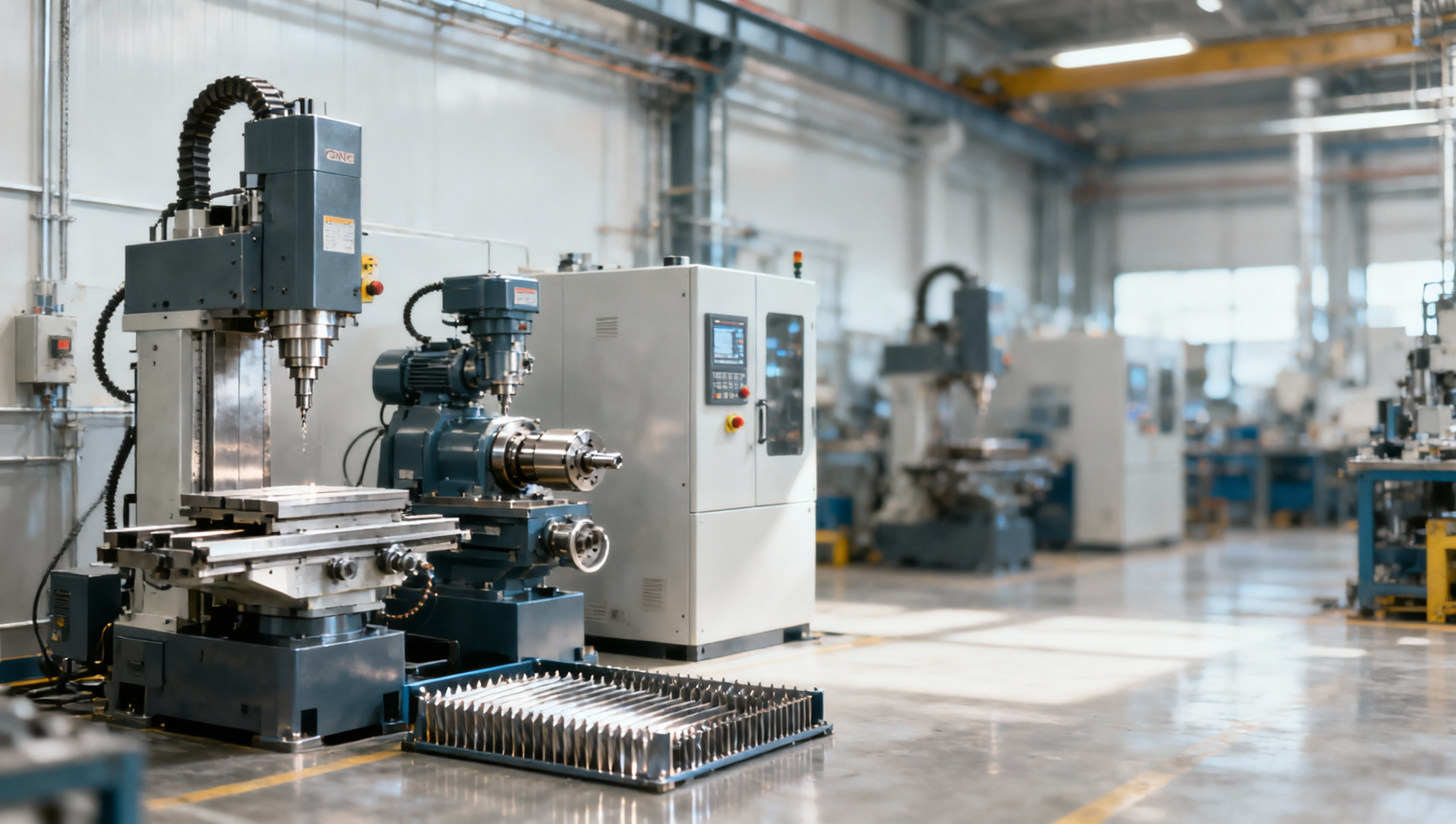
Choosing a space-saving CNC manufacturing setup requires balancing floor space, output, and long-term efficiency. Whether you source from a CNC manufacturing wholesaler, CNC manufacturing supplier, or CNC machine tool manufacturer, the right compact machine tool should support high precision CNC manufacturing, quick setup CNC manufacturing, and energy-saving CNC manufacturing. This guide helps buyers, operators, and decision-makers evaluate practical options for automotive, aerospace, electronics, and medical production.
What does a space-saving CNC manufacturing setup really include?
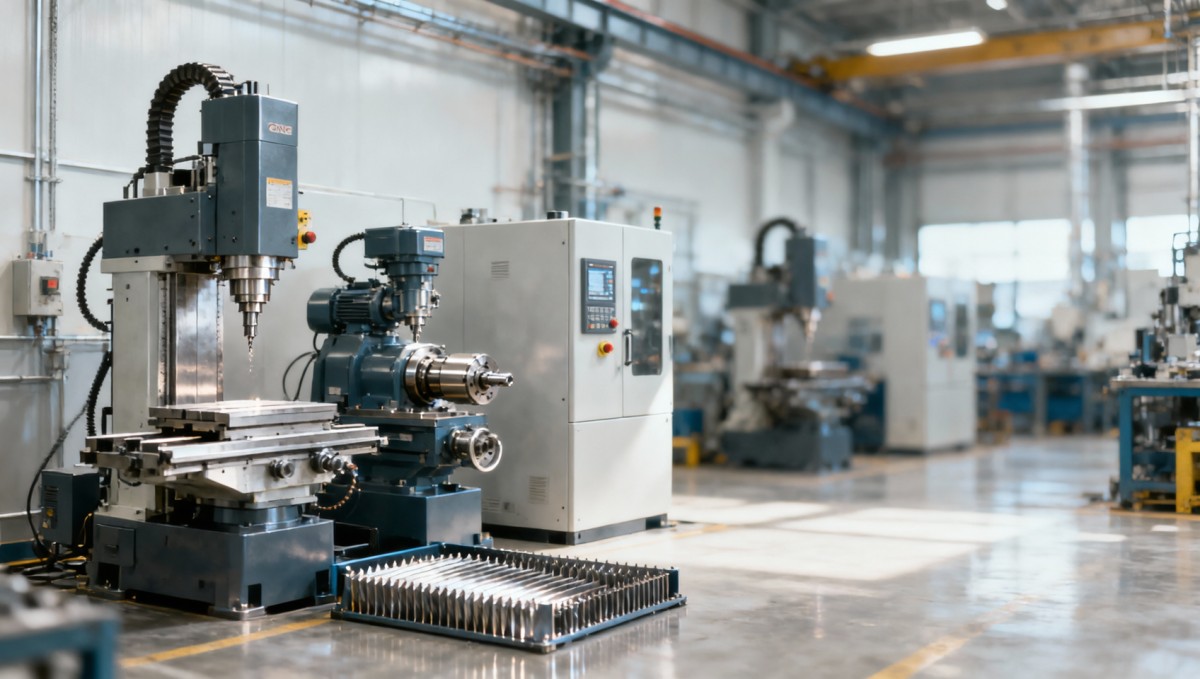
A compact CNC manufacturing layout is not just a smaller machine. In practice, it is a coordinated setup that combines machine footprint, loading method, chip handling, tool storage, electrical cabinet position, operator access, and future automation options. For many workshops, the target is to reduce occupied floor area by 15%–35% without sacrificing machining accuracy, maintenance access, or spindle utilization.
This matters across the broader manufacturing sector because available production space is often more expensive than expected. A shop may have enough installed power and labor, but still lose output due to poor machine spacing, long material flow paths, or oversized auxiliary equipment. In automotive, electronics, aerospace, and medical part production, every extra meter can affect lead time, safety, and handling efficiency.
A well-designed space-saving CNC manufacturing setup usually combines three goals: stable precision, fast changeover, and efficient motion around the machine. Buyers should think in terms of total production cell size rather than machine dimensions alone. A machine listed as compact may still require 800–1500 mm of service clearance, side access for coolant maintenance, and rear space for chip conveyor removal.
Core elements that define a compact CNC cell
Before requesting quotations, procurement teams should separate true space efficiency from simple miniaturization. The most effective compact CNC manufacturing systems tend to share several characteristics that directly affect output and operating comfort over 1-shift, 2-shift, or 24-hour production schedules.
- Integrated design: electrical cabinet, coolant tank, lubrication unit, and chip management are arranged to minimize external occupation.
- Accessible loading zone: operators need safe front access for manual or robotic loading, especially for small-batch and mixed-part work.
- Reasonable travel-to-footprint ratio: the machine should still support the intended workpiece envelope, not just save space on paper.
- Scalable automation interface: bar feeder, robot, pallet changer, or part catcher options should not force a full line redesign later.
For information researchers, this means the best compact solution is usually evaluated as a production cell. For operators, it means checking how quickly tools, fixtures, coolant filters, and doors can be reached. For enterprise decision-makers, it means linking machine density to output per square meter, energy use, and planned expansion over the next 2–5 years.
Which compact CNC machine types fit different production scenarios?
Different industries need different forms of space-saving CNC manufacturing. A compact turning center may be ideal for shaft parts, while a vertical machining center with a small footprint may suit precision housings and plates. In many workshops, selection starts with part geometry, monthly volume, and required tolerance range rather than brand preference.
Automotive suppliers often prioritize cycle stability and automation readiness. Electronics and medical manufacturers usually value clean layout, fast setup CNC manufacturing, and repeatability for small to medium batches. Aerospace machining may require more axis capability, but even there, floor efficiency matters if multiple process steps must fit into one controlled workshop area.
The table below compares common compact CNC machine configurations by application, footprint logic, and operational fit. It can help a procurement team narrow down options before discussing spindle power, travel range, and fixture design with a CNC manufacturing supplier.
In many cases, the right answer is not the smallest machine but the machine that removes one extra setup or one extra transfer. If a compact 5-axis system replaces 2–3 separate operations, its overall space efficiency can exceed that of two low-cost standalone machines. This is where a strong CNC machine tool manufacturer can add value through layout and process planning, not only equipment supply.
Scenario-based selection logic
High-mix, low-to-medium volume production
Choose compact systems with short setup time, modular fixturing, and simple operator access. A 20–40 tool magazine is often enough for mixed work if tool life management is stable. Fast door cycles and intuitive control panels matter more here than maximum spindle power.
Continuous batch production
Focus on unattended runtime, chip removal, coolant capacity, and loading automation. For 8–16 hour daily production, bar feed, pallet change, or robotic loading may save more space than keeping large buffer racks around manual machines.
Tight-tolerance precision work
For parts requiring typical tolerance bands such as ±0.01 mm to ±0.02 mm, compactness should never compromise machine rigidity, thermal stability, or probing capability. Precision still depends on structure, not just occupied floor area.
What technical parameters matter most when floor space is limited?
When comparing compact machine tools, many buyers overfocus on external dimensions and undercheck process parameters. A better method is to review 5 core categories: work envelope, spindle capability, tool capacity, automation compatibility, and maintenance clearance. These directly affect whether a space-saving CNC manufacturing setup will remain efficient after installation.
Typical machine comparison should include X/Y/Z travel, spindle speed range, spindle power range, rapid traverse, tool magazine size, and maximum workpiece size. Depending on the process, a spindle speed range of 8,000–15,000 rpm may suit general milling, while turning applications may prioritize torque and bar capacity instead. The right parameter mix depends on material and cycle structure.
The table below provides a practical evaluation framework for compact CNC manufacturing selection. It is especially useful when a procurement team needs to compare offers from multiple CNC manufacturing wholesalers or machine tool suppliers using the same decision logic.
A compact machine should also be reviewed for thermal behavior and energy-saving CNC manufacturing features. Variable-frequency drives, standby power logic, efficient coolant systems, and reduced compressed-air consumption can improve cost control over 12–36 months of operation. These factors are especially important when multiple compact cells are installed in one workshop.
A short technical checklist before approval
- Confirm the largest part size, fixture size, and loading method in one drawing review.
- Check whether the machine keeps target accuracy during 2–4 hour continuous cutting periods.
- Verify chip evacuation, coolant tank access, and filter replacement time.
- Ask if probing, mist collection, bar feeding, or robotics change the final installed footprint.
This approach avoids a common error: buying a compact machine that looks efficient in a brochure but creates downtime through awkward maintenance or repeated setup changes. Strong suppliers can help convert parameter sheets into practical production decisions.
How should buyers compare cost, output, and implementation risk?
Price alone is a weak indicator in compact CNC manufacturing. A lower-cost machine may require more floor space around it, more manual loading, or more frequent fixture changes. A slightly higher investment can make sense if it reduces one operator station, shortens setup by 20–40 minutes per batch, or supports stable lights-out production for repeat jobs.
Decision-makers should compare total operating logic over at least 12–24 months. That includes installation time, training, tooling adaptation, downtime risk, and future automation. In many industrial projects, the most expensive cost is not the machine itself, but lost throughput caused by layout mistakes or under-specified capability.
The following comparison table helps teams discuss procurement and implementation in a structured way, especially when balancing budget limitations with output growth targets.
A practical procurement model is to score each option across 5 dimensions: footprint, output, setup time, expansion potential, and service support. If two machines are similar in price, the one with better local support, spare part response, and integration planning often delivers lower risk. For imported equipment, ask about normal lead times such as 6–12 weeks for standard units and longer for customized cells.
Common implementation mistakes to avoid
- Ignoring utility needs such as power supply, air pressure, coolant handling, and chip collection before installation day.
- Choosing the minimum machine size without allowing room for future fixture changes or automation modules.
- Comparing quotations without standardizing what is included in tooling, probing, training, and commissioning scope.
- Assuming compact means low maintenance; in reality, dense layouts need disciplined service access planning every week or every month.
For many B2B buyers, the best path is phased implementation: start with one validated compact cell, stabilize process capability, then duplicate the layout. This reduces launch risk and creates a repeatable model for broader factory expansion.
What standards, workflow steps, and operator questions should be checked before purchase?
Compact CNC manufacturing still needs the same discipline as larger systems. Buyers should review machine documentation, electrical and safety conformity, installation requirements, and operator training scope before issuing a purchase order. Depending on market and destination, common considerations may include CE-related conformity expectations, ISO-based quality management processes, and application-specific documentation for traceability.
A simple 4-step implementation process helps reduce surprises. First, confirm parts, tolerances, and planned output. Second, review layout, utilities, and loading direction. Third, validate tooling, fixtures, and trial machining. Fourth, define acceptance criteria, training schedule, and after-sales response. This sequence is especially useful when sourcing from an overseas CNC manufacturing supplier.
Pre-purchase checklist for operators, buyers, and managers
- Can the machine hold required tolerance across the intended shift length and material type?
- How long does a normal setup change take for a new part family: 15 minutes, 45 minutes, or more?
- Is operator loading ergonomic, and can doors, fixtures, and control screens be reached safely in daily use?
- What spare parts, remote support, and on-site service response are available during the first 12 months?
- Will the compact layout still work if a robot, mist collector, bar feeder, or extra chip handling is added later?
For operators, the hidden issue is often not machine cutting performance but daily usability. A machine that is difficult to clean, reset, or inspect can lose efficiency over time. For procurement teams, the hidden issue is specification mismatch. For management, the hidden issue is whether the chosen setup supports expansion into smart manufacturing and digital process tracking over the next 3–5 years.
FAQ for compact CNC manufacturing decisions
How do I know if a compact CNC machine is too small for future production?
Check not only current parts but the next 2–3 product families. If fixture growth, tool count, or automation needs are likely to expand within 12–24 months, reserve capacity now. A slightly larger travel range or tool magazine can prevent an early replacement cycle.
Is quick setup CNC manufacturing more important than top spindle speed?
For mixed production and small-batch work, yes in many cases. If each batch changes frequently, saving 20–30 minutes per setup can create more weekly output than a higher spindle speed that only improves cutting time by a few minutes per part.
What is a normal lead time for a compact CNC manufacturing setup?
Standard machines may follow a common delivery window of 6–12 weeks, while customized automation cells often take longer due to fixture, interface, and testing requirements. Always separate machine lead time from tooling, trial parts, and installation planning.
Can energy-saving CNC manufacturing really matter in a small cell?
Yes, especially when several compact cells run together. Lower standby consumption, efficient coolant management, and optimized air use can improve operating cost over time. The impact becomes more visible in multi-shift production or when utility costs are high.
Why contact us when planning a compact CNC manufacturing solution?
A good supplier should do more than send a brochure. For compact CNC manufacturing, practical value comes from matching machine type, layout constraints, part process, and expansion plans into one workable proposal. That is especially important when buyers need to compare multiple machine configurations, delivery schedules, and automation paths across international sourcing options.
We focus on the global CNC machining and precision manufacturing sector, where precision, automation, and digital integration are already reshaping plant decisions. If you are evaluating a CNC manufacturing wholesaler, CNC manufacturing supplier, or CNC machine tool manufacturer, we can help structure the conversation around real production factors instead of only catalog specifications.
What you can discuss with us
- Parameter confirmation for part size, spindle range, tool capacity, and expected tolerance level.
- Product selection advice for compact lathes, machining centers, multi-task units, and automation-ready cells.
- Estimated delivery cycle discussion for standard equipment, customized options, and implementation stages.
- Customized solution planning for workshop layout, loading method, fixture logic, and future expansion.
- Support on documentation, common compliance expectations, sample evaluation, and quotation comparison.
If you are planning a space-saving CNC manufacturing setup, send your part drawings, target output, current floor constraints, and preferred delivery window. With those 4 inputs, it becomes much easier to discuss the right machine category, compact layout strategy, setup efficiency goals, and a sourcing path that fits your budget and production plan.
Recommended for You
![]() JTEKT Introduces G5 Series Large CNC Cylindrical Grinder, Sales Begin October 26, 2026Machine Tool Industry Editorial Team
 Shaft Parts for Heavy Machinery: Selecting Materials for High Shock LoadsCNC Machining Technology Center
![]() 33rd JIMTOF 2026 Set to Open in Tokyo as Taiwanese Exhibitors Seek OrdersGlobal Machine Tool Trade Research Center
 Which Fixture Type Cuts Changeover Time Most in High-Mix CNC Machining?CNC Machining Technology Center
![]() FANUC Invests $18 Million in Largest U.S. Corporate Automation Training CenterMachine Tool Industry Editorial Team
 Southeast Asia Machine Tool Market: Comparing Automotive Demand by CountryManufacturing Market Research Center


Aris Katos
Future of Carbide Coatings
15+ years in precision manufacturing systems. Specialized in high-speed milling and aerospace grade alloy processing.
▶
FANUC Links FIELD System Data with Copilot to Advance Shop-Floor Data UseCNC Machining Technology Center▶
Smart Manufacturing for Aerospace: Building Traceability Across CNC OperationsCNC Machining Technology Center▶
Choosing a CNC Machine for Mold Making: Accuracy, Rigidity, and Surface FinishCNC Machining Technology Center▶
How to Cut CNC Machining Energy Use per Part Without Longer Cycle TimesCNC Machining Technology Center▶
Will a Mazak CNC retrofit work with your existing servo drives?CNC Machining Technology Center
▶
Mastering 5-Axis Workholding Strategies
Join our technical panel on Nov 15th to learn about reducing vibrations in thin-wall components.

Providing you with integrated sanding solutions
Before-sales and after-sales services
Comprehensive technical support