• Global CNC market projected to reach $128B by 2028 • New EU trade regulations for precision tooling components • Aerospace deman
NYSE: CNC +1.2%LME: STEEL -0.4%

Why High-Speed CNC Manufacturing Fails in Some Applications
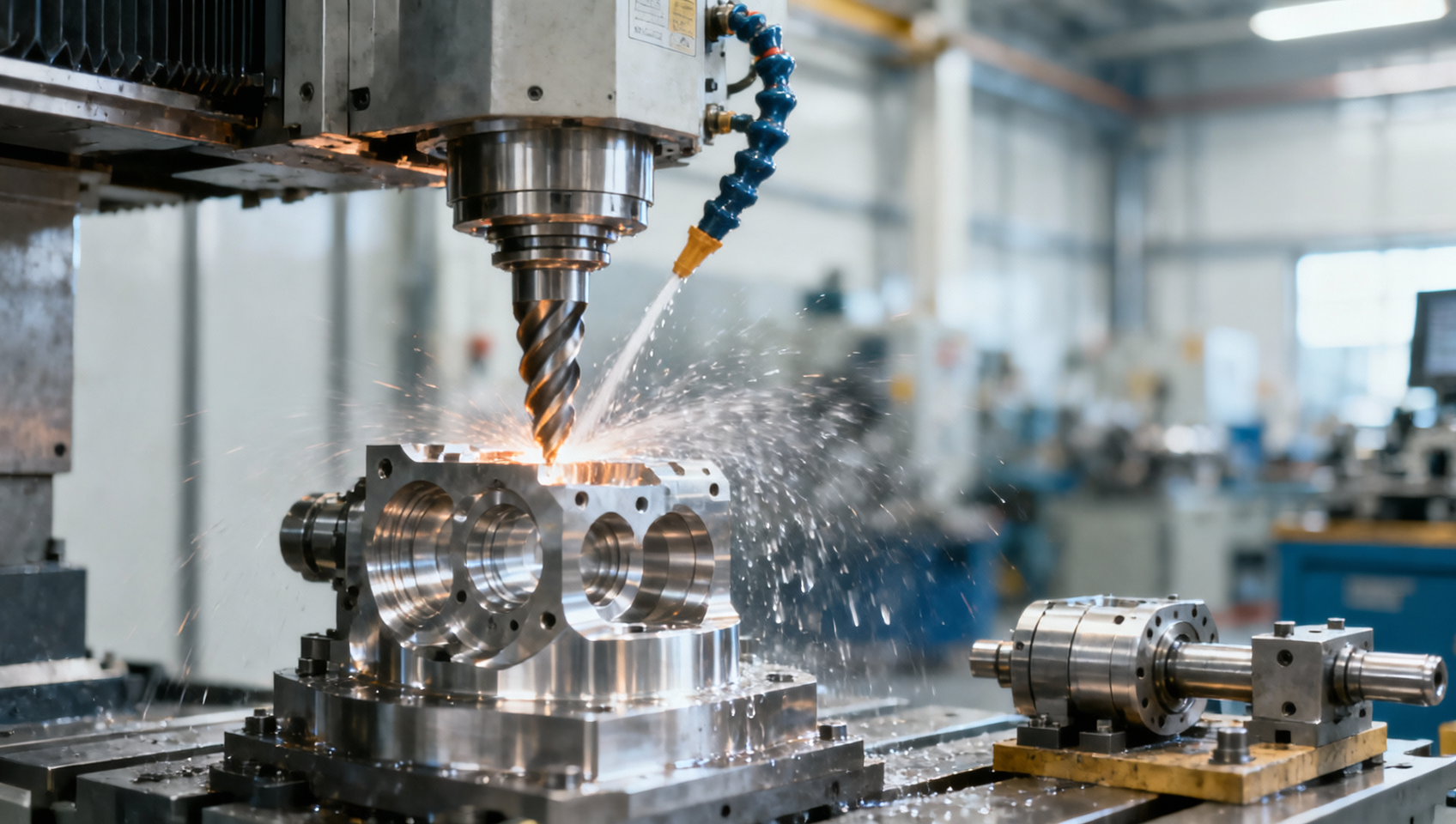
High-speed CNC manufacturing promises faster output, but in some scenarios it compromises stability, tolerance, and tool life. From precision CNC manufacturing and multi-axis CNC manufacturing to CNC manufacturing for aerospace, medical devices, and energy equipment, the wrong speed strategy can increase costs instead of efficiency. This article explores where high-speed machining fails, why it happens, and how manufacturers can choose a more cost-effective CNC manufacturing approach.
For researchers, operators, buyers, and manufacturing leaders, the real question is not whether higher spindle speed looks attractive on paper. The practical issue is whether the full process chain—machine rigidity, tool path, material response, fixture stability, coolant delivery, and quality control—can support that speed without increasing scrap, rework, or unplanned downtime.
In global machining environments, the pressure to shorten lead time by 10% to 30% often pushes workshops toward aggressive cutting strategies. Yet in many B2B applications, especially those involving tight tolerances, difficult-to-cut alloys, or low-volume high-mix production, a balanced CNC manufacturing approach delivers better profitability than maximum speed alone.
Where High-Speed CNC Manufacturing Commonly Breaks Down
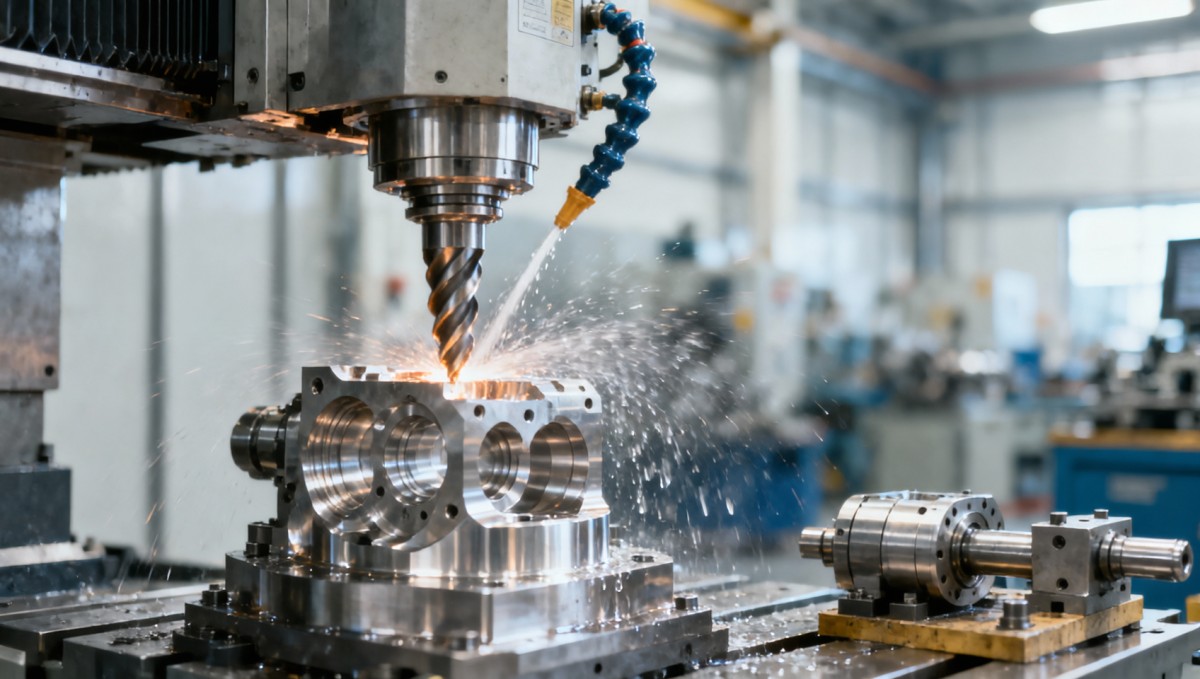
High-speed CNC manufacturing usually performs well in lighter cuts, aluminum machining, and stable repeat production. Problems start when cutting conditions become less predictable. In these cases, faster spindle speed or feed rate can amplify vibration, thermal distortion, and dimensional inconsistency rather than improve throughput.
This is especially true in precision CNC manufacturing, where tolerance bands may sit within ±0.01 mm to ±0.02 mm. A process that removes material 20% faster but creates a 5% to 8% rise in out-of-tolerance parts can quickly erase any productivity gain. For procurement teams and plant managers, this means cost per accepted part matters more than cycle time alone.
Multi-axis CNC manufacturing adds another layer of complexity. In 4-axis and 5-axis operations, tool engagement changes constantly, and machine motion is more dynamic. Higher speed can trigger micro-deflection in long tools, reduce surface consistency on contoured parts, and increase collision risk if CAM strategies are not optimized for real machine behavior.
Applications with the highest failure risk
The most common problem environments include titanium aerospace components, hardened steel dies, thin-wall medical housings, and large energy equipment parts. These applications tend to involve one or more of the following: low rigidity, high material hardness, deep cavities, long overhang tools, or complex surfaces requiring multiple finishing passes.
- Thin-wall components below 2 mm thickness may deform under aggressive feed and cutting pressure.
- Titanium and nickel alloys retain heat, making tool wear accelerate sharply at unsuitable speed ranges.
- Large parts above 500 mm may suffer thermal drift during long machining cycles.
- Medical or sealing surfaces often demand surface roughness targets such as Ra 0.8 or better, limiting how aggressive finishing can be.
The table below outlines where high-speed CNC manufacturing often underperforms compared with a controlled-speed strategy.
The key conclusion is straightforward: high-speed machining is not a universal productivity shortcut. In high-value manufacturing, process stability, first-pass yield, and tool cost per part are often better decision metrics than spindle RPM by itself.
Why Speed Alone Creates Hidden Cost in CNC Manufacturing
Many shops evaluate CNC manufacturing performance by cycle time reduction. That metric matters, but it is incomplete. If speed increases tool consumption by 15% to 40%, drives more frequent setup correction, or causes extra inspection loops, the total manufacturing cost can rise even while machine time per part falls.
One hidden cost comes from tool life instability. In difficult materials, a tool may last 60 parts at a controlled cutting condition but only 25 to 35 parts at an aggressive speed setting. This shortens unattended machining windows and raises the risk of cutting with a worn edge, which directly affects finish quality and dimensional repeatability.
Another hidden cost is inspection and rework. In CNC manufacturing for aerospace or regulated medical applications, a single tolerance failure may require full traceability review, extra measurement reports, or batch segregation. What appeared to be a 12% productivity gain can become a delivery delay of 2 to 5 days if parts fail final verification.
The most common cost drivers
1. Tool wear and breakage
At higher cutting speeds, edge temperature rises faster. If coolant delivery is insufficient or chips are not evacuated cleanly, flank wear, crater wear, and sudden edge failure become more likely. This matters even more in multi-axis CNC manufacturing, where tools may cut at varying contact angles throughout a single tool path.
2. Machine dynamics and vibration
A machine rated for high RPM does not automatically guarantee stable high-speed cutting. Spindle bearings, guideways, fixture setup, and tool holder balance all matter. Even a small imbalance at 15,000 to 20,000 RPM can create enough vibration to reduce finish quality or damage the cutting edge.
3. Quality loss in finishing operations
Roughing may tolerate more aggressive parameters, but finishing is less forgiving. On sealing faces, bearing seats, and mating geometries, process variation of just a few microns may affect downstream assembly. For buyers, this is why suppliers should be evaluated on process capability, not simply on advertised machine speed.
The following comparison helps decision-makers assess whether a high-speed strategy truly improves manufacturing economics.
In many B2B production settings, the balanced strategy wins because it supports quoting accuracy, delivery reliability, and lower non-conformance risk. That is often more valuable than chasing the shortest possible cycle time.
How Material, Geometry, and Tolerance Define the Right Speed Strategy
A smart CNC manufacturing plan starts with three variables: material, part geometry, and required tolerance. These determine the safe process window far more than the machine brochure does. For example, aluminum parts with open access features may support high spindle speeds, while Inconel pockets with a 4:1 depth-to-diameter ratio may demand a much narrower parameter range.
Geometry matters because it affects rigidity. A thick block with broad support behaves very differently from a thin-wall bracket or an impeller blade. Even when the same machine and tool are used, the second part may need 20% to 50% lower engagement to prevent deflection. This is why part families should not be grouped under one speed rule.
Tolerance also shapes process choice. A roughing operation with ±0.1 mm allowance can be optimized for material removal, but a finishing pass targeting ±0.01 mm, positional accuracy, or controlled surface roughness requires a more conservative approach. In practical terms, the best CNC manufacturing strategy often mixes fast roughing with controlled semi-finishing and finishing.
Selection framework for engineers and buyers
- Classify the material: aluminum, stainless steel, tool steel, titanium, nickel alloy, or composite-related machining setup.
- Review feature risk: thin walls, deep cavities, small radii, long tools, or interrupted cuts.
- Define acceptance criteria: dimensional tolerance, flatness, roundness, burr limits, and surface finish targets.
- Check process capability: spindle speed range, holder balance grade, coolant pressure, probing, and machine rigidity.
- Run parameter validation before full production, especially for batches above 50 to 100 parts.
The table below provides a practical guide to matching process intensity with application requirements.
This framework helps procurement teams compare suppliers more effectively. A capable supplier should explain not only machine capacity, but also why a certain speed strategy is technically and commercially appropriate for the part family.
What a More Cost-Effective CNC Manufacturing Approach Looks Like
The most cost-effective CNC manufacturing model is usually process-specific rather than speed-maximized. It balances roughing efficiency, finishing stability, fixture design, tool selection, machine capability, and inspection planning. This is particularly relevant for suppliers serving aerospace, medical, electronics, and energy equipment sectors where repeatability has direct commercial value.
A practical approach often separates operations into stages. Roughing can use higher material-removal settings where the part remains rigid. Semi-finishing then stabilizes geometry and removes stress concentration. Final finishing uses a narrower parameter window to protect tolerance and surface integrity. This 3-stage method reduces risk compared with trying to run the entire job at one aggressive speed level.
For operators and production planners, in-process monitoring is equally important. Tool wear offsets, spindle load tracking, probing, and scheduled inspection at defined intervals—such as every 10, 20, or 50 parts depending on criticality—help maintain control. Digital integration and smart factory tools can make these checks faster without interrupting output excessively.
Recommended process controls
- Use separate roughing and finishing tools where part value justifies it, instead of forcing one tool to do both tasks.
- Validate holder balance and runout before high-speed multi-axis operations; even small runout can reduce tool life materially.
- Adjust feed and radial engagement according to feature rigidity rather than applying one CAM template to every part.
- Apply probing or intermediate measurement on critical dimensions before final pass completion.
- Review actual cost per accepted part, including inspection time, tooling, scrap, and machine stoppage—not only spindle utilization.
Procurement checklist for supplier evaluation
When sourcing CNC manufacturing partners, buyers should ask process-focused questions. Can the supplier explain why a 12,000 RPM strategy is better than 18,000 RPM for a certain alloy? Do they segment roughing and finishing? How do they control thermal drift over 2-hour to 6-hour cycles? These details reveal real capability.
If your project involves precision parts, complex 5-axis geometries, or export-oriented quality requirements, a supplier that chooses controlled speed with documented validation may be the more competitive option in the long run. Lower disruption, steadier lead time, and better lot consistency usually support stronger total project value.
FAQ: Practical Questions About High-Speed CNC Manufacturing
Is high-speed CNC manufacturing always better for production efficiency?
No. It can improve efficiency in suitable conditions, especially with aluminum, short tools, and stable high-volume jobs. But in tight-tolerance or hard-alloy applications, the best result may come from a moderate-speed process that protects tool life, reduces scrap, and improves first-pass yield.
Which industries should be most cautious about speed-first machining strategies?
Aerospace, medical devices, energy equipment, and precision electronics should be especially cautious. These sectors often work with difficult materials, demanding geometries, or strict acceptance criteria. In such cases, a small quality drift can have a larger commercial impact than a slightly longer cycle time.
What are the top indicators that a CNC process is running too fast?
Common signs include unstable spindle load, increasing chatter marks, shorter tool life than expected, rising burr levels, excessive heat discoloration, and dimensional drift across the batch. If these symptoms appear after a speed increase, the process window may be too aggressive for the application.
How should buyers compare CNC suppliers beyond machine speed?
Focus on at least 4 areas: process engineering logic, quality control method, tooling strategy, and batch repeatability. Ask how they manage roughing versus finishing, what inspection frequency they use, how they control tool wear, and how they adapt parameters for different materials and geometries.
High-speed CNC manufacturing is valuable when the application, material, machine dynamics, and quality targets all support it. But in many precision manufacturing environments, faster is not automatically better. The stronger strategy is to optimize total cost per qualified part, protect process stability, and match speed to real production conditions.
If you are evaluating CNC manufacturing for aerospace, medical, energy, automotive, or complex multi-axis parts, a process review can help identify the right balance between speed, quality, and delivery reliability. Contact us to discuss your part requirements, compare machining approaches, and get a more tailored manufacturing solution.
Recommended for You
![]() Mitsubishi Electric Announces Physical AI System Linking Humanoid Robots and CNC MachinesMachine Tool Industry Editorial Team
 Precision Machining for Defense: Supplier Quality and Traceability ChecksManufacturing Market Research Center
![]() Nidec Machine Tool Launches MVR-5X Five-Axis Gantry MachineMachine Tool Industry Editorial Team
 Choosing a Precision Disc Parts Manufacturer in China: Tolerances and Quality ChecksManufacturing Market Research Center
![]() Siemens Executive Says AI Could Raise Factory Automation to 80%Manufacturing Market Research Center
 Choosing Automated Machine Tools for High-Mix, Low-Volume ProductionMachine Tool Industry Editorial Team

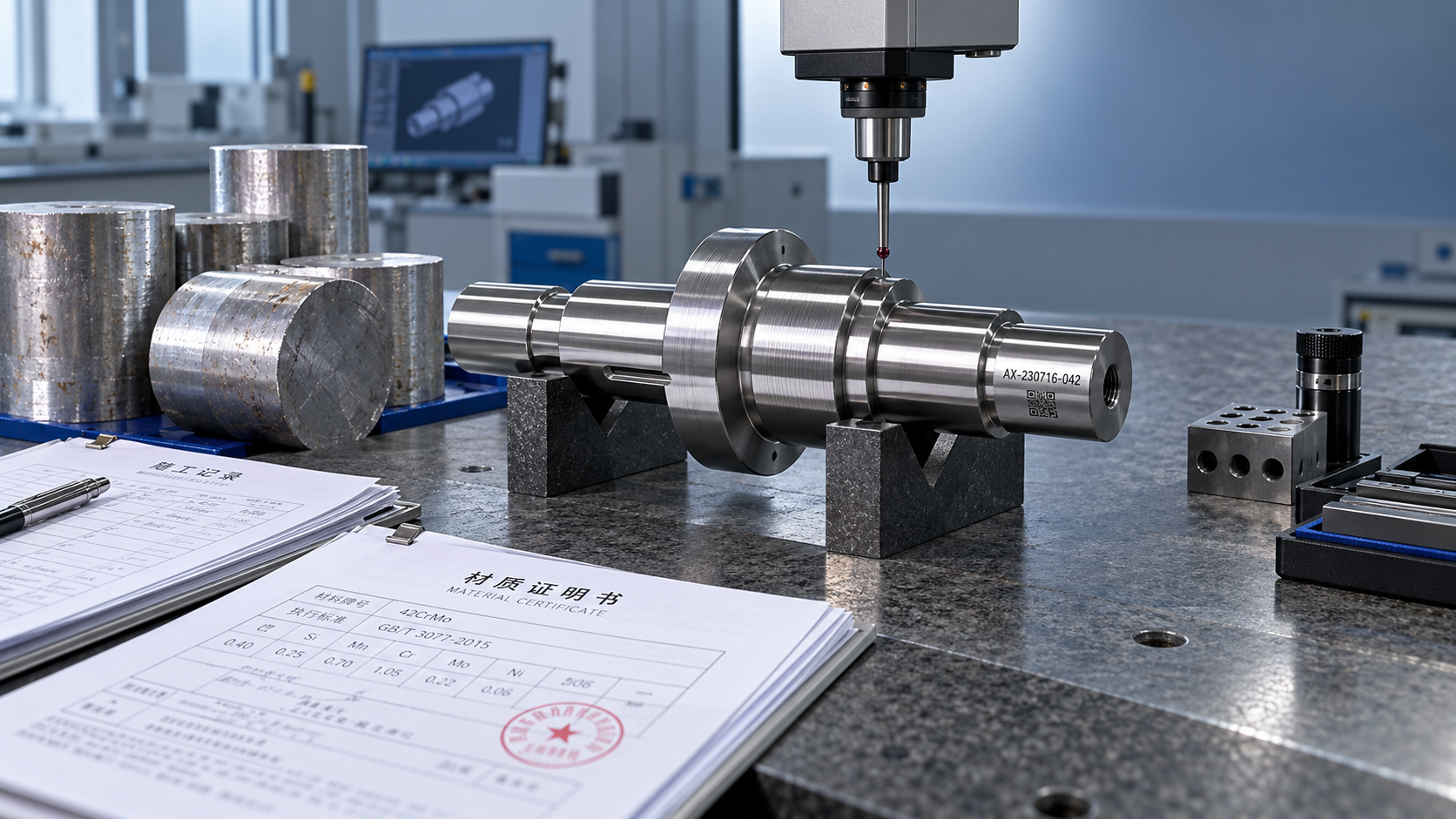
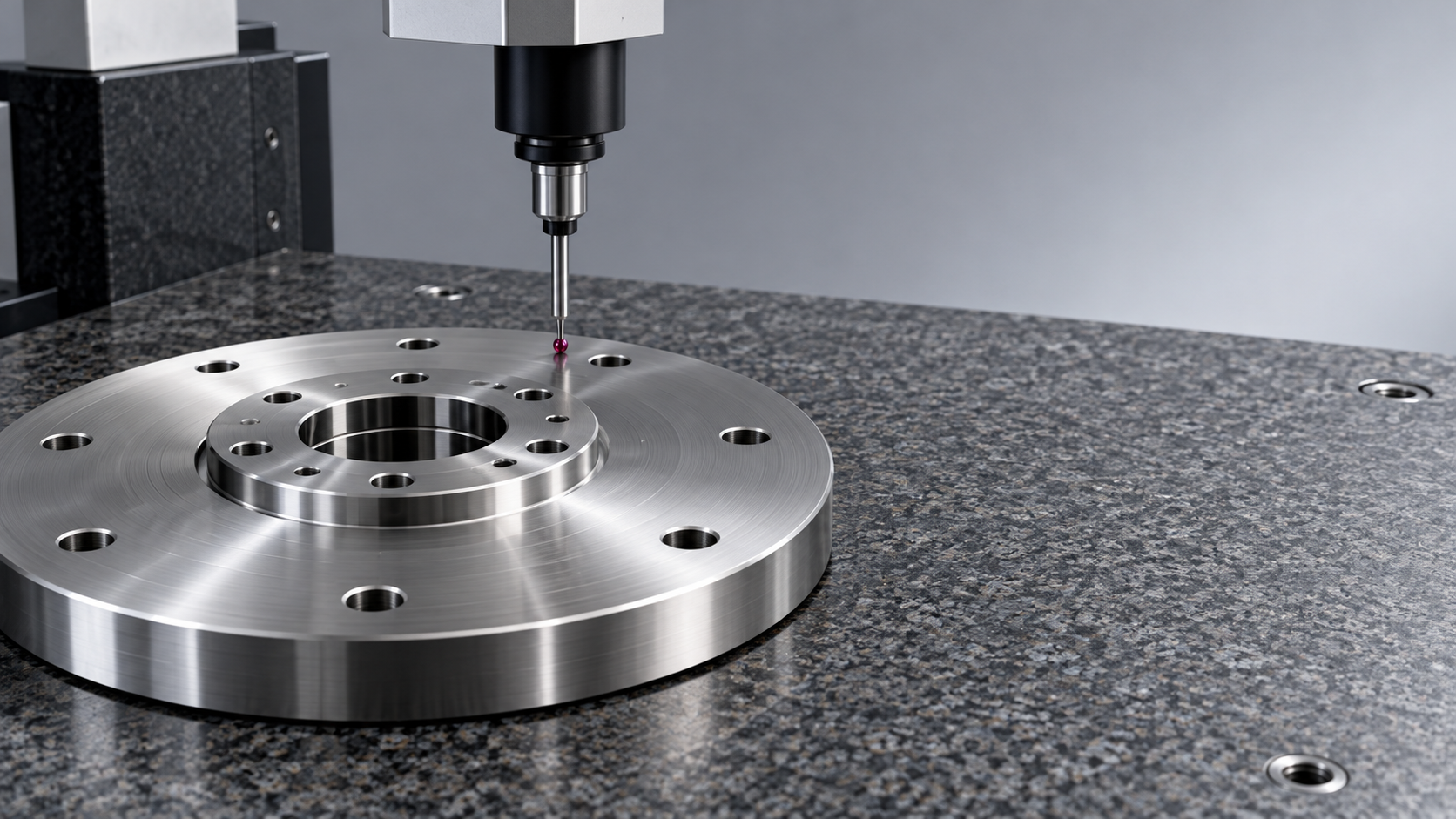

Aris Katos
Future of Carbide Coatings
15+ years in precision manufacturing systems. Specialized in high-speed milling and aerospace grade alloy processing.
▶
Choosing a CNC Machine for Mold Making: Accuracy, Rigidity, and Surface FinishCNC Machining Technology Center▶
How to Cut CNC Machining Energy Use per Part Without Longer Cycle TimesCNC Machining Technology Center▶
Will a Mazak CNC retrofit work with your existing servo drives?CNC Machining Technology Center▶
Do energy-efficient machine tools reduce power use at partial load?CNC Machining Technology Center▶
Comparing energy-efficient machine tools by energy use per partCNC Machining Technology Center
▶
Mastering 5-Axis Workholding Strategies
Join our technical panel on Nov 15th to learn about reducing vibrations in thin-wall components.

Providing you with integrated sanding solutions
Before-sales and after-sales services
Comprehensive technical support