• Global CNC market projected to reach $128B by 2028 • New EU trade regulations for precision tooling components • Aerospace deman
NYSE: CNC +1.2%LME: STEEL -0.4%

Quick Setup CNC Manufacturing: When It Makes Sense for Low-Volume Parts
Quick Setup CNC Manufacturing: When It Makes Sense for Low-Volume Parts
For low-volume parts, speed rarely depends on machining time alone.
In many projects, the real delay comes from setup, tooling changes, approvals, and repeated handoffs.
That is why quick setup CNC manufacturing is getting more attention across precision manufacturing.
It helps reduce non-cutting time while keeping dimensional control, process stability, and scheduling flexibility.
When designs may still change, this approach gives teams room to move without committing to full production conditions.
In practical terms, quick setup CNC manufacturing works best when urgency, moderate complexity, and uncertain demand appear together.
The value is not just faster starts.
It also improves decision quality by shortening the gap between engineering intent and physical results.
What Quick Setup CNC Manufacturing Really Means
Quick setup CNC manufacturing is not a shortcut around process discipline.
It is a production strategy built around faster preparation, fewer adjustments, and repeatable machine readiness.
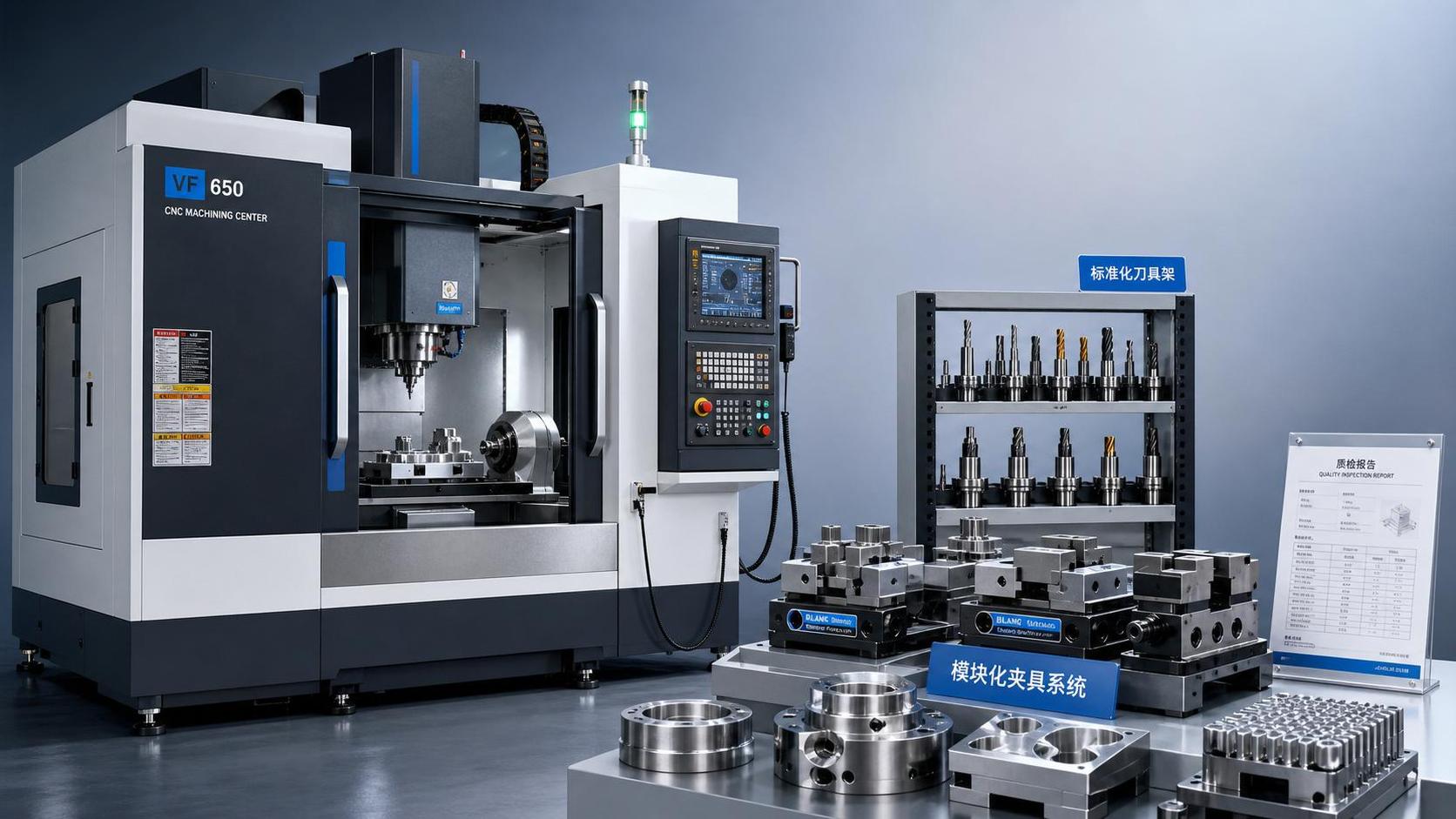
This usually includes standardized fixtures, pre-qualified tools, proven programs, and operators trained for rapid changeovers.
Digital workflow support also matters.
CAM libraries, setup sheets, probing routines, and in-process inspection reduce uncertainty before the first part is cut.
In the global CNC machine tool sector, this fits the broader shift toward flexible production and smarter manufacturing systems.
For low-volume parts, that flexibility often matters more than maximum spindle utilization.
When It Makes Sense for Low-Volume Parts
Not every part needs quick setup CNC manufacturing.
The method makes the most sense when the business case depends on responsiveness more than pure volume efficiency.
Several situations are strong indicators:
- Prototype-to-pilot transitions with limited quantities
- Bridge production before a larger line is ready
- Spare parts with intermittent demand
- Custom industrial components for equipment upgrades
- Validation batches needing dimensional consistency
- Projects facing design revisions late in the schedule
These cases are common in aerospace support, automation equipment, electronics tooling, and energy systems.
They also show up in automotive programs during early launch phases or engineering change implementation.
From a planning perspective, the key signal is unstable demand with high timing pressure.
That combination often makes conventional setup economics less attractive.
Why It Works Better Than Standard Production Setups
Traditional production planning usually rewards scale.
Longer setup time is acceptable when it can be spread across hundreds or thousands of parts.
Low-volume work changes that math completely.
If setup consumes a large share of total production time, cost per part rises fast.
Quick setup CNC manufacturing attacks that problem at the source.
It trims preparation effort, reduces trial runs, and shortens machine idle periods between jobs.
This creates three direct gains:
- Shorter lead times for internal and customer-facing milestones
- Lower setup-driven cost on small batches
- More predictable quality during frequent job changes
That last point is often underestimated.
In low-volume manufacturing, inconsistency between setups can erase the benefit of moving quickly.
So the goal is fast setup with stable output, not speed by itself.
How to Evaluate Fit Before Committing
A simple screening process helps avoid using the method where it adds little value.
Start with five questions:
- Is demand too low or irregular for dedicated production tooling?
- Will schedule delay cost more than slightly higher machining rates?
- Are engineering changes still likely within the next release cycle?
- Can the part use standard fixturing or modular holding methods?
- Does quality risk increase when setup steps are inconsistent?
If the answer is yes to most of these, quick setup CNC manufacturing is usually worth deeper review.
It is especially relevant when procurement, engineering, and production need faster feedback loops.
This is where a capable CNC machining partner can make a measurable difference.
Key Process Elements That Make It Successful
The method only works when the production system is prepared for fast transitions.
Several elements matter more than they first appear.
1. Modular fixturing
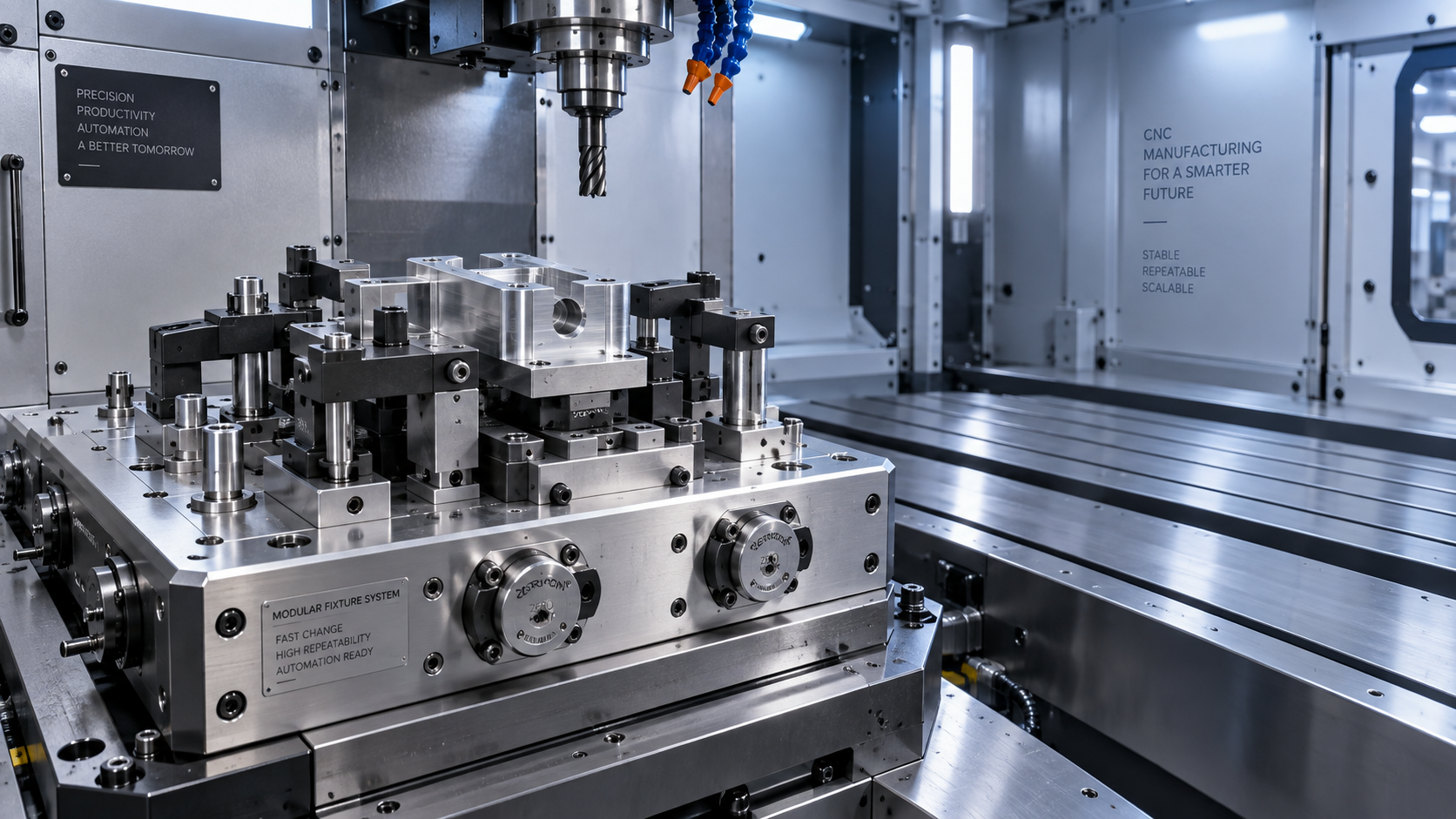
Reusable workholding reduces setup variation and cuts fixture preparation time.
It also supports design updates without fully rebuilding the setup.
2. Tool standardization
Tool libraries, preset offsets, and common holders save more time than many teams expect.
They also lower the chance of setup mistakes between jobs.
3. Program reuse and verification
Proven CAM strategies shorten programming time and reduce first-run surprises.
Simulation and digital setup records are particularly useful for complex parts.
4. In-process inspection
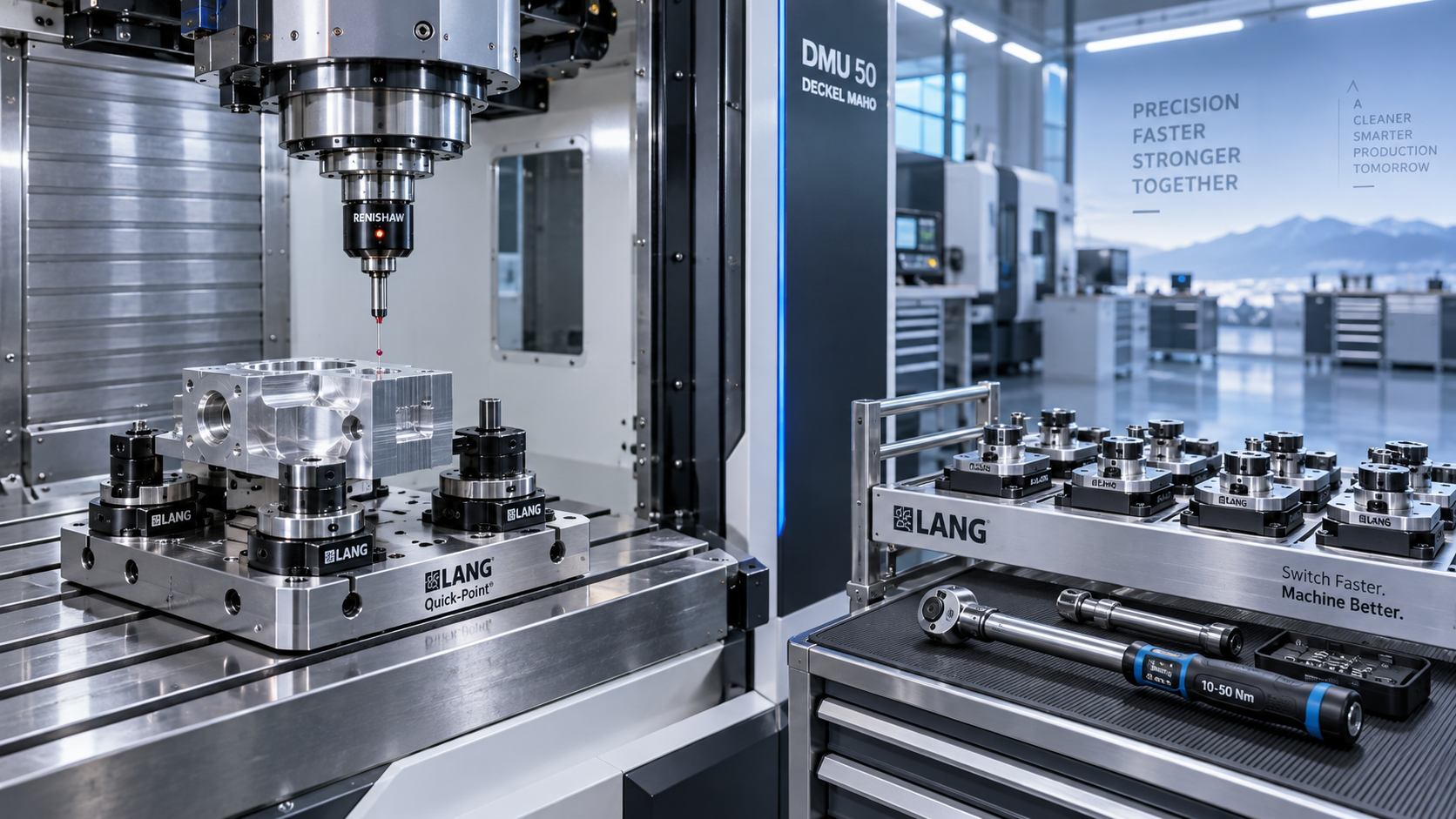
Touch probes, reference features, and early-stage checks catch deviation before an entire batch is affected.
That is critical when part counts are low and every piece carries more value.
Cost, Lead Time, and Quality Trade-Offs
Quick setup CNC manufacturing is not always the cheapest route on paper.
However, paper estimates often miss the cost of waiting, redesign, rescheduling, and disrupted project flow.
A balanced view looks at total project impact.
In real operations, the best choice often depends on whether time risk or unit price risk matters more.
Common Risks and How to Control Them
There are limits to quick setup CNC manufacturing, and ignoring them creates preventable problems.
The most common risks are operational rather than technical.
- Using unstable drawings that trigger repeated revisions after setup
- Choosing parts that really need dedicated fixtures for accuracy
- Underestimating inspection needs on complex geometries
- Assuming every supplier can execute rapid changeovers reliably
Control starts with clearer release discipline.
Freeze critical dimensions, confirm revision levels, and define acceptance criteria before machining begins.
It also helps to separate urgent parts from unstable parts.
Urgency supports quick setup CNC manufacturing.
Uncontrolled engineering churn does not.
A Practical Decision Framework
A useful decision model can stay simple.
Review the part against four factors: quantity, urgency, change probability, and setup repeatability.
If quantity is low, urgency is high, and changes remain possible, the case becomes stronger.
Then check whether the process can be standardized enough to protect quality.
That final point is decisive.
Quick setup CNC manufacturing delivers the best results when flexibility is supported by disciplined execution.
For low-volume parts, that balance can shorten launch cycles, reduce hidden costs, and improve planning confidence.
In the current CNC machining market, where responsiveness and precision increasingly move together, this approach is becoming a practical operating choice.
The next step is straightforward: identify parts with high setup burden, uncertain demand, and schedule pressure, then evaluate them for quick setup CNC manufacturing using a fixed screening checklist.
Recommended for You
 Can CNC Machining Inconel Control Tool Wear in High-Temperature Aerospace Parts?CNC Machining Technology Center
 Machine Tool Market Outlook: Demand Drivers, Capacity Shifts, and Investment RisksManufacturing Market Research Center
 Zero-Point Clamping or Modular Fixtures? Choosing a Faster CNC Changeover SystemCNC Machining Technology Center
 How to Cut CNC Fixture Changeover Time Without Sacrificing Part AccuracyCNC Machining Technology Center
 When Does CNC Turning Pay Off? A Break-Even Guide by Annual Part VolumeMachine Tool Industry Editorial Team
 Machine Tool Standards by Country: What Importers Must Verify Before PurchaseManufacturing Policy Research Center

Aris Katos
Future of Carbide Coatings
15+ years in precision manufacturing systems. Specialized in high-speed milling and aerospace grade alloy processing.
▶
Can CNC Machining Inconel Control Tool Wear in High-Temperature Aerospace Parts?CNC Machining Technology Center▶
How Automated Precision Machining Maintains Tolerance in High-Mix ProductionCNC Machining Technology Center▶
CNC Programming Explained: From CAD Models to Reliable Shop-Floor ToolpathsCNC Machining Technology Center▶
How Multi-Axis Machining Produces Complex Components With Fewer SetupsCNC Machining Technology Center▶
How Much Does CNC Programming Software Cost in 2026?CNC Machining Technology Center
Mastering 5-Axis Workholding Strategies
Join our technical panel on Nov 15th to learn about reducing vibrations in thin-wall components.

Providing you with integrated sanding solutions
Before-sales and after-sales services
Comprehensive technical support