• Global CNC market projected to reach $128B by 2028 • New EU trade regulations for precision tooling components • Aerospace deman
NYSE: CNC +1.2%LME: STEEL -0.4%

How Industrial Machining Equipment Maintenance Reduces Downtime and Repeat Failures
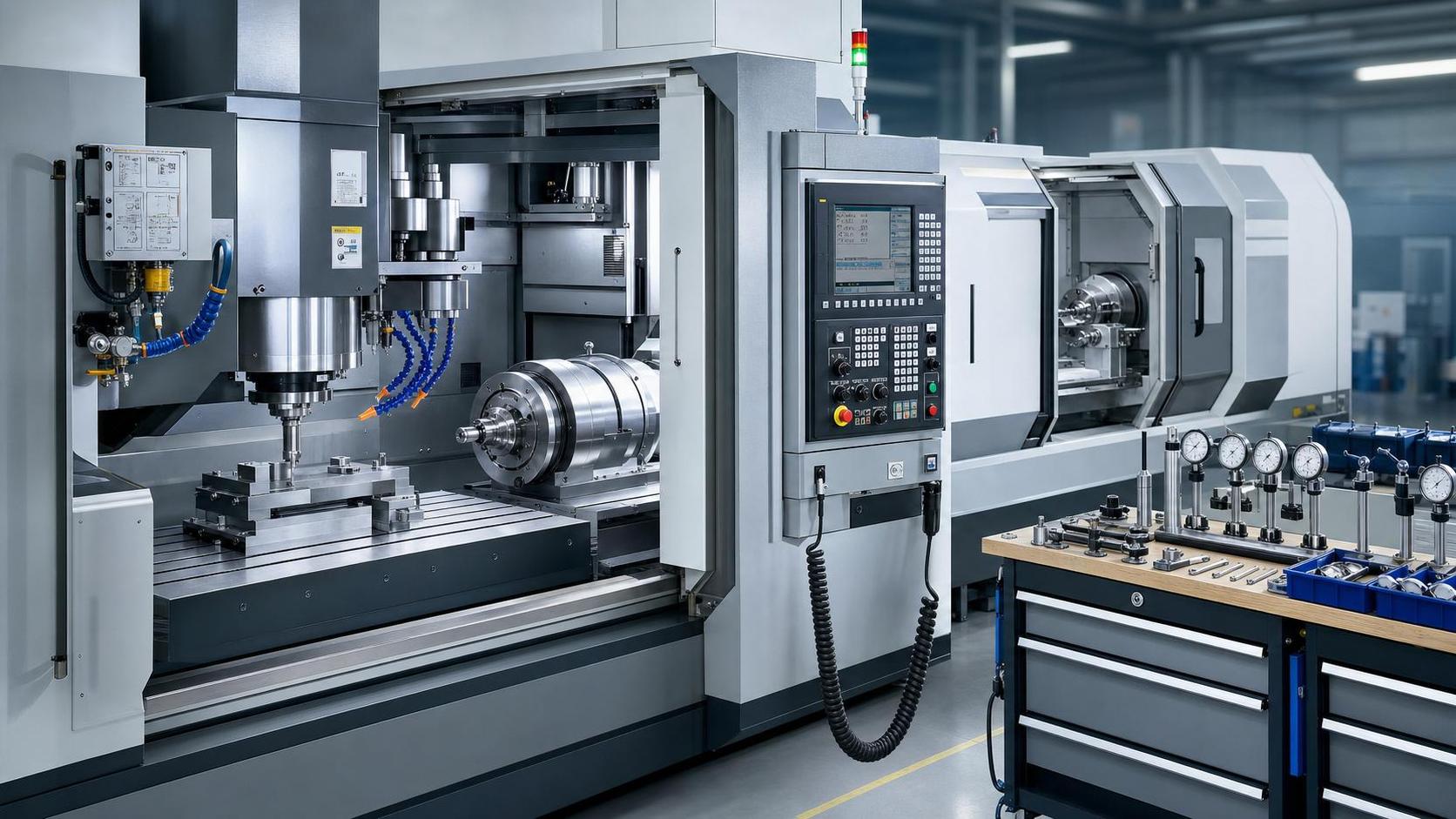
How Industrial Machining Equipment Maintenance Reduces Downtime and Repeat Failures
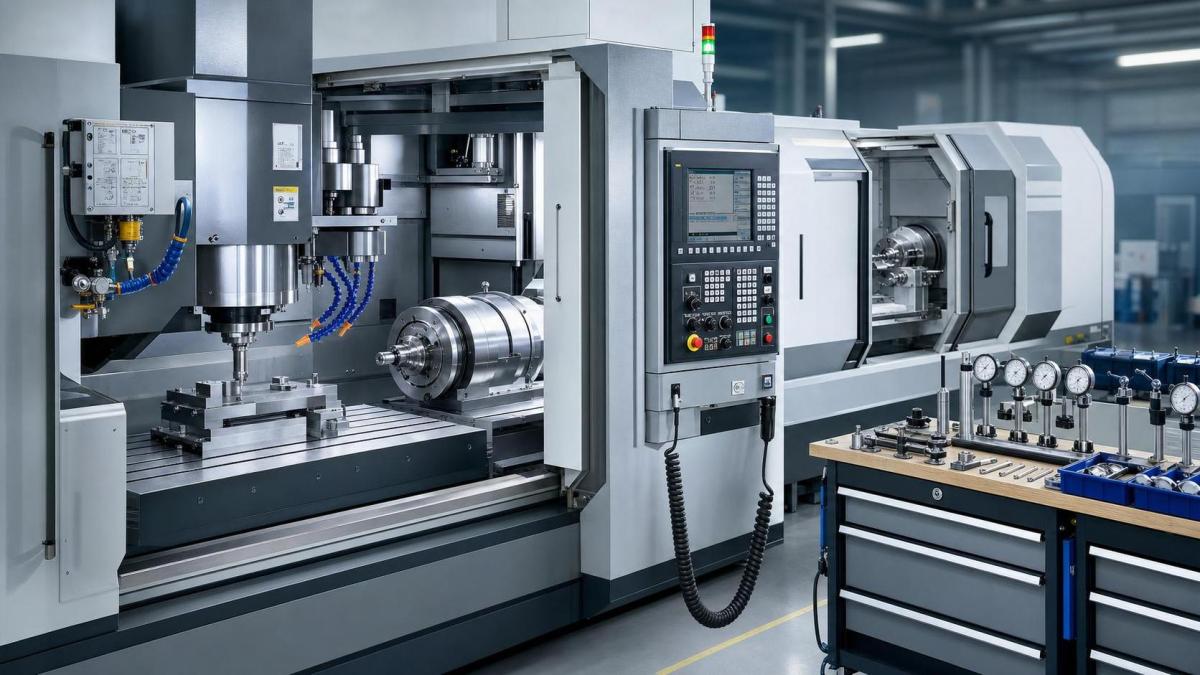
Keeping industrial machining equipment running well is not only about avoiding sudden stops. It also protects accuracy, tool life, part quality, and delivery schedules.
In real production settings, most repeat failures do not begin as major events. They usually start with small changes that were missed or delayed.
A spindle runs hotter. Lubrication flow drops. A guideway collects contamination. Servo response becomes slightly inconsistent. Each signal looks minor at first.
That is why a structured maintenance approach matters for industrial machining equipment. It helps teams catch wear early and stop one failure from becoming a recurring problem.
This is especially important in CNC lathes, machining centers, and multi-axis systems. These machines operate under tight tolerances and heavy production pressure.
When maintenance is disciplined, downtime becomes shorter, root causes become clearer, and the same breakdown is less likely to come back.
Why downtime keeps returning on the same machine
Many failures look mechanical, but the real cause is often process-related. A rushed repair can restore motion without restoring reliability.
In industrial machining equipment, repeat failures usually come from one of four gaps. The first is incomplete diagnosis. The second is weak preventive routines.
The third is poor maintenance records. The fourth is a mismatch between machine condition and production load.
For example, replacing a bearing without checking alignment, lubrication quality, and vibration history often solves the symptom, not the source.
A similar pattern appears in coolant systems. Teams may clear a blockage, restart the machine, and move on. Then contamination builds again and the same alarm returns.
From a service perspective, reducing downtime means changing that cycle. The goal is not fast recovery alone. The goal is stable recovery.
Common repeat failure patterns
- Spindle overheating caused by poor lubrication or clogged filters
- Axis positioning errors linked to backlash, encoder issues, or loose couplings
- Hydraulic instability caused by leaking seals or dirty fluid
- Coolant failure related to blocked lines, pump wear, or bacterial buildup
- Electrical trips tied to cabinet dust, heat buildup, or unstable connectors
What effective maintenance looks like in industrial machining equipment
Good maintenance is not a single checklist. It is a layered system that combines inspection, cleaning, measurement, adjustment, and verification.
For industrial machining equipment, the strongest routine usually has three levels. Daily checks catch obvious changes. Scheduled service addresses wear. Condition monitoring finds trends.
This also means maintenance must reflect machine type and workload. A high-speed machining center needs different attention than a lower-speed CNC lathe.
More importantly, maintenance needs measurable standards. Terms like “looks fine” or “still usable” are too vague for precision equipment.
Core maintenance areas that reduce downtime
- Lubrication management. Check flow, viscosity, contamination, and delivery timing.
- Mechanical alignment. Verify backlash, parallelism, coupling condition, and fastener torque.
- Thermal control. Monitor spindle temperature, cabinet cooling, and coolant stability.
- Electrical inspection. Look for connector wear, insulation aging, and fan blockage.
- Fluid system care. Test hydraulic oil, coolant concentration, filtration, and leakage points.
- Calibration checks. Confirm repeatability, zero return accuracy, and axis response.
When these tasks are documented and repeated consistently, industrial machining equipment becomes easier to troubleshoot and less likely to fail in the same way twice.
How to diagnose the real cause instead of treating the symptom
Troubleshooting quality determines whether downtime ends or simply pauses. That is where many maintenance programs succeed or fail.
A useful rule is simple. Never close a failure ticket without proving why it happened, how it was confirmed, and what prevents recurrence.
For industrial machining equipment, root cause checks should combine machine data with physical inspection. One without the other creates blind spots.
A practical diagnostic flow
- Define the failure clearly. Record alarm codes, machine state, tooling status, and production conditions.
- Check history. Look for similar faults, recent repairs, part changes, or process changes.
- Inspect physically. Verify wear marks, leaks, looseness, contamination, and temperature differences.
- Measure performance. Use vibration, current draw, runout, pressure, or thermal readings.
- Test the repair. Confirm normal operation under actual load, not only idle conditions.
- Add a prevention action. Update intervals, parts lists, or inspection points.
This method takes slightly longer during the event, but it saves much more time later. That tradeoff usually pays back quickly.
Maintenance records that actually help future repairs
Many machine histories are too general to support real decisions. Notes like “repaired,” “adjusted,” or “checked” do not help the next visit.
For industrial machining equipment, service records need enough detail to show patterns. They should explain what changed, what was measured, and what was replaced.
This matters even more across global manufacturing networks. Equipment may move between teams, regions, or suppliers, but the maintenance logic must stay traceable.
Minimum data worth recording
- Machine model, serial number, axis involved, and operating hours
- Alarm code, symptom description, and production context
- Measured values before repair and after repair
- Parts replaced, lubricant used, and adjustment settings
- Recommended follow-up date and risk level
Better records turn industrial machining equipment maintenance from reactive work into a repeatable reliability process. That shift is where downtime starts to shrink.
Priority matrix for frequent maintenance risks
Not every issue deserves the same response. A simple priority matrix helps teams focus on failures that stop production or damage accuracy fastest.
Where digital monitoring adds real value
From recent industry changes, one trend is clear. More industrial machining equipment is being maintained with data, not calendar intervals alone.
That does not mean every machine needs a complex smart factory system. Even basic monitoring can improve maintenance timing and reduce repeat failures.
Useful signals include spindle vibration, motor current, lubricant consumption, coolant pressure, cabinet temperature, and cycle-based fault frequency.
When these signals are trended over time, industrial machining equipment reveals deterioration earlier. That gives teams room to plan service before production stops.
The bigger advantage is consistency. Data makes handovers cleaner and helps different service teams judge condition with the same baseline.
A practical maintenance routine that holds up under production pressure
The best routine is the one that gets used every week. It should be detailed enough to prevent misses and simple enough to survive a busy schedule.
For industrial machining equipment, a strong routine usually blends daily observation with weekly verification and monthly condition review.
Suggested service rhythm
- Daily: inspect alarms, leaks, temperatures, unusual noise, and chip evacuation
- Weekly: check lubrication points, filters, fasteners, coolant condition, and backlash trends
- Monthly: review vibration data, thermal drift, cabinet condition, and axis repeatability
- Quarterly: inspect hydraulic quality, calibration status, and recurring fault history
This kind of rhythm keeps industrial machining equipment reliable without waiting for major failures to define the schedule.
In day-to-day operations, the real win is cumulative. Fewer surprise stops, fewer repeated alarms, and fewer emergency parts orders create measurable stability.
Final takeaway
Industrial machining equipment maintenance works best when it is preventive, measurable, and tied to root cause discipline. That is what reduces downtime in a lasting way.
The same approach also cuts repeat failures because it turns every repair into a learning point, not just a reset button.
Start with the machines that fail most often. Standardize inspection points, improve records, verify repairs under load, and track changes over time.
When industrial machining equipment is maintained with that level of control, reliability improves, service work becomes easier to scale, and production performance stays far more predictable.
Recommended for You
 Can CNC Machining Inconel Control Tool Wear in High-Temperature Aerospace Parts?CNC Machining Technology Center
 Machine Tool Market Outlook: Demand Drivers, Capacity Shifts, and Investment RisksManufacturing Market Research Center
 Zero-Point Clamping or Modular Fixtures? Choosing a Faster CNC Changeover SystemCNC Machining Technology Center
 How to Cut CNC Fixture Changeover Time Without Sacrificing Part AccuracyCNC Machining Technology Center
 When Does CNC Turning Pay Off? A Break-Even Guide by Annual Part VolumeMachine Tool Industry Editorial Team
 Machine Tool Standards by Country: What Importers Must Verify Before PurchaseManufacturing Policy Research Center

Aris Katos
Future of Carbide Coatings
15+ years in precision manufacturing systems. Specialized in high-speed milling and aerospace grade alloy processing.
▶
What Should You Check When a CNC Machine Arrives at Your Factory?CNC Machining Technology Center▶
What Safety Checks Are Required for CNC Cutting Operations?CNC Machining Technology Center▶
What Are Machine Tools? Common Types, Functions, and Typical Shop ApplicationsCNC Machining Technology Center▶
CNC Industrial Machines Maintenance Checklist: How to Reduce Downtime and Tool WearCNC Machining Technology Center▶
What Is Industrial Machining? Common Processes, Materials, and Typical UsesCNC Machining Technology Center
Mastering 5-Axis Workholding Strategies
Join our technical panel on Nov 15th to learn about reducing vibrations in thin-wall components.

Providing you with integrated sanding solutions
Before-sales and after-sales services
Comprehensive technical support