• Global CNC market projected to reach $128B by 2028 • New EU trade regulations for precision tooling components • Aerospace deman
NYSE: CNC +1.2%LME: STEEL -0.4%

How to Maintain CNC Equipment: Common Failure Points, Daily Checks, and Service Intervals
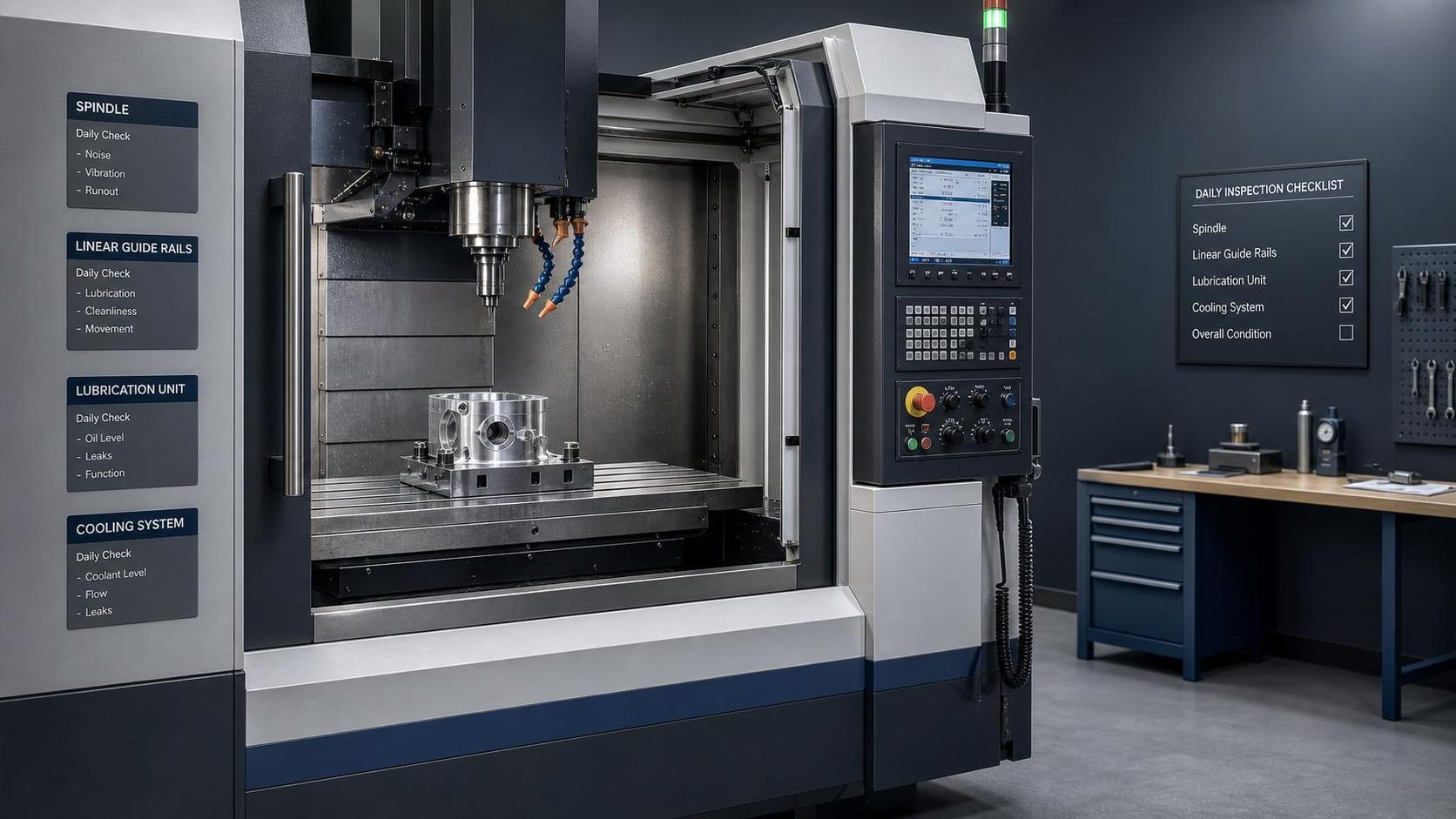
Why does CNC equipment maintenance matter more than many teams expect?
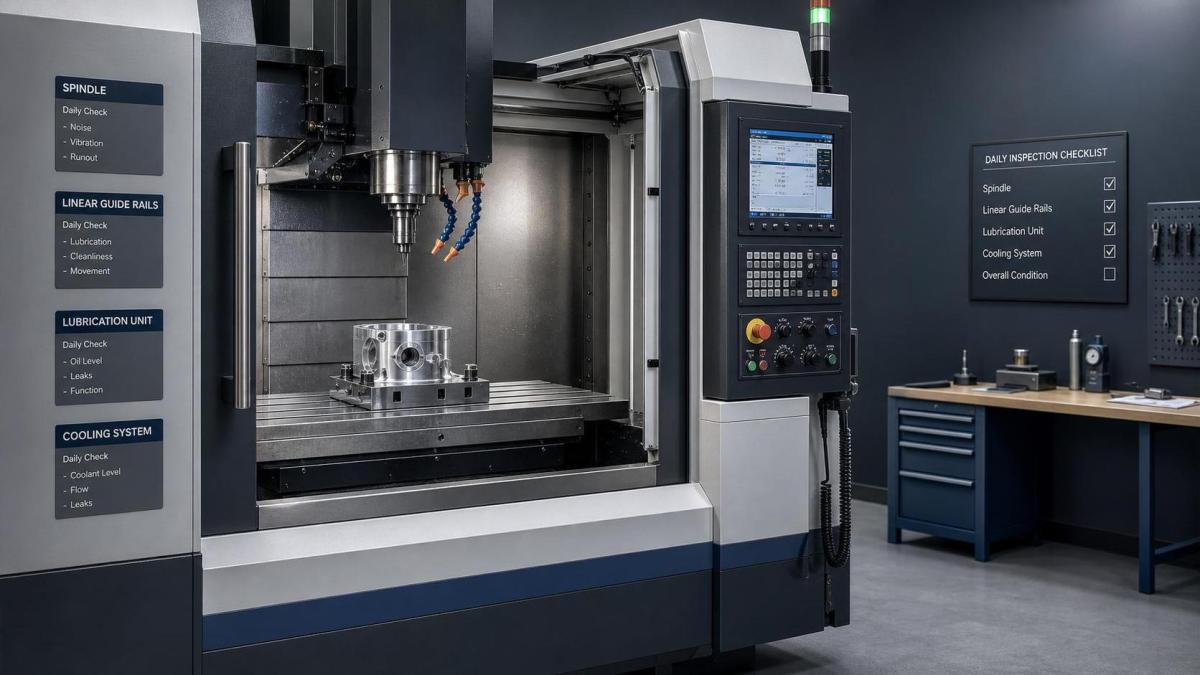
CNC equipment sits at the center of precision manufacturing, where uptime, repeatability, and surface quality all depend on stable machine condition.
In automotive, aerospace, energy, and electronics production, a small maintenance gap can quickly become a scrap, delivery, or safety problem.
That is why maintenance is not just a repair activity. It is part of process control.
A well-kept machine holds geometry longer, runs cooler, alarms less often, and gives more predictable cycle results.
In practical terms, good CNC equipment care reduces unplanned downtime, protects spindle life, and keeps customer complaints from repeating.
The bigger trend also matters. As machine tools become more automated and digitally connected, failures spread faster across production lines.
One neglected lubrication point or clogged cooler can affect accuracy, tool wear, and even robot handoff timing.
So the better question is not whether CNC equipment needs routine attention. It is which checks prevent the most expensive failures first.
Where do CNC equipment failures usually start?
Most CNC equipment failures do not begin with a major crash. They begin with slow condition drift that goes unnoticed.
The most common failure points are usually mechanical, thermal, lubrication-related, electrical, and contamination-related.
Spindles are a frequent concern. Early signs include rising temperature, abnormal sound, vibration, and unstable surface finish.
Linear guides and ball screws often fail more quietly. Backlash, positioning error, poor repeatability, and axis noise are typical clues.
Lubrication systems deserve close attention. Low oil level, blocked metering units, or missed grease intervals can damage several assemblies at once.
Hydraulic and pneumatic circuits also cause many service calls. Pressure instability can affect tool clamping, chuck force, and automatic door functions.
Electrical cabinets are another weak point, especially in warm or dusty plants. Loose terminals, cooling fan failure, and dirty filters trigger intermittent alarms.
Coolant systems should not be treated as secondary. Poor concentration, bacterial growth, and chip blockage often lead to heat, corrosion, and sensor issues.
The table below gives a quick way to connect visible symptoms with likely sources and first actions.
What should be included in a daily CNC equipment check?
Daily checks work best when they are short, repeatable, and tied to failure history rather than paperwork alone.
A useful daily routine should take minutes, but it must cover the systems most likely to stop production.
Start with basic machine condition. Look for leaks, unusual smell, loose covers, chip buildup, and signs of coolant overflow.
Then review lubrication. Confirm oil level, pump operation, grease delivery status, and any low-pressure warning.
Listen during warm-up. Changes in spindle noise or axis movement often appear before an alarm message does.
Check coolant concentration and flow if the process is sensitive to heat or chip evacuation.
On machines connected to automated lines, verify sensor cleanliness and door, pallet, or tool changer movement.
A practical daily checklist for CNC equipment usually includes these points:
- Air pressure, hydraulic pressure, and lubrication levels
- Coolant level, concentration, and visible contamination
- Spindle warm-up behavior and unusual vibration
- Axis travel smoothness and abnormal servo load
- Chip conveyor function and chip removal areas
- Tool holder cleanliness and clamping condition
- Cabinet fan operation and filter cleanliness
More important than the checklist itself is recording exceptions. Trends tell more than isolated readings.
When the same spindle takes longer to stabilize every week, that is already a maintenance signal.
How often should CNC equipment be serviced?
There is no single interval that fits every CNC equipment setup, because duty cycle, material, coolant condition, and ambient dust all matter.
Still, service planning becomes easier when intervals are grouped by frequency and machine risk.
Daily work should focus on operating condition. Weekly service should focus on cleaning, drainage, and visible wear.
Monthly service usually includes lubrication verification, belt inspection, backlash review, and cabinet cleaning.
Quarterly or semiannual work often covers alignment checks, spindle drawbar force testing, coolant tank cleaning, and electrical tightening.
Annual service is where deeper inspection belongs, especially for heavily loaded machining centers and multi-axis systems.
A sensible interval guide looks like this:
When CNC equipment runs three shifts or cuts abrasive materials, these intervals often need to be shortened.
The better approach is condition-based maintenance supported by alarm history, load data, and recurring part quality issues.
Which maintenance mistakes create the most repeat failures?
The most expensive mistake is treating every alarm as an isolated event.
For example, resetting a spindle overheat alarm without checking chiller flow, bearing condition, and cabinet ventilation only delays the next stop.
Another common issue is over-cleaning with the wrong method. High-pressure air can push chips deeper into seals, sensors, and connectors.
Lubrication errors are also frequent. Using the wrong grease or extending intervals beyond design limits can damage precision components quickly.
Some teams focus on mechanical parts and overlook environment. Yet heat, humidity, unstable power, and dirty compressed air often drive recurring CNC equipment faults.
One more trap is skipping post-repair validation. A machine that runs without alarms may still have positioning drift or clamping inconsistency.
In actual field service, the better habit is to close each job with a short function check, alarm review, and process confirmation part.
How can you build a maintenance routine that actually holds up?
A reliable CNC equipment routine is simple enough to repeat and detailed enough to catch drift before failure.
Start by separating machines into risk levels. A high-speed spindle machine in continuous production should not share the same service rhythm as a lightly used unit.
Then map three things together: common alarms, consumable life, and process-critical accuracy points.
This works especially well in global manufacturing environments, where machine fleets may include different brands, control systems, and service practices.
Standardized records help compare machines across sites in China, Germany, Japan, South Korea, and other major production regions.
That comparison often reveals preventable patterns, such as one coolant type shortening seal life or one shift missing warm-up routines.
If there is one practical next step, it is this: review the last ten CNC equipment stoppages and sort them by root cause, not by alarm code alone.
From there, adjust daily checks, tighten service intervals on weak points, and verify repairs with measurable machine condition data.
That approach keeps maintenance grounded in production reality, where accuracy, uptime, and predictable service cost matter most.
Recommended for You
 How to Select a Machine Tool for Aerospace Parts with Tight Tolerances?Machine Tool Industry Editorial Team
 How to Select CNC Equipment for High-Mix, Low-Volume ProductionCNC Machining Technology Center
 Can CNC Machining Inconel Control Tool Wear in High-Temperature Aerospace Parts?CNC Machining Technology Center
 Machine Tool Market Outlook: Demand Drivers, Capacity Shifts, and Investment RisksManufacturing Market Research Center
 Zero-Point Clamping or Modular Fixtures? Choosing a Faster CNC Changeover SystemCNC Machining Technology Center
 How to Cut CNC Fixture Changeover Time Without Sacrificing Part AccuracyCNC Machining Technology Center

Aris Katos
Future of Carbide Coatings
15+ years in precision manufacturing systems. Specialized in high-speed milling and aerospace grade alloy processing.
▶
What Should You Check When a CNC Machine Arrives at Your Factory?CNC Machining Technology Center▶
What Safety Checks Are Required for CNC Cutting Operations?CNC Machining Technology Center▶
What Are Machine Tools? Common Types, Functions, and Typical Shop ApplicationsCNC Machining Technology Center▶
CNC Industrial Machines Maintenance Checklist: How to Reduce Downtime and Tool WearCNC Machining Technology Center▶
What Is Industrial Machining? Common Processes, Materials, and Typical UsesCNC Machining Technology Center
Mastering 5-Axis Workholding Strategies
Join our technical panel on Nov 15th to learn about reducing vibrations in thin-wall components.

Providing you with integrated sanding solutions
Before-sales and after-sales services
Comprehensive technical support