• Global CNC market projected to reach $128B by 2028 • New EU trade regulations for precision tooling components • Aerospace deman
NYSE: CNC +1.2%LME: STEEL -0.4%

Is Low Maintenance CNC Manufacturing Right for Your Shop
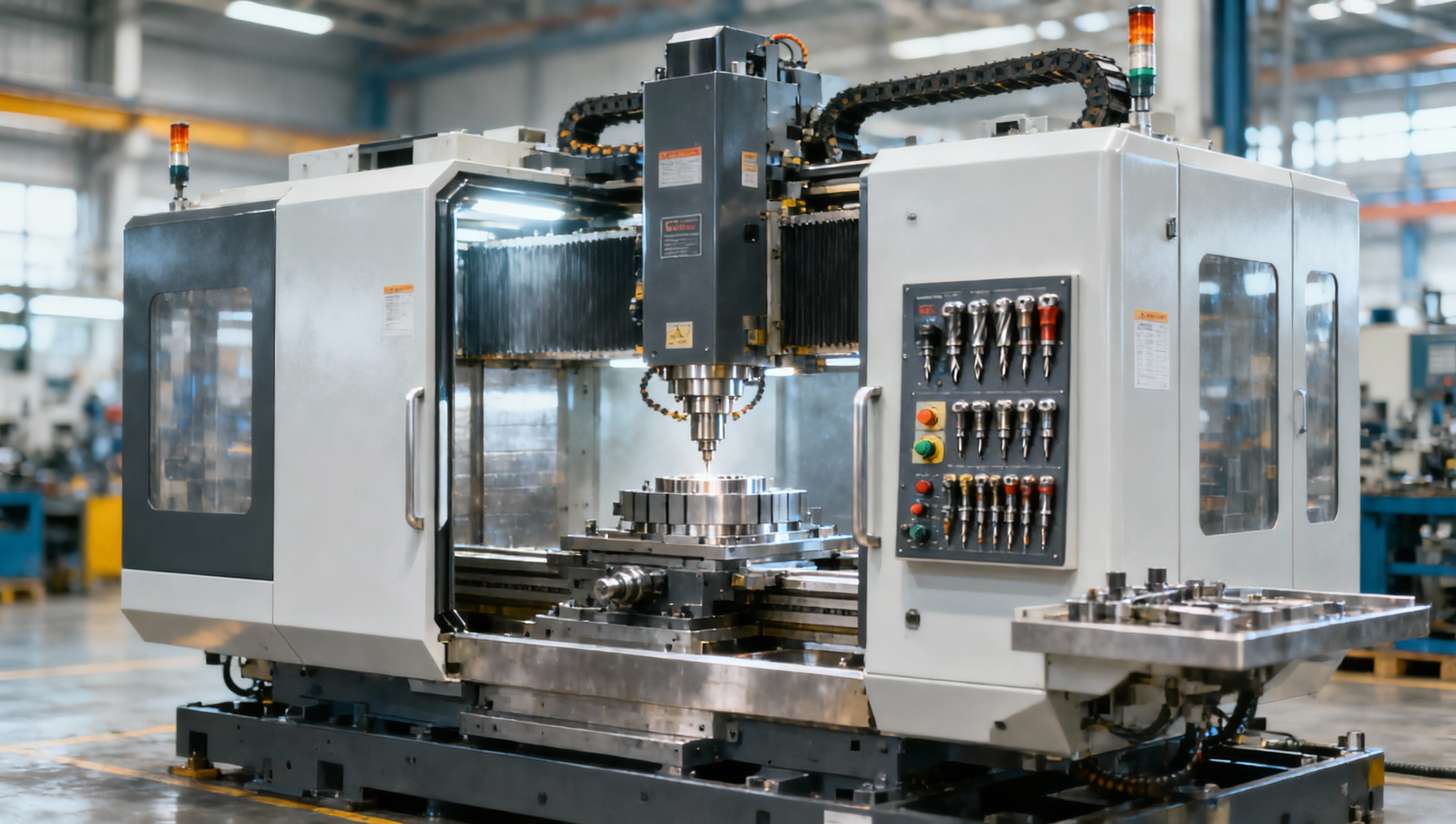
Is low maintenance CNC manufacturing the right fit for your shop? As demand grows for precision CNC manufacturing, quick setup CNC manufacturing, and energy-saving machine tool solutions, manufacturers must balance uptime, cost, and flexibility. This article explores how automated CNC manufacturing and compact machine tool options can help buyers, operators, and decision-makers improve efficiency in automotive, aerospace, electronics, and energy equipment production.
For many manufacturers, the question is not whether CNC automation matters, but whether a low maintenance CNC manufacturing model can reduce unplanned downtime without sacrificing machining accuracy, spindle performance, or process stability. In a market where delivery windows often run from 2 to 6 weeks and tolerances may fall within ±0.01 mm to ±0.05 mm, machine availability directly affects competitiveness.
This topic matters to several audiences at once. Operators want easier daily upkeep and fewer emergency stoppages. Procurement teams need better life-cycle cost visibility. Decision-makers look for equipment that supports scalable production, lower energy consumption, and faster return on capital. A low maintenance strategy only works when machine design, service planning, and production requirements align.
What Low Maintenance CNC Manufacturing Really Means
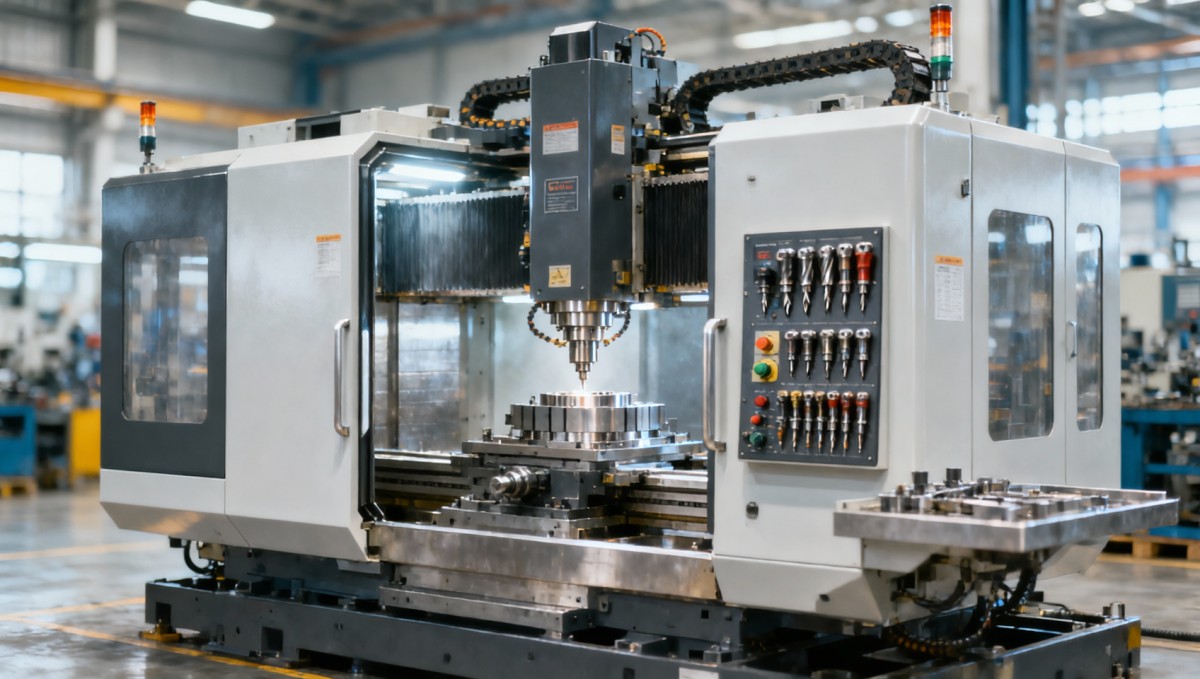
Low maintenance CNC manufacturing does not mean maintenance-free operation. It refers to a machining environment where routine service tasks are simplified, maintenance intervals are predictable, and wear-related failures are reduced through machine design, component selection, and process control. In practical terms, shops aim to cut reactive maintenance events while keeping output stable over 1, 2, or even 3 shifts.
In the CNC machine tool industry, low maintenance often starts with robust base casting, stable thermal control, centralized lubrication, enclosed guideway protection, and accessible service points. These features help reduce contamination, preserve repeatability, and shorten service time. A machine that takes 20 minutes for daily checks instead of 45 minutes can create meaningful labor savings over 250 operating days per year.
The concept also applies to support equipment. Tool holders, coolant systems, chip conveyors, workholding devices, and automatic loading interfaces all affect maintenance frequency. In automated CNC manufacturing, a single weak point in peripheral equipment can stop the entire cell, even when the machining center itself is mechanically sound.
Key traits of a low maintenance setup
- Scheduled maintenance intervals based on operating hours, such as every 500, 1,000, or 2,000 hours.
- Easy-access service areas for filters, lubrication points, electrical cabinets, and coolant tanks.
- Stable spindle and axis design that minimizes vibration, heat drift, and premature bearing wear.
- Integrated alarms for lubrication level, coolant flow, axis load, and temperature thresholds.
Shops producing automotive shafts, aerospace brackets, precision electronic housings, or energy equipment components usually benefit when machine maintenance becomes more planned and less disruptive. In these segments, even 3 to 5 hours of unexpected downtime per week may interrupt downstream inspection, assembly, and delivery schedules.
Low maintenance versus low capability
A common misconception is that low maintenance equipment is only suitable for simple work. In reality, many compact machine tool platforms and automated CNC manufacturing cells are designed for demanding operations, including multi-face machining, contour milling, and high-speed turning. The key is matching machine capability to the part mix instead of overbuying complexity that the shop rarely uses.
For example, a shop running 60% repeat jobs with limited part variation may gain more from a reliable 3-axis or 4-axis platform with quick setup features than from a high-end multi-axis system that increases programming demands and service complexity. Lower maintenance often comes from fewer unnecessary subsystems, not from compromising precision where it matters.
When Low Maintenance CNC Makes Sense for Different Shop Profiles
Not every factory benefits in the same way from low maintenance CNC manufacturing. The ideal fit depends on production volume, part complexity, staffing levels, and service support availability. A job shop with 20 to 50 part numbers each month has different needs than a plant making 5,000 identical components every week.
Smaller and mid-sized shops often see the biggest advantage when maintenance staff are limited. If one technician supports 8 to 15 machines, simpler maintenance routines can reduce overtime and response delays. This matters especially in operations where a machine stoppage affects multiple linked processes, such as turning, drilling, deburring, and final inspection.
Low maintenance equipment is also attractive in regions where spare parts lead times may range from 7 to 21 days. A shop that cannot easily access specialized service engineers usually prefers machine configurations with common consumables, standard control architecture, and lower dependence on rare proprietary components.
Application fit by production environment
The table below outlines where low maintenance CNC manufacturing tends to perform well and where a more advanced, higher-service platform may still be justified.
The key takeaway is that low maintenance CNC manufacturing is most effective where uptime, repeatability, and labor efficiency matter more than owning the most complex machine specification on paper. For repetitive or semi-repetitive production, a simpler machine that runs reliably for 16 to 20 hours per day often outperforms an advanced system that requires more downtime and specialist support.
Signs your shop is a strong candidate
- Your current machines lose more than 5% of planned production time to unplanned service.
- Operators spend over 30 minutes per shift on cleanup, lubrication checks, or manual intervention.
- You run repeated part families where fixture and tool libraries can be standardized.
- Your procurement strategy now includes energy-saving machine tool options and total cost review over 3 to 5 years.
If several of these points apply, a low maintenance platform may deliver higher real productivity than a machine chosen only for peak speed or maximum axis count.
How to Evaluate Machines Beyond Purchase Price
Buyers often compare CNC equipment by initial quotation, spindle speed, or travels, but low maintenance CNC manufacturing requires a wider evaluation framework. A machine with a lower purchase price may carry higher costs in filters, coolant management, spindle service, operator time, and spare part delays. For B2B procurement, total cost over 36 to 60 months is usually more useful than a single acquisition number.
Decision-makers should also consider setup time, power consumption, and training requirements. In many shops, a quick setup CNC manufacturing platform that reduces average changeover from 90 minutes to 35 minutes can generate more annual value than a nominally faster spindle. This is especially true when batches are short and product variation is high.
Energy performance matters as well. An energy-saving machine tool with optimized standby behavior, efficient coolant pumps, and right-sized drive systems may lower utility load over long operating hours. While exact savings vary by cycle profile, the difference becomes meaningful in plants running 4,000 to 6,000 spindle hours per year.
Core procurement criteria
The following table can help buyers compare machine options using practical maintenance and production criteria rather than headline specifications alone.
A useful rule is to score each factor on a 1-to-5 scale, then compare the weighted total against purchase price. Shops that make this shift often avoid buying machines that look strong in brochures but create higher hidden costs after the first 12 months.
Questions to ask suppliers before purchase
- What are the daily, weekly, and quarterly maintenance tasks, and how many minutes do they typically require?
- Which wear parts are expected to be replaced within the first 12 to 24 months under normal use?
- Can remote diagnostics identify spindle load anomalies, lubrication faults, or thermal alarms?
- What is the usual spare parts response time for core components in my region?
These questions support smarter procurement and reduce the chance of selecting equipment that is technically capable but operationally expensive.
Implementation, Maintenance Planning, and Shop Floor Control
Even the best low maintenance CNC manufacturing solution will underperform without a disciplined implementation plan. Shops should treat installation, process qualification, operator training, and maintenance scheduling as one integrated launch phase. In most cases, the first 30 to 90 days determine whether uptime improvements will be sustainable.
A practical rollout begins with part-family analysis. Group components by material, tolerance band, fixture similarity, and batch size. This helps define whether a compact machine tool, automated pallet system, or standard machining center is the better fit. For example, aluminum housings with batch sizes of 100 to 500 may need a different setup strategy than hardened steel shafts produced in lots of 20 to 80.
Maintenance planning should then be converted into visible routines. A simple checklist for coolant concentration, lubrication level, chip evacuation, and spindle warm-up can prevent many avoidable issues. Shops that formalize 5 to 10-minute start-of-shift checks often see fewer contamination-related alarms and better surface consistency.
Suggested implementation steps
- Define production targets, including expected spindle hours, shift count, and target setup reduction.
- Select machine configuration based on part geometry, material mix, and automation level.
- Create standardized tool lists, fixture references, and maintenance check intervals.
- Train operators and maintenance staff on alarm response, cleaning, lubrication, and daily inspection.
- Review performance after 30, 60, and 90 days using downtime, scrap, and cycle consistency metrics.
For automated CNC manufacturing cells, interface reliability deserves special attention. Robot loading, part sensing, air supply stability, and chip accumulation should all be checked at the cell level. A machining center may be stable on its own, but automation faults can still erode the expected maintenance advantage.
Common implementation mistakes
One frequent mistake is underestimating coolant and chip management. Fine chips in electronics machining or sticky alloys in aerospace work can overload conveyors and filters if maintenance intervals are copied from a different application. Another mistake is assuming that low maintenance machines need less operator discipline. In reality, simpler machines perform best when cleaning, warm-up, and inspection routines are consistently followed.
Shops should also avoid selecting compact machine tool platforms solely to save floor space. Compact equipment is highly effective when work envelopes, tool capacity, and material handling are correctly matched. If part size or fixture height frequently approaches limits, maintenance events and setup inefficiency may increase rather than decrease.
Risks, Trade-Offs, and Practical Decision Guidance
Low maintenance CNC manufacturing offers clear benefits, but it is not automatically the right answer for every plant. The main trade-off is between simplicity and flexibility. A machine optimized for stable, low-intervention output may not be ideal for highly variable prototypes, extreme multi-axis contouring, or frequent engineering changes that require advanced kinematics and deeper software customization.
Another risk is focusing too narrowly on reduced maintenance while ignoring process capability. If your application needs tight positional accuracy over long machining cycles, high torque at low speed, or advanced in-process measurement, a low maintenance platform must still meet those requirements. Reduced upkeep has value only when the machine consistently delivers acceptable quality at the required takt time.
This is why cross-functional evaluation is important. Operators should review accessibility and workflow. Procurement should assess life-cycle cost and service responsiveness. Engineering should confirm capability for current and next-generation parts. Leadership should compare the business case across 3 dimensions: output, operating cost, and future scalability.
Decision matrix for final selection
The matrix below helps align technical and business priorities before investment.
The practical answer is often not an extreme choice. Many successful manufacturers combine low maintenance CNC manufacturing for stable production families with more advanced machines reserved for complex or developmental work. This mixed strategy can improve overall equipment effectiveness while controlling service burden.
FAQ for buyers and production teams
How quickly can a low maintenance CNC strategy show results?
In many shops, early improvements appear within 30 to 60 days if maintenance routines, tool management, and setup standards are implemented at the same time. Full ROI depends on machine utilization, but downtime reduction and labor savings usually become visible before long-term capital payback calculations are complete.
Is low maintenance CNC only for high-volume production?
No. It is also valuable for mixed production environments where setup simplicity and predictable servicing matter. Job shops with moderate volumes often benefit because reducing manual intervention can free operator capacity across several part families.
What metrics should be tracked after installation?
Track unplanned downtime hours, setup time per batch, maintenance labor time, scrap rate, and machine utilization. Reviewing these 5 metrics monthly for at least 3 months provides a clearer picture than relying on cycle time alone.
Low maintenance CNC manufacturing is the right fit when your shop values reliable uptime, controlled life-cycle cost, fast setup, and practical automation over unnecessary complexity. It is especially relevant for automotive, aerospace support work, electronics machining, and energy equipment production where repeatability, delivery discipline, and labor efficiency directly affect margins.
If you are reviewing machine tool options, planning an automated CNC manufacturing cell, or comparing compact machine tool solutions for your next investment, now is the time to evaluate maintenance burden as carefully as cutting performance. Contact us to discuss your production goals, get a tailored recommendation, and explore solutions that match your parts, staffing, and growth plans.
PREVIOUS ARTICLE
Recommended for You
![]() Survey: 81% Expect US Cutting Tool Shipments to Rise or Hold Steady in 2026Machine Tool Industry Editorial Team
 CNC Fixture Design: Locating and Clamping for Accurate MachiningCNC Machining Technology Center
![]() US Decides Against New Tariffs on Robots, Industrial Machinery and PartsManufacturing Policy Research Center
![]() White House Section 232 Ruling: No New Machine Tool or Robot Tariffs, Calls for TalksManufacturing Policy Research Center
 How to Integrate Warehouse Palletizing Robots with Minimal DowntimeMachine Tool Industry Editorial Team
![]() AI Investment Lifts US September Equipment Demand; Core Capital Goods Orders Rise 0.5%Manufacturing Market Research Center



Aris Katos
Future of Carbide Coatings
15+ years in precision manufacturing systems. Specialized in high-speed milling and aerospace grade alloy processing.
▶
Why Heavy Machinery Shafts Fail Under Cyclic Loads and How to Prevent ItCNC Machining Technology Center▶
Shaft Parts for Heavy Machinery: Selecting Materials for High Shock LoadsCNC Machining Technology Center▶
What Is Metal Processing? From Raw Material to Finished Machine PartsCNC Machining Technology Center▶
How long does CNC machine delivery and installation usually take?CNC Machining Technology Center▶
What Monthly Maintenance Does a CNC Machine Need?CNC Machining Technology Center
▶
Mastering 5-Axis Workholding Strategies
Join our technical panel on Nov 15th to learn about reducing vibrations in thin-wall components.

Providing you with integrated sanding solutions
Before-sales and after-sales services
Comprehensive technical support