• Global CNC market projected to reach $128B by 2028 • New EU trade regulations for precision tooling components • Aerospace deman
NYSE: CNC +1.2%LME: STEEL -0.4%

Where Cost-Effective CNC Manufacturing Often Goes Wrong
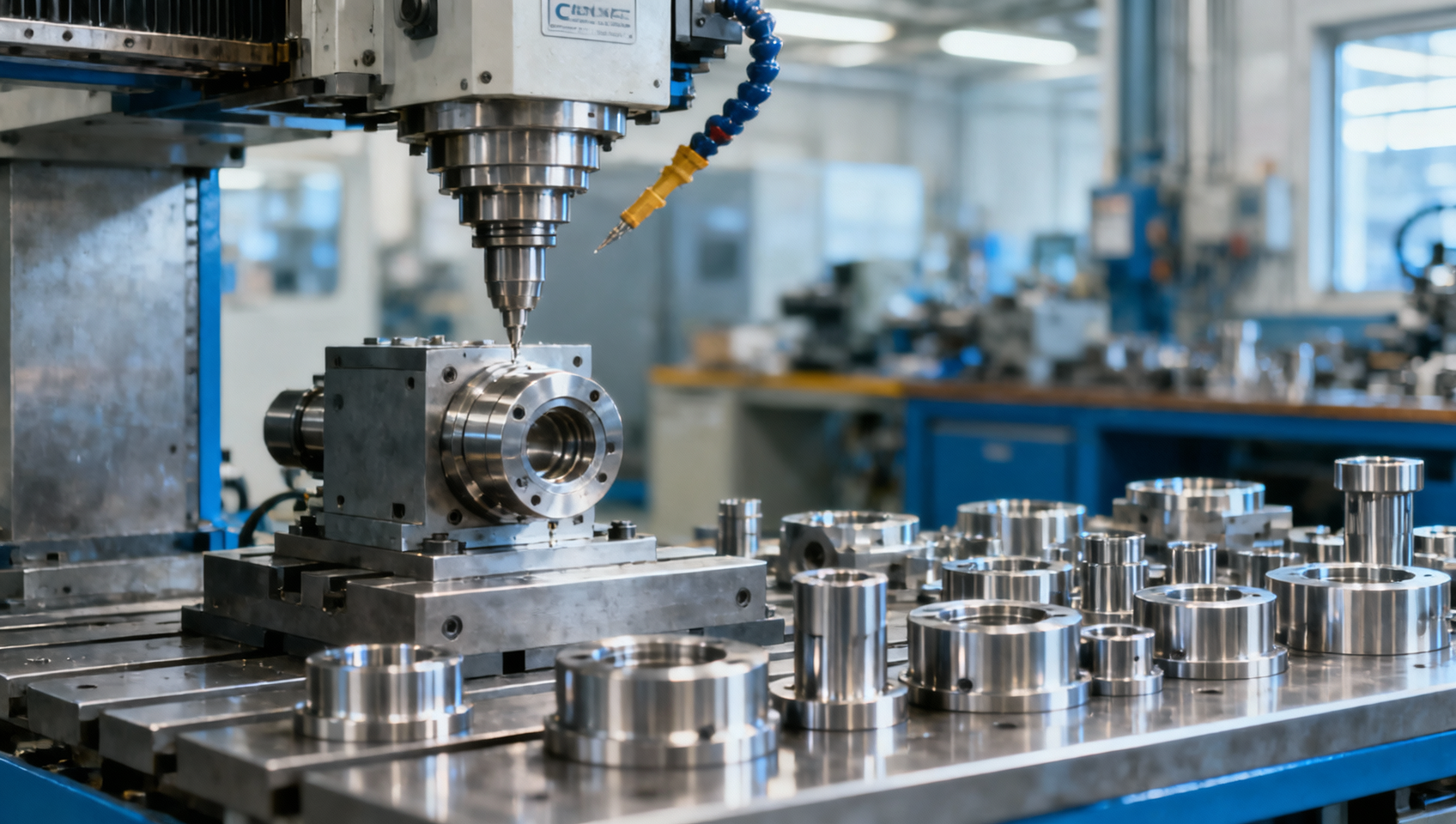
Cost-effective CNC manufacturing often fails when buyers focus only on machine tool price while overlooking precision CNC manufacturing, quick setup CNC manufacturing, and long-term maintenance needs. From aerospace and medical devices to automotive and energy equipment, choosing the right CNC manufacturing supplier or CNC machine tool manufacturer is critical to achieving stable quality, efficient output, and real production savings.
For researchers, operators, sourcing teams, and business decision-makers, the real issue is rarely the initial quotation alone. Problems usually emerge later: unstable tolerances, repeated setup changes, excessive scrap, weak after-sales support, or machine downtime that quietly erodes margins over 6 to 24 months. In global CNC machining and precision manufacturing, “low cost” only works when the full production system is aligned.
This article examines where cost-effective CNC manufacturing most often goes wrong, why these failures are common across machine tool purchasing and outsourced machining, and how buyers can evaluate suppliers more accurately. The goal is practical: reduce production risk, improve output consistency, and make purchasing decisions that support long-term manufacturing performance.
Price-First Purchasing Creates Hidden Production Costs
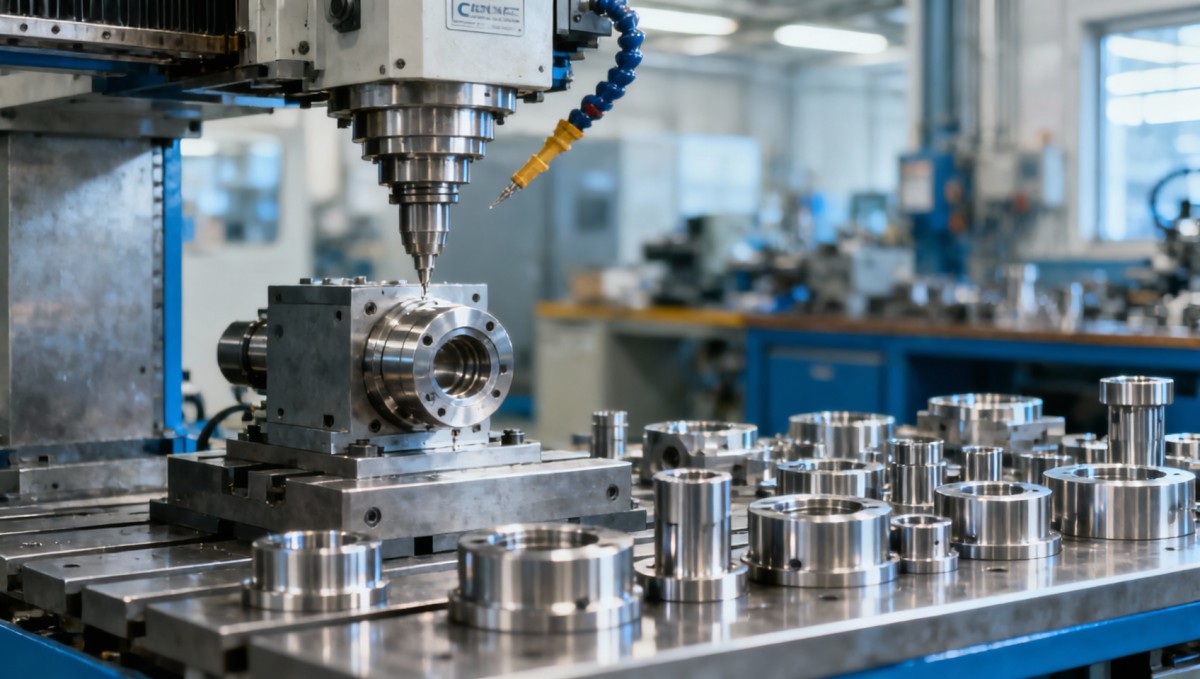
A low machine price can look attractive during sourcing, especially when procurement teams compare 3 to 5 vendors under pressure to reduce capex. Yet in CNC manufacturing, the purchase price may represent only part of the total cost. Tool life, spindle stability, software compatibility, maintenance frequency, setup time, and operator learning curves all affect actual unit economics.
For example, a machining center with a lower initial price may require 20% to 30% more setup adjustments per batch, or produce tolerance drift after long runs. In industries such as aerospace, medical components, electronics housings, and automotive shaft parts, even a deviation of ±0.01 mm to ±0.03 mm can trigger rework, inspection delays, or customer rejection.
The same issue applies to outsourced precision CNC manufacturing. A supplier offering the cheapest part price may be using older equipment, unstable fixtures, or weak process planning. The buyer sees a low RFQ price, but the real cost appears later in delayed delivery, mixed lot quality, and frequent engineering clarification.
Where the cost gap usually appears
Most failures happen because pricing is assessed at the quotation stage, while performance is measured during production. That gap can be significant in medium-volume programs of 500 to 5,000 pieces per month, where even small inefficiencies multiply quickly across labor, tooling, and downtime.
- Longer setup and changeover time, often adding 15 to 45 minutes per batch
- Higher scrap rates, especially on thin-wall, multi-axis, or high-hardness parts
- Inconsistent surface finish requiring additional polishing or inspection
- Limited spare parts support, causing downtime of 2 to 7 days instead of same-day recovery
The table below highlights how “cheap” and “cost-effective” are not the same in CNC machine tool selection.
The key takeaway is simple: the lowest quote can increase the total production cost if it weakens throughput, quality, or uptime. In CNC manufacturing, procurement should compare machine performance over the full operating cycle, not just the first invoice.
Precision and Setup Planning Are Often Undervalued
Another common failure point is assuming that any CNC machine or supplier can achieve required tolerances without process-specific planning. In reality, precision CNC manufacturing depends on machine rigidity, thermal control, cutting parameters, fixture design, tool path optimization, and inspection discipline. Precision is not only a machine specification; it is a production system.
Quick setup CNC manufacturing is equally misunderstood. Buyers often request shorter lead times but do not evaluate whether the supplier has standardized fixturing, pre-set tooling, or programming workflows that support fast transition between part families. A supplier may promise a 7-day lead time, but without setup control, that schedule becomes fragile under real batch conditions.
This matters most in high-mix, low-to-medium volume production, where parts change frequently and setup quality determines both speed and repeatability. A machine tool that saves 25 minutes in changeover across 8 daily setups can recover more productive time than a lower-priced machine that runs slightly cheaper per hour.
Typical precision and setup risk points
Tolerance capability versus process capability
A supplier may claim a machine can hold ±0.005 mm, but buyers should ask whether that level is maintained across 1 piece, 50 pieces, and 500 pieces. Process capability during continuous operation is more relevant than ideal single-part performance in a demonstration environment.
Setup speed versus setup repeatability
Fast setup is valuable only when repeatability is high. If operators still need repeated offsets, trial cuts, and manual corrections, the quoted setup time has little practical meaning. In production terms, repeatable setup can reduce first-article approval delays by 10% to 25%.
- Check whether fixtures are modular or custom for each part family
- Ask if tool presetting and offset libraries are standardized
- Verify in-process inspection methods for long-cycle or tight-tolerance parts
- Review how thermal drift and spindle warm-up are managed during multi-shift use
The following comparison helps buyers connect setup planning with actual production outcomes.
For buyers in automotive, energy equipment, and electronics production, precision and setup discipline should be reviewed before price finalization. If these two areas are weak, the project will usually underperform regardless of how competitive the quotation looks.
Supplier Selection Fails When Evaluation Is Too Narrow
Choosing a CNC manufacturing supplier or CNC machine tool manufacturer based only on price and lead time creates avoidable risk. A stronger evaluation framework includes technical capability, production planning, quality control, service response, and fit for the intended industry. This is particularly important when sourcing for regulated or safety-sensitive applications such as aerospace parts, medical components, or power equipment assemblies.
Decision-makers should assess whether the supplier can handle required materials, part geometry, and volume changes. A shop that performs well on aluminum housings may not be equally capable on stainless steel shafts, heat-resistant alloys, or multi-axis impellers. Capability must match the actual part mix and process route.
A reliable sourcing process often uses 4 to 6 checkpoints before final selection. These checkpoints reduce the chance of choosing a vendor that appears competitive on paper but struggles with execution after the purchase order is released.
A practical evaluation checklist
- Review part type compatibility, including dimensions, tolerance bands, material grade, and surface finish requirements.
- Confirm production capacity by shift pattern, number of machines, and realistic delivery windows such as 2 to 4 weeks for standard batches.
- Check quality workflow, including first article inspection, in-process checks, and final measurement methods.
- Evaluate service support, including spare parts availability, remote troubleshooting, and on-site response timing.
- Assess communication discipline for drawing revisions, engineering changes, and nonconformance handling.
The table below can be used by procurement teams and plant managers as a simplified supplier review tool.
Broad supplier evaluation is not bureaucracy. It is a cost-control method. The wider the technical and service review, the lower the chance of expensive surprises after production begins.
Maintenance, Service, and Digital Integration Determine Long-Term Value
Many buyers focus heavily on the installation stage and neglect the 12 to 60 months that follow. In practice, the long-term value of CNC manufacturing depends on maintenance planning, spare parts access, software support, and the ability to integrate with automated or data-driven production systems. A low-cost machine with poor service can become an expensive bottleneck very quickly.
Routine maintenance intervals matter. Lubrication checks, spindle condition monitoring, axis calibration, coolant management, and tool changer inspection should follow a defined schedule. If preventive maintenance is delayed, the result is often not dramatic failure at first, but gradually increasing inaccuracy, unstable surface finish, and unpredictable cycle times.
This issue is becoming more important as machine tool production moves toward higher automation, flexible lines, and smart factory integration. In connected environments, one unreliable machine can interrupt upstream and downstream processes. That affects not only machining, but also robotic loading, inspection queues, and assembly timing.
What buyers should verify after installation
Service structure
Ask whether the supplier provides remote diagnosis, operator training, preventive maintenance guidance, and critical spare parts planning. For production-critical lines, a response window of 24 to 48 hours may be acceptable, but longer delays can severely affect output.
Data and control compatibility
If the plant uses MES, tool monitoring, barcode tracking, or automated loading, machine compatibility should be reviewed early. Digital integration is no longer optional in many global manufacturing clusters, especially where mixed-model production or traceability is required.
- Plan preventive maintenance in weekly, monthly, and quarterly layers
- Stock critical wear parts before ramping into stable production
- Train operators on alarm response and setup recovery procedures
- Review software update and post-processor support before expansion
In short, true cost-effective CNC manufacturing includes the service model behind the machine or supplier. Long-term uptime, not just initial purchasing savings, determines real financial performance.
How to Build a More Reliable CNC Purchasing Strategy
A better CNC sourcing strategy starts by defining what “cost-effective” means for the actual production scenario. For one buyer, it may mean fast setup for frequent product changes. For another, it may mean stable tolerance over 3 shifts. For a third, it may mean scalable output with lower operator dependence. The correct purchase decision depends on which of these variables drives business value.
The most reliable strategy is to align part requirements, machine capability, supplier discipline, and service support before order confirmation. This reduces hidden losses that are otherwise difficult to reverse after tooling, programming, and customer schedules are already locked in.
For companies involved in global CNC machining, machine tool trade, or precision manufacturing supply chains, the strongest purchasing decisions usually come from cross-functional review. Engineering, operations, quality, and procurement should all participate, even if the final approval sits with one decision-maker.
A 5-step decision framework
- Define application needs: material type, annual volume, tolerance target, and changeover frequency.
- Shortlist suppliers that match process complexity, such as turning, 3-axis, 4-axis, or 5-axis requirements.
- Validate production assumptions through sample parts, process discussion, or trial runs where possible.
- Compare total operating impact, including setup time, maintenance, support, and expected scrap exposure.
- Set post-purchase checkpoints for training, spare parts, service access, and performance review after 30 to 90 days.
FAQ for buyers and plant teams
How long is a typical CNC production lead time?
For standard components, typical lead times may range from 7 to 15 days for simple batches and 2 to 4 weeks for more complex or multi-process parts. However, real lead time depends on setup readiness, material availability, and inspection requirements.
Which metrics matter most during supplier comparison?
Look at at least 4 areas: tolerance stability, setup repeatability, service responsiveness, and realistic delivery performance. If only unit price is compared, the evaluation is incomplete.
Is a higher-priced supplier always better?
No. The better choice is the supplier or machine tool manufacturer that can deliver the required precision, uptime, and support at a sustainable cost. The goal is controlled total cost, not the highest or lowest quote.
When should buyers prioritize quick setup CNC manufacturing?
It is especially important when product variation is high, lot sizes are small, or demand changes weekly. In such environments, setup efficiency can influence output more than nominal spindle speed or hourly machining cost.
Where cost-effective CNC manufacturing goes wrong is usually predictable: buyers focus too narrowly on initial price, underestimate precision and setup planning, evaluate suppliers with incomplete criteria, and overlook maintenance and service after installation. These mistakes are common, but they are preventable with better technical review and clearer sourcing priorities.
If your team is comparing CNC manufacturing suppliers, machine tool options, or precision production solutions across industries such as automotive, aerospace, electronics, medical, or energy equipment, a structured evaluation can protect both quality and profitability. Contact us to discuss your application, request a tailored sourcing framework, or learn more about practical CNC manufacturing solutions that support stable long-term performance.
PREVIOUS ARTICLE
Recommended for You
![]() Mitsubishi Electric Announces Physical AI System Linking Humanoid Robots and CNC MachinesMachine Tool Industry Editorial Team
 Precision Machining for Defense: Supplier Quality and Traceability ChecksManufacturing Market Research Center
![]() Nidec Machine Tool Launches MVR-5X Five-Axis Gantry MachineMachine Tool Industry Editorial Team
 Choosing a Precision Disc Parts Manufacturer in China: Tolerances and Quality ChecksManufacturing Market Research Center
![]() Siemens Executive Says AI Could Raise Factory Automation to 80%Manufacturing Market Research Center
 Choosing Automated Machine Tools for High-Mix, Low-Volume ProductionMachine Tool Industry Editorial Team

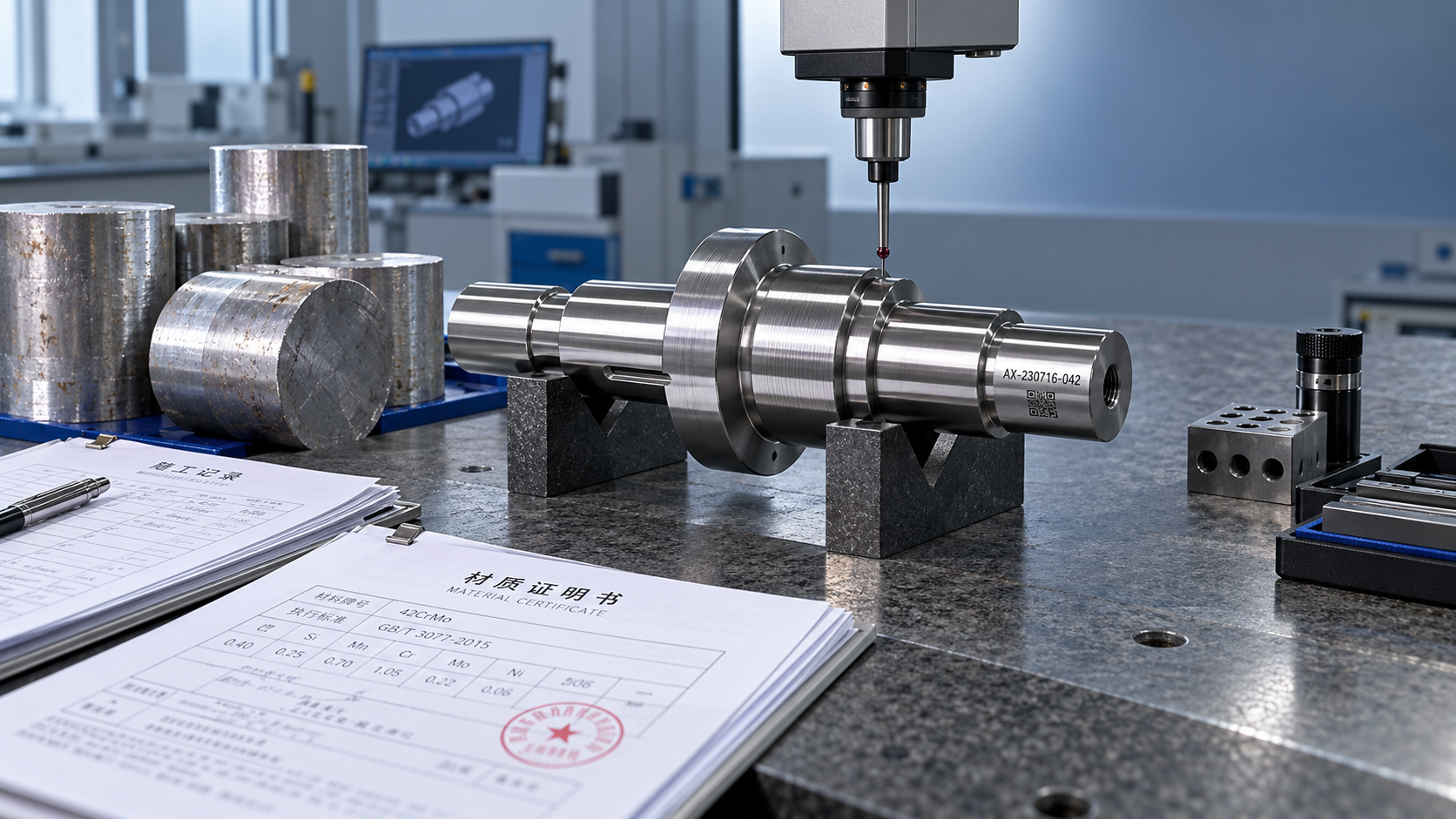

Aris Katos
Future of Carbide Coatings
15+ years in precision manufacturing systems. Specialized in high-speed milling and aerospace grade alloy processing.
▶
What Is Metal Processing? From Raw Material to Finished Machine PartsCNC Machining Technology Center▶
How long does CNC machine delivery and installation usually take?CNC Machining Technology Center▶
CNC Machine Arrival Inspection: Check Shipping Damage, Accuracy, Safety, and DocumentsCNC Machining Technology Center▶
What Should You Check When a CNC Machine Arrives at Your Factory?CNC Machining Technology Center▶
What Safety Checks Are Required for CNC Cutting Operations?CNC Machining Technology Center
▶
Mastering 5-Axis Workholding Strategies
Join our technical panel on Nov 15th to learn about reducing vibrations in thin-wall components.

Providing you with integrated sanding solutions
Before-sales and after-sales services
Comprehensive technical support